Why Generic Drugs Stall After Tentative FDA Approval: The Real Reasons for Delays
You’ve heard the promise: generic drugs are cheaper, effective alternatives to expensive brand-name medications. But if you’ve ever waited months or even years for a specific generic to hit your local pharmacy shelves, you know the reality is messier. A huge part of that frustration comes from a regulatory status called tentative approval, which is a regulatory status granted by the U.S. Food and Drug Administration (FDA) to Abbreviated New Drug Applications (ANDAs) for generic drugs that meet all scientific and quality requirements but cannot receive final marketing authorization due to existing patent protections or regulatory exclusivities. It sounds like a green light, but it’s actually more like being stuck in a holding pattern.
Tentative approval means the FDA has reviewed the science and decided the generic is safe, effective, and bioequivalent to the brand-name drug. The manufacturer did their homework. But they still can’t sell the product. Why? Because legal barriers-mostly patents held by the original drug company-are still standing. As of 2023, the FDA had granted tentative approval to over 2,500 generic applications. Yet, many of these drugs never make it to market, or they arrive years late. This gap between "approved" and "available" costs patients billions and leaves them with fewer choices.
The Scientific Hurdle: Why Review Cycles Multiply
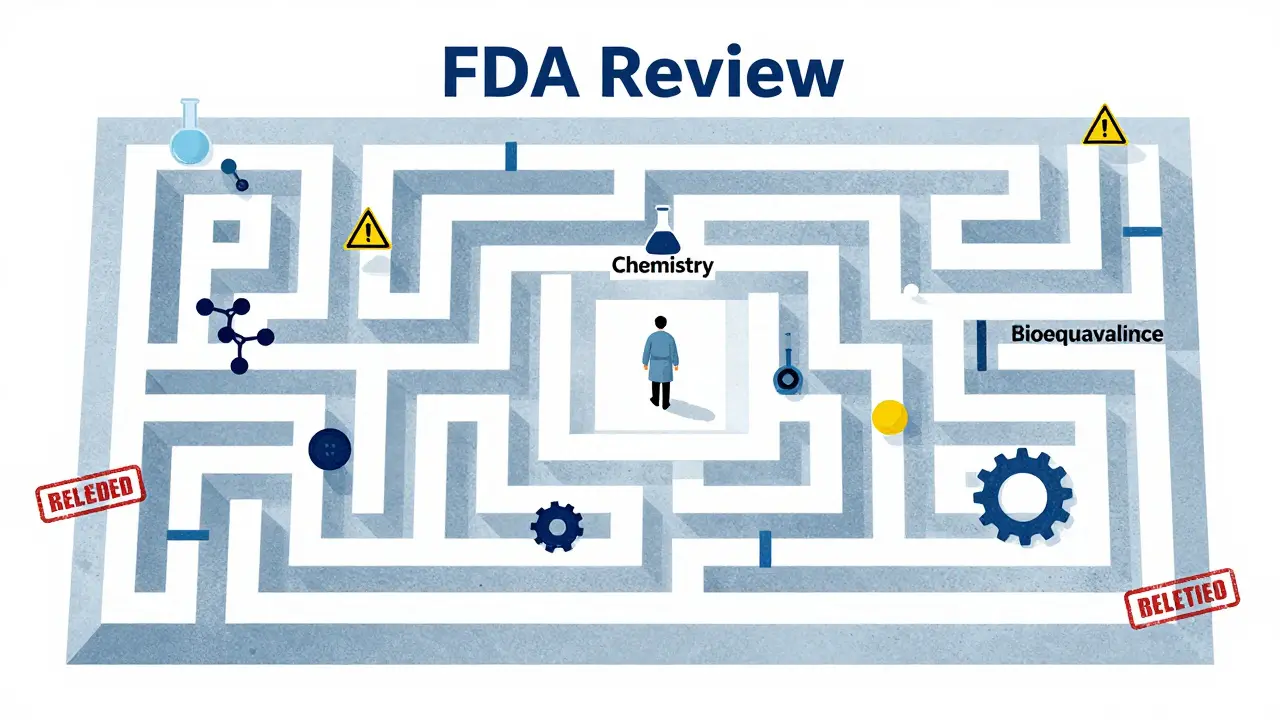
Before we even get to the lawyers, there’s the science. Getting that initial tentative approval isn’t easy. It often involves multiple rounds of back-and-forth with the FDA. In the past, generic drug applications went through nearly four review cycles on average before getting approved. Even after reforms like the Generic Drug User Fee Amendments (GDUFA), the first-cycle approval rate remains low. In March 2017, it was only 9 percent.
What causes these repeated rejections? It usually boils down to three main areas:
- Chemistry, Manufacturing, and Controls (CMC): About 35 percent of deficiencies relate to how the drug is made. If the manufacturer can’t prove their process is consistent and clean, the application gets stalled.
- Bioequivalence Studies: Roughly 28 percent of issues stem from inadequate study protocols. The generic must behave in the body exactly like the brand name. If the data doesn’t show this clearly, the FDA asks for more work.
- Analytical Method Validation: Another 22 percent of problems involve the tests used to check the drug’s quality. If the testing methods aren’t validated properly, the results don’t count.
Manufacturing facility inspections add another layer of complexity. In fiscal year 2022, facility-related issues caused 41 percent of Complete Response Letters (CRLs)-the official notice that an application needs major fixes. Common failures include poor quality control systems (63 percent of facility issues) and environmental monitoring lapses (29 percent). For complex drugs like inhalers or topical creams, these hurdles are even higher. Modified-release products experience 2.3 times more review cycles than simple immediate-release pills.
The Legal Wall: Patent Litigation and Strategic Delays
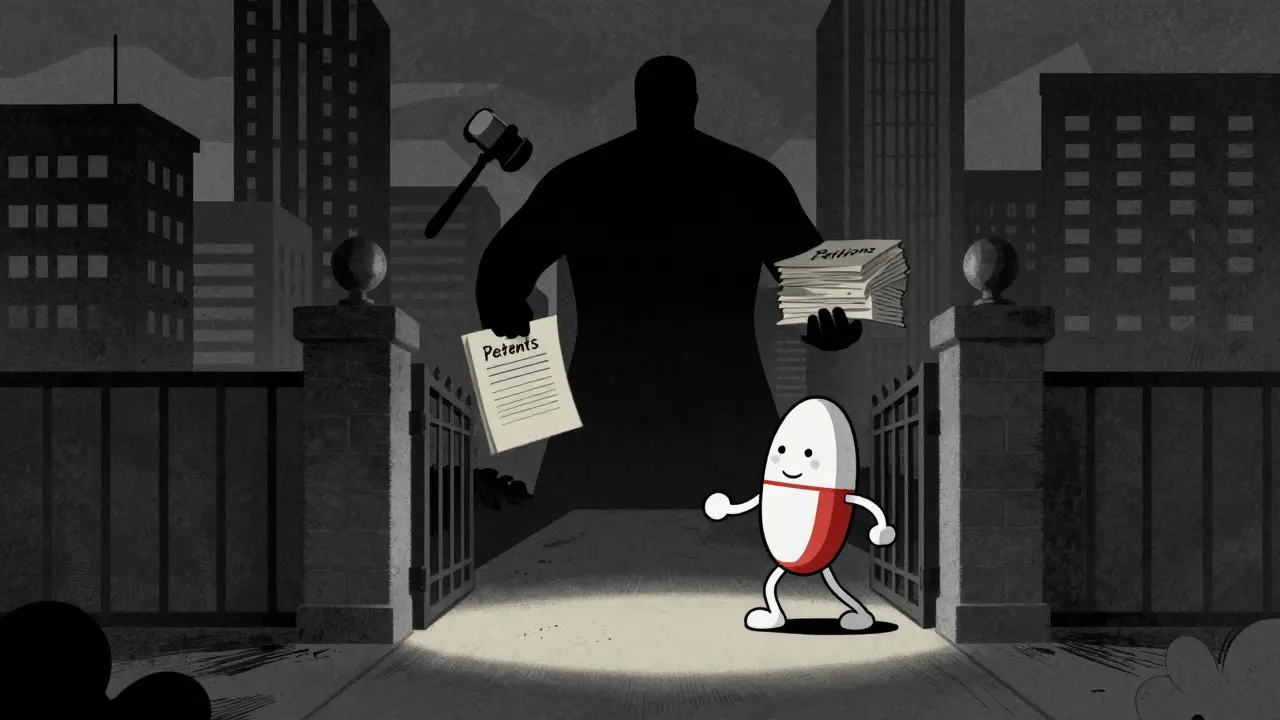
Once a generic manufacturer clears the scientific hurdles and gets tentative approval, they face the biggest obstacle: the law. The primary reason tentative approvals don’t turn into market launches is patent litigation. Under the Hatch-Waxman Act of 1984, brand-name companies can file lawsuits against generic makers who claim the brand’s patents are invalid or won’t be infringed upon. This triggers a statutory 30-month stay, during which the FDA cannot grant final approval, regardless of the tentative status.
This isn’t just a rare occurrence. A 2017 analysis by the Commonwealth Fund found that ongoing patent litigation delayed the market introduction for 68 percent of generic drugs that received tentative approval between 2010 and 2016. Brand manufacturers have developed sophisticated strategies to extend their monopolies:
- Citizen Petitions: Brand companies file petitions arguing that standard bioequivalence tests are inadequate. Between 2013 and 2015, the FDA received 67 such petitions, approving only three. The FDA found that 72 percent of these petitions were designed to delay competition using scientifically unsupported arguments.
- Product Hopping: Companies slightly modify a drug’s formulation to create new patents, forcing generic makers to start over. An FTC study found this affected 17 percent of top-selling drugs.
- Pay-for-Delay Settlements: Brand companies pay generic manufacturers to stay out of the market. The FTC documented 987 such delayed entries between 2009 and 2014.
These tactics keep prices high. When only one generic competitor exists, prices can remain above 80 percent of the brand price for up to two years. The Congressional Budget Office estimated that these patent-related delays added $9.8 billion annually to U.S. prescription drug spending as of 2018.
Regulatory Bottlenecks and Applicant Delays
It’s not always the FDA or the brand companies slowing things down. Sometimes, the generic manufacturers themselves contribute to the delay. The FDA attributes 37 percent of delays to applicant-related factors. One major issue is slow responses to deficiency letters. In 2022, the average time for a company to respond to a Complete Response Letter was 9.2 months, well beyond the recommended six-month timeframe.
Incomplete applications are also a persistent problem. In 2021, 29 percent of initial ANDA submissions contained significant omissions in clinical data, chemistry information, or labeling. Specific gaps include:
- Stability Data: 43 percent of deficiencies in 2022 related to inadequate stability packages, which prove the drug stays potent over time.
- Container Closure Systems: 31 percent involved insufficient info on how the drug is packaged, which can affect its shelf life.
- Process Validation: 26 percent of CRLs in 2022 cited issues with validating the manufacturing process itself.
The complexity of the drug plays a role here too. Complex generics, such as inhalation products or topical creams, faced launch delays exceeding 12 months post-patent expiration in 62 percent of cases due to manufacturing scale-up challenges. The FDA’s efforts to streamline this, like the 2020 Complex Generic Drug Product Draft Guidance, have seen mixed results, with only 12 percent of complex applications meeting targeted timelines in 2021.
Economic Realities: Why Some Generics Never Launch
Even when the science is sound and the patents expire, some generic drugs simply never reach the market. Economics dictates the rest. According to a 2022 analysis by Drugpatentwatch.com, approximately 30 percent of generically approved drugs never launch because the economics don’t work out. For drugs with annual U.S. sales below $50 million, this number jumps to 47 percent.
Generic manufacturers are businesses. They need to recoup the costs of development, manufacturing, and compliance. If the market is too small, or if brand-name discounts make the price difference negligible, there’s little incentive to invest. Additionally, strategic timing plays a role. Manufacturers may wait for optimal market conditions rather than launching immediately upon patent expiration, hoping to maximize profit margins before other competitors enter.
This lack of competition hurts patients. As of December 2020, 517 brand drugs still lacked any generic competition, with 312 of those having tentative approvals delayed by litigation or petitions. The result is a system where patients pay premium prices for drugs that should be affordable, simply because the path from tentative approval to the pharmacy shelf is fraught with legal, regulatory, and economic traps.
Efforts to Speed Up the Process
The FDA and Congress recognize these delays and have implemented several initiatives to fix them. The Competitive Generic Therapy (CGT) pathway, established in 2017, gives priority review to drugs with insufficient generic competition. By 2022, 78 percent of CGT-designated products received tentative approval within eight months, compared to the standard 18 months.
GDUFA III (2023-2027) sets ambitious goals, including increasing first-cycle approval rates to 70 percent by 2027. The FDA’s 2022 Tentative Approval Initiative focused on 102 high-priority drugs, resulting in 67 percent receiving final approval within 12 months. However, challenges remain. The median time from tentative approval to market launch was still 16.5 months in 2022. Industry analysts project that patent-related delays will continue to add $12.4 billion annually to U.S. prescription costs through 2027.
| Delay Factor | Impact Statistic | Primary Source |
|---|---|---|
| Patent Litigation | Delayed 68% of tentatively approved generics (2010-2016) | Commonwealth Fund |
| Manufacturing Deficiencies | Caused 41% of Complete Response Letters (FY 2022) | FDA GDUFA II Report |
| Applicant Response Time | Avg. 9.2 months to respond to CRLs (2022) | FDA Performance Report |
| Economic Viability | 30% of approved generics never launch | Drugpatentwatch.com |
| Citizen Petitions | 72% filed to delay competition with weak science | FDA Citizen Petition Review |
What does tentative approval mean for patients?
Tentative approval means the FDA has verified the generic drug is safe and effective, but it cannot yet be sold due to patent or exclusivity barriers. For patients, this means the drug might not be available at your pharmacy yet, even though it meets all medical standards. You may still need to use the more expensive brand-name version until those legal barriers expire.
How long does it take for a tentative approval to become final?
There is no fixed timeline. It depends entirely on when the relevant patents expire or when legal disputes are resolved. The median time from tentative approval to market launch was 16.5 months in 2022. However, some drugs never launch due to economic reasons, while others may face years of litigation delays.
Why do some generic drugs never reach the market?
Approximately 30 percent of generically approved drugs never launch because they are not economically viable. If the potential market is too small or if brand-name pricing makes the profit margin too thin, manufacturers decide not to invest in production and distribution. This is especially common for drugs with annual sales under $50 million.
What is the role of citizen petitions in delaying generics?
Citizen petitions are requests to the FDA to reconsider an approval decision. Brand-name companies often file these petitions shortly before a generic is set to launch, arguing that the generic’s testing methods are flawed. While most are rejected, the process itself forces the FDA to pause approval, effectively delaying the generic entry by an average of 7.2 months.
Are complex generic drugs harder to approve?
Yes. Complex generics like inhalers, injectables, and topical creams require more rigorous testing and validation. They experience 2.3 times more review cycles than simple oral solids. Topical products, for example, go through an average of 3.7 review cycles, leading to approval timelines that are 14 months longer than simpler drugs.