Vitamin D and Bone Health: Do Supplements Actually Work?

For decades, we’ve been told that vitamin D is the magic bullet for strong bones. If you’re worried about osteoporosis or just want to stay mobile as you age, it’s easy to assume that popping a high-dose supplement daily is the safest bet. But what if more isn’t actually better? Recent large-scale studies are shaking up the long-held belief that flooding your system with vitamin D guarantees denser bones and fewer fractures.
The reality is far more complex than a simple pill bottle suggests. While vitamin D remains essential for skeletal health, the amount you need depends heavily on your baseline levels, body weight, and even how you take it. Taking too much can sometimes backfire, leading to lower bone density rather than higher. Let’s break down what the latest science says about targets, supplements, and how to actually protect your bones without wasting money or risking side effects.
How Vitamin D Actually Builds Bone
To understand why supplementation works-or doesn’t-you have to look at the mechanics. Vitamin D is a fat-soluble vitamin that acts like a hormone in the body, primarily regulating calcium absorption. Without it, your gut absorbs only about 10% to 15% of the calcium from your food. With adequate vitamin D, that number jumps to 60%-80%. That calcium is then deposited into your bones, ensuring they remain mineralized and strong.
But it’s not just about minerals. Vitamin D also plays a critical role in muscle function. Strong muscles support your skeleton and reduce the risk of falls, which is often the direct cause of fractures in older adults. The International Osteoporosis Foundation highlights these three pillars: enabling calcium absorption, ensuring correct bone renewal, and maintaining muscle strength.
There are two main forms of this vitamin you’ll see on labels:
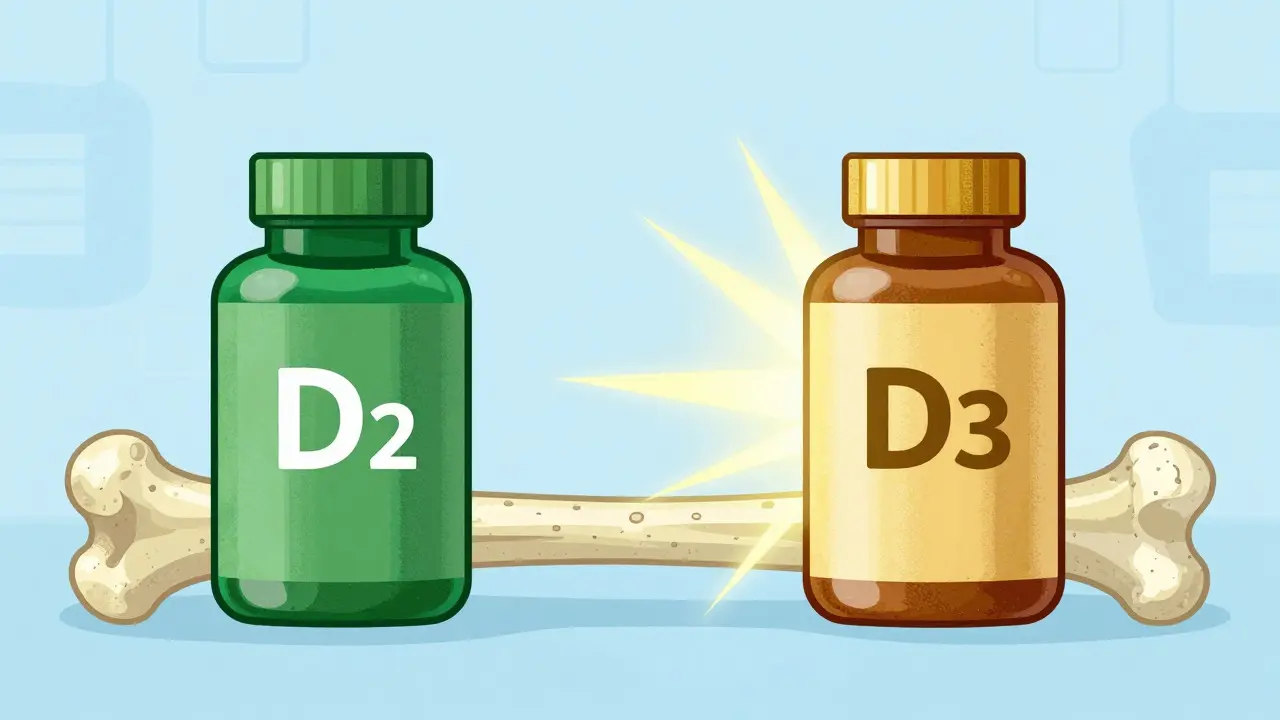
- Vitamin D2 (Ergocalciferol): Derived from plants and yeast. It is generally less effective at raising blood levels.
- Vitamin D3 (Cholecalciferol): Derived from animal sources or synthesized in the skin via sunlight. A 2011 study by Heaney et al. found that D3 is approximately 87% more potent than D2 at raising serum levels.
If you’re choosing a supplement, D3 is almost always the superior choice for maximizing absorption and effectiveness.
The Great Debate: How Much Is Enough?
This is where things get tricky. For years, guidelines were somewhat vague or overly aggressive. The Institute of Medicine recommends 600 IU/day for adults under 70 and 800 IU/day for those over 70. However, the Endocrine Society suggests higher doses-1,500 to 2,000 IU/day-to maintain serum levels above 30 ng/mL.
Recent evidence challenges the idea that everyone needs high doses. The VITAL trial, one of the largest randomized controlled trials involving over 25,000 participants, tested whether 2,000 IU/day of vitamin D3 reduced fracture risk in healthy adults. The results, published in 2022, showed no significant difference in bone fractures between those taking the supplement and those taking a placebo.
Dr. Meryl LeBoff, principal investigator of the study, noted that most healthy older adults already get enough vitamin D through diet and sun exposure. This suggests that blanket recommendations for high-dose supplementation may be unnecessary for the general population. However, the story changes for people who are already deficient.
| Organization | Recommendation | Target Group |
|---|---|---|
| Institute of Medicine (IOM) | 600-800 IU/day | General adult population |
| Endocrine Society | 1,500-2,000 IU/day | Adults aiming for >30 ng/mL serum levels |
| National Osteoporosis Foundation | 800-1,200 IU/day | Adults 50+ and those with osteoporosis |
| ESCEO (European) | 800-1,000 IU/day | Adults over 60 |
Can You Take Too Much Vitamin D?
Yes, and it might hurt your bones. It sounds counterintuitive, but recent research indicates a negative dose-response relationship for bone density at very high supplementation levels.
A 2020 study published in JAMA looked at adults taking either 4,000 IU or 10,000 IU daily for three years. Compared to those taking a low dose of 400 IU, the high-dose groups saw statistically significant decreases in radial bone mineral density (BMD). Specifically, the 10,000 IU group experienced a drop of 7.5 mg HA/cm³. This suggests that megadoses don’t just sit harmlessly in your body; they can actively weaken bone structure over time.
Why does this happen? High levels of vitamin D can lead to hypercalcemia (too much calcium in the blood), which may trigger the body to excrete calcium or disrupt the normal balance of bone remodeling. Dr. Walter Willett of Harvard T.H. Chan School of Public Health summarized this well: benefits are likely confined to those with baseline deficiency, while excess supplementation may have paradoxical negative effects.
Who Actually Needs Supplementation?
Not everyone is created equal when it comes to vitamin D metabolism. Several factors determine whether you need a supplement and how much:
- Baseline Deficiency: If your serum 25-hydroxyvitamin D [25(OH)D] level is below 20 ng/mL, you are deficient. Levels between 21-29 ng/mL indicate insufficiency. People in this range benefit significantly from supplementation. A 2023 meta-analysis showed that calcium and vitamin D co-supplementation reduced hip fracture risk by 30% in deficient individuals, but only when intake was optimized.
- Body Weight: Vitamin D is fat-soluble, meaning it gets stored in adipose tissue. If you have a BMI of 30 or higher, you may need double the standard dose because the vitamin is sequestered in fat cells and less available for bone use. Research shows obese individuals have 57% lower serum levels than normal-weight counterparts at the same intake.
- Skin Color and Sun Exposure: Melanin reduces the skin’s ability to produce vitamin D from sunlight. People with darker skin tones living in northern latitudes (like Halifax, Canada, or Seattle, USA) are at higher risk of deficiency, especially during winter months.
- Age: As we age, our kidneys become less efficient at converting vitamin D into its active form. Adults over 70 often require higher intakes to maintain sufficient levels.
Optimizing Your Supplement Strategy
If you decide you need a supplement, how you take it matters just as much as the dose. Here are practical tips to maximize absorption and efficacy:
- Take it with Fat: Since vitamin D is fat-soluble, it absorbs best when consumed with a meal containing fats. A 2015 study found that taking vitamin D with the largest meal of the day increased absorption by 56.7% compared to fasting.
- Pair with Calcium Carefully: While calcium and vitamin D work together, high-dose calcium supplements can cause gastrointestinal issues like constipation. Many users report better tolerance with liquid vitamin D drops rather than combined pills. If you need calcium, consider getting it from dietary sources like dairy, leafy greens, or fortified plant milks first.
- Test Before You Guess: Don’t just pick a dose off the shelf. Get a blood test to check your 25(OH)D levels. Wait at least three months after starting or changing a dose before retesting, as it takes time to reach steady state in the blood.
- Choose Quality Brands: Not all supplements are created equal. ConsumerLab.com found that 15% of tested vitamin D supplements contained less than 90% of the labeled amount. Look for third-party testing seals (like USP, NSF, or ConsumerLab) to ensure potency and purity.
Dietary Sources vs. Supplements
Before reaching for a pill, consider your diet. Natural food sources of vitamin D are limited but powerful:
- Fatty Fish: Salmon (approx. 570 IU per 3 oz serving), mackerel, and sardines are among the best sources.
- Egg Yolks: Contain about 44 IU per egg.
- Fortified Foods: Milk, orange juice, and cereals often have added vitamin D (typically 100 IU per cup).
However, it’s nearly impossible to meet the recommended daily allowance through diet alone, especially in regions with limited sunlight. This is why supplementation remains a key tool for many, particularly during fall and winter.
Future Directions and Personalized Medicine
The future of bone health management is moving toward personalization. The 2023 NIH consensus statement emphasized individualized strategies based on baseline status, BMI, and genetic factors. New analogs like eldecalcitol, approved in Japan, show promise in reducing vertebral fracture risk by 37% compared to standard vitamin D, offering a potential alternative for severe osteoporosis cases.
Additionally, upcoming data from the D-Health Trial in Australia, which involves 21,000 participants receiving monthly high doses, may further clarify optimal dosing strategies for large populations. Until then, the safest approach is moderation: aim for sufficiency, not excess.
What is the best time of day to take vitamin D?
The best time to take vitamin D is with your largest meal of the day, particularly one that contains fats. Studies show this can increase absorption by over 50% compared to taking it on an empty stomach.
Can vitamin D supplements cause kidney stones?
High doses of vitamin D can increase calcium levels in the blood and urine, which may raise the risk of kidney stones in susceptible individuals. If you have a history of kidney stones, consult your doctor before starting high-dose supplementation.
Is Vitamin D2 or D3 better?
Vitamin D3 (cholecalciferol) is generally considered better. Research indicates it is approximately 87% more effective at raising and maintaining serum vitamin D levels compared to D2 (ergocalciferol).
How long does it take for vitamin D supplements to work?
It typically takes about 2 to 3 months of consistent supplementation to reach a steady state in your blood. This is why doctors recommend waiting at least three months before retesting your levels after adjusting your dose.
Do I need calcium if I take vitamin D?
Vitamin D helps your body absorb calcium, so having adequate calcium is important. However, you don’t necessarily need a calcium supplement if you get enough from your diet. For many people, combining high-dose calcium and vitamin D pills can cause digestive issues. Focus on dietary calcium first.