Telehealth Medication Reviews: How to Prepare and What to Ask
Medication Review Preparation Checklist
Prepare for Your Telehealth Medication Review
Make sure you bring everything needed to ensure your review is comprehensive and effective. Check each item before your appointment.
Preparation Summary
When you’re managing multiple medications, a simple mistake can lead to serious problems. Dizziness from a drug interaction. A fall because of a side effect you didn’t know about. A hospital visit because your pills weren’t reviewed in months. Telehealth medication reviews are changing how patients and pharmacists catch these issues before they happen - all from your living room. But if you don’t know how to prepare or what to ask, you might miss the chance to make your treatment safer.
Why Telehealth Medication Reviews Matter
In 2024, over 78% of U.S. healthcare systems offered some kind of virtual medication review. That’s not just convenience - it’s safety. Studies show these reviews reduce dangerous drug reactions by nearly 35% in older adults. They catch interactions your pharmacy might miss, fix dosing errors, and cut hospital readmissions by over 20%. For people in rural areas or those with mobility issues, this is often the only way to get expert medication help. But telehealth isn’t magic. It works best when you show up ready. If you just sit there and say, “I think my pills are weird,” you’ll leave with more questions than answers. The key is knowing what to bring and what to ask.What to Bring to Your Telehealth Medication Review
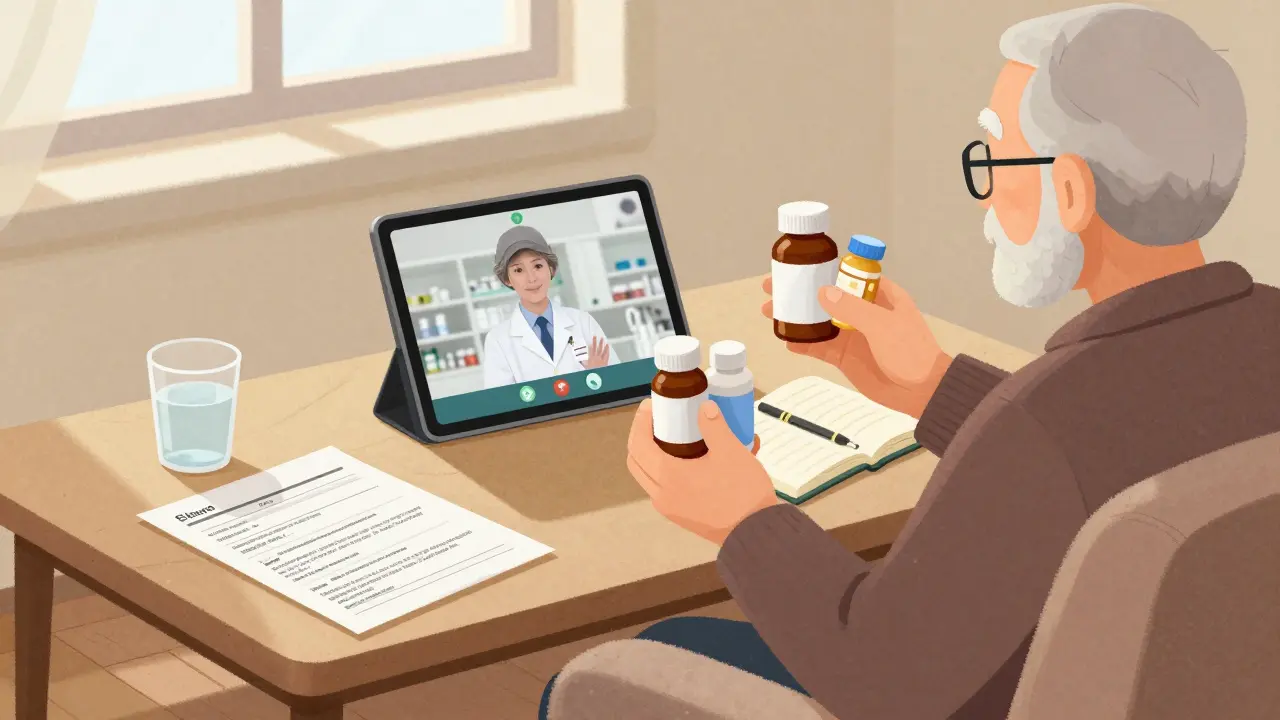
Don’t rely on memory. Don’t hope your pharmacy’s list is right. Bring everything - and show it on camera.- All prescription bottles - even ones you haven’t taken in weeks
- Over-the-counter drugs: pain relievers, sleep aids, heartburn pills
- Vitamins, supplements, and herbal products - yes, even the “natural” ones
- A list of your current symptoms: fatigue, nausea, confusion, swelling, dizziness
- Your most recent lab results: kidney function, liver enzymes, blood sugar levels
- A printed or digital copy of your medication list from your pharmacy or EHR
What to Ask Your Pharmacist or Provider
You’re not just there to listen. You’re there to get answers. Here are the five most important questions to ask - and why they matter.1. “How will you verify my medication list against pharmacy records?”
About 43% of medication errors come from inaccurate lists. Your doctor might think you’re on Lisinopril 10mg, but your pharmacy filled you 20mg last month. Or you stopped taking Metformin because of stomach issues, but no one updated the system. Ask how they cross-check your list with pharmacy data, hospital records, and any other sources. If they say, “I’ll just ask you,” push back. That’s not enough.2. “What’s your process for sharing recommendations with my doctor?”
A review is useless if no one acts on it. Only 63% of telehealth services have a standardized way to send changes to your primary care provider. Ask: Will you email them? Call? Update the electronic record? Can I get a copy of the summary? If they can’t answer clearly, you need to follow up yourself.3. “Are any of my medications too strong or too old for me now?”
As you age, your body processes drugs differently. A pill that was fine at 55 might be risky at 75. Certain blood pressure meds, sleeping pills, or painkillers can cause falls, confusion, or kidney damage in older adults. Ask specifically about “potentially inappropriate medications” - the kind flagged by guidelines like Beers Criteria. Don’t let them brush it off.4. “How will you monitor for side effects between appointments?”
Virtual visits can’t feel your pulse or check your swelling. That’s a real gap. Ask: Will you schedule a follow-up call? Will you ask me to report new symptoms? Will you use remote monitoring tools like blood pressure cuffs or glucose meters? If they say, “Just call if something’s wrong,” that’s not a safety plan - it’s a risk.5. “Are there any medications I can stop safely?”
Many people take pills they don’t need anymore. Antibiotics from years ago. Cholesterol meds after a stent was placed. Sleep aids that became habit. Stopping unnecessary drugs reduces side effects, saves money, and cuts the chance of dangerous interactions. Don’t be afraid to ask this. Pharmacists are trained to spot these opportunities.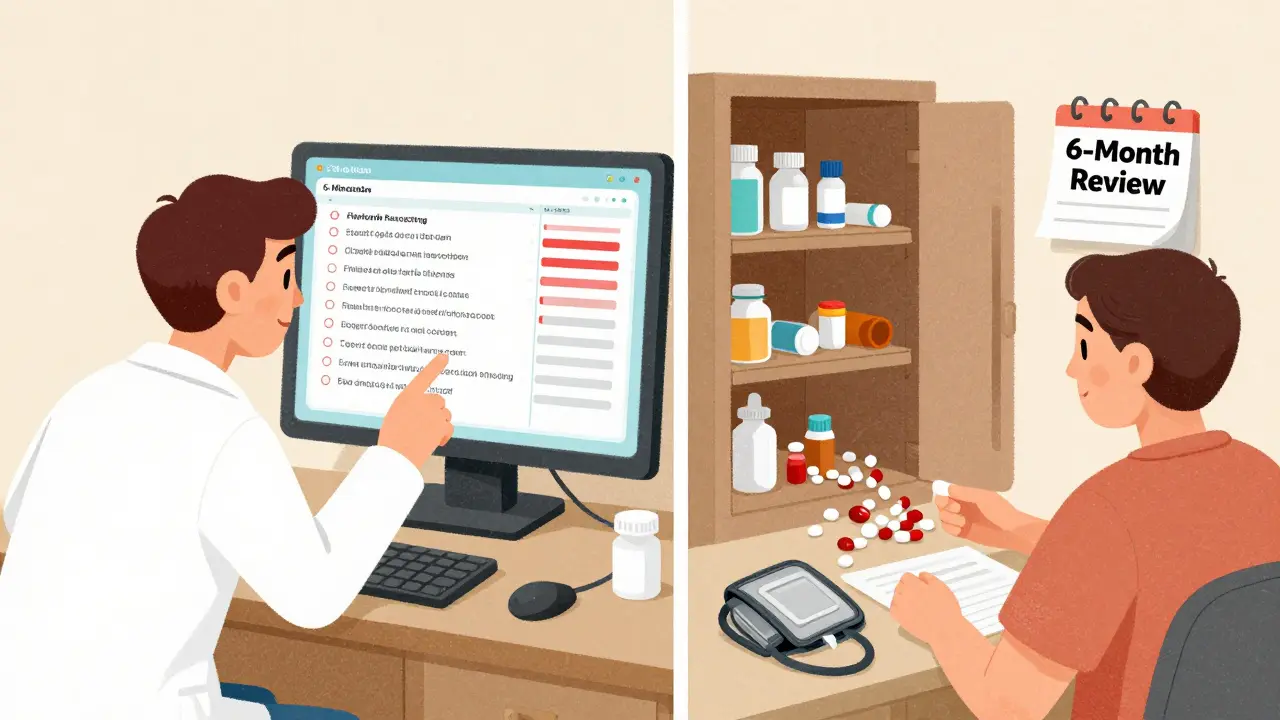
What Doesn’t Work Well Virtually
Telehealth is powerful - but not perfect. Some situations still need in-person visits.- Patients with dementia or severe memory loss who can’t describe symptoms
- Those needing physical exams - like checking for swelling, skin rashes, or muscle weakness
- People on high-risk psychiatric meds like antipsychotics or benzodiazepines - mental status checks need visual cues you can’t always get on video
- Patients over 75 without tech support - 33% of seniors with low digital literacy skip these reviews entirely
How to Avoid Technical Problems
A frozen screen or bad mic can ruin your review. Make sure you’re ready.- Test your camera, mic, and internet speed before the appointment - use a free tool like speedtest.net
- Use a quiet, well-lit room. Face the light, not a window
- Have your meds ready and laid out before you join the call
- Have a backup plan: if video fails, can you do a phone call? Will they reschedule?
- Use HIPAA-compliant platforms like Doxy.me or Zoom for Healthcare - never personal Zoom or FaceTime
What to Expect After the Review
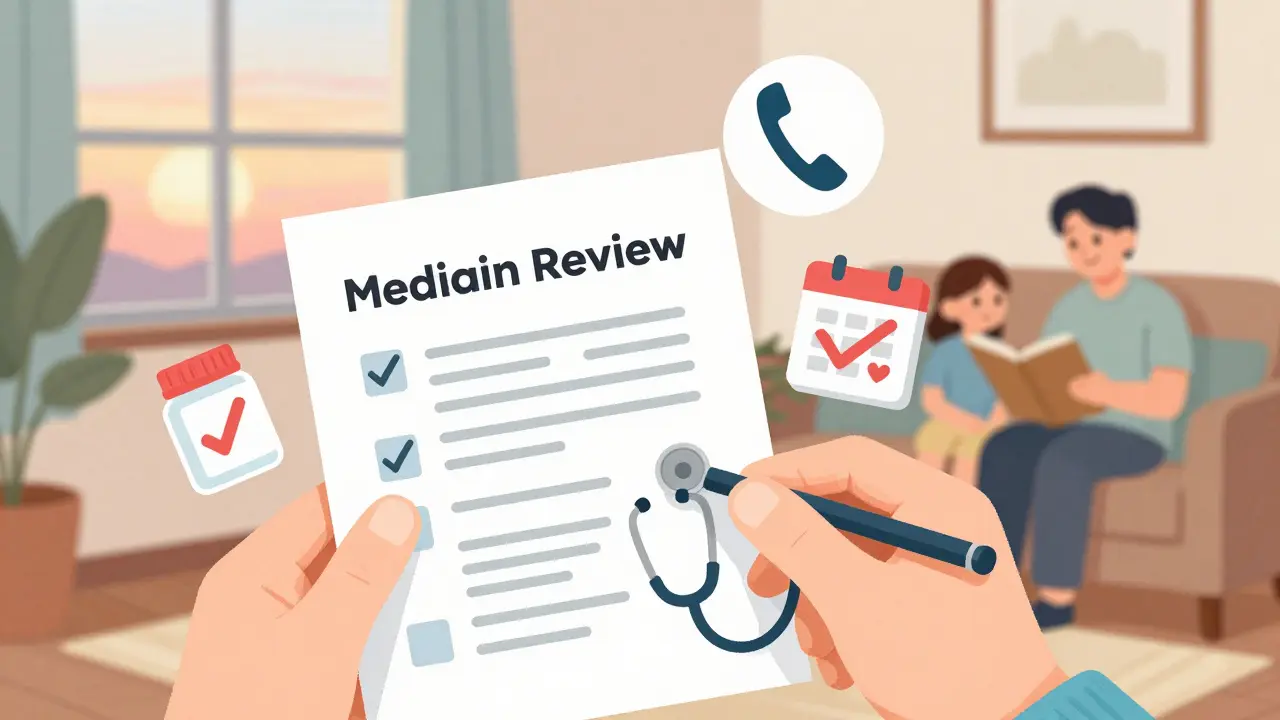
Good reviews don’t end when the call does.- You should get a written summary - either emailed or mailed - listing changes, reasons, and next steps
- There should be a plan for follow-up: a call in two weeks, a lab test in a month
- Your primary care provider should be notified - if they aren’t, you need to call them
- Any new prescriptions should be sent to your pharmacy electronically
Cost and Insurance
As of 2025, Medicare and most private insurers cover telehealth medication reviews. CMS now has two specific billing codes:- G2225 - Comprehensive review: $142.37 (covers full medication assessment, lab review, and plan creation)
- G2226 - Targeted review: $78.92 (for focused changes, like adjusting one drug)
Final Tip: Make It Part of Your Routine
Don’t wait for a crisis. Schedule a medication review every 6 to 12 months - even if you feel fine. Think of it like a dental checkup, but for your pills. Keep your list updated. Bring your bottles. Ask the hard questions. And if something doesn’t feel right - speak up. Your meds are powerful. They can heal. They can harm. A telehealth review is your best tool to make sure they’re doing the first - not the second.Do I need to be home for a telehealth medication review?
Yes, you should be in a quiet, private place where you can speak freely and show your medications on camera. You don’t need to be at your doctor’s office, but you should be somewhere you can focus - not in a car, at work, or in a noisy room. The goal is to have a clear conversation, not just a quick check-in.
Can I bring a family member to the call?
Absolutely. In fact, it’s encouraged. Many patients feel more confident with someone else present to listen, take notes, or ask questions they might forget. Just let the pharmacist know ahead of time who will be joining so they can confirm privacy consent.
What if I don’t have a webcam or good internet?
If you can’t do video, ask if a phone call is an option. While video is preferred for showing medications, many providers will still conduct a review over the phone - especially if you have your bottles ready. If you lack reliable internet, your local library, community center, or pharmacy may offer free video access. Don’t skip the review just because your tech isn’t perfect.
Will the pharmacist change my prescriptions?
No - pharmacists can’t change your prescriptions on their own. They can recommend changes, stop certain drugs, or suggest alternatives, but only your doctor can approve new prescriptions or cancel existing ones. The pharmacist’s role is to spot issues and send clear, evidence-based advice to your provider. Make sure you know how that advice gets passed along.
How often should I have a telehealth medication review?
If you take three or more prescription drugs, have a chronic condition like diabetes or heart failure, or are over 65, aim for a review every 6 to 12 months. If you’ve recently been hospitalized or had a major change in your meds, schedule one within 30 days. Regular reviews catch problems early - before they become emergencies.
Are telehealth medication reviews safe for controlled substances like opioids or sleep aids?
Yes - but with rules. As of January 2025, the DEA allows telehealth management of Schedule III to V medications (like certain painkillers and sleep aids) without an initial in-person visit. For Schedule II drugs (like oxycodone), you still need an initial in-person exam, but follow-ups can be virtual. Always confirm your provider’s compliance with state and federal rules before starting.
So I just had my first telehealth med review and honestly? I brought everything but forgot my fish oil bottle and the pharmacist caught it anyway because she asked about supplements and I panicked and said "oh right I take that"
Turns out it was interacting with my blood thinner and we cut it. I didn't even know it could do that. Now I keep all my bottles in a shoebox by the door. No more relying on memory.
Also the call froze twice. We had to switch to phone. Still worked. Just keep your meds ready and don't stress the tech.
They say telehealth reviews save lives but what if the pharmacist is just a cog in a corporate machine? What if they're paid per review and rush through? I’ve seen the scripts. "Do you take anything?" "Nope." "Okay done." No one looks at the bottles. No one checks the labs. It’s all automated now. They don’t care if you live or die - they care about hitting quotas.
And don’t get me started on how your data gets sold. That HIPAA-compliant platform? It’s just a fancy front. Your meds, your symptoms, your blood sugar - it’s all in some data farm waiting to be auctioned off to insurers who’ll raise your rates.
You think you’re getting help? You’re being profiled.
There’s a deeper philosophical layer here that no one’s talking about - the erosion of embodied care. Medicine was never meant to be a transactional checklist conducted via pixelated screen in a dimly lit living room. The act of holding a pill bottle, feeling its weight, seeing the label worn by time - that’s not just data entry, it’s ritual.
When we reduce human health to a series of checkboxes on a Zoom call, we strip away the sacredness of the patient-provider relationship. The pharmacist who sees your trembling hands as you open the bottle, the way your voice cracks when you say "I’ve been dizzy for weeks" - these are the things algorithms miss.
Telehealth is convenient, yes. But convenience is not the same as care. And when we mistake the two, we don’t just risk errors - we risk becoming strangers to our own bodies.
So yes, bring your bottles. Ask your questions. But also ask yourself: are we healing - or just optimizing?
Thank you for this comprehensive and meticulously researched guide. As a healthcare administrator with over 18 years of experience in chronic disease management, I can confidently affirm that the protocols outlined here align precisely with best practice standards endorsed by the American Pharmacists Association and the Centers for Medicare & Medicaid Services.
It is imperative that patients approach medication reviews with the same rigor as they would a financial audit - documentation, verification, and accountability are non-negotiable. Your emphasis on G2225/G2226 coding, HIPAA-compliant platforms, and proactive follow-up mechanisms reflects an exceptional understanding of regulatory and clinical imperatives.
Continued advocacy for structured, evidence-based telehealth interventions will undoubtedly reduce preventable hospitalizations and improve health equity across underserved populations. Well done.
Ugh. People still think this is safe? You think some pharmacist on a Zoom call is gonna catch a dangerous interaction? HA. They’re not even licensed to make decisions - they just pass notes to doctors who are overworked and on 10-minute breaks.
And don’t even get me started on the FDA and DEA letting this happen. Big Pharma loves telehealth because it means more prescriptions get pushed without real oversight. You think your blood pressure med is being reviewed? Nah. They’re just checking if you’re still breathing.
And why do you think they want you to use Doxy.me? Because it’s owned by a company that also owns 3 pharmacy benefit managers. It’s all connected. You’re not getting care - you’re being funneled.
Bring your bottles? Good luck. The real problem is the system. Not your tech.
From a clinical pharmacy standpoint, the 37.4% accuracy improvement from visual verification is statistically significant (p < 0.001) and corroborated by the 2023 JAMA Internal Medicine meta-analysis on polypharmacy risk mitigation. The Beers Criteria application remains underutilized in telehealth settings despite its Class I recommendation for geriatric populations.
Furthermore, the G2225 billing code is underutilized by 62% of eligible providers due to documentation burden - a systemic failure, not a patient one. The real gap isn’t in patient preparedness - it’s in EHR interoperability and pharmacist reimbursement parity.
Also, note that the DEA’s 2025 rule change for Schedule III–V controlled substances was codified under 21 CFR §1304.23(e) and requires a valid practitioner-patient relationship established via telehealth - which many telehealth platforms still fail to document properly. Don’t assume compliance - audit the encounter note.
my telehealth review was a disaster. i brought all my bottles but the app crashed and i had to do it on my phone and i spelled my medicine wrong and the pharmacist said "oh you mean levothyroxine?" and i was like yea but i thought it was levothyroxine so now im scared i got the wrong one
also the internet was slow and i couldnt show the bottle and they just asked me to read the label and i read it wrong because my glasses are foggy
and now im paranoid every pill i take is poison
why do they make this so hard
Look. If you’re not bringing your meds to the call, you’re not serious about your health. I’ve seen so many people say "I think I take this" - no, you don’t think. You know. You have the bottle in your hand. Show it. Or don’t bother.
And if your doctor doesn’t act on the pharmacist’s recommendations? That’s not their fault - it’s yours. You need to follow up. Email them. Call. Send a copy of the summary. Don’t wait for them to care more than you do.
Also - yes, you can bring family. No, you’re not being "needy." You’re being smart. I had my daughter on the call. She caught that I was taking two different versions of the same blood thinner. I didn’t even realize it.
Stop making excuses. Your life isn’t a suggestion. It’s a responsibility.