Targeted Therapy Guide: Precision Medicine and Tumor Genetics
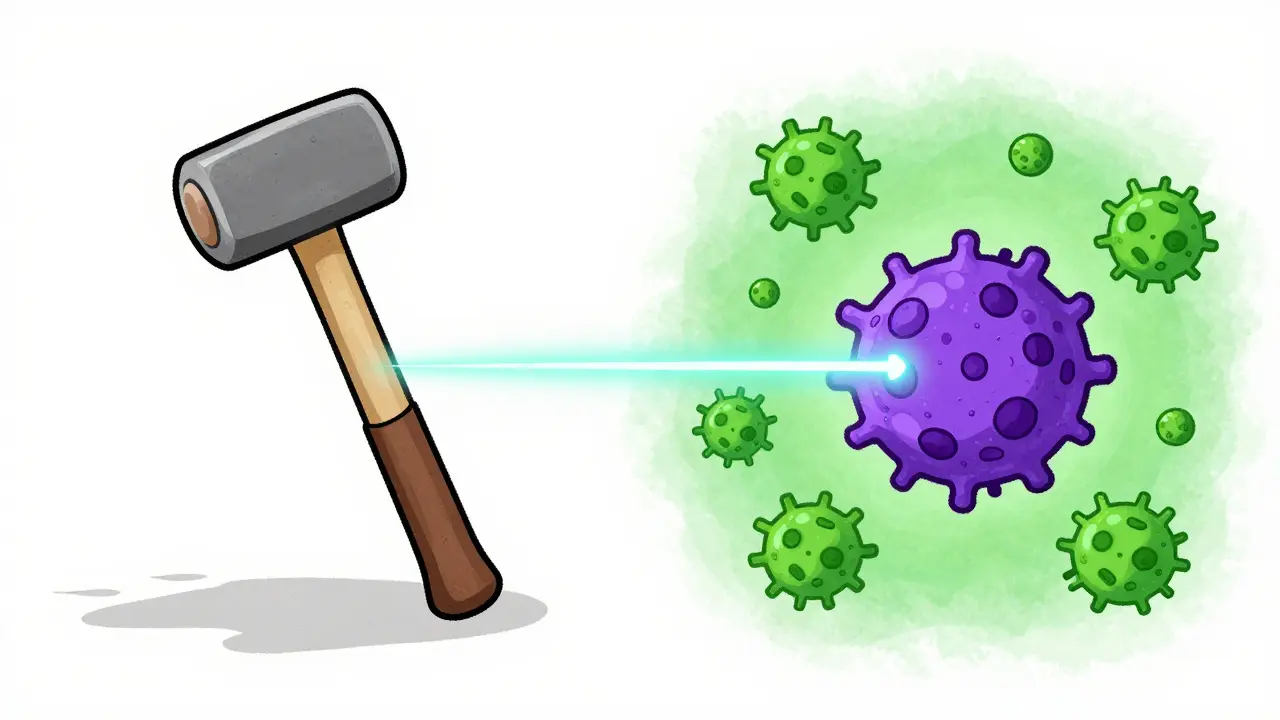
Imagine a cancer treatment that doesn't just blast everything in its path like a sledgehammer, but instead works like a sniper. For decades, chemotherapy was the gold standard, but it comes with a heavy price: it attacks any cell that divides quickly, which is why patients lose their hair and feel exhausted. Targeted therapy is a type of cancer treatment that uses drugs to find and attack specific proteins or genetic mutations that tell cancer cells to grow. By focusing only on the "broken" parts of the cell, it aims to kill the tumor while leaving healthy tissue alone.
The Quick Rundown on Precision Oncology
- What it is: Medicine tailored to the specific genetic makeup of your tumor.
- How it works: It blocks the signals that allow cancer cells to multiply.
- The goal: Higher success rates with far fewer side effects than standard chemo.
- The catch: You must have a specific genetic "marker" for the drug to work.
How Tumor Genetics Drive Treatment
To understand targeted therapy, you have to look at the DNA inside a tumor. Cancer happens when genes mutate, turning a normal cell into a rogue agent. These mutations usually fall into two camps. First, there are oncogenes, which act like a gas pedal stuck to the floor, forcing the cell to grow uncontrollably. Most targeted drugs, about 92% of them, focus on these. Second, there are tumor suppressor genes, which act like brakes. When these are lost, the cell can't stop growing. Unfortunately, it's much harder to "fix" a missing brake than it is to block a stuck gas pedal, which is why most current drugs focus on oncogenes.
A classic example of this in action is imatinib (Gleevec). Back in 2001, this drug changed the game for chronic myeloid leukemia. Before Gleevec, one-year survival rates were a grim 20-30%. After its introduction, that number jumped to 89%. It didn't just treat the cancer; it turned a once-fatal diagnosis into a manageable chronic condition for thousands of people.
The Roadmap: From Biopsy to Targeted Drug
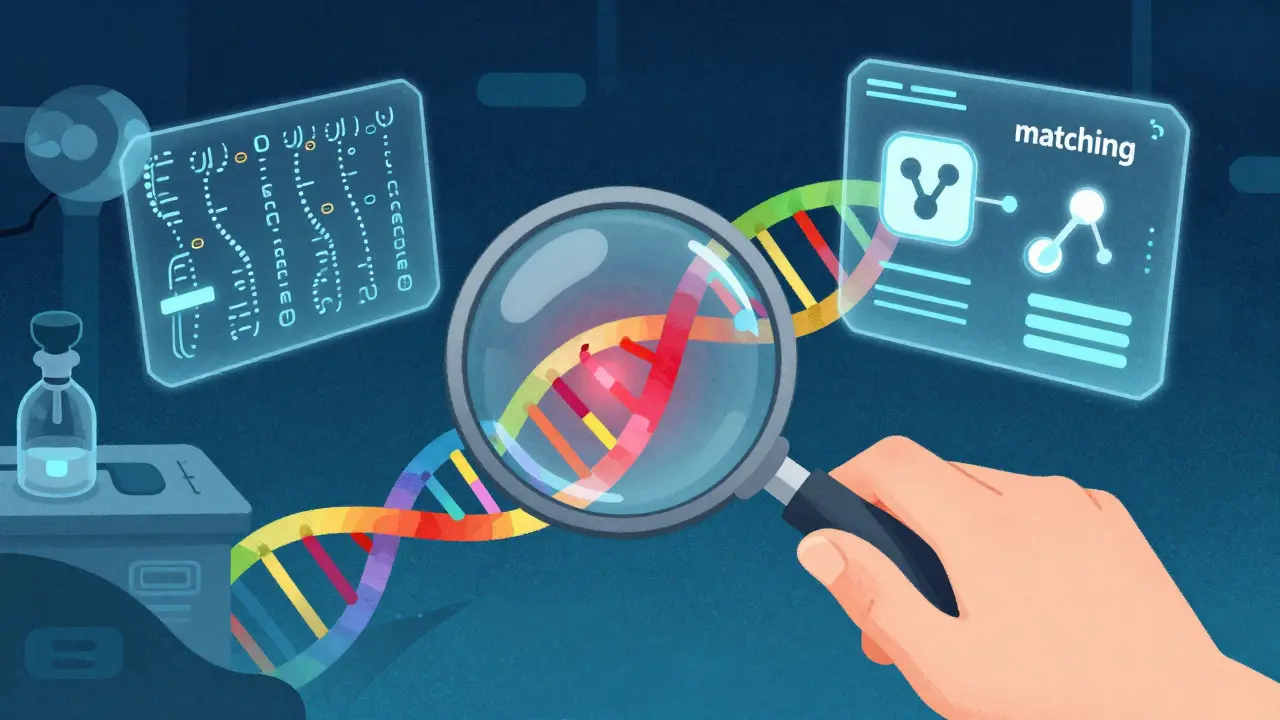
You can't just start a targeted therapy; you need a map of the tumor's genetics first. This is where biomarker testing comes in. The modern standard is Next-Generation Sequencing (NGS). Unlike old tests that looked at one gene at a time, NGS can scan hundreds of genes at once to find the exact mutation driving the cancer.
Here is how the process typically unfolds in a clinical setting:
- Tissue Sampling: A doctor takes a biopsy of the tumor. For a reliable result, the lab usually needs a sample with at least 20% tumor cellularity.
- Genomic Profiling: The sample is run through a panel, such as the FoundationOne CDx, which analyzes over 300 genes.
- The Wait: It usually takes 14 to 21 days for the results to come back.
- The Match: An oncologist reviews the report. If they find a mutation like EGFR in lung cancer or HER2 in breast cancer, they match it to a specific drug.
If a physical biopsy isn't possible, doctors are now using liquid biopsies. This involves a simple blood draw to find circulating tumor DNA (ctDNA). It's a powerful tool because it can detect when a cancer is becoming resistant to a drug 3 to 6 months before a scan even shows a new tumor.
Comparing Targeted Therapy vs. Traditional Chemotherapy
The difference between these two approaches isn't just in how they work, but in how they make a patient feel. While chemotherapy is a broad-spectrum attack, targeted therapy is a precision strike. For example, in patients with EGFR-mutant lung cancer, a drug called osimertinib can significantly extend the time before the cancer progresses compared to platinum-based chemo.
| Feature | Targeted Therapy | Conventional Chemotherapy |
|---|---|---|
| Mechanism | Blocks specific growth signals | Kills all rapidly dividing cells |
| Precision | High (requires biomarker) | Low (broad application) |
| Side Effects | Specific (e.g., skin rash, liver issues) | Systemic (e.g., nausea, hair loss) |
| Toxicity Rate | 15-30% severe events | 50-70% severe events |
| Typical Cost | $15,000 - $30,000 / month | $5,000 - $10,000 / month |
The Real-World Hurdles: Resistance and Access
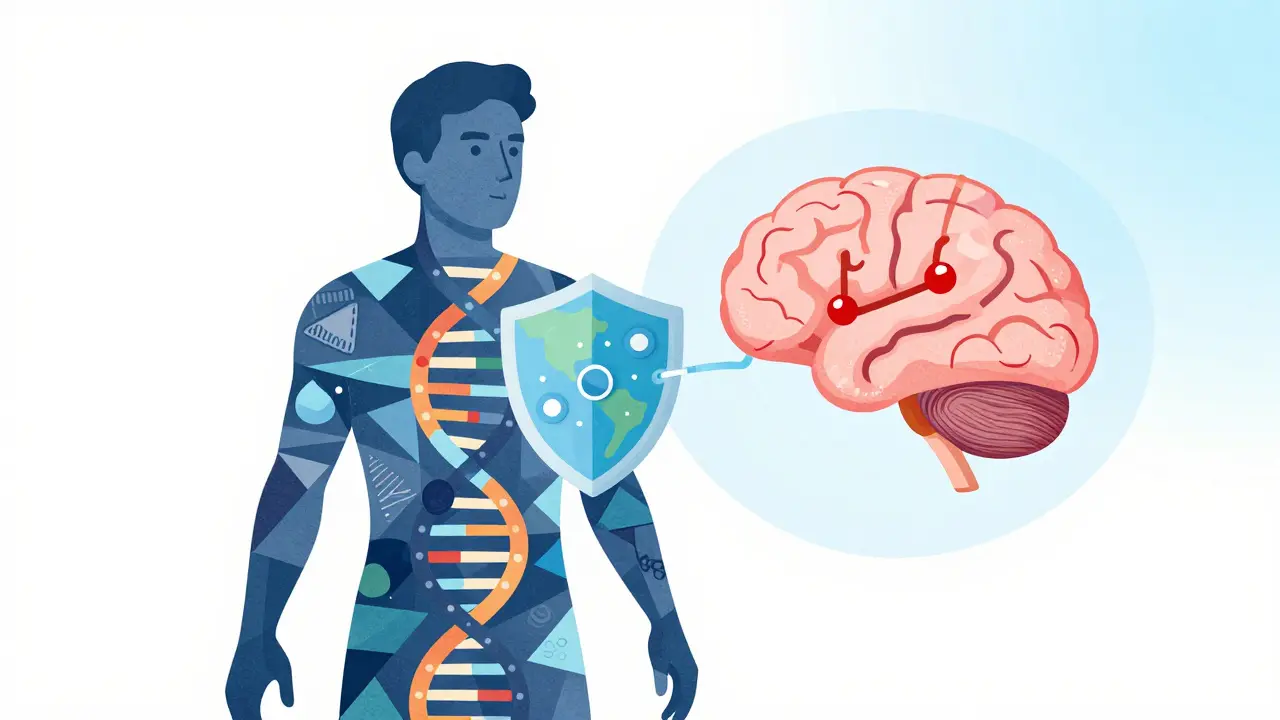
If these drugs are so effective, why aren't we using them for everyone? The first problem is that not every tumor has a "target." Only about 10-15% of solid tumors have mutations that we currently have drugs for. Most people simply don't have the right genetic marker to qualify.
Then there is the issue of acquired resistance. Cancer is smart. When you block one pathway, the tumor often finds a "detour" to keep growing. In 70-90% of patients, the cancer eventually learns how to bypass the drug, usually within 9 to 14 months. This is why researchers are now focusing on combination therapies-hitting the cancer from two or three different angles at once so it can't escape.
Beyond biology, there is the "financial toxicity." These drugs are incredibly expensive. Many patients face insurance denials because a drug might be approved for lung cancer but not for the specific rare tumor they have, even if the genetic mutation is identical. This leads to a frustrating gap where the science exists, but the payment system doesn't allow access.
The Future of Precision Medicine
We are moving toward a "tissue-agnostic" era. This means doctors stop caring where the cancer started (lung, colon, breast) and only care about the mutation. For instance, if a patient has an NTRK fusion, a drug like larotrectinib can work regardless of whether the tumor is in the thyroid or the salivary gland. This shift is fundamentally changing how clinical trials are designed, moving from organ-based trials to "basket trials" that group patients by mutation.
Artificial intelligence is also stepping in. AI tools are now helping molecular tumor boards analyze massive amounts of genomic data to find rare matches that a human doctor might miss. By 2030, it's predicted that 40% of all cancer patients will receive some form of biomarker-directed therapy. We are slowly moving away from the "one size fits all" model and toward a future where your treatment is as unique as your own DNA.
Does targeted therapy have any side effects?
Yes. While it doesn't typically cause the systemic hair loss or severe nausea associated with chemotherapy, it has its own set of issues. Common side effects include skin rashes, diarrhea, and liver enzyme elevations, depending on the specific drug used.
How do I know if I'm a candidate for targeted therapy?
The only way to know is through genomic profiling. Ask your oncologist about Next-Generation Sequencing (NGS) or biomarker testing. They will take a sample of your tumor and check for specific mutations (like EGFR, ALK, or BRAF) that can be targeted by existing drugs.
Why is targeted therapy so expensive?
The high cost stems from the intense research and development required to map the human genome and design molecules that fit perfectly into specific protein targets. Because these drugs are often designed for smaller, specific patient populations, the cost per patient remains high.
What happens if the cancer becomes resistant to the drug?
When resistance occurs, doctors often perform a second biopsy or a liquid biopsy to see how the mutation has evolved. In some cases, there is a "second-generation" drug designed specifically to overcome that new resistance mutation.
Is targeted therapy better than chemotherapy?
For patients who have the correct biomarker, targeted therapy is generally superior because it offers better response rates and a higher quality of life. However, for patients without an actionable mutation, traditional chemotherapy remains the most effective option.
Typical US pharma greed rite here lol $30k a month is insaan some of these prices r just robbery
Oh sure, let's just trust the 'sniper' approach while the pharmaceutical companies basically hold our DNA hostage for a monthly subscription fee. Truly the pinnacle of human progress :)
This is basic. Anyone with a shred of intellectual capacity knows the ontological failure of these 'targeted' systems is the inherent chaos of somatic evolution. It's almost quaint that people think a 'map' is enough when the terrain changes every few months. Purely pedestrian analysis.
It is quite fascinating to observe how different healthcare systems across the globe grapple with these costs, as some countries have implemented much more robust negotiation frameworks to prevent the kind of financial devastation that often accompanies these cutting-edge therapies in the American private insurance model.
omg the part about the financial toxicity is just so true i cant even deal with how unfair it is that you can have the cure right there but just no money to pay for it like literally heart breaking
Listen we got the best tech in the world right here in the states and if we just stopped letting other countries rip us off with their patents we could actually afford this stuff for every single patriot out there who is fighting for their life
The teleological drive of the cell is simply to persist, and this 'targeted' approach is just a skirmish in a larger cosmic war between entropy and order 🌀 the bio-molecular hegemony is real 💊
It is highly improper to discuss the costs of life-saving medicine in such a casual manner. One must maintain a level of dignity and respect for the scientific rigor required to develop these molecules regardless of the pricing structures.
My sister went through this and the wait for those 21 days of genomic profiling was the absolute worst time of our lives. I remember sitting in the waiting room just feeling the air get thinner and thinner while the doctors acted like it was just another Tuesday. It's not just about the science, it's about the soul-crushing anxiety of waiting for a piece of paper to tell you if you have a chance or not. I can still feel that heaviness in my chest just thinking about the way she looked at me when the results finally came back and we realized she didn't have the right marker. It's a special kind of hell to be told the cure exists but it just isn't for you. I don't think people realize how much that destroys a person inside. The mental toll is just as bad as the physical one. Every second of that three-week wait felt like a year of my life being stripped away. I still wake up sometimes feeling that exact same dread.
Science is a tool but the spirit is what really heals us in the end.
It is interesting to see the emphasis on liquid biopsies as a way to monitor resistance in real time.