Storing Medications Away from Children: Safety Best Practices
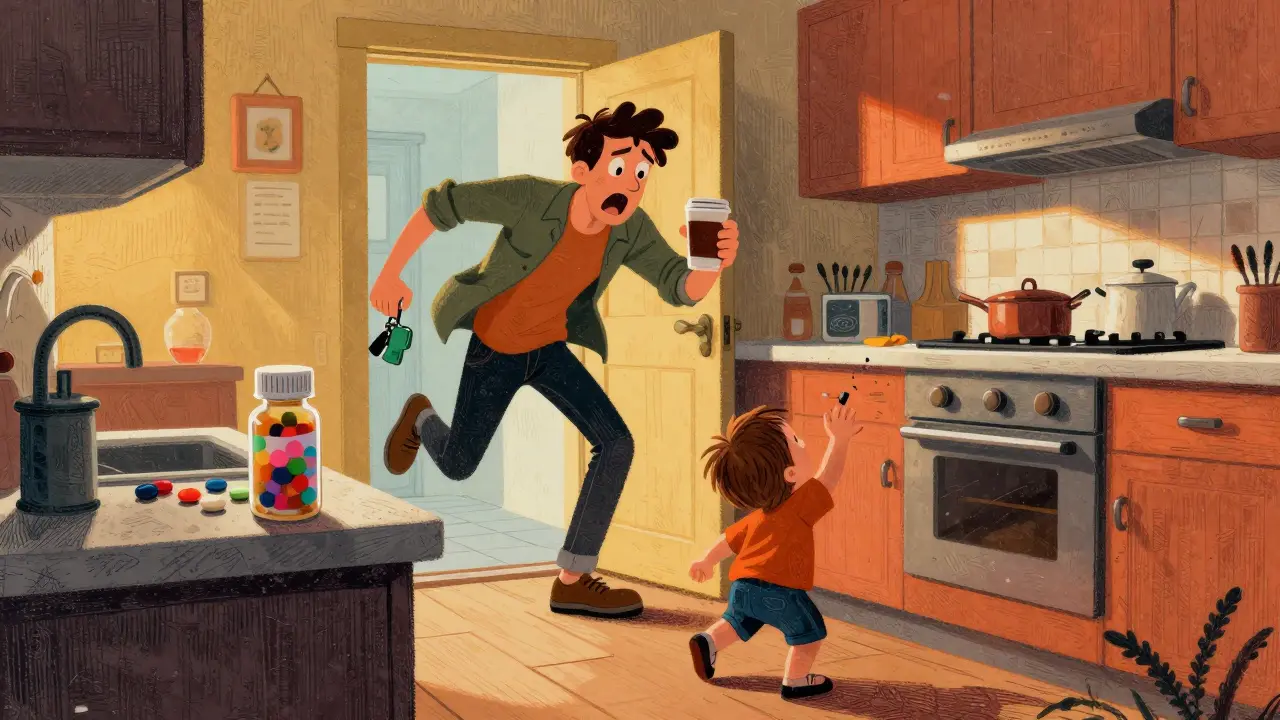
Imagine this: you’re rushing to get out the door for work. You grab your coffee, your keys, and a quick dose of your daily prescription. In that split second, you leave the bottle on the counter. By the time you realize it’s gone, your toddler has already swallowed two pills. It sounds like a nightmare scenario, but according to the Centers for Disease Control and Prevention (CDC), this type of incident leads to approximately 60,000 emergency room visits every year among children under five.
We often think we are watching our kids closely enough. We trust those little child-resistant caps on prescription bottles. But the reality is starkly different. The average child can figure out how to open a standard safety cap in less than a minute if left unsupervised. Storing medications safely isn’t just about being careful; it is about creating physical barriers that make access impossible. This guide breaks down exactly how to secure your home, travel routines, and even grandparent visits to keep your family safe.
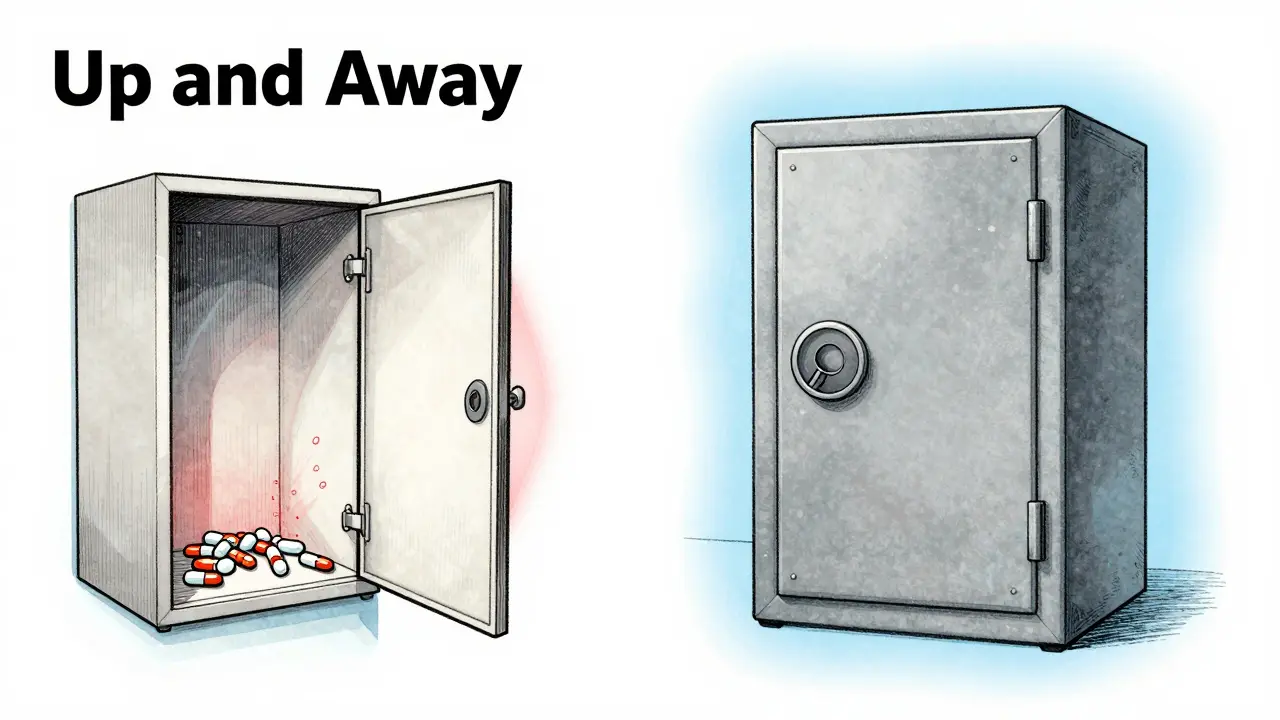
The "Up and Away" Rule Explained
You might have heard the phrase "Up and Away." It’s not just a catchy slogan; it is an evidence-based strategy launched in 2012 by the CDC in partnership with the PROTECT Initiative. The rule is simple but strict: medications must be stored up high and away from sight at all times. Not just when guests are over, and not just during naptime. Always.
Why does this matter? Because convenience kills. A 2023 survey by Safe Kids Worldwide found that 41% of parents still store meds in bathroom cabinets. Why? Because it’s easy. But here is the problem: 89% of those same parents know their kids can reach those cabinets. Children as young as 24 months can operate standard latches. If your medicine is visible, your child will eventually find it. Out of sight is necessary, but as experts note, it is insufficient without physical barriers like locks.
Physical Barriers: Locks vs. Child-Resistant Caps
Let’s talk about the hardware. Most people rely on the plastic caps on their pill bottles. The U.S. Consumer Product Safety Commission tests these caps rigorously. They require containers to withstand 10 minutes of manipulation by 200 children aged 42 to 51 months. That sounds tough, right? But real-world data tells a different story. An analysis by Express Scripts in 2023 revealed that 50% of children can open these safety caps within one minute when they are alone.
This is why locked storage is non-negotiable. A 2022 study published in the Journal of Pediatric Health Care tracked 1,200 households with children under six. The results were clear: locked cabinets provided 98% effectiveness in preventing access. High shelves alone only offered 72% effectiveness. Weekly pill organizers stored in plain sight had a dismal 45% effectiveness rate. If you want peace of mind, you need a lock. Whether it is a key-operated cabinet or a biometric safe, the barrier must be something a toddler cannot bypass.
| Storage Method | Effectiveness Rate | Risk Level |
|---|---|---|
| Locked Cabinet/Safe | 98% | Low |
| High Shelf (Unlocked) | 72% | Moderate |
| Pill Organizer (Visible) | 45% | High |
| Bathroom Counter | <20% | Critical |
Special Considerations for Grandparents and Travel
Your home might be secure, but what happens when your kids visit Grandma and Grandpa? Or when you pack a bag for a weekend trip? These are the weak points in most families' safety nets. Research from the National Association for Children of Alcoholics (NACoA) shows that 28% of accidental ingestions happen in grandparents' homes. Why? Because 76% of grandparents fail to lock up medications when grandchildren visit. Many believe their grandchild "knows better," but toddlers don't care about rules; they care about curiosity.
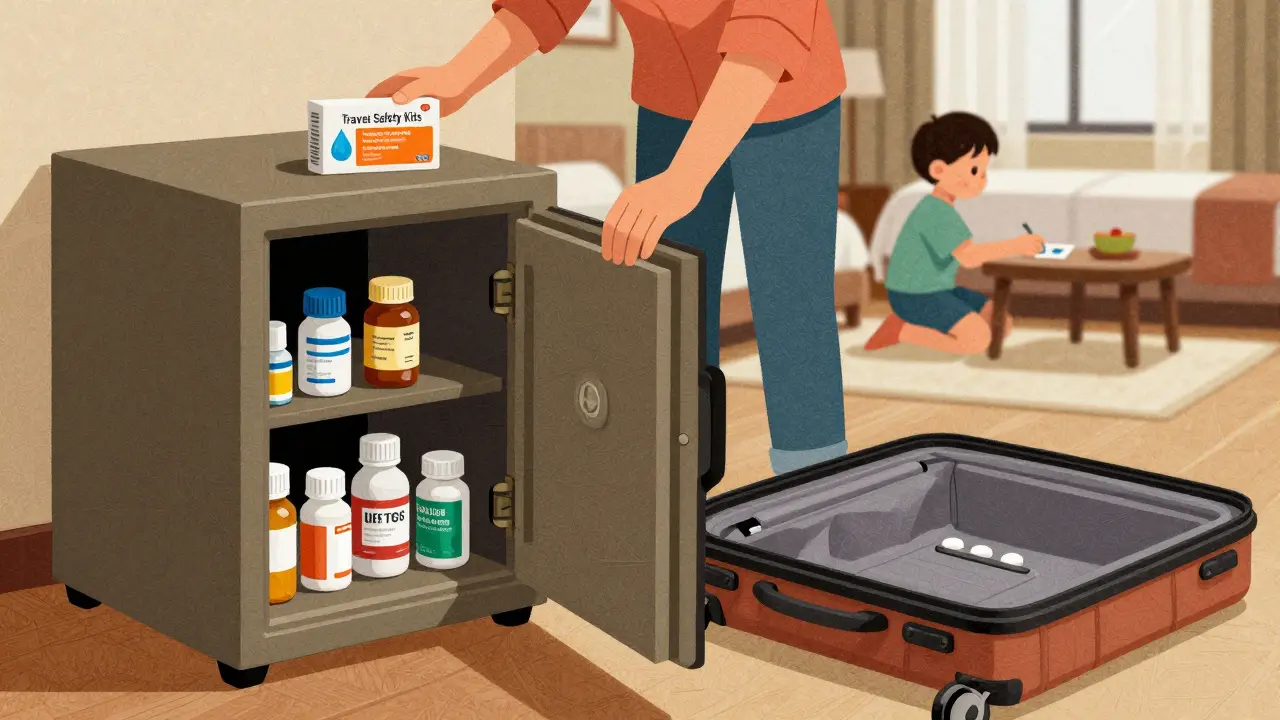
If you are traveling, do not leave meds in your purse or overnight bag. A 2022 CDC case report highlighted a 22-month-old who accessed opioid medication from an unsecured bag, leading to hospitalization despite proper storage at home. The solution? Use portable lockboxes. The CDC’s updated "Up and Away" campaign now recommends "Travel Safety Kits" containing small lockboxes designed to fit inside hotel safes. Keep your daily prescriptions, insulin, and emergency meds in these kits. Never leave them loose in a suitcase.
The Two-Minute Rule and Daily Habits
Even the best lockbox fails if you leave it open. Dr. Stephen Gersch, past president of the American Academy of Family Physicians, notes that 78% of accidental ingestions occur during routine medication administration. That means while you are handing a pill to a child or yourself, another child wanders in. To combat this, adopt the "Two-Minute Rule."
This rule mandates that medications should never remain unsecured for more than 120 seconds. Here is how to practice it:
- Prep first: Take the med out of the locked box before you call the child over.
- Administer immediately: Give the dose without distractions.
- Secure instantly: Put the container back in the lock and close it before turning your attention elsewhere.
Temperature Control and Disposal Protocols
Safety isn’t just about locking things away; it is also about keeping meds effective. Temperature matters. According to FDA guidelines updated in January 2024, most solid medications stay stable between 59°F and 77°F with humidity levels of 35% to 65%. Insulin, however, requires refrigeration between 36°F and 46°F. If you store insulin in a locked box, ensure that box is inside the fridge, not next to it. Heat degrades potency, which can be dangerous for diabetics.
What about old meds? Don’t flush them unless instructed, and don’t leave them in the trash where a curious kid might dig. The CDC’s 2024 Poison Prevention Toolkit specifies that proper disposal involves mixing medications with undesirable substances like coffee grounds or cat litter in a sealed container before throwing them away. Even better, use permanent disposal kiosks. As of 2024, 78% of U.S. communities offer these drop-off boxes at local pharmacies. It is free, secure, and eliminates the risk entirely.
Smart Technology and Future Trends
Technology is changing how we secure meds. The medication lockbox industry hit $287 million in annual sales by early 2024. Newer models feature Bluetooth connectivity that alerts your phone if the box is opened. While convenient, be cautious. The Consumer Technology Association reported only 43% reliability in these smart systems as of May 2024. Glitches happen. A physical lock remains the gold standard.
Looking ahead, the FDA launched a pilot program in 2025 requiring pictogram-based storage instructions on all prescription labels. Early trials showed a 63% reduction in accidental ingestions when visual cues were used alongside verbal instructions. For now, however, your job is to create a culture of safety. Teach your teenagers to document doses and verify with adults. The National Association of Pediatric Nurse Practitioners found this reduced prescription misuse by 67% in households with teens. Safety is a team effort, starting with you.
Is a child-resistant cap enough to protect my toddler?
No. While child-resistant caps meet federal testing standards, studies show that 50% of children can open them within one minute when unsupervised. For true safety, you must combine these caps with locked storage solutions like cabinets or safes.
Where is the safest place to store medication in the house?
The safest place is a locked cabinet or drawer positioned at or above counter height (minimum 36 inches). Avoid bathrooms and kitchens, as these are high-traffic areas where children spend time. Locked steel or hardened plastic containers provide the highest level of security.
How should I handle medications when traveling with kids?
Never leave medications loose in suitcases or purses. Use portable lockboxes designed for travel and store them inside hotel safes. Follow the "Two-Minute Rule" by securing meds immediately after administration. This prevents access during moments of distraction.
What is the "Two-Minute Rule" for medication safety?
The Two-Minute Rule states that medications should never remain unsecured for more than 120 seconds. You should prepare the dose, administer it, and return the container to its locked storage immediately. This habit reduces accidental access by 83%.
Do grandparents need to lock up their medications too?
Yes. 28% of accidental ingestions occur in grandparents' homes because 76% of older caregivers fail to lock meds when grandchildren visit. Toddlers do not distinguish between "safe" and "unsafe" environments based on whose house it is. All adult caregivers must enforce locked storage.