Statin Muscle Cramps: Myopathy vs. Neuropathy Guide
Statin Muscle Symptom Checker
Answer the Questions
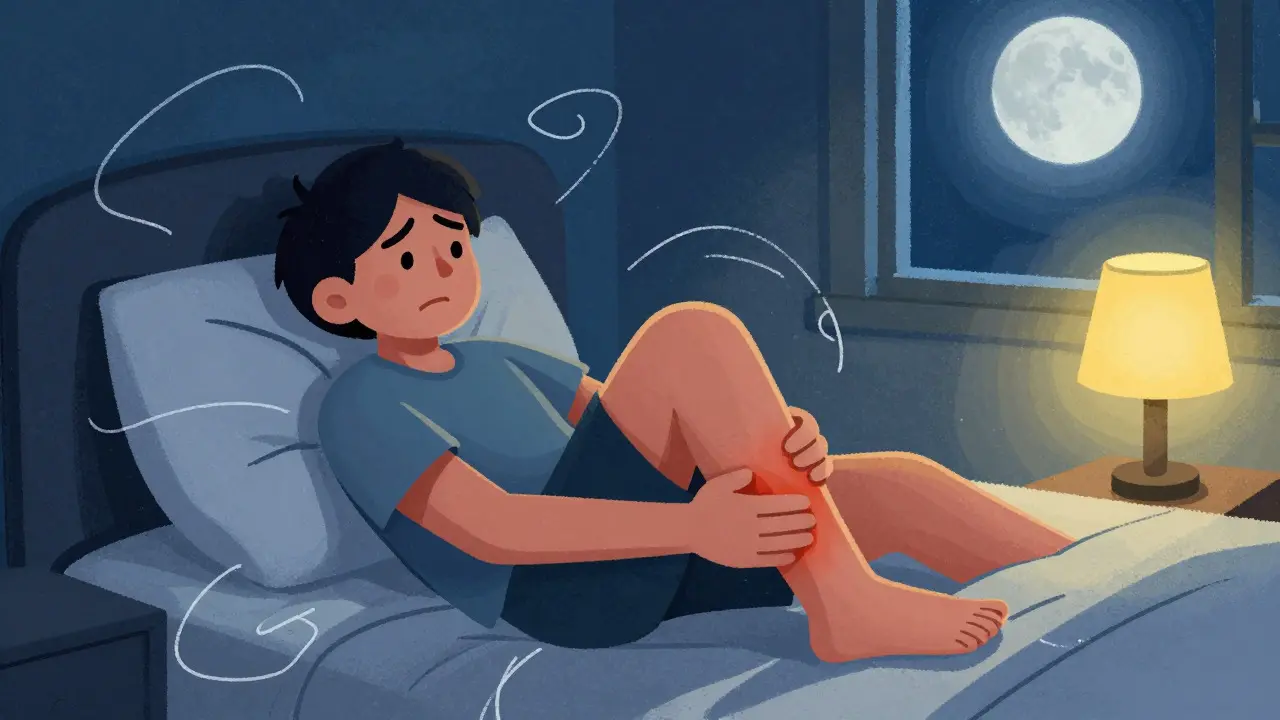
Waking up with a painful leg cramp after starting a new cholesterol medication can be alarming. Many patients assume the pain is just their body adjusting, but sometimes it signals a deeper issue. The core problem here isn't just discomfort; it’s figuring out where the pain actually comes from. Is it your muscles reacting to the drug, or are your nerves getting irritated? This distinction matters because the treatment paths are completely different. If you’re experiencing these symptoms, you need to know how to tell the difference between myopathy and neuropathy before making any drastic changes to your medication.
Quick Summary / Key Takeaways
- Statin-Associated Muscle Symptoms (SAMS) affect 7-29% of patients in real-world settings, though true severe cases are rare.
- Myopathy typically causes proximal weakness and elevated creatine kinase (CK) levels, while Neuropathy causes distal tingling and normal CK levels.
- Diagnosis requires ruling out other causes like hypothyroidism or vitamin deficiencies before blaming the statin.
- Management often involves switching to a hydrophilic statin or adding non-statin therapies rather than stopping lipid-lowering treatment entirely.
Understanding Statin-Associated Muscle Symptoms
Statins have been around since the late 1980s, starting with lovastatin. They work by blocking an enzyme called HMG-CoA reductase, which helps your liver make cholesterol. While they are incredibly effective at reducing heart attack and stroke risks, they do come with side effects. The most common complaint is muscle-related pain, officially known as SAMS. According to the European Atherosclerosis Society Consensus Panel, about 7% to 29% of people report some kind of muscle symptom while on these drugs. However, only a tiny fraction-roughly 1 in 1,000 to 1 in 10,000-experience true myopathy with significant lab abnormalities.
The confusion arises because "muscle pain" is a broad term. It could mean a simple ache, a severe cramp, or actual muscle damage. To understand what's happening, we have to look at two distinct mechanisms: direct muscle toxicity (myopathy) and nerve irritation (neuropathy). These two conditions feel different, look different on tests, and require different handling. Misidentifying them can lead to unnecessary discontinuation of life-saving medication or, worse, missing a treatable condition.
Identifying Myopathy: The Muscle Origin
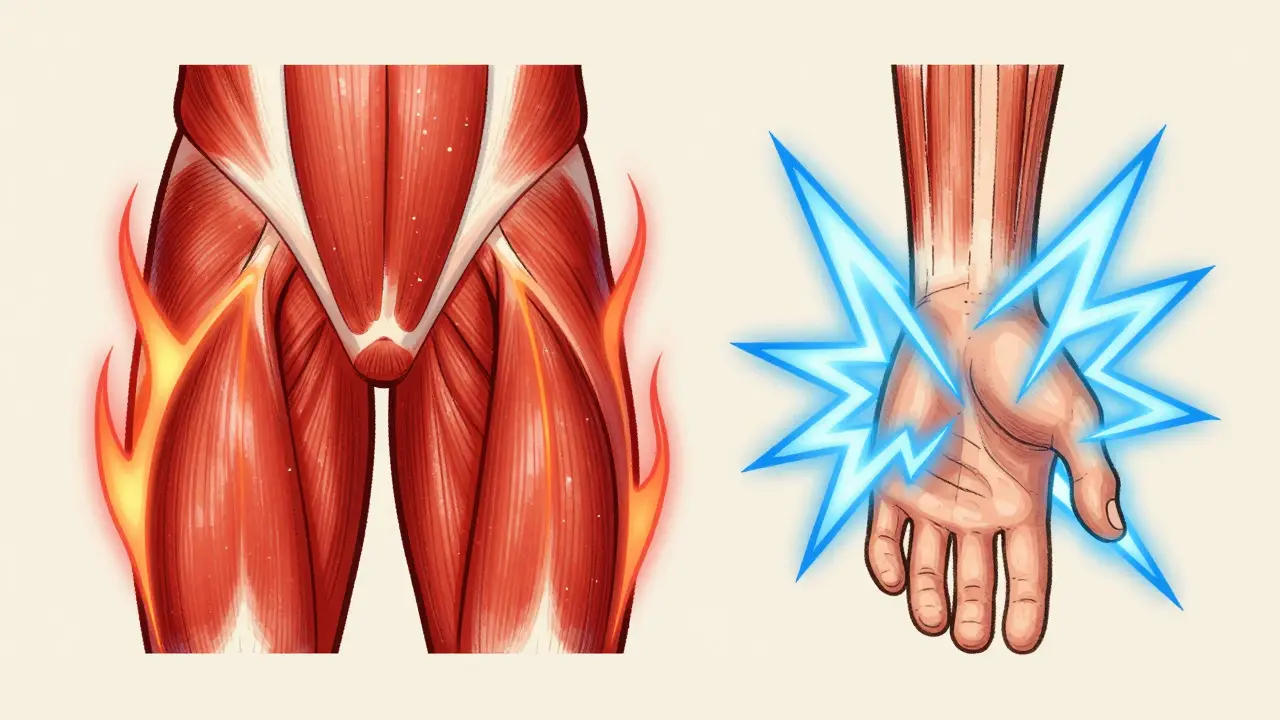
Statin-Induced Myopathy is a condition where the drug directly affects skeletal muscle cells. The hallmark of this issue is bilateral proximal muscle weakness. This means the muscles closest to your trunk-like those in your hips, thighs, and shoulders-feel weak or achy. You might find it hard to climb stairs or get out of a chair. Unlike neuropathy, the pain is usually deep and aching rather than sharp or burning.
Why does this happen? Statins interfere with the production of Coenzyme Q10 (CoQ10), a molecule essential for energy production in mitochondria. Studies show that statins can decrease CoQ10 levels by up to 40% within 30 days of starting therapy. Skeletal muscle is much more sensitive to this inhibition than liver cells. When muscle cells don't have enough energy, they start to leak enzymes into the blood. The key marker here is Creatine Kinase (CK). In true myopathy, CK levels rise significantly, often above four times the upper limit of normal. If your doctor checks your blood and sees high CK along with proximal weakness, myopathy is the likely culprit.
Recognizing Neuropathy: The Nerve Origin
Peripheral Neuropathy, on the other hand, involves the nerves themselves. If you suspect neuropathy, pay attention to where the sensation is. Neuropathic symptoms are typically distal, meaning they start in your toes or fingers and move inward. Think of a "stocking-glove" distribution. You might feel tingling, numbness, burning, or pins-and-needles sensations. Unlike myopathy, there is usually no significant weakness in the large muscle groups early on. Instead, you might notice balance issues or sensitivity to touch.
The evidence linking statins directly to neuropathy is actually quite mixed. Some studies suggest a causal link, particularly with long-term use, while others, like a 2019 case-control study involving over 600 patients, found that statin users had a lower risk of polyneuropathy. This contradiction makes diagnosis tricky. Proposed mechanisms include the disruption of nerve cell membranes due to lowered cholesterol levels or a deficiency in Vitamin E, which travels with LDL cholesterol. Since statins lower LDL, they might inadvertently reduce the delivery of protective antioxidants to nerves. Regardless of the cause, if your symptoms are sensory and distal, nerve involvement is the primary suspect.
Diagnostic Differences: How to Tell Them Apart
Distinguishing between these two conditions relies on a combination of clinical observation and specific tests. Here is a breakdown of the key differences:
| Feature | Myopathy (Muscle) | Neuropathy (Nerve) |
|---|---|---|
| Symptom Location | Proximal (hips, thighs, shoulders) | Distal (toes, fingers, legs, arms) |
| Type of Sensation | Aching, cramping, weakness | Tingling, burning, numbness, pain |
| Creatine Kinase (CK) | Elevated (>4x ULN in severe cases) | Normal |
| Electrodiagnostic Tests | Normal nerve conduction; EMG may show myopathic changes | Reduced sensory nerve action potentials; axonal pattern |
| Response to Statin Stop | Symptoms usually resolve within weeks | May persist; resolution is slower and less certain |
Beyond the table, the temporal relationship is crucial. For myopathy, symptoms should appear shortly after starting the statin or increasing the dose. If you stop the statin, the pain should fade. If you restart it, the pain should return. This "rechallenge" test is a gold standard for confirming causality. For neuropathy, the timeline might be longer, and symptoms might not disappear immediately upon stopping the drug, especially if the nerve damage has already occurred.

Risk Factors and Contributing Conditions
Not everyone on statins develops these issues. Certain factors increase your vulnerability. Age is a major one; patients over 65 are at higher risk. Women also report muscle symptoms more frequently than men, with a ratio of roughly 2:1. Medication interactions play a huge role too. Combining statins with fibrates (another cholesterol drug) dramatically increases the risk of rhabdomyolysis, a severe form of muscle breakdown. Genetic factors also matter. Variants in the SLCO1B1 gene can make simvastatin much more toxic to muscles, increasing risk by 4.5-fold at higher doses.
However, before blaming the statin, doctors must rule out mimics. Hypothyroidism, low vitamin D, kidney disease, and alcohol excess can all cause similar muscle pains. A thorough workup includes checking thyroid function, electrolytes, and vitamin levels. This step is vital because treating the underlying cause (like replacing thyroid hormone) might solve the problem without needing to change your cholesterol regimen.
Management Strategies and Next Steps
If myopathy is confirmed, the goal is to maintain cardiovascular protection while relieving symptoms. Stopping the statin completely is rarely the best option unless the reaction was severe. Most guidelines recommend trying a different statin. Hydrophilic statins like pravastatin or rosuvastatin are less likely to penetrate muscle tissue compared to lipophilic ones like simvastatin or atorvastatin. About 60% of patients who switch to a hydrophilic statin tolerate it well. Alternatively, lowering the dose of the current statin or adding a non-statin agent like ezetimibe can help achieve LDL targets with fewer side effects.
For suspected neuropathy, the approach is more cautious. Because the evidence for statin-caused neuropathy is inconsistent, doctors will first aggressively rule out diabetes, B12 deficiency, and other common causes. If neuropathy is strongly linked to the statin, a switch or pause may be considered, but close monitoring is required. Patient education is critical here. Many patients quietly stop their meds when symptoms hit, then restart them later without telling their neurologist, leading to confusing relapses. Communication between your primary care provider and any specialists is essential.
Frequently Asked Questions
Do statin-induced muscle cramps always go away?
If the cramps are due to mild myopathy, they typically resolve within a few weeks of stopping or switching the statin. However, if the cause is peripheral neuropathy, symptoms may take months to improve or might not fully resolve, depending on the extent of nerve involvement.
Can I take CoQ10 supplements to prevent statin cramps?
While theoretically logical since statins lower CoQ10 levels, clinical trials have shown mixed results. A major 2015 study found no significant benefit over placebo for preventing muscle symptoms. It is generally safe to take, but don't rely on it as a guaranteed fix for existing pain.
What is the difference between myalgia and myopathy?
Myalgia simply means muscle pain. Myopathy refers to a disease or dysfunction of the muscle itself. In the context of statins, myalgia is the symptom, while myopathy is the underlying condition characterized by muscle weakness and often elevated CK levels.
Should I stop my statin immediately if I get cramps?
Unless the pain is severe or accompanied by dark urine (a sign of rhabdomyolysis), it is best to contact your doctor first. Abruptly stopping can raise your cardiovascular risk. Your doctor may want to check your CK levels and thyroid function before deciding whether to pause the medication.
Which statin is least likely to cause nerve problems?
There is no definitive statin proven to be "nerve-safe." However, hydrophilic statins like rosuvastatin and pravastatin are often preferred for patients with muscle complaints because they have lower affinity for muscle tissue. For neuropathy specifically, individual response varies, so trial and error under medical supervision is common.