Sleep Apnea and Opioids: How Opioid Use Raises Risk of Nighttime Oxygen Drops
Sleep Apnea Risk Calculator
Calculate Your Risk
Risk Assessment
When you take opioids for chronic pain, you might not think about your breathing while you sleep. But for many people, opioids quietly sabotage one of the most basic survival functions: breathing at night. The combination of opioid use and sleep apnea doesn’t just make sleep restless-it can be deadly. If you or someone you know is on long-term opioid therapy, understanding this hidden danger isn’t optional. It’s life-saving.
Why Opioids and Sleep Don’t Mix
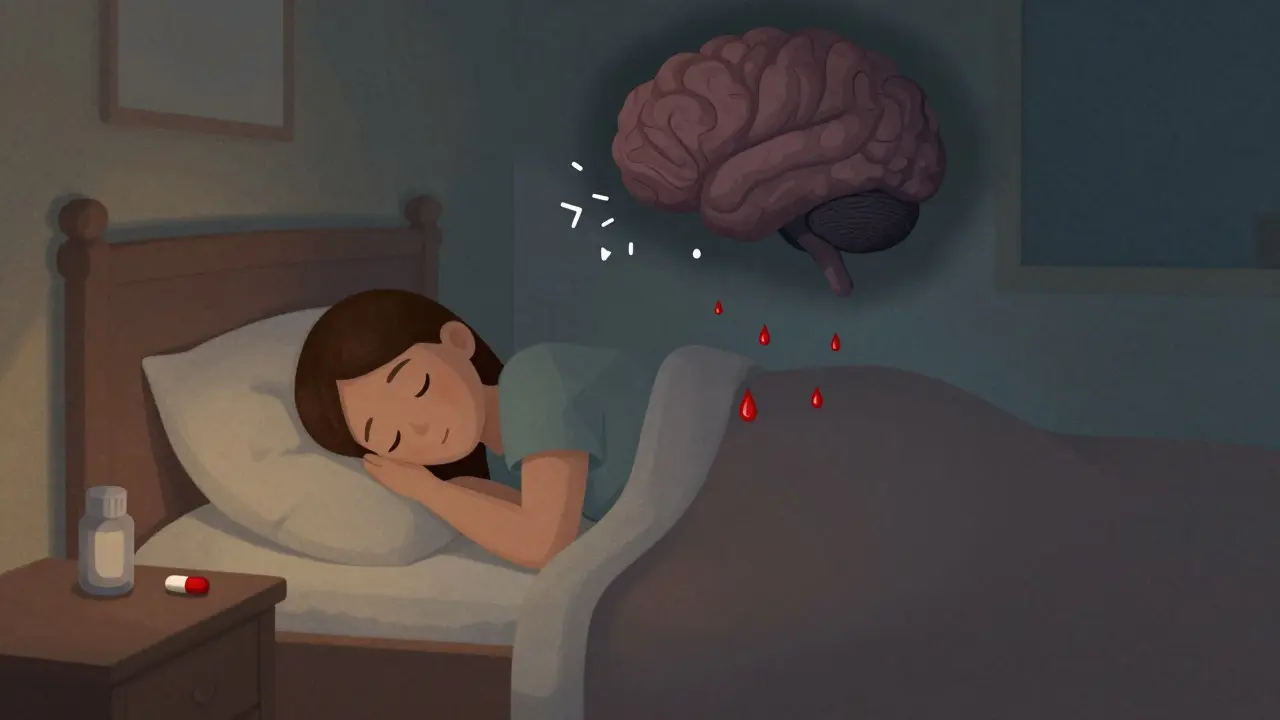
Opioids work by binding to receptors in the brain that reduce pain. But they don’t stop there. They also hit the brainstem, the part that controls automatic breathing. This is where things get dangerous. During sleep, your body naturally slows down breathing. Your brain doesn’t need to be as alert, so respiratory drive dips. Opioids push that dip even lower. The result? Breathing becomes shallow, slow, or stops entirely for seconds at a time-sometimes dozens of times an hour. This isn’t just about snoring or feeling tired in the morning. It’s about oxygen levels crashing while you sleep. Studies show that people on opioids can drop below 88% blood oxygen saturation for more than five minutes during the night. For context, healthy people rarely dip below 90% even during deep sleep. When oxygen levels fall below 80% for prolonged periods, your heart and brain are under serious stress. This is called nocturnal hypoxia, and it’s a direct result of opioid-induced respiratory depression.The Two Types of Apnea-And How Opioids Make Both Worse
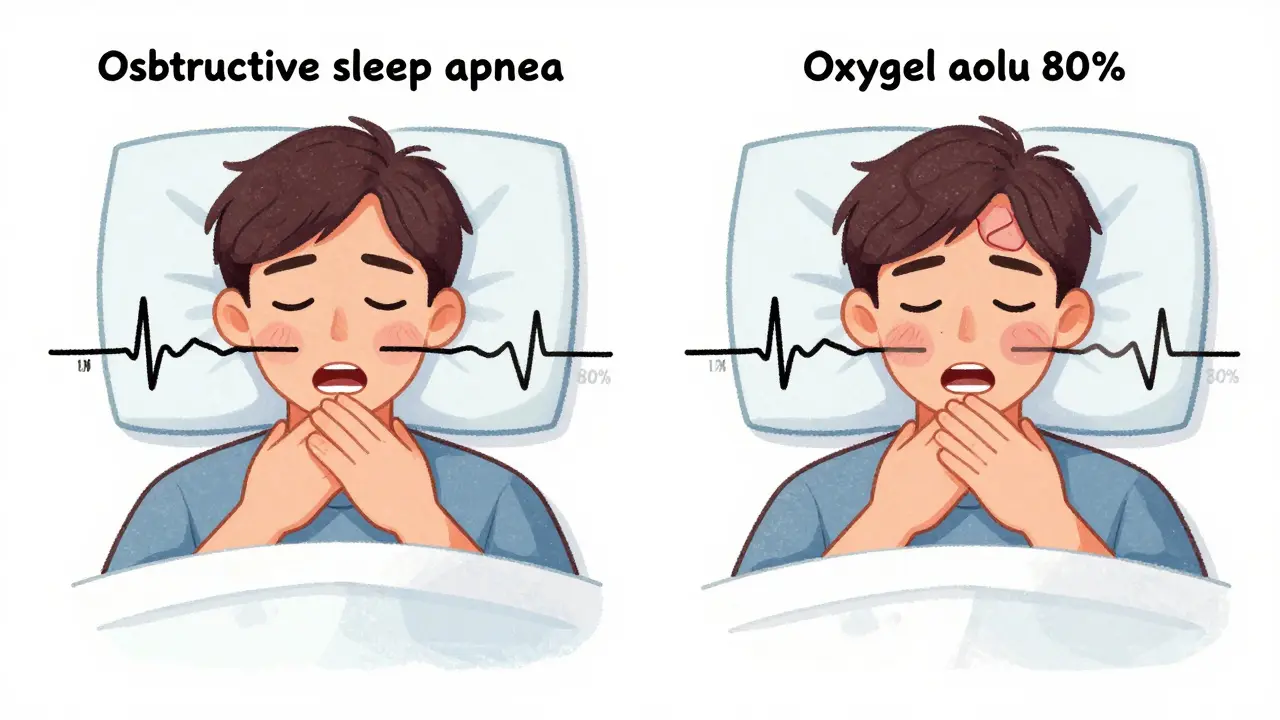
There are two main kinds of sleep apnea: obstructive and central. Opioids worsen both. Obstructive sleep apnea (OSA) happens when throat muscles relax too much and block the airway. Opioids relax those muscles even more. Research shows opioids reduce the pressure needed to keep the airway open by 2 to 4 cm H₂O. That might sound small, but in sleep, it’s enough to cause repeated collapses. People on opioids with OSA are 3.7 times more likely to experience oxygen saturation below 80% during sleep than those with OSA alone. Central sleep apnea (CSA) is even more alarming. It’s not caused by a blocked airway-it’s caused by the brain forgetting to tell your body to breathe. Opioids directly suppress the brain’s breathing centers. The medullary pre-Bötzinger complex and the Kölliker-Fuse nucleus, two key areas for rhythm generation, get dulled by opioid binding. Polysomnography studies show that chronic opioid users have central apnea indices (CAI) of 10 to 15 events per hour. For comparison, non-users average just 2 to 5. With methadone doses over 100 mg/day, 65% of patients have CAI above 20. That means they stop breathing over 20 times every hour while asleep.The Numbers Don’t Lie
The data is overwhelming:- 71% of chronic opioid users have moderate-to-severe sleep apnea (AHI ≥15 events/hour).
- 46% have severe sleep apnea (AHI ≥30 events/hour).
- 80% of long-term opioid users show signs of central sleep apnea (CAI ≥5 events/hour).
- Each 10 mg increase in morphine equivalent daily dose (MEDD) raises AHI by 5.3%.
- Methadone carries the highest risk-4.2 times more likely to cause severe apnea than other opioids.
Who’s at Highest Risk?
Not everyone on opioids develops this problem-but some are far more vulnerable:- Those on doses over 50 MEDD (morphine equivalent daily dose)
- People with a BMI over 30 (obesity increases airway collapse risk)
- Anyone with a history of snoring, daytime sleepiness, or witnessed apneas
- Patients on methadone or high-dose oxycodone
- Those with pre-existing sleep apnea who haven’t been treated
What Happens If It’s Left Untreated?
Ignoring this issue can have fatal consequences. The synergy between opioids and sleep apnea doesn’t just cause poor sleep-it increases the risk of sudden cardiac arrest, stroke, and death during sleep. Dr. Kingman P. Strohl of Case Western Reserve University called it a “perfect storm for respiratory compromise.” In patients with both conditions, mortality rates may double compared to those with either condition alone. One patient in a 2022 case report nearly died after being prescribed oxycodone for back pain. He had undiagnosed OSA. Within weeks, he started waking up gasping, his wife noticed he stopped breathing for 20 seconds at a time, and his oxygen levels dropped to 72% overnight. He didn’t seek help until he passed out once while sitting up watching TV. A sleep study confirmed severe apnea. Once he started CPAP, his oxygen levels stabilized, and his daytime alertness improved dramatically.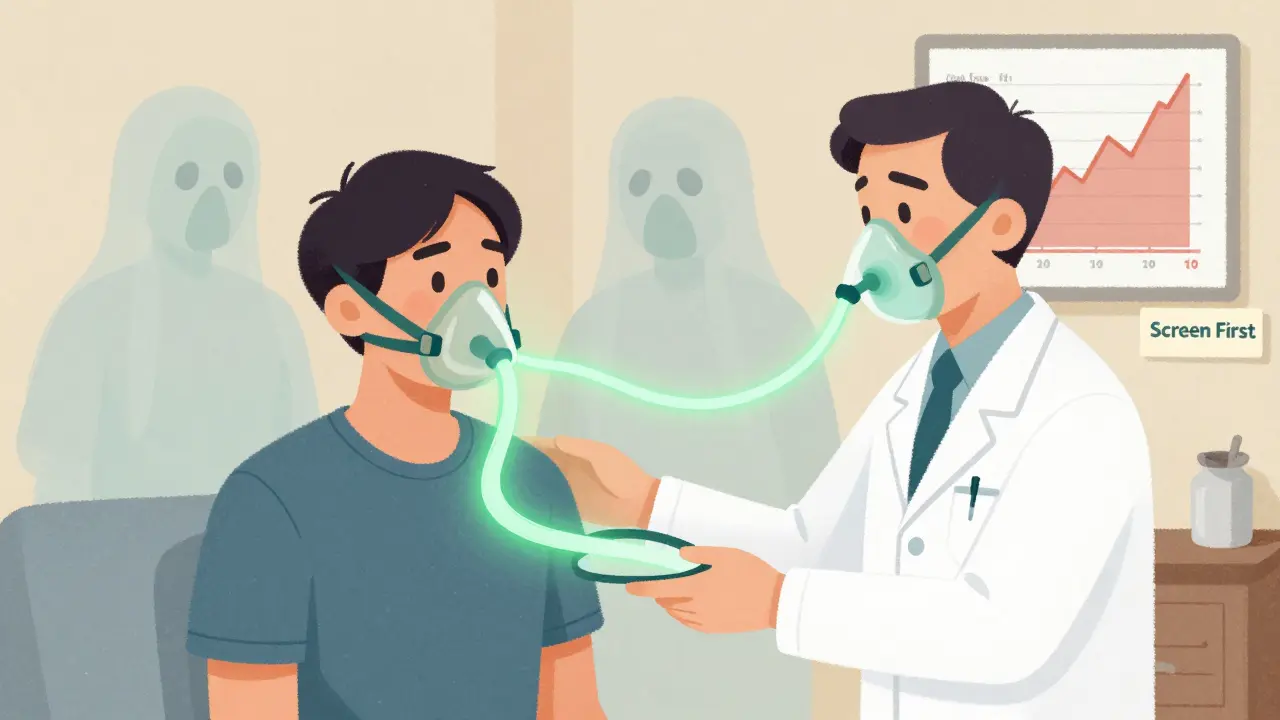
What Can Be Done?
The good news? This problem is manageable-if caught early.- Polysomnography (sleep study) is the gold standard. It’s the only way to confirm central apnea and measure oxygen drops.
- CPAP therapy remains first-line treatment for OSA. But adherence is low-only 58% of opioid users stick with it, compared to 72% of others. Why? Opioids cause brain fog, drowsiness, and reduced motivation. Some patients find masks uncomfortable because they’re too tired to adjust.
- Opioid rotation or dose reduction can help. Switching from methadone to buprenorphine, for example, reduces respiratory depression risk. Cutting daily dose by 25% often improves breathing patterns.
- Positional therapy (sleeping on your side) helps if OSA is the main issue.
- Acetazolamide is being tested in clinical trials (NCT06043830) as a non-CPAP option. Early results show a 35% reduction in apnea events with 500 mg daily. It stimulates breathing by making the blood slightly more acidic.
- Home sleep tests like the Nox T3 Pro, FDA-cleared in January 2023, are now validated for opioid users. They’re faster, cheaper, and easier than lab studies.
The Future: Better Screening, Better Treatments
The NIH is tracking 1,200 patients in the Opioid Sleep Apnea Registry (NCT04892105) to find genetic markers that predict risk. Early findings suggest people with certain PHOX2B gene variants have over three times the risk of severe central apnea on opioids. This could one day lead to genetic screening before prescribing. Pharmaceutical companies are also exploring drugs like cebranopadol-opioid-like painkillers that don’t depress breathing as much. But those are still years away. Right now, the most urgent step is screening. If you’re on opioids for more than a few weeks, ask your doctor: “Could my breathing be affected while I sleep?” If you snore, feel exhausted during the day, or wake up gasping, don’t wait. Get tested. The tools exist. The risk is real. And for many, the solution is simple: a mask, some air pressure, and a sleep study.Can opioids cause sleep apnea, or do they just make it worse?
Opioids don’t always cause sleep apnea from scratch, but they dramatically worsen it. In people without prior sleep apnea, opioids can trigger central sleep apnea by suppressing the brain’s breathing signals. In those who already have obstructive sleep apnea, opioids make airway collapse worse and reduce the body’s ability to recover from breathing pauses. The result is a combined, more dangerous form of apnea.
Is it safe to use CPAP if I’m on opioids?
Yes, CPAP is not only safe-it’s often life-saving. CPAP keeps the airway open and prevents oxygen drops. While opioids reduce the brain’s drive to breathe, CPAP mechanically supports breathing, so your body doesn’t have to rely on its own weakened signals. Many patients on opioids see dramatic improvements in oxygen levels and sleep quality once they start using CPAP consistently.
Do all opioids carry the same risk?
No. Methadone carries the highest risk for causing central sleep apnea, followed by high-dose oxycodone and hydromorphone. Buprenorphine, on the other hand, has much lower respiratory depression effects and is often recommended as a safer alternative for patients with sleep apnea. The dose matters too-each 10 mg increase in morphine equivalent daily dose raises apnea risk by 5.3%.
Should I stop taking opioids if I have sleep apnea?
Never stop opioids abruptly without medical supervision. Sudden withdrawal can be dangerous. Instead, talk to your doctor about combining CPAP or other treatments with a gradual dose reduction plan. In some cases, switching to a less respiratory-depressant opioid like buprenorphine can improve breathing without losing pain control. The goal is to manage both conditions together, not to eliminate one at the cost of the other.
How do I know if I have sleep apnea from opioids?
Signs include waking up gasping for air, chronic daytime fatigue, morning headaches, difficulty concentrating, or being told by a partner that you stop breathing during sleep. If you’re on opioids and have these symptoms, ask for a sleep study. Home tests like the Nox T3 Pro are now validated for opioid users and can detect apnea with 92% accuracy. Don’t assume it’s just aging or stress-this is a treatable medical condition.
What to Do Next
If you’re on long-term opioids:- Ask your doctor for a sleep apnea screening if you haven’t had one.
- Track symptoms: Do you wake up tired? Do you snore? Have you been told you stop breathing?
- If you have a sleep study scheduled, bring your opioid dosage list.
- If you’re already using CPAP, make sure it’s set correctly-opioid users often need higher pressure settings.
- Don’t ignore symptoms. This isn’t normal. It’s not just “getting older.” It’s a medical emergency waiting to happen.
It’s wild how something as routine as taking pain medication can quietly unravel your most basic biological functions. I never thought about breathing while asleep until I read this. The idea that opioids suppress the brainstem’s automatic signals is terrifying-but also so logical once you know it. We treat pain like it’s the only thing that matters, but the body doesn’t work in silos. Your lungs don’t take a vacation just because your back hurts. This isn’t just a medical issue-it’s a human one. And we’re failing people by not screening before prescribing.
I’ve seen friends on long-term opioids who just accept fatigue as part of life. ‘I’m old now,’ they say. No, you’re hypoxic. And that’s fixable. A CPAP machine isn’t a punishment-it’s a lifeline. Imagine sleeping through the night without your body screaming for air. That’s not a luxury. That’s dignity.
Of course the government and pharma don’t want you to know this. They’re too busy pushing opioids as ‘safe’ while quietly stacking up bodies in sleep studies. This is the next big opioid scandal-just buried under medical jargon and lazy doctors. You think they’re helping? They’re profit-driven enablers. And now they’re selling CPAP machines like they’re miracle cures instead of band-aids on a bullet wound. Wake up. This was planned.
In my country, we say, ‘The body speaks when the mind is silent.’ This post reminds me of that. We often overlook the quiet suffering-the nights spent gasping, the mornings too tired to rise. Pain is real, yes. But so is the cost of treating it without seeing the whole picture. I hope more doctors here learn to ask: ‘Do you wake up breathing?’ before writing another script. Compassion isn’t just about easing pain-it’s about preserving life.
I find it deeply concerning that this information is only now gaining traction. The scientific community has known about opioid-induced central apnea for over a decade. Why is public awareness lagging so far behind clinical evidence? This is not an isolated phenomenon. It is a systemic failure of medical education, regulatory oversight, and institutional accountability. One must question the ethics of continuing to prescribe high-dose opioids without mandatory polysomnography. It is indefensible.
I’m so glad someone finally said this out loud. My mom’s on oxycodone for her arthritis and she’s been snoring like a chainsaw for years. We thought it was just ‘old age’ or stress. Then one night I saw her stop breathing for 30 seconds. I screamed, shook her, she woke up confused. I didn’t know what to do. We went to the doctor and they laughed-said ‘everyone snores.’ I cried in the parking lot. This article? It’s the first thing that made me feel like I wasn’t crazy. CPAP changed everything. She sleeps like a baby now. Don’t wait until it’s too late. Ask for the test. Even if they roll their eyes. You’re not being dramatic-you’re being smart.
Also-methadone is the worst. My cousin’s on it. He’s got a CAI of 28. He doesn’t even know. Please, if you’re on methadone, get tested. Now.
So opioids are bad for sleep. Wow. Groundbreaking. Next you’ll tell me smoking causes cancer. This is why we can’t have nice things. People take pills because they’re lazy. If you can’t handle pain without drugs, maybe you should’ve lifted more weights in high school. Stop making everything a medical emergency. I’m tired of being told to get a sleep study because I took a painkiller. Get over it.
I just want to say-this isn’t just about opioids. It’s about how we treat chronic pain as a problem to be solved with chemicals instead of a signal to be understood. I’ve been on opioids for 7 years. I didn’t know I had apnea until my wife forced me to the sleep clinic. I thought I was just ‘tired.’ Turns out I was dying slowly every night. CPAP felt ridiculous at first. But now? I wake up feeling like a human again. I’m not saying this to make you feel bad. I’m saying this because I wish someone had told me earlier. You’re not weak for needing help. You’re brave for asking.
Just to clarify a common misconception: CPAP works even with opioid-induced central apnea because it prevents airway collapse and maintains pressure gradients that stimulate respiratory drive indirectly. It doesn’t fix the brain’s signal, but it buys time. For patients with mixed apnea (obstructive + central), CPAP with backup rate (ASV) is often more effective. Also-acetazolamide isn’t just experimental. It’s been used off-label for decades in high-altitude sleep apnea. The trial is just formalizing what we already see clinically.
And yes-buprenorphine is a game-changer. Lower respiratory depression, less euphoria, and it’s a partial agonist. If you’re on >50 MEDD and have apnea, switching to buprenorphine alone can reduce AHI by 40-60%. It’s not magic, but it’s science.
The assertion that opioid-induced respiratory depression is under-recognized is a product of ideological bias masquerading as clinical insight. The data cited is cherry-picked from observational studies with high confounding variables. The mortality risk increase cited is not statistically significant when adjusted for comorbidities such as obesity, age, and concurrent benzodiazepine use. Furthermore, the suggestion that routine polysomnography should precede opioid prescribing is logistically unfeasible and economically unsustainable. This is fearmongering dressed as public health advocacy.
I’ve been on methadone for 12 years. I didn’t know I had apnea until my oxygen monitor beeped during a sleep study. I thought I was just ‘sleeping deeply.’ Turns out I was shutting down. Every night. For years. I cried when they told me. Not because I was scared-but because I felt so alone. No one ever asked. Not my pain doctor. Not my therapist. Not even my sister, who slept next to me. We’re taught to suffer quietly. But your breath doesn’t. It screams. And if you’re listening, it can save you. I’m on CPAP now. I’m not cured. But I’m alive. And that’s more than I can say for the last decade.
If you’re reading this and you’re on opioids? Please. Get tested. Even if you think you’re fine. Your breath doesn’t lie.
Oh wow, so the solution to opioid-induced apnea is… a mask? That’s the big reveal? I’m shocked. Next you’ll tell us that eating vegetables prevents scurvy. Meanwhile, people are getting prescribed 120mg of morphine equivalents and told to ‘just sleep better.’ Like that’s a choice. This isn’t medicine. It’s a corporate game of Jenga and we’re the block that keeps getting pulled.
Screen before you prescribe. That’s it. No need for panic. No need for drama. Just ask the questions. Snoring? Gasping? Daytime tired? Done. Sleep study. Done. CPAP or dose change. Done. Simple. Effective. Why isn’t this standard? Because doctors are busy. But busy isn’t an excuse for negligence. Do the thing. It’s not hard.
my dr told me to get a sleep study after i brought up how tired i was. i thought he was joking. turns out i had acai of 18. cpap saved my life. no cap. i used to nod off at red lights. now i drive like a normal person. also-methadone is the devil. switch to buprenorphine if you can. it’s a game changer.
There is a profound philosophical shift needed here: from viewing pain as an enemy to be conquered, to recognizing it as a messenger. Opioids silence the messenger, but they do not resolve the message. Sleep apnea is not a side effect-it is a consequence of misalignment. The body is not malfunctioning. It is resisting. When we force it to sleep while its respiratory centers are chemically subdued, we create a war within. The mask is not a cure-it is a truce. And truces, however necessary, are temporary. The real healing begins when we ask: why was this silence demanded in the first place?
India has one of the highest rates of untreated sleep apnea in the world. And yet, here we are-prescribing opioids like candy. No screening. No education. No follow-up. I’ve seen patients on 150mg MEDD with AHI >40 and zero awareness. They think fatigue is normal. They think snoring is ‘just how men sleep.’ This isn’t medical negligence. It’s cultural ignorance. We need to teach people: if you’re on opioids and you’re tired, it’s not aging. It’s your brain forgetting to breathe. And that’s not okay.
Also-acetazolamide works. I’ve used it off-label for years. 250mg twice a day. Cheap. Effective. No mask needed. Why isn’t this in guidelines? Because nobody’s pushing it. But I am. Try it. You won’t regret it.