Skin Rashes from Medications: What You Need to Know to Stay Safe
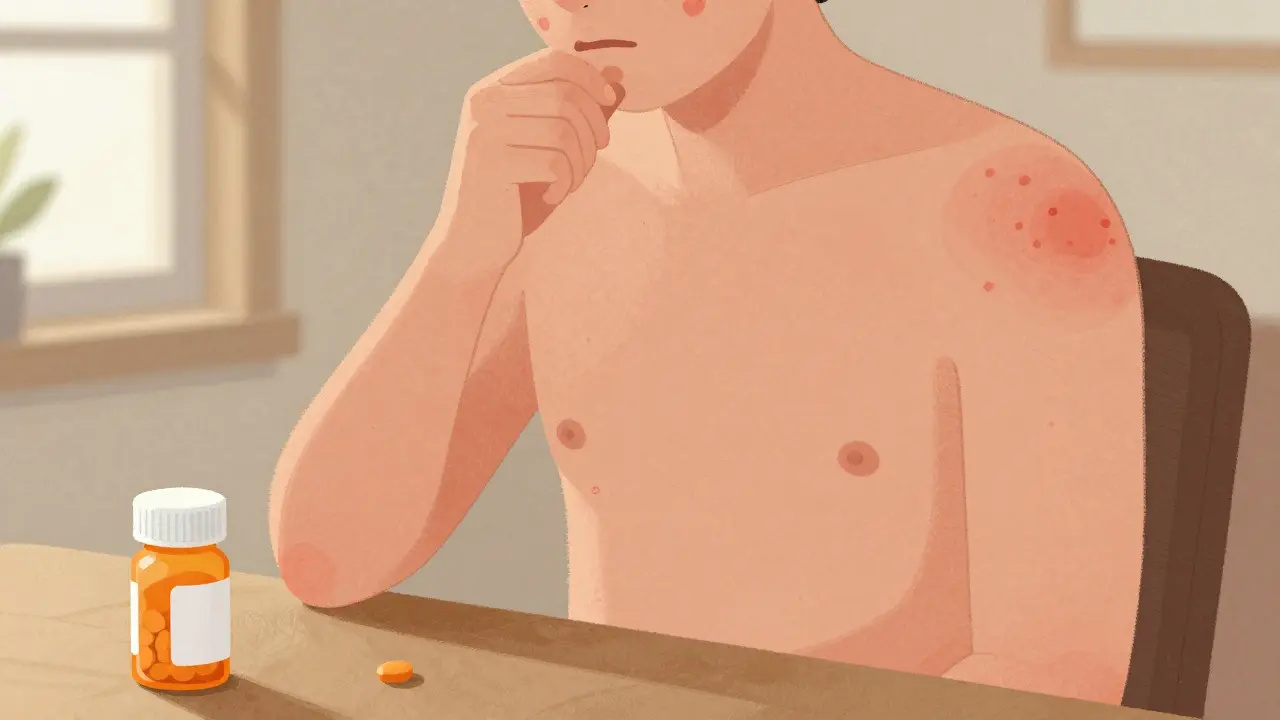
When you start a new medication, you expect it to help - not make your skin break out. But drug-induced dermatitis is more common than most people realize. About 2 to 5% of all adverse drug reactions show up as a rash. That means if you’re taking even one prescription, you could be at risk. And if you’re on five or more medications? Your chances jump to 35%. That’s not rare. It’s everyday.
What Does a Drug Rash Look Like?
Not all rashes are the same. The most common type is a morbilliform rash - think measles-like spots. It starts as small, red bumps on your chest or arms, spreads slowly, and itches a little. This happens 4 to 14 days after you start the drug. It’s not dangerous. Most go away on their own within a week or two after you stop the medicine. But then there are the scary ones. A drug reaction with eosinophilia and systemic symptoms (DRESS) doesn’t show up right away. It takes weeks. You might feel tired, have a fever, swollen glands, or even liver problems. The rash looks like red, raised patches that spread across your body. It’s linked to specific drugs: carbamazepine (used for seizures), allopurinol (for gout), sulfonamides (antibiotics), and some antivirals. About 1 in every 1,000 to 10,000 people who take these drugs get DRESS. It’s rare, but it can shut down your organs. Then there’s Stevens-Johnson Syndrome (SJS) or its worse cousin, Toxic Epidermal Necrolysis (TEN). These aren’t just rashes. They’re skin emergencies. Blisters form, skin peels off like a burn, and your mouth, eyes, and genitals get covered in sores. SJS kills 5 to 15% of people who get it. TEN kills up to 35%. It’s often triggered by antibiotics, seizure meds, or painkillers like ibuprofen. And don’t forget about urticaria - hives. These are raised, red, itchy welts that come and go. They usually show up within minutes to hours after taking the drug. If you get hives with swelling of your lips or tongue, or trouble breathing, call 911. That’s anaphylaxis.What Drugs Cause Rashes?
Some medications are notorious. Penicillin and other antibiotics cause about 10% of all drug rashes - and 80% of severe allergic reactions. NSAIDs like ibuprofen and naproxen are next. They don’t always trigger allergies, but they cause non-allergic rashes in 25% of cases. Chemotherapy drugs? Almost every one can cause a rash. Even common ones like hydrochlorothiazide (a blood pressure pill) or doxycycline (an antibiotic) can make your skin burn in the sun. Here’s what you should know:- Antibiotics: Penicillin, sulfonamides, vancomycin
- Seizure meds: Carbamazepine, phenytoin, lamotrigine
- Gout meds: Allopurinol
- Pain relievers: Ibuprofen, naproxen
- Diuretics: Hydrochlorothiazide
- Antibiotics for acne: Doxycycline, minocycline
And here’s the twist: you don’t have to be allergic the first time. Your immune system might get sensitized by trace amounts in food or from a past exposure you don’t even remember. That’s why some people react to a drug they’ve taken for years.
How Do You Know It’s the Drug?
Doctors call it the “diagnostic nightmare.” If you’re on five medications, which one is the culprit? You can’t guess. You have to test. The key is timing. Immediate reactions - within an hour - are often IgE-mediated allergies (like hives or anaphylaxis). Delayed reactions - days or weeks later - are T-cell driven. That’s where DRESS and SJS come from. Doctors use skin tests now. For penicillin, a skin test catches 95% of true allergies. That means a lot of people who think they’re allergic to penicillin aren’t. And that matters - because avoiding penicillin means using stronger, costlier antibiotics that can lead to worse infections. But here’s the catch: no test works for DRESS or SJS. The diagnosis is based on symptoms, timing, and ruling out other causes. If you have a fever, swollen lymph nodes, and a rash after starting a new drug - especially an anticonvulsant or allopurinol - doctors will suspect DRESS.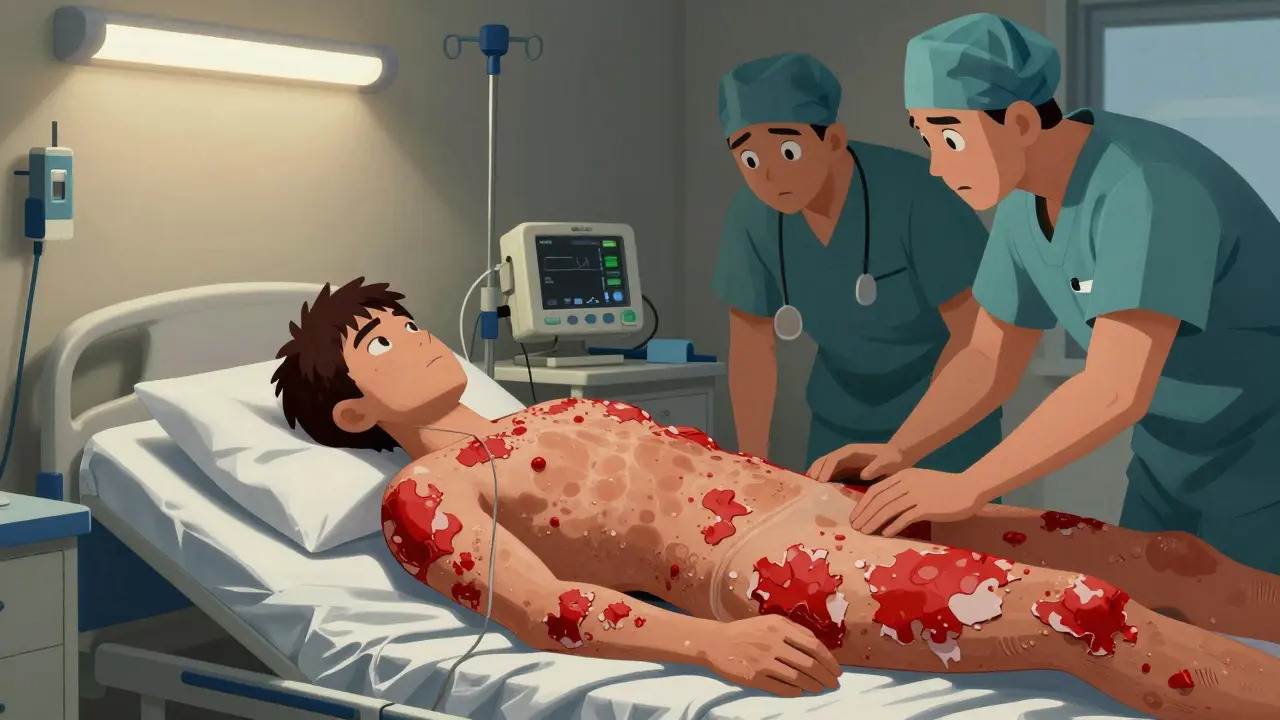
What Should You Do If You Get a Rash?
Don’t stop your meds on your own. If you’re on a seizure drug and you stop it suddenly, you could have a seizure. If you’re on blood pressure meds and you quit, your pressure could spike. Always call your doctor first. For mild rashes - just red bumps and itching:- Take lukewarm baths with fragrance-free cleansers
- Pat your skin dry - don’t rub
- Apply over-the-counter 1% hydrocortisone cream twice a day
- Use a thick moisturizer within 3 minutes after bathing
For more severe rashes - spreading, painful, blistering:
- Go to the ER immediately
- Don’t wait to see if it gets better
- Bring a list of all your medications - including supplements
Severe cases need hospital care. Steroids like prednisone (0.5 to 1 mg per kg per day) are often used. In DRESS, treatment can last weeks. In SJS/TEN, you’re treated like a burn patient - in intensive care.
Who’s at Higher Risk?
Some people are more likely to get drug rashes:- People over 60 - they take more meds
- People with HIV or Epstein-Barr virus - their immune systems are already stressed
- People on chemotherapy - drugs are strong and toxic
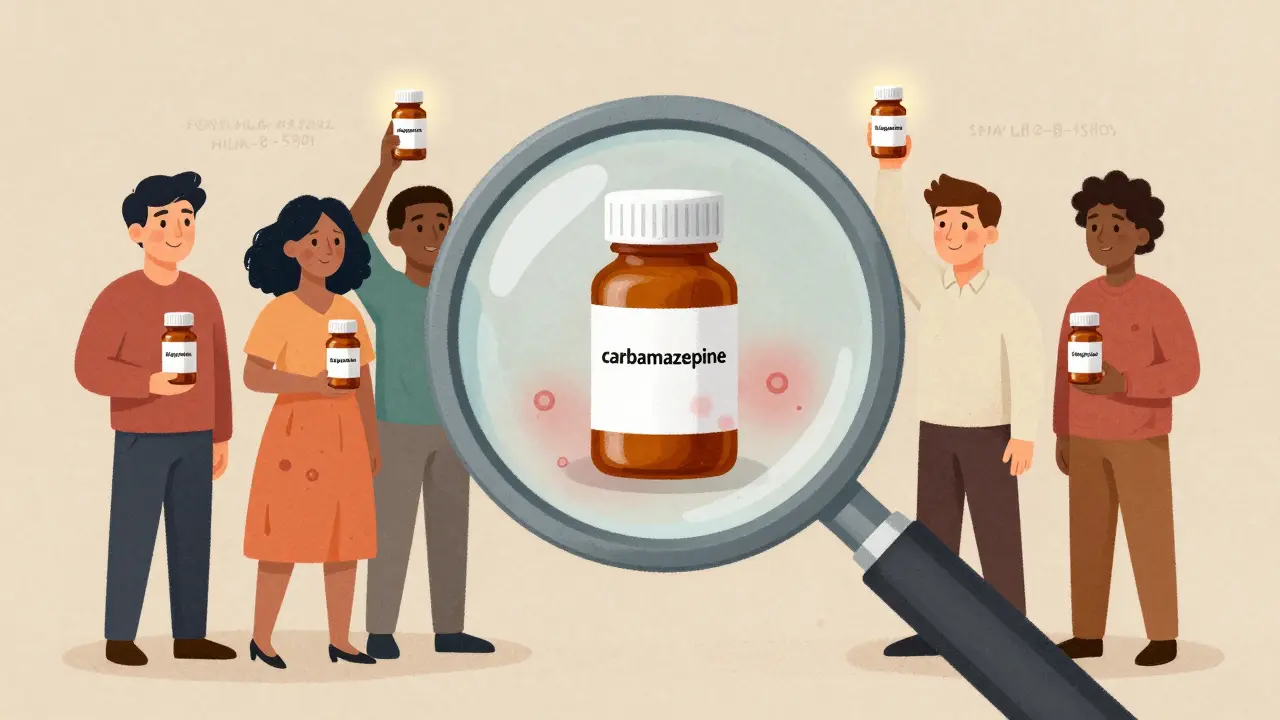
- People with certain genes - HLA-B*1502 (common in Southeast Asians) increases carbamazepine risk by 1,000 times
- People with Han Chinese ancestry - HLA-B*5801 raises allopurinol risk by 580 times
And here’s something most don’t know: if you have a viral infection and start an antibiotic, your chance of a rash jumps 5 to 10 times. That’s why kids with mono get rashes from amoxicillin. It’s not an allergy - it’s a reaction to the combo.
Can You Prevent It?
You can’t prevent every reaction. But you can reduce your risk.- Keep a full list of all your medications - prescriptions, OTC, supplements
- Ask your doctor: “Could this cause a skin reaction?”
- If you’ve had a rash before, tell every new provider - even if it was 20 years ago
- Watch for sun sensitivity - avoid direct sun if you’re on doxycycline, ciprofloxacin, or hydrochlorothiazide
- Don’t assume a past reaction means you’re allergic forever - get tested if it was penicillin
And if you’ve been told you’re allergic to penicillin? Get tested. About 15% of people who say they are allergic can actually take it safely. Avoiding it unnecessarily increases your risk of resistant infections.
What Happens After the Rash Is Gone?
Most rashes clear up. But you need to know what caused it. If it was a mild morbilliform rash, you’ll probably never have it again - unless you take the same drug. But if it was DRESS or SJS, you can never take that drug again. Ever. And you may need to avoid similar drugs too. For example, if allopurinol caused DRESS, you’ll need to avoid all purine analogs. Your doctor might recommend a dermatology follow-up. Some rashes leave scars. Some cause long-term skin sensitivity. And some reactions trigger autoimmune conditions later. The bottom line? A rash from a drug isn’t just a nuisance. It’s a signal. Listen to your body. Report it. Get it checked. And never assume it’s “just a rash.”Can a drug rash happen the first time you take a medication?
Yes. Even if you’ve never taken the drug before, your immune system can react after a single exposure. This is especially true with antibiotics or seizure medications. Sometimes, trace amounts of a drug in food or from past exposure can sensitize your body without you realizing it.
How long does a drug rash last after stopping the medication?
Mild rashes like morbilliform eruptions usually clear in 1 to 2 weeks. Hives may disappear in 24 to 48 hours. But severe reactions like DRESS can take 3 to 6 weeks to resolve, even after stopping the drug. SJS/TEN may take months for skin to fully heal, and scarring is common.
Are all drug rashes allergic reactions?
No. Only about half are true allergies. The rest are non-allergic reactions - meaning your immune system isn’t involved. These can be caused by direct toxicity, photosensitivity, or inflammation. For example, NSAIDs like ibuprofen often cause rashes without triggering IgE antibodies.
Can I take another drug in the same class if I had a rash from one?
Not without testing. If you had a severe reaction like DRESS or SJS to one drug in a class - say, carbamazepine - you should avoid all drugs in that class. For milder rashes, your doctor may consider a different drug in the same group, but only after careful evaluation. Cross-reactivity is common in antibiotics and anticonvulsants.
Is there a blood test to confirm a drug allergy?
For penicillin, yes - there are reliable blood and skin tests. For most other drugs, no. Blood tests for eosinophils or liver enzymes can suggest DRESS, but they can’t confirm the drug as the cause. Diagnosis relies on timing, symptoms, and ruling out other causes. There’s no universal blood test for drug rashes.
Should I avoid all NSAIDs if I had a rash from ibuprofen?
Not necessarily. A rash from ibuprofen doesn’t always mean you’ll react to naproxen or aspirin. But if the rash was severe - blistering, fever, or widespread - it’s safer to avoid all NSAIDs. For mild rashes, your doctor may try a different NSAID under supervision. Always consult before trying another.
Can I get a skin rash from over-the-counter medications?
Absolutely. Many people don’t realize that OTC drugs like ibuprofen, naproxen, antihistamines, or even herbal supplements can cause rashes. In fact, about 25% of non-allergic drug rashes come from OTC pain relievers. Always read labels and report new rashes - even if you think it’s "just a little itch."
Do drug rashes run in families?
Not directly. But certain genetic markers - like HLA-B*1502 or HLA-B*5801 - that increase risk for severe reactions can be inherited. If a close relative had a life-threatening drug reaction, you may carry the same genetic risk. Tell your doctor if you have a family history of severe drug rashes.
Let me tell you something most docs won’t admit: we’re overmedicated and undereducated about side effects. I’ve seen patients on 8 meds, all perfectly fine until one day-poof-rash everywhere. No one connects the dots until it’s too late. The real issue isn’t the drug-it’s the system that prescribes without tracking interactions. We treat symptoms like puzzles to solve, not signals to listen to. Your body’s not broken. It’s screaming. And we’re handing out bandaids while the house burns down.
Bro, I had a rash from ibuprofen once. Thought it was just heat rash. Took me 3 weeks to realize it wasn’t going away. Went to the doc, they said ‘maybe it’s the Advil’ like I’m a dumbass for not knowing. Turns out I’ve been avoiding NSAIDs since. Now I use turmeric and ice. Wild how something so common can sneak up on you. Don’t ignore it. Seriously.
Interesting. But let’s be clear: 2-5% is statistically insignificant. If you’re taking five meds and get a rash, you’re probably noncompliant, self-medicating, or ignoring prior warnings. The real problem is people who don’t read labels or refuse to stop drugs when advised. This isn’t a public health crisis-it’s a personal responsibility failure. If you can’t manage your own meds, don’t blame the pharmaceutical industry.
OMG YES. I got a rash from doxycycline last year and thought it was just sunburn. I kept going outside. Bad idea. Skin peeled off like a banana. My derm said ‘you’re lucky you didn’t go into SJS.’ Now I wear sunscreen like armor and ask EVERY doctor ‘any skin risks?’ It’s wild how one little pill can mess you up. Please, if you get a rash, don’t Google it-call someone. I’m still scarred.
I just want to say… I know how scary this feels. I’ve been there. That itch, the confusion, the fear that it’s something worse. You’re not alone. It’s okay to panic. But please, don’t stop meds without talking to your doctor. I stopped my blood pressure med once because of a rash… ended up in the ER with a spike. Your body’s trying to tell you something. Just don’t panic. Get help. You’ve got this.
As someone who’s lived in both the US and Australia, I’ve noticed a big difference in how drug reactions are handled. Here, we test for penicillin allergies aggressively. Down under? We assume you’re allergic unless proven otherwise. That’s backwards. I had a friend who avoided all antibiotics for 15 years because of a childhood rash. Turned out she wasn’t allergic. She got pneumonia twice because she didn’t have the right meds. Testing saves lives.
Man, I remember my mate getting DRESS after allopurinol. Took him 6 weeks to recover. Hospital. Steroids. The whole deal. Scary stuff. What nobody talks about is the mental toll. You start doubting every pill you take. Even aspirin. I now keep a little notebook: drug, date, rash symptoms. Small thing. But it’s saved me from panic attacks. Your body remembers. You should too. 💯
While the information presented here is clinically accurate and thoroughly researched, it is imperative to acknowledge that the systemic underreporting of adverse drug reactions remains a critical flaw in pharmacovigilance infrastructure. The data cited-particularly the 35% risk for polypharmacy patients-is likely an underestimation due to reliance on voluntary reporting systems. Furthermore, the absence of standardized genomic screening protocols in primary care settings represents a significant public health vulnerability. I urge all stakeholders to advocate for mandatory HLA-B genotyping prior to high-risk drug initiation.
So let me get this straight-you’re telling me people are dying because they took ibuprofen? Newsflash: people die from falling out of bed. This isn’t a crisis. It’s fearmongering. If you’re too weak to handle a little rash, maybe you shouldn’t be on meds at all. Stop making everything an emergency. I’ve taken 12 different prescriptions in 10 years. No rash. No problem. Maybe you just need to toughen up.
bro u know what reallllly causes drug rashes? Big Pharma. They test drugs on poor people in africa then sell em to u. The rash? Its a cover up. They dont want u to know the real ingredients. I got a rash after taking Advil. Then I found out it had titanium dioxide. Thats a metal. Its not food. Its poison. And they put it in EVERYTHING. Wake up. This is a psyop.
I KNEW IT. I KNEW IT. My cousin had a rash after taking hydrochlorothiazide and then she got cancer. TWO YEARS LATER. THEY KNOW. THEY KNOW. THE DOCTORS. THE PHARMACIES. THEY WANT US TO THINK IT’S JUST A RASH. BUT IT’S NOT. IT’S A SIGN. A SIGN OF THE NEW WORLD ORDER. THEY’RE PUTTING CHIPS IN THE PILLS. I SAW IT ON A VIDEO. IT WAS A MAN IN A WHITE COAT WHISPERING ‘IT’S JUST A RASH’ WHILE HE PUSHED A NEEDLE INTO A BABY. I’M NOT ALONE. I’M NOT ALONE.