Shoulder Pain? How to Treat Rotator Cuff Injuries and Bursitis with Effective Rehab
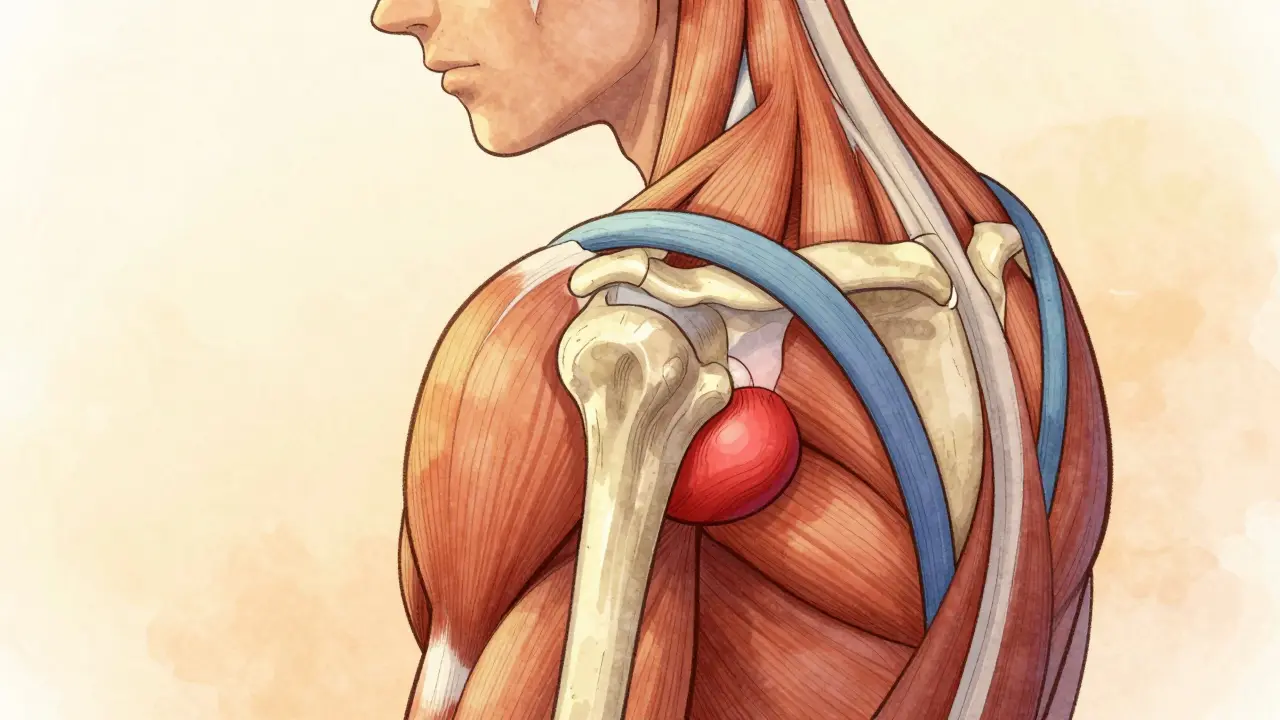
What's really going on in your shoulder?
Over 2 million Americans seek medical help for shoulder pain each year. If you're dealing with that ache or sharp pain in your shoulder, you're not alone. But what's really causing it? Often, it's rotator cuff injury or a condition where the tendons of the shoulder's rotator cuff muscles become inflamed or torn. This is closely related to subacromial bursitis, which is inflammation of the fluid-filled sac (bursa) that cushions the rotator cuff tendons.
Your shoulder is a complex ball-and-socket joint. Four muscles-supraspinatus, the topmost rotator cuff muscle that lifts your arm, infraspinatus, helps rotate your arm outward, teres minor, a small muscle that assists with rotation, and subscapularis, rotates your arm inward-work together to stabilize the glenohumeral joint, the main shoulder joint where the upper arm bone meets the shoulder blade. Above these muscles sits the acromion process, a bony ridge on the shoulder blade. When the subacromial bursa between them gets inflamed, it rubs against the rotator cuff tendons during movement, causing pain.
Common symptoms to watch for
Rotator cuff injuries and bursitis share similar signs. You might notice a painful arc, sharp pain between 60° and 120° of shoulder movement when lifting your arm. Pain often worsens at night, especially if you lie on the affected side. Weakness when reaching behind your back or lifting objects is another red flag. If you feel a dull ache that doesn't go away after rest, it's time to investigate further.
First steps: immediate pain relief
When shoulder pain strikes, start with these simple actions:
- Rest the shoulder for a few days-avoid overhead movements and heavy lifting.
- Apply ice packs for 15-20 minutes, 3-4 times daily, to reduce swelling.
- Take over-the-counter NSAIDs, nonsteroidal anti-inflammatory drugs like ibuprofen (400-600 mg three times daily) to manage pain and inflammation.
- Modify daily activities-like not carrying heavy bags on that side or avoiding sleeping on the affected shoulder.
These steps often ease symptoms within a week. But if pain persists beyond 4-6 weeks, you'll need a more structured plan.
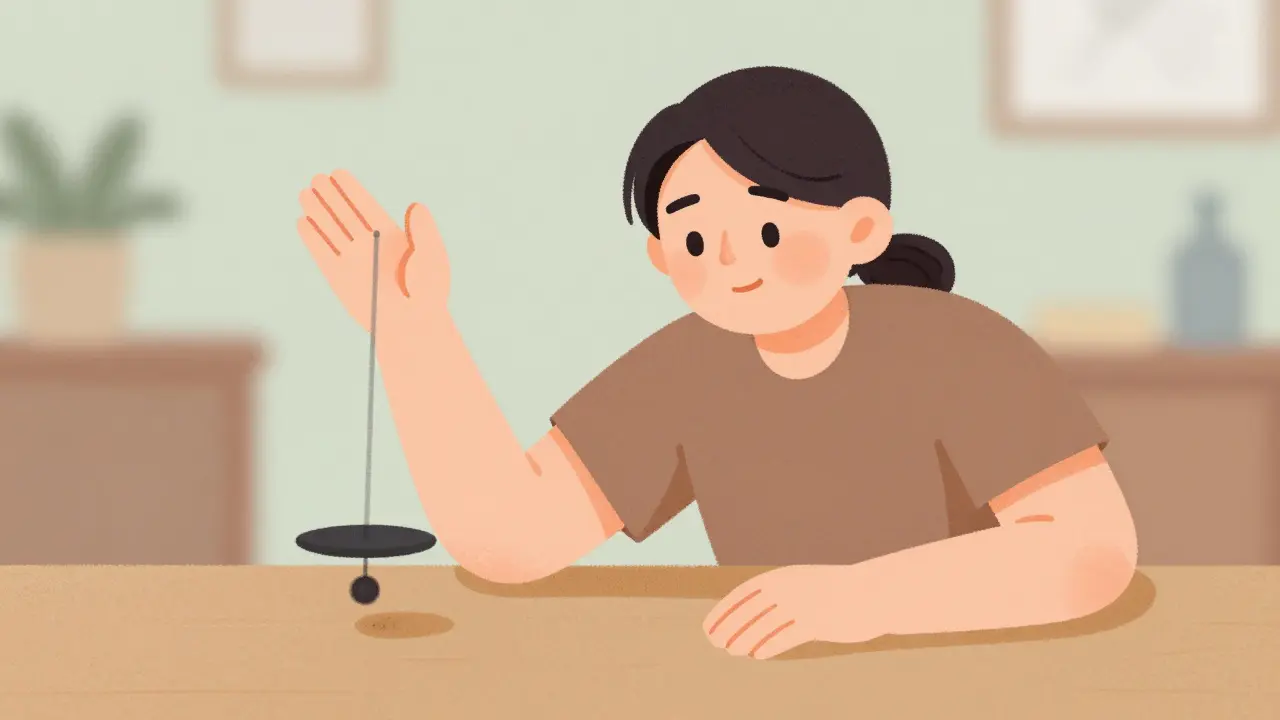
Physical therapy exercises that actually work
Once the acute pain eases, physical therapy becomes key. Here's what experts recommend:
- Pendulum exercises: Lean forward, let the affected arm hang loose. Gently swing it in small circles for 5-10 minutes, three times daily. This helps maintain mobility without straining the shoulder.
- Scapular retractions: Squeeze your shoulder blades together like you're trying to hold a pencil between them. Hold for 5 seconds, repeat 15 times in 3 sets daily. Studies show this speeds up pain relief by 30% compared to focusing only on rotator cuff exercises.
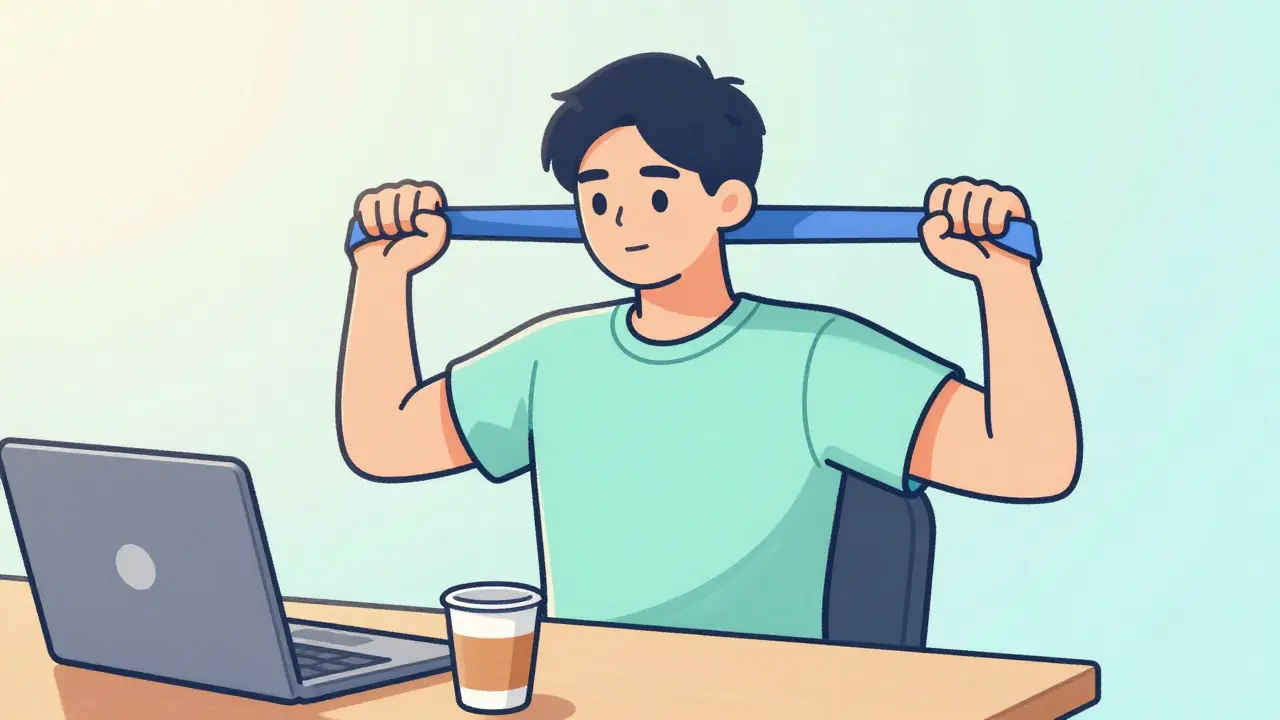
- Resistance band exercises: Use a TheraBand, a flexible resistance band for strengthening to do external rotations. Keep your elbow at your side, rotate your forearm out against the band's resistance. Do 15-20 reps per set, three sets daily. Start with light resistance (30-50% of max effort) to avoid aggravating the injury.
Consistency matters. Patients who do these exercises daily for 8-10 weeks see 68% improvement in pain and function, according to physical therapy clinics.
When injections or surgery might be necessary
If conservative treatments fail after 4-6 weeks, your doctor may suggest corticosteroid injections, ultrasound-guided shots of triamcinolone acetonide (20-40 mg) to reduce inflammation. These provide relief for 65-75% of patients for 4-12 weeks. However, experts limit injections to 2-3 per year due to tendon weakening risks.
Surgery is reserved for cases that don't improve after 3-6 months of non-surgical care. The most common procedure is arthroscopic subacromial decompression, a minimally invasive surgery to remove inflamed bursa tissue and shave down the acromion bone. Modern techniques use 3-4 mm incisions, leading to shorter recovery. But studies show surgery for isolated bursitis without significant tendon tears offers little advantage over physical therapy alone. A 2022 study found no significant difference in shoulder function scores between surgical and non-surgical groups at 12 months.
Long-term prevention tips
To avoid future shoulder issues:
- Strengthen scapular muscles daily: Focus on exercises like scapular retractions and rows. Strong shoulder blades prevent impingement.
- Avoid repetitive overhead motions: Take breaks every hour if your job involves lifting or reaching above shoulder height.
- Use proper lifting technique: Bend at the knees, keep objects close to your body, and avoid twisting.
- Listen to your body: Stop activity if pain exceeds a 5 on a 0-10 scale. Pushing through pain often worsens injuries.
People in high-risk jobs-like construction workers or athletes-have a 32-45% higher chance of shoulder problems. Consistent prevention makes all the difference.
Frequently Asked Questions
Can I still work out with a rotator cuff injury?
Yes, but modify your routine. Avoid overhead presses, bench presses, or any movements that cause pain. Focus on lower body exercises and light core work. Once pain improves, gradually reintroduce shoulder exercises under a physical therapist's guidance. Never push through sharp pain-this can turn a minor injury into a tear.
How long does bursitis take to heal?
With proper treatment, most people see improvement in 4-6 weeks. Full recovery often takes 3-6 months. Factors like age, overall health, and adherence to rehab play a big role. Older adults (over 60) may take longer due to natural tissue changes. Skipping physical therapy or returning to activity too soon can delay healing by weeks or months.
Do corticosteroid injections weaken tendons?
Yes, frequent injections increase tendon weakening risks. Studies show a 8% risk of tendon rupture with more than 3 injections per year. That's why doctors limit them to 2-3 annually. For long-term management, physical therapy is safer and more effective. If you've had multiple injections without relief, it's time to explore other options like platelet-rich plasma (PRP) therapy.
What's the difference between rotator cuff tendinitis and a tear?
Tendinitis is inflammation of the tendon without structural damage. A tear involves a partial or full rupture of the tendon fibers. Symptoms overlap, but tears often cause more weakness and limited movement. MRI scans can confirm tears. Conservative treatment works for 75% of partial tears but only 40% of full-thickness tears in patients over 60. Surgery is usually needed for complete tears.
Can physical therapy prevent surgery?
Absolutely. About 80% of rotator cuff tendinitis and bursitis cases improve with physical therapy alone. Early intervention is key-starting rehab within the first 2 weeks of symptoms reduces surgery needs by 50%. A structured program with scapular stabilization, rotator cuff strengthening, and proper movement patterns addresses the root cause, not just symptoms. Skipping therapy and going straight to surgery often leads to worse outcomes.
Let me tell you about the real cause of shoulder pain.
It's not rotator cuff injuries or bursitis.
It's 5G radiation from cell towers.
The government and Big Pharma are in a secret agreement to cover this up.
They don't want you to know the truth.
Every time you see a doctor talking about physical therapy, they're part of the cover-up.
I've seen studies that prove this, but they're buried in obscure journals.
You should be suspicious of any mainstream medical advice.
The real solution is to avoid cell towers and use natural remedies.
But they don't want you to do that.
It's all about controlling the population.
You need to wake up and see the truth.
They're using the shoulder pain epidemic to push unnecessary surgeries.
The medical establishment is corrupt.
It's time to demand transparency.
There's no scientific evidence linking 5G to shoulder issues. The rotator cuff problems are well-documented and stem from overuse or injury. Physical therapy and proper exercises are the proven methods. Let's focus on what actually works.
Nope not helpful
I've been through this. The scapular retractions and pendulum exercises really helped. Consistency is key. Do them daily and avoid heavy lifting.
Scapular retractions work. 15x3 sets daily. Avoid overhead motions.
This is really helful! ive been using the resistance bands and it's been gr8. keep up the good work!
This advice is amateurish. Real experts know it's all about surgery. Physical therapy is useless for serious cases.
America has the best shoulder treatments other countries dont have this info just follow US guidelines
I agree with the exercises. They really work. Do them consistently.
Do the exercises daily. It works. Trust me!
Meh. Not sure. Maybe it works. I don't know.