Shingles Vaccine: Who Should Get It and When in 2026

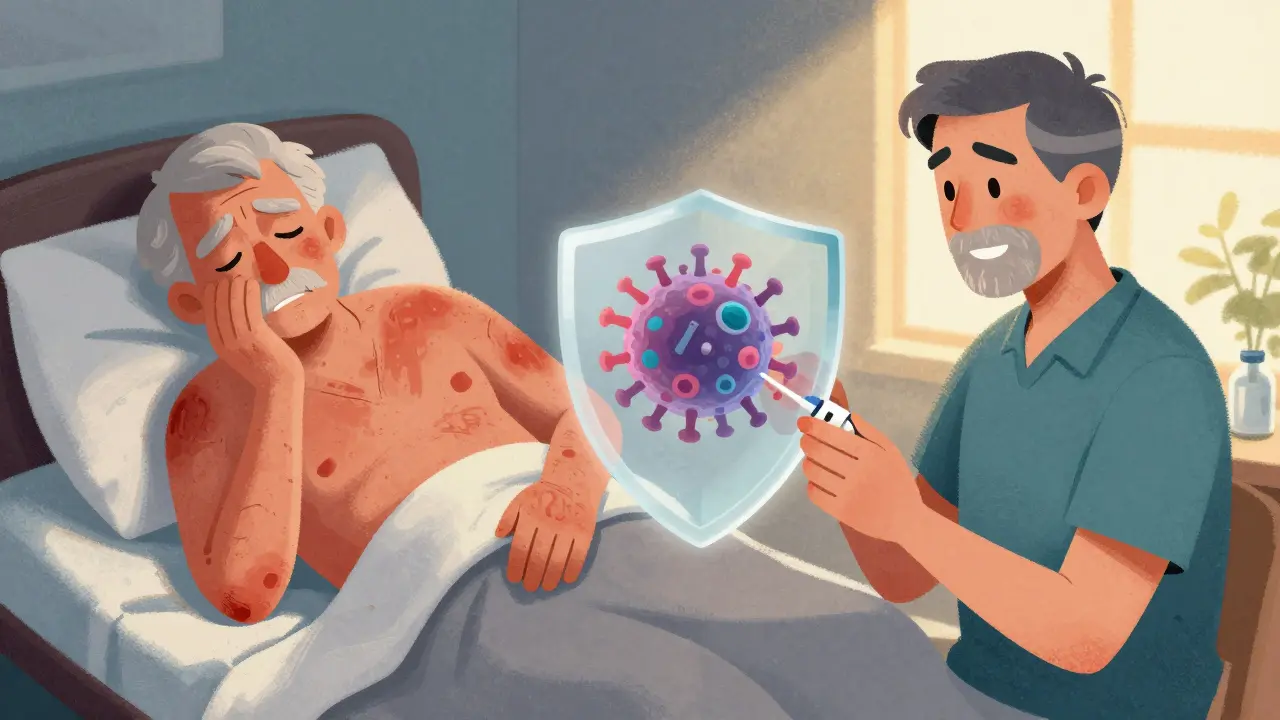
One in three people will get shingles in their lifetime. That’s not a rare chance-it’s a real risk, especially as you get older. Shingles isn’t just a rash. It’s a painful, sometimes long-lasting nerve condition caused by the same virus that gives you chickenpox. And while you might think you’re safe after having chickenpox as a kid, the virus never leaves your body. It hides in your nerves and can wake up decades later. The good news? There’s a vaccine that works better than ever before: Shingrix.
Who Needs the Shingles Vaccine?
If you’re 50 or older, you should get the shingles vaccine. That’s the simple rule from the CDC and every major medical group in the U.S. and Canada. You don’t need to wait until you’re 65. Don’t wait until you’ve had shingles already-even if you have, you can still get the vaccine to prevent another outbreak. The risk doesn’t go away after one episode.
And here’s something many people don’t know: if you’re 19 or older and your immune system is weakened-because of cancer treatment, HIV, organ transplant, or even long-term steroid use-you’re at even higher risk. Shingrix is the only shingles vaccine approved for this group. The old vaccine, Zostavax, was unsafe for people with weakened immunity. Shingrix isn’t a live virus, so it won’t trigger an infection. It’s safe for people on immunosuppressants, including those preparing to start chemotherapy or biologics.
Diabetes? Autoimmune disease? Chronic kidney disease? All of these conditions raise your shingles risk. The American Association of Clinical Endocrinology specifically recommends Shingrix for adults with diabetes, even if they’re under 50. If you have any chronic condition that affects your immune system, talk to your doctor about getting vaccinated sooner rather than later.
When Should You Get It?
Shingrix is a two-dose shot. The first dose can be given anytime after your 50th birthday. The second dose should come 2 to 6 months after the first. That’s the sweet spot for maximum protection. Don’t rush it-waiting too long between doses weakens the immune response. But if you miss the window, don’t panic. Even if it’s been 8 months or a year, just get the second dose. You don’t need to restart the series.
For people with weakened immune systems, the rules are different. The second dose can be given as early as 1 month after the first, as long as you’re not about to start a treatment that will suppress your immune system. If you’re scheduled for chemotherapy or a transplant, get the first dose at least 2 weeks before treatment starts. If you’re already on treatment, talk to your doctor about timing. The CDC says it’s still safe to vaccinate during immunosuppression, as long as you’re not actively having a severe infection.
What if you got Zostavax years ago? You still need Shingrix. The CDC says to wait at least 8 weeks after your last Zostavax shot before getting Shingrix. That’s because the old vaccine doesn’t offer lasting protection, and Shingrix is far more effective. You’re not doubling up-you’re upgrading.
How Effective Is Shingrix?
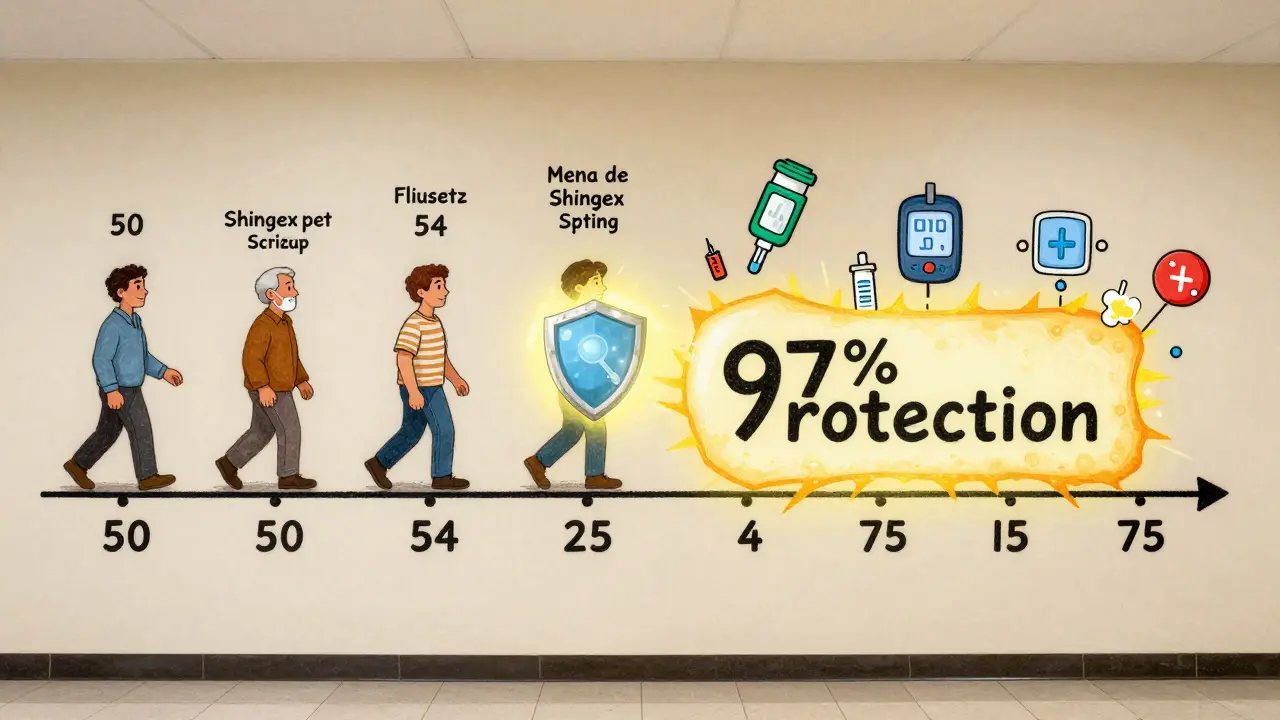
Shingrix is one of the most effective vaccines ever made for adults. In people aged 50 to 69, it prevents shingles in more than 97% of cases. For those 70 and older, it still works at 91%. That’s not a small improvement-it’s a game-changer. The old vaccine, Zostavax, only worked about 50% of the time. Shingrix doesn’t just reduce shingles. It slashes the risk of postherpetic neuralgia (PHN), the nerve pain that can last for months or even years after the rash clears. For people over 70, Shingrix cuts PHN risk by more than 90%.
And it lasts. Data from 2023 shows protection stays above 85% for at least 7 years after the second dose. That’s longer than any other vaccine for adults. Experts believe it could last even longer-we just haven’t had enough time to track it yet. The CDC says no booster is needed right now. If you get both doses, you’re protected for the long haul.
What Are the Side Effects?
Shingrix isn’t a walk in the park. Most people feel something after the shot. About 8 out of 10 people get soreness, redness, or swelling where the shot was given. Half report muscle pain. Nearly 4 in 10 feel tired. One in three gets a headache. Some have chills, fever, or stomach pain. These aren’t rare side effects-they’re normal.
They usually start within a day or two and last 2 to 3 days. That’s why people say, “I felt like I had the flu.” But here’s the key: these symptoms mean your immune system is working. The stronger your reaction, the better your protection. If you had a bad reaction after the first dose, you’ll likely have one after the second. That doesn’t mean you should skip it. In fact, the second dose is where the strongest protection kicks in.
Very few people have serious reactions. Less than 1 in 100,000 have a severe allergic reaction. If you’ve ever had a life-threatening reaction to any vaccine ingredient-like gelatin or polysorbate-you shouldn’t get it. If you’ve had shingles in the last year, wait until you’re fully recovered before vaccinating.
How Much Does It Cost?
Shingrix costs about $185 to $220 per dose in the U.S. in 2026. That’s two doses, so total out-of-pocket could be $370 to $440. But most people pay nothing. Medicare Part D covers it with no copay for all enrollees. Most private insurance plans cover it fully under the Affordable Care Act. If you’re on Medicaid, check your state-coverage varies, but most states cover it for those 50+.
Canada doesn’t have universal public funding for Shingrix yet, but some provinces like Ontario and British Columbia offer it for free to adults 65 and older. Others cover it for high-risk groups. If you’re under 65 and uninsured, look into pharmacy discount programs or patient assistance from GSK. Many pharmacies like Shoppers Drug Mart or CVS offer payment plans.
What About the Future?
There’s a new version of Shingrix in the works-a single-dose shot. GSK started Phase II trials in 2024, and if it works, it could be available by 2028. That would make it much easier for people to complete the series. Right now, about one-third of people never get the second dose. A single shot could change that.
Merck, the maker of Zostavax, is also developing a new vaccine. But so far, nothing has matched Shingrix’s effectiveness. For now, Shingrix remains the gold standard. The American Geriatrics Society now recommends talking about vaccination at age 50, not 65. That’s because shingles risk starts climbing at 50 and doubles by 60. Waiting until 65 means you’re already in the danger zone.
Where Can You Get It?
You don’t need a doctor’s appointment. Pharmacies across Canada and the U.S. offer Shingrix without a prescription. Walk into any major pharmacy-Shoppers Drug Mart, Walmart, CVS, Walgreens, or your local clinic-and ask for the shingles vaccine. Pharmacists are trained to give it. They’ll check your records, ask about allergies, and schedule your second dose if needed.
Some workplaces or community health centers offer vaccination clinics in the fall, especially around flu season. If you’re unsure where to go, call your provincial health line or use the CDC’s VaccineFinder tool. In Halifax, most pharmacies have it in stock year-round.
What If You’re Still Unsure?
It’s okay to have questions. But don’t let fear of side effects stop you. The pain from shingles can be worse than any vaccine reaction. One man in his 70s told me he had shingles so bad he couldn’t sleep for three weeks. His rash covered his entire side. He said, “I wish I’d gotten the shot when I was 50.”
If you’re worried about cost, check your insurance. If you’re worried about timing, talk to your pharmacist. If you’re worried about your immune system, ask your doctor. But don’t wait. Every day you delay, you’re one day closer to getting shingles.
Can I get the shingles vaccine if I’ve never had chickenpox?
Yes. Most adults over 50 have had chickenpox, even if they don’t remember it. But if you’ve never had chickenpox or been vaccinated for it, you should still get Shingrix. The vaccine protects against the virus reactivating, not against getting chickenpox. If you’ve never been exposed, you’re not at risk for shingles-but you should still get the chickenpox vaccine (Varicella) first. Talk to your doctor about your history.
Is Shingrix safe for people with autoimmune diseases?
Yes. Shingrix is safe for people with autoimmune conditions like lupus, rheumatoid arthritis, or multiple sclerosis-even if they’re on medications like methotrexate or biologics. Unlike the old Zostavax vaccine, Shingrix doesn’t contain live virus, so it won’t trigger a flare. The CDC and American College of Rheumatology both recommend it for these patients.
Can I get Shingrix at the same time as my flu shot or COVID booster?
Yes. You can get Shingrix on the same day as your flu shot, pneumonia vaccine, or COVID-19 booster. Just use different arms. Studies show no reduction in effectiveness or increase in side effects when given together. Many people choose to get them all at once to avoid multiple visits.
What if I only get one dose of Shingrix?
One dose gives you some protection-about 70% against shingles-but it’s not enough. The second dose boosts protection to over 90%. If you skip the second shot, you’re leaving yourself vulnerable. Studies show people who only get one dose are twice as likely to get shingles as those who complete both doses.
How do I know if I’m immunocompromised?
You’re considered immunocompromised if you’re taking medications that weaken your immune system-like steroids, chemotherapy, or biologics-or if you have conditions like HIV, leukemia, lymphoma, or organ transplants. If you’re unsure, ask your doctor. They can check your blood counts or review your medications. If you’re on any long-term immune-suppressing drug, you qualify for the early second dose schedule.
Next Steps
If you’re 50 or older, call your pharmacy today. Ask if they have Shingrix in stock. Schedule your first dose. Set a reminder for your second dose-4 to 6 months from now. If you’re under 50 but have a chronic illness, talk to your doctor about whether you qualify early.
If you’ve already had shingles, get vaccinated anyway. It can prevent a second outbreak. If you got Zostavax in the past, get Shingrix now. The difference isn’t just small-it’s life-changing.
Shingles isn’t just a summer rash. It’s a disease that can ruin months of your life. The vaccine is safe, effective, and available. You don’t need to wait for a doctor’s note. You don’t need to be sick to protect yourself. Get it now, before the virus wakes up.
Let me just say this: if you're over 50 and haven't gotten Shingrix yet, you're not just being lazy-you're gambling with your nervous system. I've seen people in their 70s cry because the pain won't stop. This isn't a ‘maybe.’ It's a medical imperative. The CDC doesn't sugarcoat it, and neither should you. You think side effects are bad? Try sleeping with a live wire running through your ribs for weeks. I got both doses last fall. Felt like I got hit by a truck. Worth every second. Don't be that guy who says ‘I’ll do it next year.’ Next year might be too late.
While the efficacy data for Shingrix is indeed statistically compelling, one must consider the broader epistemological framework surrounding preventive immunology. The vaccine's mechanism-recombinant subunit technology coupled with the AS01B adjuvant system-represents a paradigmatic shift from live attenuated approaches. However, the societal tendency to conflate immunological robustness with moral virtue is both reductive and potentially dangerous. One’s decision to vaccinate should not be framed as a moral obligation but rather as an informed choice within a complex medical ecology. The psychological burden of guilt imposed by public health messaging often undermines genuine autonomy.
Shingrix saved my life. Not dramatic. True. I got it at 52 after my rheumatoid arthritis flared and my doc said ‘you’re a walking target.’ Two days after shot #2, I was wiped. Took a nap for 14 hours. But I’ve had zero rash. Zero pain. Zero nightmares. If you’re scared of the side effects, just remember: the virus doesn’t care if you’re tired. It only cares if you’re unprotected. Talk to your pharmacist. They know more than your doctor sometimes. Seriously.
Back in Mumbai, my uncle got shingles after his chemo. His whole side turned red like a sunset. He said the pain was like fire ants chewing through his bones. We didn’t have Shingrix back then-only Zostavax, and it didn’t help. Now, my sister in Toronto got both shots last month. She said it hurt more than her last yoga class, but she’s smiling now. I’m getting mine next month. India needs this vaccine way more than people think. We don’t talk about pain here. But we should.
Bro. I got Shingrix last week. Felt like a zombie for 48 hours. 😵💫 But I’m alive. My grandma got shingles at 72 and couldn’t sit for 3 months. She cried every night. I didn’t wanna be her. So I did it. No regrets. Also, got my flu shot and COVID booster same day. Pharmacist was like ‘you’re a legend.’ 🙌 If you’re thinking about it-just go. Your future self will high-five you. 💪
It is imperative that individuals who are immunocompromised, regardless of age, receive Shingrix without delay. The clinical evidence is unequivocal: the vaccine reduces the incidence of postherpetic neuralgia by over 90% in the elderly and provides durable protection for at least seven years. Furthermore, the safety profile in patients on biologics or corticosteroids has been validated in multiple peer-reviewed studies, including those published in the New England Journal of Medicine. To forgo vaccination is to knowingly expose oneself to a preventable neurological catastrophe. Please consult your physician immediately.
Let’s be real. This whole Shingrix push is just Big Pharma’s way of making money off scared old people. The side effects are worse than the disease. I’ve seen people laid up for days after this shot. Meanwhile, the real problem is that hospitals don’t even track shingles cases properly. And why are they pushing it for 50-year-olds? That’s not medicine-that’s panic marketing. You think your immune system needs a ‘boost’? Maybe you just need to stop eating junk and sleep more. This vaccine isn’t a miracle. It’s a profit center.
Y’all. I got the first dose last month. Felt like I got run over by a semi. 😅 But guess what? I’m still here. Alive. And I’m getting #2 next week. I used to think vaccines were ‘for other people.’ Then I watched my dad suffer through shingles for 11 weeks. He couldn’t hold a cup of coffee. I didn’t want that to be me. So I did it. No excuses. If you’re reading this and you’re over 50? Go. Now. Your body will thank you. 🙏
I got shingles at 58. It was the worst thing I’ve ever felt. Like someone lit my skin on fire and left me to burn. I cried every night. I missed my granddaughter’s birthday. I lost 15 pounds because I couldn’t eat. I got Shingrix after it cleared. It’s not about being ‘scared.’ It’s about not being an idiot. If you’re waiting for someone else to tell you to do it-you’re already too late. Get it. Now. Before it’s too late.