Protein Shakes and Levothyroxine: Best Morning Dose Timing Tips
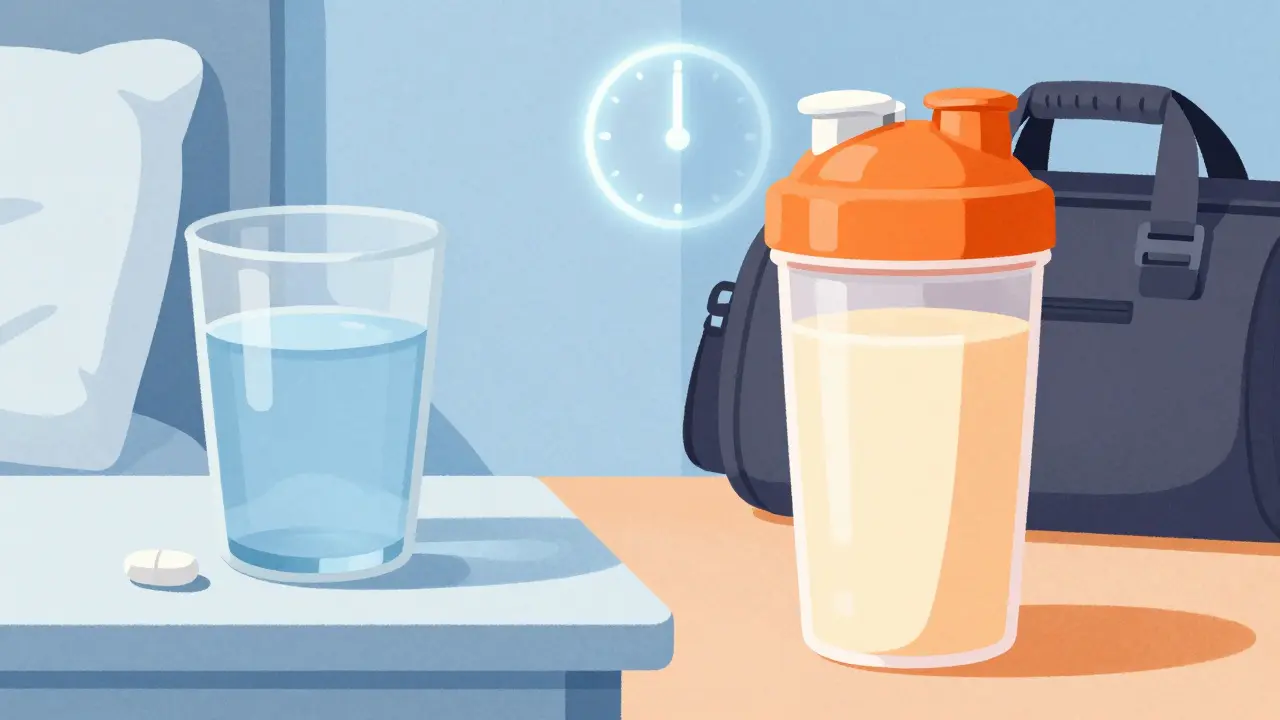
Imagine waking up, taking your thyroid medication, and sipping a protein shake to kickstart your fitness goals, only to find out months later that your TSH or thyroid-stimulating hormone levels are completely out of whack. It sounds like a minor detail, but for millions of people, the timing of a morning shake can be the difference between feeling energized and feeling like you're dragging a weighted blanket through your day.
The core problem is that Levothyroxine a synthetic form of the thyroid hormone thyroxine (T4) used to treat hypothyroidism is incredibly picky about how it enters your system. When you mix it with certain nutrients-especially the proteins and minerals found in shakes-your body simply stops absorbing the medicine. If you aren't getting the full dose, your thyroid levels drop, and your symptoms come roaring back.
Quick Summary: The Golden Rules of Timing
- The 4-Hour Gap: Aim for at least 4 hours between your medication and any protein supplement.
- Empty Stomach: Always take your dose immediately upon waking with water only.
- Calcium Caution: Shakes fortified with calcium or iron are the biggest culprits for absorption blocks.
- Evening Alternative: Consider switching your dose to bedtime to free up your morning routine.
Why Protein Shakes Mess With Your Medication
You might think a shake is just "healthy food," but chemically, it's a complex mixture that disrupts the proximal small intestine where Levothyroxine is absorbed. According to research published in Pharmaceuticals, absorption can plummet from 80% on an empty stomach to as low as 37% when taken with food.
Specifically, Whey Protein a concentrated protein derived from cow's milk commonly used in fitness supplements slows down gastric emptying. This means the medication sits in your stomach longer than it should, delaying its arrival at the absorption site. Even worse, many shakes are fortified with calcium or iron. These minerals act like magnets, binding to the hormone in your gut and carrying it out of your body before it ever hits your bloodstream.
In one documented case, a patient's TSH levels spiked from a healthy 1.8 mIU/L to a concerning 15.2 mIU/L simply because she consumed whey protein within 30 minutes of her dose. This isn't just a theoretical risk; it's a biological reality that can lead to unnecessary dose increases by your doctor.
The Ideal Morning Routine for Thyroid Health
If you prefer taking your medication in the morning, you need a strict protocol to ensure you're actually getting the medicine you're paying for. Here is the scientifically backed sequence for the best results:
- Wake Up: Take your pill immediately with 8 ounces of plain water. Avoid juice or coffee at this stage.
- The First Hour: Wait at least 60 minutes before eating any light breakfast or drinking anything other than water.
- The Protein Window: Wait an additional 3 hours before having your protein shake. This creates the total 4-hour separation window recommended by the American Association of Clinical Endocrinologists.
Dealing with hunger during this four-hour stretch is a common struggle. If you can't make it, try sticking to herbal tea or plain water. Avoid "healthy" smoothies in the interim, as fruit fibers and fats can also interfere with absorption.
| Protein Type | Absorption Reduction | Recommended Gap |
|---|---|---|
| Whey Protein (Standard) | ~28.7% | 4 Hours |
| Pea Protein | ~12.3% | 3-4 Hours |
| Calcium-Fortified Shakes | Up to 25% (T4 levels) | 4+ Hours |

The Evening Dose: A Game Changer for Gym-Goers
For those who can't imagine a morning without their protein shake, there is a simpler solution: move your medication to the evening. A large-scale meta-analysis in the Journal of Clinical Endocrinology & Metabolism found that evening dosing actually resulted in 13.8% higher free T4 levels and 27.6% lower TSH levels compared to morning dosing.
Why does this happen? It comes down to your gut. Bowel movements naturally decrease at night, giving the medication more time to be absorbed without being pushed through the system. By taking your dose at least 4 hours after dinner, you can enjoy your protein shakes throughout the morning and afternoon without any risk of interference.
If you're considering this switch, do it gradually and keep a log of your energy levels. Many people find that evening dosing removes the stress of the "waiting game" and leads to more stable lab results over time.
Signs Your Timing is Wrong
How do you know if your protein shake is stealing your meds? You won't feel the absorption drop instantly, but you will feel the systemic effects over a few weeks. Watch for these red flags:
- Returning Fatigue: You were feeling great, but suddenly you're exhausted again despite taking your pill.
- Unexpected Weight Gain: Your metabolism slows down because the hormone isn't reaching your cells.
- Cold Intolerance: You're shivering in rooms where others are comfortable.
- Brain Fog: Difficulty concentrating or remembering things, which often mirrors the onset of hypothyroidism.
If you notice these, don't just assume you need a higher dose. Check your timing first. Many patients have seen their TSH drop significantly simply by moving their shake to lunchtime, without any change in their actual prescription.

Alternative Protein Options
Not all protein is created equal. If you absolutely must have something in the morning, consider the source. Research suggests that pea protein causes less interference with absorption than whey protein. While a 4-hour gap is still the gold standard, plant-based proteins may be slightly more forgiving.
Also, be wary of "meal replacement" shakes. These are often packed with calcium carbonate and iron, which are the most aggressive blockers of thyroid hormone absorption. If the label says "fortified with vitamins and minerals," treat it as a high-risk interaction and stick to the 4-hour rule.
Can I take my levothyroxine with a protein shake if it's plant-based?
It is still not recommended. While some studies show pea protein has a lower impact (around 12% reduction) than whey protein (nearly 30%), any significant amount of protein can delay gastric emptying. To be safe, maintain at least a 3-4 hour gap regardless of the protein source.
What happens if I accidentally take my shake too soon?
A one-time mistake won't cause a crisis, but doing this daily will lead to sub-therapeutic levels of hormone in your blood. If you've been doing this for weeks, you may notice a rise in your TSH levels and a return of hypothyroid symptoms.
Why is the gap 4 hours instead of just 1 hour?
While 60 minutes is enough for simple food, protein and calcium take longer to clear the absorption zone of the small intestine. Calcium, in particular, can bind to the medication for several hours, making a longer window necessary to ensure full bioavailability.
Should I tell my doctor if I use protein supplements?
Yes. Doctors often see rising TSH levels and assume the patient needs a dose increase. If they know you use protein shakes, they can help you optimize your timing instead of prescribing a higher dose that might lead to over-medication (hyperthyroidism) once you finally adjust your timing.
Does coffee affect the timing too?
Yes, coffee can significantly interfere with levothyroxine absorption. You should wait at least 60 minutes after your dose before having coffee, and if you add cream or protein powder to your coffee, the 4-hour rule applies.
Next Steps for Your Routine
If you've been mixing your shakes and meds, don't panic, but do take action. First, start the 4-hour separation today. If that's too difficult, talk to your doctor about switching to an evening dose.
For those transitioning, keep a simple diary of your energy levels and mood for the next 8-12 weeks. Most people achieve stable thyroid levels within this timeframe once timing is corrected. If you're still feeling sluggish after three months of perfect timing, it's time to schedule a TSH blood test to see if your actual dosage needs a tweak based on your new, improved absorption rate.
Been there. Seriously, the brain fog is the worst part. I used to just jam my meds with a smoothie and wonder why I felt like a zombie by noon. Switching to the evening dose was a total game changer for my gym routine since I can finally have my protein shake at 7am without worrying about my TSH spiking.
Absolutely tragic that we've reached a point in human evolution where we need a manual just to drink a shake and take a pill. It's a bleak commentary on the fragility of the modern body. We are basically just fragile biological machines that break if we eat a piece of whey too early. Truly pathetic!
this is so helpful ✨ thanks for sharing 💖
It is simply a matter of basic biological discipline. Those who fail to adhere to a strict schedule shouldn't be surprised when their health declines. It is not complex; it is merely a requirement of the medication.
Why is everyone just agreeing with this???!!! 🙄 I've taken my meds with food for years and my levels are fine... maybe it's not as strict as this post claims!!! 🧐🤔
Imagine being so intellectually bankrupt that you ignore the chemistry of absorption. It's a total circus. You're basically flushing your expensive meds down the toilet if you're too lazy to wait four hours. Absolute clown behavior.
It's interesting how we try to optimize every second of our morning. Maybe the evening dose isn't just about biology, but about letting go of the morning rush and finding a more balanced rhythm with our bodies.
I love this approach! 🌟 It's all about finding what works for your own unique journey. Thanks for the tips! 😊
That evening dose thing sounds like a total lifesaver. I'm kinda tired of the waitin game every singel mornin. Absolute game changah!
Most people just lack the will to be disciplined. If you can't handle a four hour gap, you don't really value your health. It's just basic math and timing.
I didn't know coffee was such a big deal too. I'll try to move my brew later in the morning then.
This is a great breakdown. I think many of us struggle with the hunger part, but the evening option is a really practical way to solve it for everyone.
The information regarding the different types of protein is very useful. It helps to know that plant-based options might be slightly better, even if the gap is still needed.
I'm just so worried for everyone who's been doing this wrong! It's heartbreaking to think about all that fatigue you could be avoiding just by shifting a shake. Please everyone, just try the evening dose!