Protein Prioritization: How to Lose Fat Without Losing Muscle
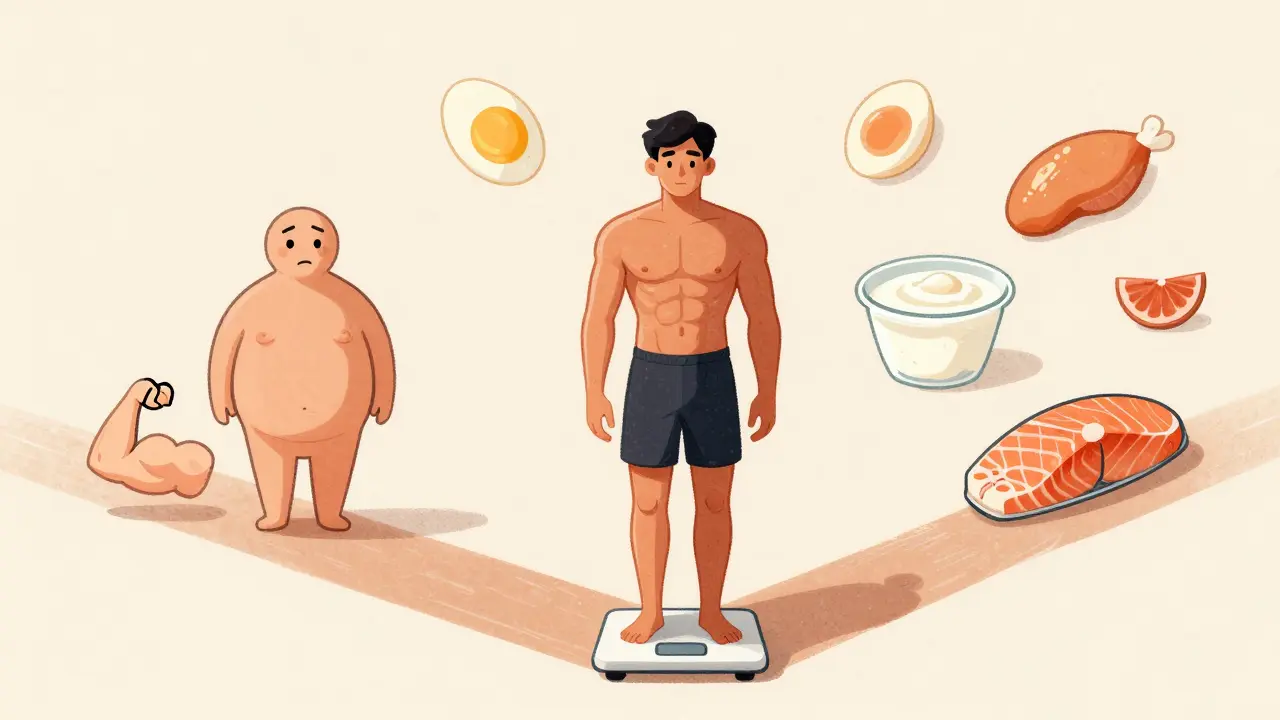
When you’re trying to lose weight, the biggest fear isn’t gaining fat-it’s losing muscle. You’ve seen it happen: someone drops 20 pounds, feels proud, but looks thinner, not tighter. Their arms are flabby. Their metabolism slows. Why? Because most diets don’t prioritize protein. They cut calories, but they don’t protect what keeps you strong, active, and looking lean. Protein prioritization isn’t a trend. It’s the science-backed way to lose fat while keeping your muscle, staying full longer, and actually sticking to your plan.
Why Protein Isn’t Just About Gains
Most people think protein is for bodybuilders. But the real magic happens when you’re in a calorie deficit. When you eat fewer calories than you burn, your body doesn’t know whether to burn fat or muscle. Without enough protein, it picks muscle. That’s because muscle is metabolically expensive. Your body sees it as unnecessary if you’re not fueling it properly.
Research shows that when people cut calories without increasing protein, they lose up to 37% more muscle than those who prioritize it. A 2023 study of 120 older men found that those eating 1.6 grams of protein per kilogram of body weight preserved 1.3 kg more lean mass over 12 weeks than those eating the standard 0.8 g/kg. That’s like keeping the equivalent of a full bag of groceries’ worth of muscle.
But protein does more than just protect muscle. It keeps you full. When you eat protein, your body releases hormones like peptide YY and GLP-1, which signal fullness to your brain. At the same time, it lowers ghrelin-the hunger hormone. One study showed that a high-protein meal reduced hunger by 13% compared to a carb-heavy meal. That’s not a small difference. It’s the reason some people can stick to a diet for months while others quit after a week.
How Much Protein Do You Actually Need?
The old recommendation-0.8 grams per kilogram of body weight-isn’t enough for weight loss. That number was designed for sedentary people just to avoid deficiency. If you’re trying to lose fat, you need more.
For most adults, the sweet spot is 1.6 grams per kilogram of body weight. That’s about 112 grams for a 70 kg (154 lb) person. Some people benefit from going up to 2.2 g/kg, especially if they’re active or older. But beyond that, there’s little added benefit-and it can get expensive.
For older adults (65+), the recommendation is 1.2-1.6 g/kg. As we age, our muscles become less responsive to protein. This is called anabolic resistance. Eating more protein helps, but timing matters even more.
When You Eat Protein Matters More Than You Think
It’s not enough to eat 120 grams of protein in one giant steak at dinner. Your body can only use about 30-40 grams of protein in one sitting to build muscle. Any extra just gets burned for energy or stored as fat.
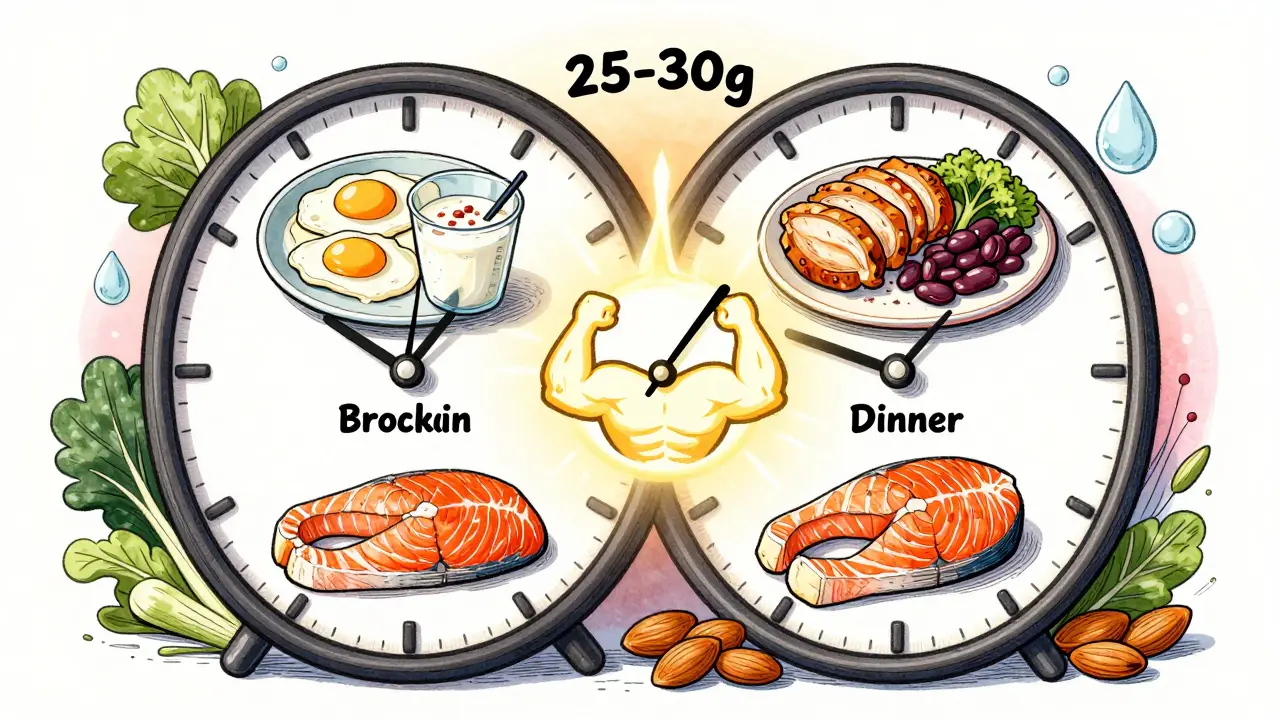
The solution? Spread it out. Aim for 25-30 grams of protein per meal, across 3-4 meals a day. This is called the “even distribution” model. Research from Wageningen University found that people who ate protein evenly throughout the day stimulated muscle protein synthesis 30% more than those who ate most of it at dinner.
And don’t skip breakfast. A 2025 study showed that older adults who ate at least 25 grams of protein at breakfast had 22% less muscle loss over 6 months than those who ate toast and jam. Why? Because your body is most resistant to muscle-building in the morning. A protein-rich breakfast wakes up your muscles.
Not All Protein Is Created Equal
Whey, eggs, chicken, fish, and dairy score high on two scales: PDCAAS and DIAAS. These measure how well your body can digest and use the amino acids in protein. Whey protein scores a perfect 1.0. Eggs are 0.97. That means they deliver nearly all the building blocks your muscles need.
Plant proteins-like beans, lentils, tofu, and quinoa-are great, but they’re incomplete. Most lack enough leucine, the key amino acid that triggers muscle growth. You need about 2.5-3.0 grams of leucine per meal to fully activate muscle synthesis. That’s easy with 30g of whey. But you’d need nearly 60g of lentils to get the same amount.
If you’re plant-based, you have to be smarter. Combine sources: rice and beans, tofu with pumpkin seeds, or add a leucine-fortified plant protein powder. Otherwise, you’re playing catch-up.
What Happens When You Don’t Do It Right
Many people try high-protein diets and quit. Why? Three reasons show up again and again.
- Cost: High-protein foods-especially lean meats and protein powder-can raise your grocery bill by 18%. A person spending $97 a week on chicken and whey might feel great at first, but it’s not sustainable. Canned tuna, eggs, Greek yogurt, and legumes are cheaper alternatives.
- Digestive issues: Over 29% of people report bloating or discomfort when they jump to more than 2.0 g/kg/day. That’s often because they’re not drinking enough water or eating enough fiber. Aim for 25-30g of fiber daily. Add veggies, chia seeds, and whole grains.
- Culinary boredom: Eating chicken breast every day gets old. That’s why 43% of people abandon high-protein diets. Mix it up: try salmon one day, lentil stew the next, Greek yogurt with nuts for breakfast, and tofu stir-fry for dinner.
One Reddit user, ‘GainsByScience,’ lost 42 pounds in six months while keeping 97% of his muscle mass. His secret? 1.8 g/kg protein, spread across four meals, with variety. He didn’t eat the same thing every day. He rotated proteins and added flavor with spices, herbs, and sauces.
Who Benefits Most-and Who Doesn’t
Protein prioritization works best for:
- People losing weight (especially over 40)
- Those doing resistance training
- Anyone who’s struggled to stick to diets because they’re always hungry
It’s less helpful for:
- Sedentary people who don’t lift weights or walk regularly
- People with kidney disease (consult a doctor first)
- Those who can’t afford or access quality protein sources
And here’s something surprising: protein prioritization doesn’t make you stronger. It preserves muscle mass. But if you stop lifting, your strength will still drop-even if your muscle stays. So pair protein with movement. Even 20 minutes of bodyweight exercises three times a week makes a difference.
Real-World Success: What the Data Shows
The National Weight Control Registry tracks over 5,400 people who’ve lost 30+ pounds and kept it off for at least a year. Their secret? 83% intentionally prioritized protein. Their average intake? 1.5 g/kg/day. That’s higher than the average American’s 1.1 g/kg/day.
And it works long-term. Two years after starting a high-protein weight loss plan, 68% of people were still maintaining their weight. Only 52% of those on standard diets made it that far. Why? Because they weren’t starving. They weren’t bingeing. They stayed full. They kept their muscle. Their metabolism didn’t crash.
How to Start Today
You don’t need a personal trainer or a meal prep service. Start simple.
- Calculate your protein goal: Multiply your weight in kilograms by 1.6. If you weigh 70 kg, aim for 112 grams per day.
- Divide it into meals: Shoot for 25-30g per meal. Breakfast: 2 eggs + 1 cup Greek yogurt. Lunch: 120g chicken + 1 cup black beans. Dinner: 150g salmon. Snack: 1 scoop protein powder or a handful of almonds.
- Track for 1 week: Use a free app like MyFitnessPal. You’ll be surprised how hard it is to hit 1.6 g/kg without planning.
- Swap out cheap protein: Replace expensive meat with eggs, canned tuna, cottage cheese, or lentils. You can get 20g of protein for under $1.50.
- Drink water: At least 2.5 liters a day. Higher protein means more waste to flush out.
It takes 4-6 weeks to make this feel normal. Don’t quit at week two. Your body needs time to adjust. And remember: you’re not trying to be perfect. You’re trying to be consistent.
The Bottom Line
Protein prioritization isn’t about eating more meat. It’s about eating smarter. It’s the difference between losing weight and losing your strength. Between feeling hungry all the time and feeling satisfied. Between giving up after three months and keeping your results for years.
Science says: 1.6 g/kg/day, spread across meals, with good-quality sources, is the most reliable way to lose fat without losing muscle. You don’t need supplements. You don’t need to starve. You just need to make protein the centerpiece-not the afterthought.
Is 1.6 g/kg of protein safe for everyone?
For healthy adults, yes. But if you have kidney disease, liver disease, or are on dialysis, higher protein intake can be harmful. Always check with your doctor before making major dietary changes. For most people, even up to 2.2 g/kg is safe, as long as hydration and fiber intake are adequate.
Can I get enough protein on a plant-based diet?
Yes, but it requires planning. Most plant proteins lack sufficient leucine, the key amino acid for muscle building. To match animal proteins, combine sources-like rice and beans, or tofu with pumpkin seeds-and consider adding a leucine-fortified plant protein powder. You’ll need slightly more total protein (about 10-20% more) to get the same muscle-building effect.
Do I need protein powder?
No. Protein powder is convenient, not essential. You can get all the protein you need from whole foods: eggs, chicken, fish, Greek yogurt, cottage cheese, lentils, tofu, and canned tuna. Powder is helpful if you struggle to hit your daily target or need a quick post-workout option, but it’s not required.
Why do I feel bloated when I eat more protein?
It’s usually not the protein itself-it’s the lack of fiber and water. High-protein diets often replace carbs, which means fewer fruits, veggies, and whole grains. That leads to constipation and bloating. Drink 2.5-3 liters of water daily and add 25-30g of fiber from vegetables, chia seeds, oats, or legumes.
Will eating more protein damage my kidneys?
No, not for healthy people. A 2024 review in the Journal of the International Society of Sports Nutrition analyzed 31 studies and found no evidence that high-protein diets harm kidney function in individuals without pre-existing kidney disease. The myth comes from old studies on people with existing kidney problems. If your kidneys are healthy, you’re fine.
Interesting breakdown. I’ve been doing 1.6g/kg for 4 months now and honestly? My cravings just vanished. Used to snack at 10pm like clockwork. Now I’m asleep by 10. No willpower needed. Just protein.
Let’s be real - this whole protein prioritization thing is just keto with a fancy name. You’re still in a deficit. Protein doesn’t magically preserve muscle - it just makes you feel less hungry while you starve. And don’t get me started on the ‘even distribution’ nonsense. My grandpa ate one big steak at dinner and lived to 92. Who cares if your muscles get ‘stimulated’ 30% more? You’re not a lab rat.
Also, 1.6g/kg? That’s 130g for me. I’m 75kg. I eat two eggs, a chicken thigh, and a protein bar. That’s 80g. Do I really need to weigh my lentils? No. I’m not a nutritionist. I’m a human being. Stop overcomplicating it.
Yessssss. This is the kind of content that actually helps. I lost 30lbs last year and kept every ounce of muscle because I stopped thinking of protein as ‘bodybuilder food’ and started treating it like oxygen. You don’t survive without it. You don’t look good without it. You don’t sleep well without it. And yeah - I used to hate chicken breast. Now I make it with sriracha, lime, and cilantro. It’s a vibe.
Also - plant-based peeps: I’m vegan and I hit 1.7g/kg by combining tofu, tempeh, pea protein, and pumpkin seeds. It’s a puzzle, but it’s doable. And no, I don’t use supplements unless I’m traveling. Real food > powders.
This article is a joke. In India we have been eating dal and roti for centuries. We don’t need 1.6g/kg. We don’t need whey. We don’t need to track grams. Our grandmothers fed us with chana, paneer, and curd. We grew strong. We didn’t die. We didn’t get bloated. Why are Americans so obsessed with measuring everything? You eat rice, you eat lentils, you eat vegetables - that’s enough. Stop selling fear.
Also 2.2g/kg? That’s expensive. My uncle eats 60g of protein a day and he’s 65 and still carries 3 sacks of rice on his back. You think he’s counting amino acids? No. He’s living. You’re overthinking.
man i just want to say thank you for writing this. i’ve been trying to lose weight for 8 years and every time i did, i lost muscle and felt like a ghost. then i found this 1.6g/kg thing and it changed everything. i’m not perfect. i miss days. i eat pizza sometimes. but i always get back to protein first. it’s not about being perfect. it’s about being consistent. and honestly? my joints feel better. my energy’s up. i sleep like a baby. it’s not magic. it’s just science. and it works.
also - if you’re struggling with bloating? drink water. like, a lot. and add spinach to everything. i put it in my eggs, my smoothies, my soups. it’s the secret. and you don’t need fancy supplements. just food. real food.
Oh, so now we’re supposed to believe that eating more chicken will save us from the horrors of metabolic decline? How quaint. Let me guess - you also think sunlight is a vitamin and that ‘hormones’ are some kind of mystical elixir. This is just another corporate-backed diet cult dressed up as science. Where’s the long-term data? Where’s the control group? Where’s the peer-reviewed replication? You cite a 2023 study like it’s gospel - but you don’t mention the funding source. Probably a whey protein company. Classic.
And let’s talk about ‘muscle preservation’ - as if losing 5% of your muscle mass is some kind of tragedy. You’re not a soldier. You’re not an athlete. You’re just a guy trying to fit into jeans. Relax. Eat less. Move more. Stop obsessing over grams. Your body knows what to do.
Yall overthinkin this. Just eat eggs. Chicken. Tuna. Done. Protein powder? Nah. Plant stuff? Meh. I’m from Indiana. We don’t need no fancy science. I eat 3 eggs for breakfast, chicken for lunch, and a can of tuna for dinner. 100g protein. I’m 180lbs. I lost 25lbs in 3 months. No tracking. No apps. No math. Just eat meat. Drink water. Walk. That’s it. Stop selling this as a revolution. It’s just common sense.
As someone from India who switched to a high-protein vegetarian diet after 40, I can say this: it’s possible, but it takes patience. I started with paneer and chana, then added soy chunks and peanut butter. I didn’t know about leucine until I read this. Now I mix lentils with pumpkin seeds - and yes, it makes a difference. I feel stronger. My legs don’t shake climbing stairs anymore. It’s not about being perfect. It’s about trying. And yes - drinking water helped with the bloating too. Thank you for this. I needed to hear it.
Just wanted to say I’ve been following this for 6 weeks. Started at 1.6g/kg. Hit 110g/day. Didn’t think I could do it. But I made a routine: eggs at breakfast, yogurt with almonds at lunch, dal with rice at dinner. Snack? Hard-boiled eggs. It’s simple. I’m not losing weight fast - but I’m not hungry. And my clothes fit better. No drama. Just steady progress. This isn’t a diet. It’s a lifestyle. And honestly? I feel like myself again.