Patent Expiry Planning: A Guide for Patients and Healthcare Systems
Imagine your prescription price dropping by 80% overnight. That is the promise of patent expiry, also known as Loss of Exclusivity (LOE). When a brand-name drug loses its patent protection, cheaper generic or biosimilar versions flood the market. For patients, this means lower out-of-pocket costs. For hospitals and insurers, it represents billions in potential savings. But the transition is rarely smooth. Without planning, you might face confusing formulary changes, temporary shortages, or uncertainty about whether a new generic version works just like the old one.
We are currently living through what experts call "Patent Cliff 2.0." Data from IQVIA shows that over $90 billion in branded drug sales will be lost to generics between 2025 and 2029. This isn't just a financial statistic for pharmaceutical companies; it’s a major shift in how we access medicine. If you are a patient on chronic medication or a healthcare administrator managing budgets, understanding this timeline is critical. Let’s break down exactly what happens when patents expire and how you can prepare.
What Actually Happens When a Patent Expires?
To understand the impact, you first need to know how the system works. The framework for this process was established by the Hatch-Waxman Act of 1984. While a patent technically lasts 20 years from filing, most of that time is spent developing and testing the drug. By the time it hits the market, the manufacturer usually has only 7 to 10 years of actual exclusivity left.
Once that clock runs out, other companies can file an Abbreviated New Drug Application (ANDA) with the FDA. This allows them to sell a generic version without repeating expensive clinical trials, provided they prove the drug is bioequivalent to the original. Bioequivalence means the generic delivers the same amount of active ingredient into your bloodstream within a similar timeframe-specifically, it must fall within an 80-125% range compared to the brand name.
Here is where it gets tricky for patients. While the active ingredient is identical, inactive ingredients (like fillers, dyes, or binders) can differ. For most people, this doesn’t matter. But for those with sensitivities or narrow therapeutic index conditions, these differences can sometimes cause issues. Understanding this distinction helps you ask better questions when your doctor switches your prescription.
The Patient Perspective: Navigating Switches and Savings
If you take a medication that is nearing patent expiry, you should expect change. According to 2022 CMS surveys, 42% of Medicare Part D beneficiaries experienced medication changes due to formulary adjustments after a patent expired. Another 28% reported confusion about why their pill looked different or had a new name.
Here is what you should do to protect your health and your wallet:
- Check your formulary status. Contact your insurance provider or check their website to see if your current brand-name drug is moving to a higher tier or being replaced by a generic. Many plans automatically switch you once the generic is available.
- Talk to your pharmacist about inactive ingredients. If you have had reactions to certain fillers in the past, tell your pharmacist. They can often order a specific generic manufacturer that uses different excipients.
- Monitor your body closely during the switch. While generics are rigorously tested, individual responses vary. Keep a simple log of any new side effects for the first two weeks after switching. Report these to your doctor immediately.
- Don’t assume all generics are priced the same. As more manufacturers enter the market, prices drop further. However, some pharmacy benefit managers (PBMs) may steer you toward a specific generic based on rebates rather than the lowest cash price. Ask if there is a cost difference between generic brands at your pharmacy.
A 2023 analysis found that proactive planning could reduce discontinuation rates by 35%. Being informed is your best tool to ensure continuity of care.
For Healthcare Systems: The Strategic Timeline
For hospital administrators, pharmacy directors, and health system leaders, patent expiry is a massive operational event. The stakes are high: brand unit share typically drops to 16% within one year of generic entry. Missing the window for proper contracting and formulary updates can mean leaving millions on the table.
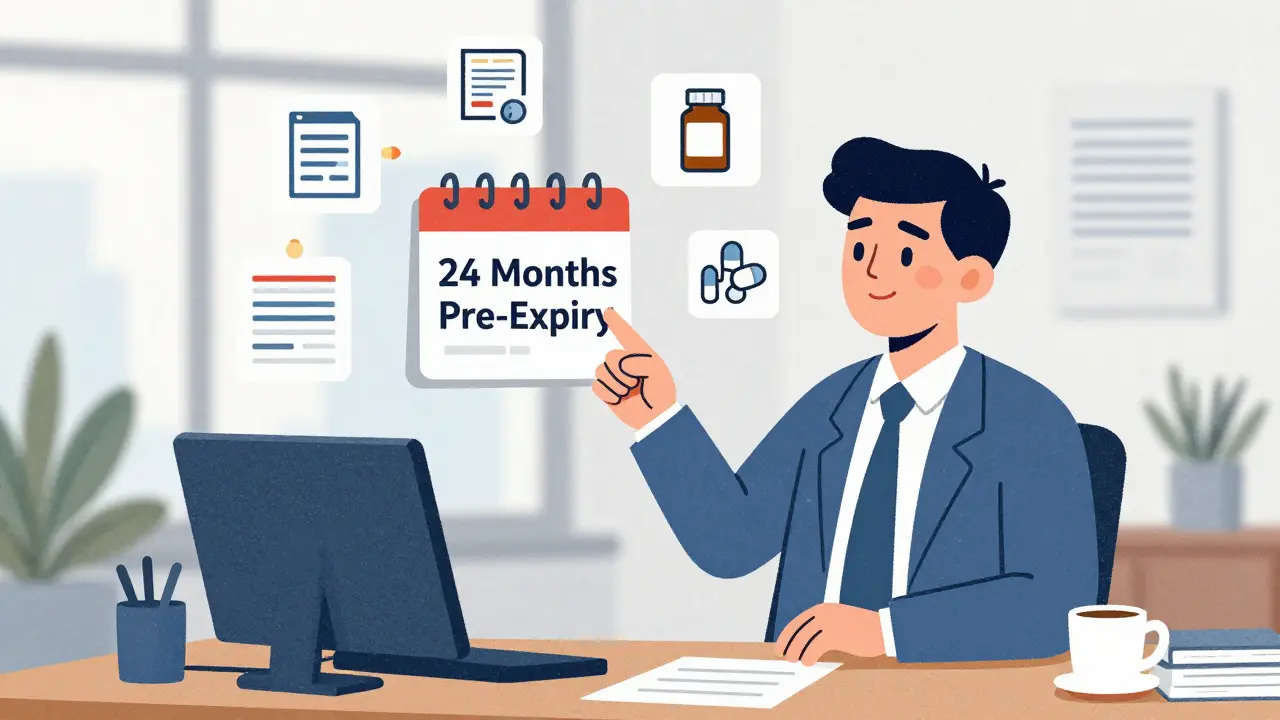
Research from PharmExec indicates that successful organizations start planning at least 24 months before the anticipated patent expiry date. Here is a practical checklist for healthcare teams:
- 24 Months Pre-Expiry: Form a Task Force. Gather representatives from pharmacy, finance, medical affairs, and contracting. Identify which drugs in your portfolio are at risk. Use tracking software like Symphony Health’s PatentSight, which is used by 65% of top health systems, to monitor pipeline status.
- 18 Months Pre-Expiry: Market Analysis. Assess the generic and biosimilar pipeline. How many competitors are entering? What are their pricing strategies? For biologics, remember that biosimilar adoption is slower-only 38% of biologic prescriptions convert within two years, compared to over 90% for small molecules.
- 12 Months Pre-Expiry: Finalize Formulary Positioning. Decide which generic or biosimilar will be preferred. Negotiate contracts early. Complex rebate structures often obscure true net pricing, so work with your finance team to calculate the real savings, not just the list price reduction.
- 9 Months Pre-Expiry: Update Clinical Guidelines. Ensure prescribers know the substitution protocols. Physician resistance is a real barrier; 62% of doctors have expressed concerns about efficacy differences in generics. Provide clear evidence-based data to alleviate these fears.
- 6 Months Pre-Expiry: Patient Education. Develop materials explaining why the switch is happening. Confusion leads to non-adherence. Clear communication reduces anxiety and improves outcomes.
Systems that follow this timeline achieve 22% greater cost savings than those that wait until the last minute. The average saving per targeted drug jumps from $3.8 million to $4.7 million with early preparation.
Small Molecules vs. Biosimilars: Why the Difference Matters
Not all patent expiries look the same. It is crucial to distinguish between small-molecule drugs (traditional pills) and biologics (complex proteins made in living cells).
| Feature | Small-Molecule Generics | Biosimilars |
|---|---|---|
| Price Reduction | 70-90% within one year | 20-40% initially |
| Market Share Conversion | 90%+ within 12 months | ~38% within 2 years |
| Manufacturing Complexity | Low (chemical synthesis) | High (biological processes) |
| Regulatory Pathway | ANDA (Abbreviated New Drug Application) | BLA (Biologics License Application) |
| Patient Perception | Generally accepted as equivalent | Higher skepticism regarding interchangeability |
This gap exists because biologics are harder to copy. You cannot simply replicate a complex protein structure in a lab like you can with aspirin. Consequently, biosimilar competition takes longer to mature. If your health system relies heavily on immunology or oncology biologics, expect a slower transition and smaller initial savings. You may need to invest more in education for both staff and patients to overcome the "novelty bias" against biosimilars.
Barriers to Entry: Patent Thickets and Delays
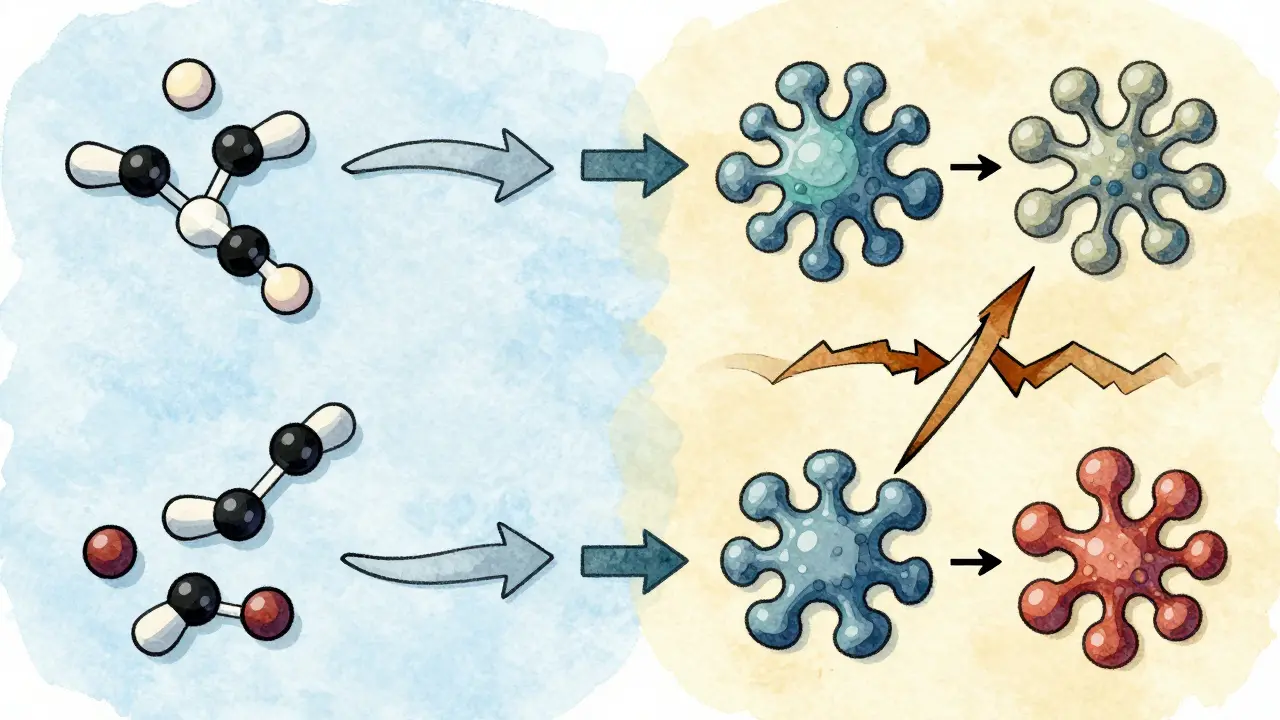
You might wonder why some drugs don’t get generics immediately after the patent expires. The answer is often "patent thickets." Pharmaceutical companies now file dozens of secondary patents for a single product-covering everything from the manufacturing process to the color of the pill or the extended-release mechanism. Evernorth’s 2023 analysis found that nearly 80 of the top 100 selling drugs have these dense webs of intellectual property.
These strategies delay generic competition. Pay-for-delay schemes, where brand manufacturers pay generic makers to stay out of the market, add another layer of complexity. In 2023, FTC data showed a 35% reduction in these agreements due to stricter enforcement under the CREATES Act amendments, but they remain a hurdle.
For patients, this means your cheap alternative might arrive later than expected. For systems, it means your 24-month planning window must include regular updates on litigation status. A patent challenge filed today can push back generic entry by several years. Stay agile and keep monitoring legal developments alongside supply chain data.
Looking Ahead: The Role of Policy and Technology
The landscape is shifting rapidly. The Inflation Reduction Act of 2022 introduced Medicare drug price negotiations, which will apply to drugs losing patent protection starting in 2026. This adds another variable to the equation for US-based systems. Additionally, AI-powered forecasting tools are improving prediction accuracy for patent expiries from 65% to 89%, allowing for more precise budgeting.
As we move through 2026, the focus is shifting from mere cost-cutting to value-based care. Successful organizations are integrating patent expiry planning into broader therapeutic strategies. They aren't just swapping a brand for a generic; they are evaluating the entire treatment pathway to ensure patient outcomes remain optimal while costs decline.
Whether you are holding a prescription bottle or balancing a hospital budget, the key is anticipation. Don’t wait for the cliff edge. Start looking at the horizon now.
How long does it take for a generic drug to become available after a patent expires?
It varies significantly. For simple small-molecule drugs, generics often appear within months of patent expiry. However, if there are patent thickets or ongoing litigation, it can take years. On average, you might see the first generic competitor within 6-12 months, but full market saturation with multiple low-cost options can take 18-24 months.
Are biosimilars as effective as the original biologic drugs?
Yes, biosimilars are required by the FDA to demonstrate no clinically meaningful differences from the reference product in terms of safety, purity, and potency. While they are not identical copies (due to the complexity of biological manufacturing), rigorous clinical trials ensure they perform equivalently for the vast majority of patients.
Why do my out-of-pocket costs sometimes go up when a generic becomes available?
This can happen due to complex rebate structures and formulary tiers. Sometimes, the brand-name drug remains on a lower tier because of negotiated rebates, while the new generic is placed on a higher tier temporarily. Always check with your pharmacist or insurer to understand the net cost to you, not just the wholesale price.
What is a "patent thicket" and how does it affect me?
A patent thicket is a strategy where a company files many overlapping patents for one drug (e.g., for its packaging, dosage form, or manufacturing method). This delays generic competition, meaning you may continue paying higher brand-name prices for longer than expected. It is a primary driver of delayed cost savings in the pharmaceutical market.
Should I switch to a generic if I am stable on the brand-name drug?
In most cases, yes. Generics are cost-effective and clinically equivalent. However, if you have a history of sensitivity to inactive ingredients or are taking a narrow therapeutic index drug (where small dose variations matter greatly), discuss the switch with your doctor. They can monitor you closely during the transition to ensure stability.