OTC Sunscreens: How to Choose the Right SPF, Broad Spectrum Protection, and When to Reapply
Every year, millions of people buy sunscreen without really knowing what they’re getting. You see SPF 50 on the bottle, think you’re covered, and head out for a day at the beach. But here’s the truth: SPF doesn’t tell the whole story. And if you’re not reapplying correctly, you might as well not be wearing it at all.
What SPF Actually Means (And What It Doesn’t)
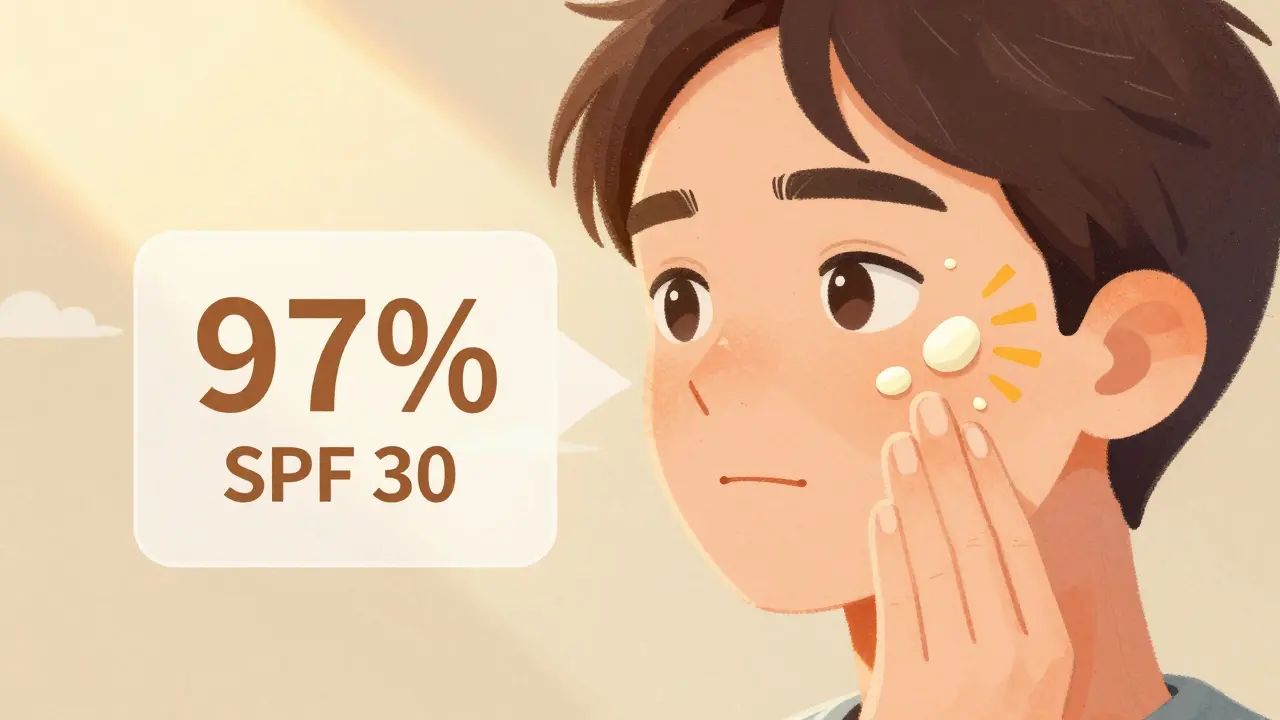
SPF stands for Sun Protection Factor. It measures how well a sunscreen blocks UVB rays - the ones that cause sunburn. But it’s not a linear scale. SPF 15 blocks about 93% of UVB rays. SPF 30 blocks 97%. SPF 50 blocks 98%. SPF 100? Just 99%. That extra 1% doesn’t mean you can stay out twice as long. No sunscreen lasts more than two hours without reapplication, no matter the number. The FDA requires all OTC sunscreens to be tested using standardized methods. For a product to claim SPF 30 or higher, it must pass tests on human skin under controlled conditions. But real life isn’t a lab. You sweat. You swim. You rub your face with a towel. That wipes off up to 80% of the sunscreen. That’s why even SPF 100 can leave you burned if you skip reapplication.Broad Spectrum Isn’t Just a Marketing Word
UVB causes sunburn. UVA causes aging - wrinkles, dark spots, and yes, skin cancer. That’s why “broad spectrum” matters. A sunscreen labeled broad spectrum must pass a test proving it protects against both UVA and UVB rays. The FDA requires broad-spectrum products to block wavelengths up to at least 370 nanometers. That’s the minimum to cover the full UVA range. But here’s the problem: not all broad-spectrum sunscreens are created equal. In Consumer Reports’ 2025 testing of 107 sunscreens, some mineral sunscreens labeled as broad spectrum only blocked about half the UVA they should have. One product marketed as SPF 30 actually delivered SPF 4. That’s not a typo. That’s a failure in regulation enforcement. Look for active ingredients that reliably block UVA. Zinc oxide is the gold standard - it physically blocks both UVA and UVB. Avobenzone is a chemical filter that’s effective against UVA, but it breaks down in sunlight unless stabilized with other ingredients like octocrylene. If you see “avobenzone” on the label, check that it’s paired with stabilizers. If not, it’s probably not doing much after the first hour.Mineral vs. Chemical: What Works Best for You
There are two types of sunscreens: mineral (physical) and chemical. Mineral sunscreens use zinc oxide or titanium dioxide. They sit on top of your skin and reflect sunlight. They work immediately. They’re less likely to irritate sensitive skin. But they often leave a white cast - especially on darker skin tones. That’s why many people avoid them. Chemical sunscreens use ingredients like avobenzone, octinoxate, or oxybenzone. They absorb UV rays and convert them into heat. They tend to blend in better, feel lighter, and don’t leave a white residue. But they take 15-20 minutes to become effective. And some ingredients like oxybenzone are linked to coral reef damage. Hawaii and Key West banned them in 2021. In testing, chemical sunscreens consistently outperformed mineral ones in UV protection. La Roche-Posay Anthelios Melt-in Milk SPF 60 scored 92 out of 100. Blue Lizard Sensitive SPF 50, a mineral option, scored 55. But mineral sunscreens scored higher for user comfort - less stinging, less redness. For people with rosacea, melasma, or eczema, dermatologists like Dr. Michele Green recommend mineral sunscreens with zinc oxide. EltaMD UV Clear SPF 46, with 9% zinc oxide and niacinamide, is a top pick. If you have darker skin, look for tinted mineral sunscreens. Brands like Black Girl Sunscreen and Caravee have improved formulations that don’t leave a gray or ashy cast. But even then, test them first. One user reported Vichy Capital Soleil Tinted Mineral SPF 60 oxidized to orange on her skin within two hours.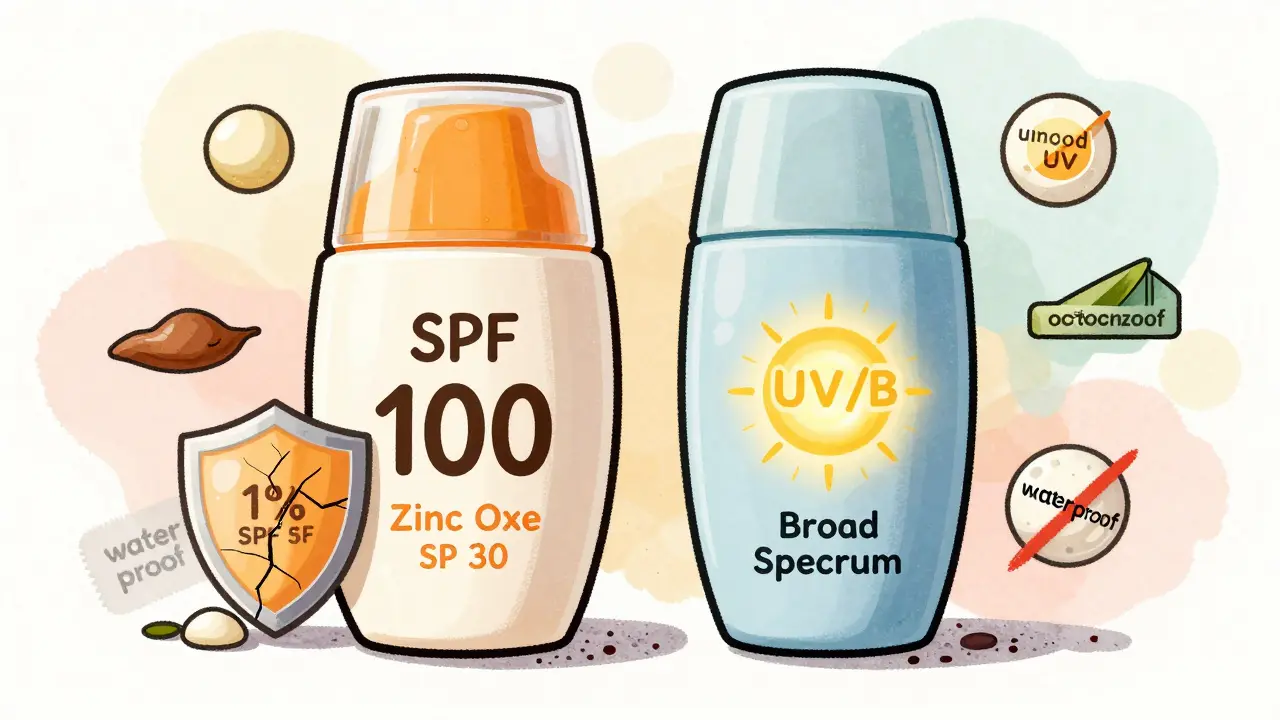
How Much Should You Actually Use?
Most people use only 25-50% of the recommended amount. That cuts protection in half. The FDA says you need 2 milligrams of sunscreen per square centimeter of skin. For your face, that’s about a quarter teaspoon - or five pea-sized dots. Spread it like you’re painting your skin, not dabbing it on. If you’re using a spray, hold it close and spray until your skin glistens, then rub it in. Sprays are easy to miss spots. One study found people sprayed their arms but skipped the back of the neck, ears, and feet. UV camera apps like Sunscreenr can show you where you missed. They’re not perfect, but they’re eye-opening.Reapplication: The Most Ignored Rule
The American Academy of Dermatology says reapply every two hours. And immediately after swimming, sweating, or towel-drying. But only 14% of beachgoers actually do it. Why? Because it’s inconvenient. You’re in the sun. You’re having fun. You forget. Here’s a trick: set a phone alarm. Or better yet, use a wearable like Shade Smart - launching in spring 2025 - that syncs with your phone and buzzes when it’s time to reapply. If you’re not using one, keep a small bottle in your bag. Keep one in your car. Keep one by your desk. Don’t fall for the myth that SPF 50 lasts longer. It doesn’t. SPF 30 and SPF 100 both need reapplication every two hours. The number doesn’t change the clock. It only changes how much UVB gets through in the first hour.What to Avoid
Stay away from sunscreens labeled “waterproof.” That term is banned by the FDA. You can only claim “water resistant” - and even then, only for 40 or 80 minutes. After that, you need to reapply. Same goes for “all-day protection.” It’s meaningless. Avoid products with PABA or trolamine salicylate. The FDA proposed banning them in 2024. They’re outdated, less effective, and more likely to cause allergic reactions. Don’t trust price as a sign of quality. CVS Health SPF 50 spray costs $2.99. JLo Beauty’s SPF 30 moisturizer costs $55. Both can offer the same protection. The difference is branding, fragrance, and packaging. Stick to the active ingredients, not the bottle.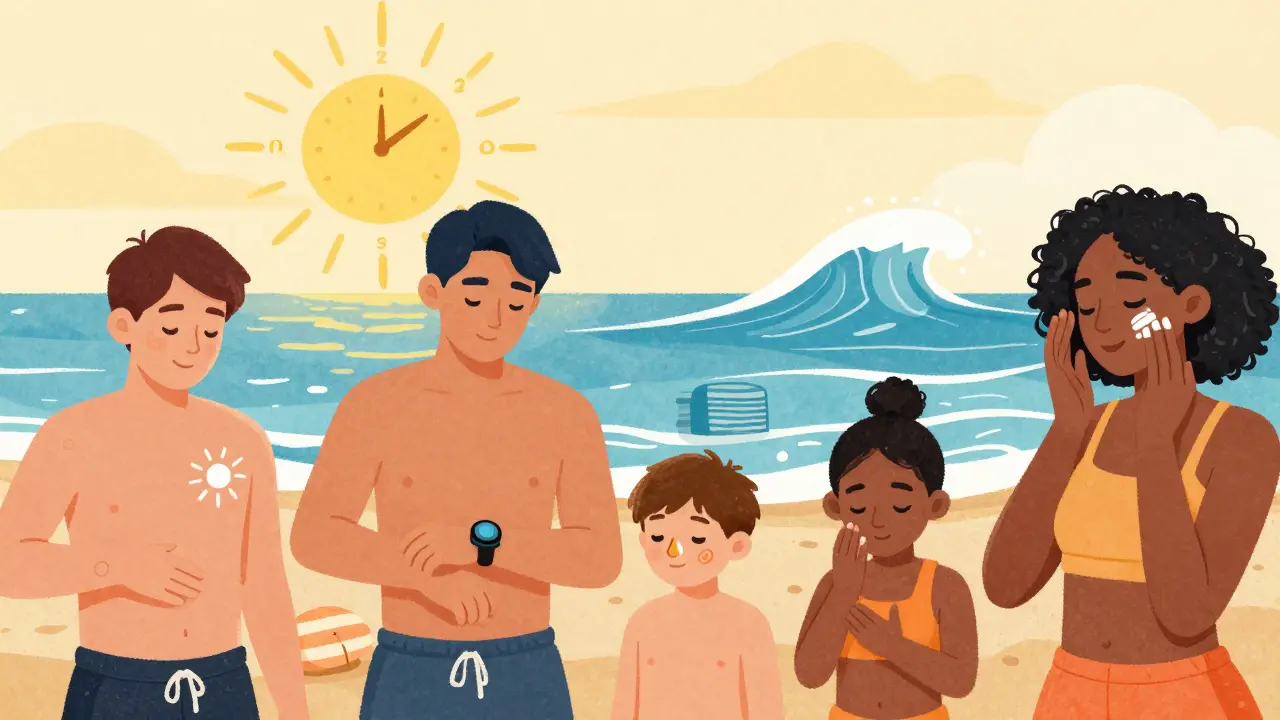
Who Needs It Most?
Everyone. But some people need it more. People with fair skin, a history of skin cancer, or a family history of melanoma should use SPF 30+ daily - even on cloudy days. UV rays penetrate clouds. Up to 80% of them get through. People with darker skin tones are often told they don’t need sunscreen. That’s false. Melanoma is deadlier in Black patients because it’s often diagnosed late. And UV damage still causes hyperpigmentation, wrinkles, and skin cancer in all skin tones. Children under six months should be kept out of direct sun. For kids over six months, mineral sunscreens are preferred. Avoid sprays on children - you can’t control how much they inhale.What’s Changing in 2025
The FDA is expected to finalize new rules by December 2025. Sunscreens will need to meet stricter UVA protection standards - closer to what the EU already requires. Some chemical filters may be banned. Zinc oxide and titanium dioxide will remain the only mineral options approved. The market is shifting. Mineral sunscreens are growing fast - expected to hit 35% of sales by 2027. But until they match chemical sunscreens in protection, they’re not a full replacement. The best option right now? A chemical sunscreen with avobenzone and octocrylene, or a mineral one with high zinc oxide (15-20%) and no white cast.Final Checklist
- Choose SPF 30 or higher - no lower.
- Look for “broad spectrum” on the label.
- Check active ingredients: zinc oxide, avobenzone, octocrylene.
- Use a quarter teaspoon for your face - not a dab.
- Reapply every two hours - or after swimming, sweating, or towel drying.
- Don’t rely on spray alone - rub it in.
- Don’t trust SPF 100 to last longer.
- Test mineral sunscreens on your skin tone before buying.
- Use sunscreen every day - even if it’s cloudy or you’re indoors near a window.
Sunscreen isn’t optional. It’s the single most effective thing you can do to prevent skin cancer and premature aging. You don’t need the most expensive one. You just need the right one - and the discipline to use it properly.
SPF 50 is basically a placebo with a higher price tag. The marginal gain from 97% to 98% UVB blocking is statistically irrelevant if you’re not applying enough or reapplying. Real talk: most people smear on a nickel-sized amount and call it a day. That’s not sunscreen, that’s a decorative glitter layer.
And don’t get me started on sprays. You’re not spraying your skin-you’re spraying the wind. I’ve seen people spray their arms while holding their breath like they’re avoiding a gas leak. Then they wonder why their shoulders look like lobster meat by noon.
Mineral sunscreens? Great for sensitive skin, terrible for anyone who doesn’t want to look like a ghost at a summer BBQ. But if you’re using tinted zinc oxide with niacinamide? That’s the sweet spot. EltaMD is basically dermatology’s version of a Tesla-expensive but worth every penny if you care about your skin long-term.
My cousin got melanoma at 29. She used SPF 100. She thought she was safe.
OMG I JUST REALIZED I’VE BEEN USING SUNSCREEN WRONG MY WHOLE LIFE 😭
I thought if I put it on in the morning I was good till sunset. Like, I’m not a monster, I just thought SPF 50 meant I could chill all day. But now I’m like… I’ve been giving myself wrinkles AND cancer??
Also I bought that JLo moisturizer because it smelled like vacation and now I feel so dumb. I’m going to buy the CVS spray and rub it in like a madwoman. Thank you for this. I’m gonna set alarms now. Like, actual phone alarms. I even bought a tiny bottle for my purse. I’m a new person.
Also, does anyone know if the Shade Smart thing works? I’m scared to spend money on tech but I’m also scared of dying of skin cancer. HELP.
People don’t understand that sunscreen is a form of control. We’ve been conditioned to believe that protection = safety. But nature doesn’t care if you’re ‘protected.’ The sun doesn’t negotiate. It doesn’t care if you’re fair-skinned or dark-skinned. It just is.
And yet we treat it like a chore. Like a product we can buy to absolve ourselves of responsibility. We use SPF 100 like a magic shield while still spending 8 hours outside, eating junk food, and scrolling TikTok.
True protection isn’t chemical. It’s behavioral. Stay in the shade. Wear a hat. Don’t go out at noon. That’s the real SPF.
Also, oxybenzone? That’s not just bad for reefs-it’s bad for your hormones. The FDA knows. They just don’t care enough to ban it. Welcome to capitalism, folks. 😌
I’ve read through this entire post twice and I still have questions. First, when you say ‘SPF 30 blocks 97% of UVB,’ is that under ideal lab conditions or real-world application? Because if it’s lab, then the 97% number is meaningless unless we know how much people actually apply. And we don’t. Studies show the average person applies 0.5mg/cm² instead of 2mg/cm². So even SPF 50 becomes SPF 10 in practice.
Second, the article mentions avobenzone degrades unless stabilized-but it doesn’t say how to tell if it’s stabilized. Is there a way to decode the ingredient list? Like, if octocrylene is listed after avobenzone, does that mean it’s stabilized? Or is that just alphabetical order?
Third, the FDA’s UVA testing requires protection up to 370nm, but UVA-1 goes up to 400nm. So technically, even ‘broad spectrum’ sunscreens are leaving 30nm of UVA unprotected. That’s not trivial. That’s a gap wide enough for photoaging to walk through.
Fourth-why are we still using chemical filters that absorb UV and convert it to heat? Heat causes inflammation. Inflammation causes collagen breakdown. So we’re blocking UV but still damaging skin with the energy we’re not blocking. Is there any sunscreen that reflects *all* UV without generating heat? Zinc oxide does, but only if it’s in high enough concentration and properly dispersed. Which most aren’t.
Bottom line: we need better regulation, better testing, and better education. And until then, we’re all just guessing.
SPF 100 is a scam. Period. You're not getting 100% protection. You're getting marketing. The FDA lets companies lie by omission. That’s not a regulation. That’s a loophole designed for profit.
And don’t tell me mineral sunscreens are safer. Zinc oxide nanoparticles? They’re in your lungs now. You think your skin blocks them? Think again. Every time you rub it in, you’re aerosolizing it. You’re breathing your sunscreen.
Also, ‘broad spectrum’ means nothing unless you test it yourself. I bought a $40 tube labeled SPF 50+. Used a UV meter. Got SPF 12. The brand didn’t even list the active ingredients on the box. That’s fraud. And nobody gets fined.
Stop buying into the lie. Sunscreen is not medicine. It’s a cosmetic with weak oversight. Protect yourself by staying indoors. That’s the only real SPF.
You people are so naive. You think sunscreen is the problem? No. It’s the corporations. They make the chemicals. They lobby the FDA. They fund the ‘studies.’ They profit from your fear.
And now you’re all running around like chickens with your heads cut off buying tinted mineral sunscreens because some influencer said so. You’re not protecting yourself-you’re buying into a cult.
Here’s the truth: the sun doesn’t kill you. Fear does. The fear that you’ll get cancer. The fear that you’ll age. The fear that you’re not doing enough.
What if the real answer is… just live? Let your skin tan. Let it burn. Let it heal. That’s how evolution works. You think your great-grandparents wore SPF 50? No. They lived to 90. Because they didn’t live in fear.
Stop buying. Start living.
Dear fellow humans, I am from India where sun exposure is a daily reality. I use SPF 50+ mineral sunscreen with zinc oxide 20% and reapply every 90 minutes. I do not use sprays. I use a pea-sized amount for face and neck. I wear a wide-brimmed hat. I avoid sun between 11 AM and 3 PM.
My skin has never burned. I have no hyperpigmentation. I am 42 and people think I am 30.
Science is not a trend. It is a discipline. Please respect it.
Thank you.
For real, the biggest thing I learned from this is that I’ve been using like half the amount I need. I thought I was being generous with a dime-sized blob. Turns out I was being stingy.
Also, I never knew mineral sunscreens could be tinted and not look like I was wearing a mask. Tried the Black Girl Sunscreen last summer-no white cast, felt like lotion, didn’t melt off. Still reapply every two hours though. Just… less guilt now.
And yeah, the alarm thing? Genius. I set one for 2 PM every day now. Even if I’m at my desk. I don’t care. My skin is worth it.
SPF is a Western obsession. In my village, we never used sunscreen. We wore turbans. We worked in shade. We drank neem water. We did not fear the sun. We respected it.
Now, you buy $55 lotions and still get cancer. Why? Because you have forgotten how to live. You are not protecting your skin. You are buying control.
Look to the East. Look to tradition. The sun is not your enemy. Your fear is.
Interesting. I’ve been using a mineral sunscreen with 20% zinc oxide for years. I reapply every 90 minutes if I’m outside. I also wear a hat and UV-blocking sunglasses. I’ve never had a sunburn. I’ve never had a mole change.
But here’s the thing-I don’t use it on cloudy days. I don’t use it indoors unless I’m near a window for 6+ hours. The science says UVA penetrates glass. But I’ve never seen a study that shows indoor exposure adds up to meaningful damage over decades.
Maybe I’m wrong. Maybe I’m lucky. But I’ve seen people who use sunscreen religiously and still get melanoma. And I’ve seen people who never use it and live to 95.
Maybe the real answer isn’t in the bottle. Maybe it’s in the balance.