Online Pharmacy Counterfeits: How Fake Medicines Put Your Life at Risk
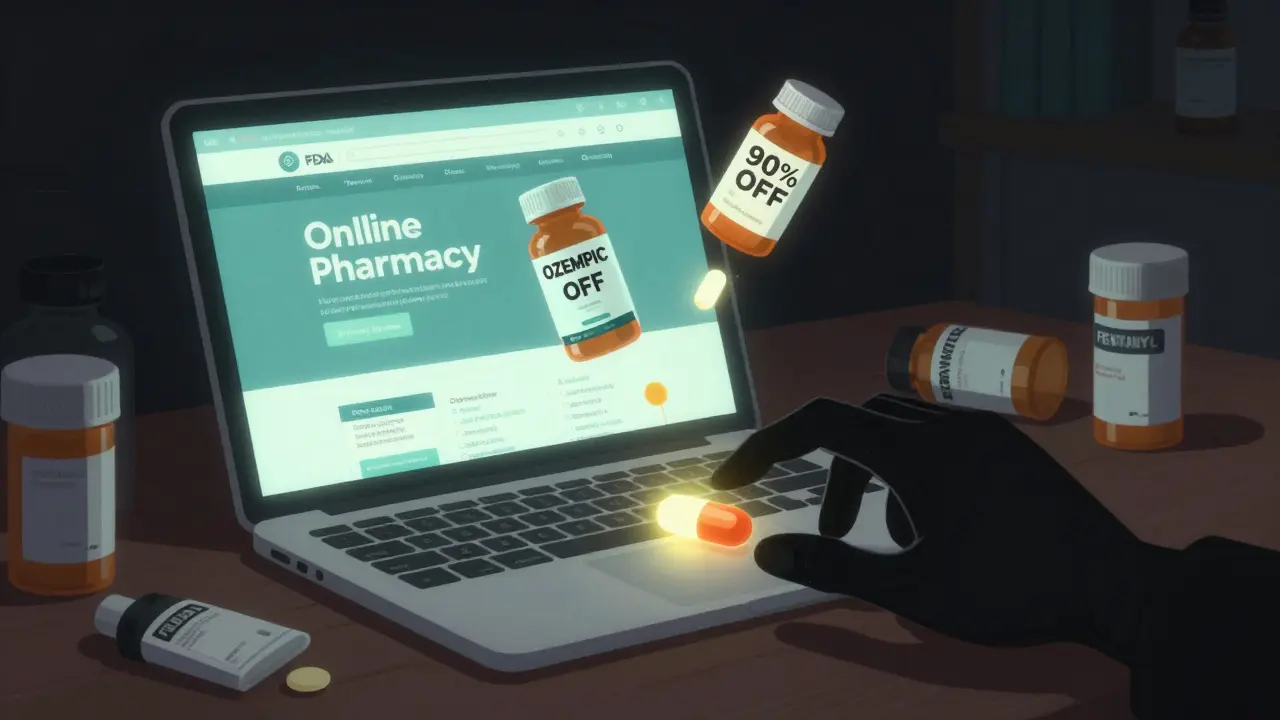
Buying medicine online sounds convenient-especially when you see a website offering Ozempic, Botox, or painkillers at half the price of your local pharmacy. But behind that tempting deal could be a pill laced with fentanyl, a fake Botox vial filled with industrial chemicals, or a counterfeit diabetes drug with no active ingredient at all. These aren’t hypothetical risks. They’re happening every day, and people are dying because of them.
How Fake Medicines End Up Online
| Feature | Legitimate Pharmacy | Illicit Pharmacy |
|---|---|---|
| Prescription Required | Yes, verified by licensed provider | No-sold without any prescription |
| Pharmacist Available | Yes, for consultations | No |
| Storage Conditions | Controlled temperature, humidity | Warehouses, shipping containers |
| Drug Source | Approved manufacturers, regulated supply chain | Unknown labs, often overseas |
| Regulatory Oversight | Licensed by state boards, FDA-compliant | None-operates outside the law |
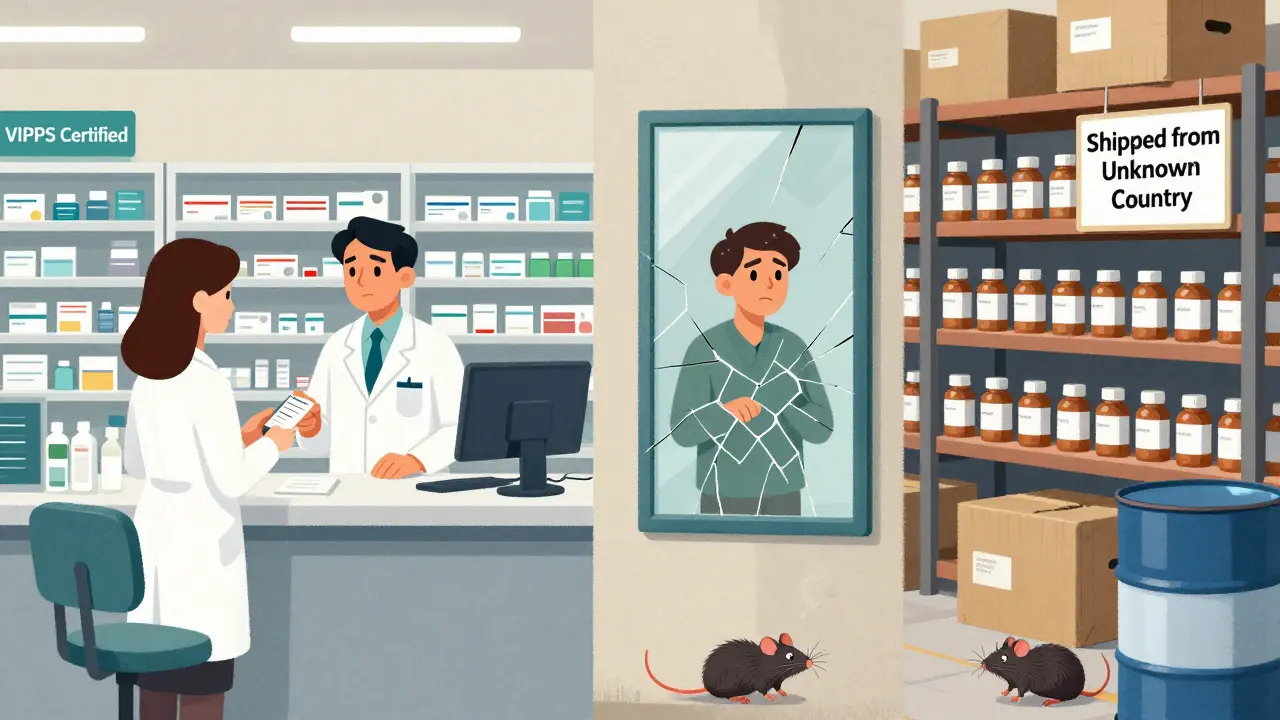
Most legitimate pharmacies follow strict rules: they require a valid prescription, store drugs at proper temperatures, and only source products from approved manufacturers. Illicit online pharmacies do the opposite. They operate from hidden locations, often overseas, where enforcement is weak. Some are run by criminal networks that also deal in drugs, weapons, or human trafficking. Others are simple websites built in a weekend with stolen branding and fake testimonials.
The fake drug trade thrives because it’s profitable and low-risk. A single counterfeit pill can cost less than a dollar to make but sells for $50 or more. And because these operations hide behind fake addresses, encrypted payments, and international borders, law enforcement struggles to shut them down. In 2025 alone, Interpol’s Operation Pangea XVI led to the shutdown of over 13,000 websites selling fake medicines. That’s just one operation in one year.
The Deadly Ingredients in Fake Pills
Counterfeit drugs aren’t just ineffective-they’re deadly. The U.S. Drug Enforcement Administration (DEA) seized over 60 million fake pills in 2024, nearly all of them containing fentanyl. Fentanyl is a synthetic opioid 50 times stronger than heroin. A dose as small as two milligrams can kill an adult. These pills are made to look exactly like prescription painkillers-oxycodone, Xanax, or Adderall-but they contain no real medication at all. Just fentanyl. And sometimes, methamphetamine.
It’s not just painkillers. Fake Ozempic (semaglutide) has been found in multiple states since 2023. Some contain nothing but sugar water. Others have unknown chemicals that can cause severe nausea, liver damage, or pancreatitis. Counterfeit Botox, seized by the FDA in 2024, was found to contain saline solution and even paint thinner. Patients who paid hundreds for wrinkle treatments ended up with facial paralysis, infections, or permanent scarring.
Even common drugs like antibiotics, diabetes pills, and malaria treatments are being faked. A 2024 report from the Pharmaceutical Security Institute found over 2,400 different medicines were counterfeited globally. Some contain too little active ingredient-so they don’t work. Others contain too much, causing overdose. And many are contaminated with rat poison, paint, or fecal matter.
Who Falls for This?
People aren’t stupid-they’re desperate. Many buy from fake pharmacies because they can’t afford real medication. Others don’t have insurance. Some are embarrassed to ask their doctor for help with weight loss or erectile dysfunction. And many just don’t know how to spot a fake site.
Illicit pharmacies have gotten very good at looking real. They use professional logos, secure-looking checkout pages, fake customer reviews, and even live chat support. Some mimic the exact layout of legitimate pharmacies like CVS or Walgreens. They use .com domains that look official. They list U.S. phone numbers that forward to overseas call centers.
The Alliance for Safe Online Pharmacies found that 96% of online pharmacies operate illegally. Only about 5% of websites meet the standards of the Verified Internet Pharmacy Practice Sites (VIPPS) program. That means if you’re not checking for certification, you’re almost certainly buying from a dangerous source.
What Happens When You Take a Fake Drug?
Most people don’t realize they’ve taken a counterfeit medicine until it’s too late. You might feel fine at first-then suddenly collapse. Or you might notice your diabetes isn’t under control, your pain isn’t going away, or your skin is breaking out after a "Botox" injection. By then, the damage is done.
Adverse events from fake drugs are reported daily through the FDA’s MedWatch program. One patient in Florida received counterfeit Muro 128 eye drops-intended to treat corneal swelling. Instead, the solution contained a toxic solvent. She lost vision in one eye. Another person in Texas bought "fentanyl patches" online to manage chronic pain. He died within hours of applying them. His autopsy showed no fentanyl at all-just a lethal dose of carfentanil, a chemical used to tranquilize elephants.
Even if you don’t overdose, you could be spreading infection. Fake vaccines, antibiotics, or insulin can carry bacteria or fungi. These aren’t just bad drugs-they’re biological hazards.
How to Stay Safe
There’s a simple rule: if you didn’t get the medicine from a licensed pharmacy you trust, don’t take it.
- Only buy from pharmacies that require a prescription and have a licensed pharmacist on staff.
- Check for the VIPPS seal from the National Association of Boards of Pharmacy. You can verify it at nabp.pharmacy/vipps/.
- Look for a physical U.S. address and phone number. Call them. If they don’t answer or sound like a call center overseas, walk away.
- Avoid sites offering "no prescription needed" or "discounts up to 90%". If it sounds too good to be true, it is.
- Never click on ads for medications on social media, YouTube, or Google search results. These are almost always fake.
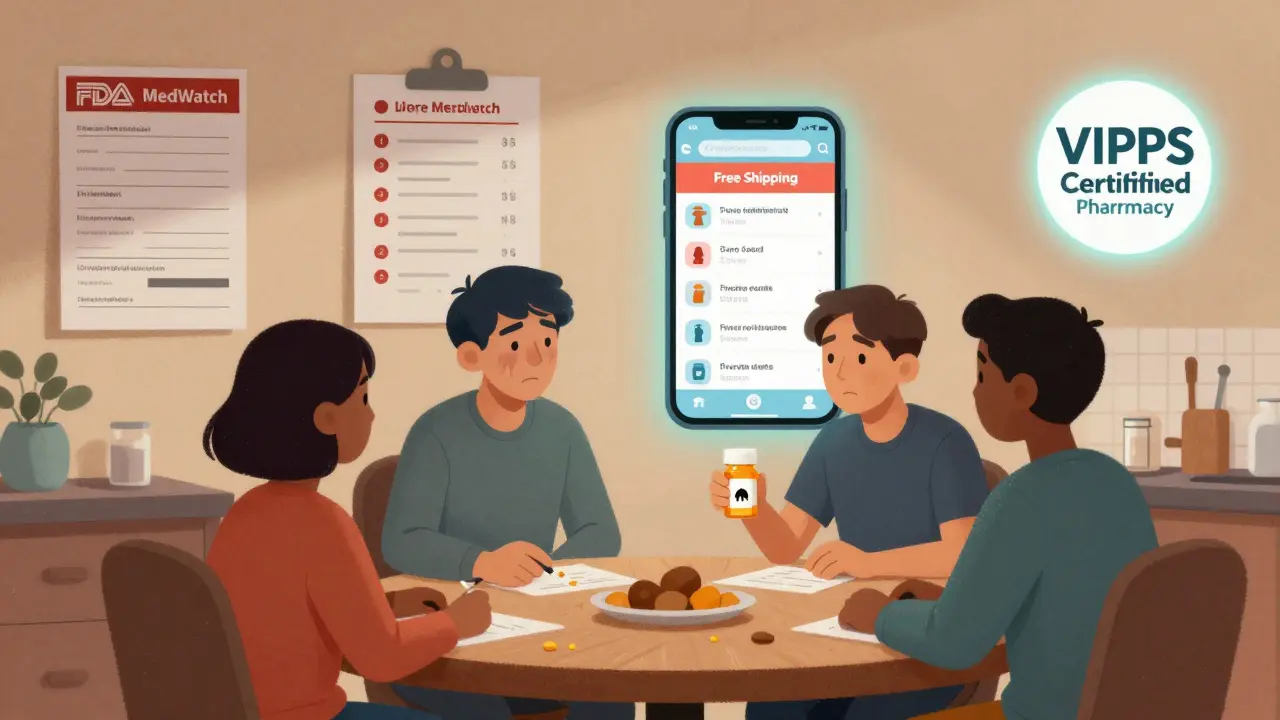
The FDA’s BeSafeRx program gives you a checklist to follow before you buy. It takes less than two minutes. That’s all it takes to avoid a life-threatening mistake.
What to Do If You’ve Already Bought Something Suspicious
If you’ve taken a drug from an unknown online source and feel unwell, seek medical help immediately. Tell your doctor you suspect counterfeit medication.
Report the website to the FDA:
- Email: [email protected]
- Phone: 855-543-3784 or 301-796-3400
Also report adverse reactions through MedWatch. Your report could help stop a dangerous product before it harms someone else.
And if you bought a fake drug-don’t flush it, throw it away, or give it to someone else. Keep it in its original packaging. Law enforcement may need it as evidence.
The Bigger Picture
This isn’t just about one bad website. It’s a global crisis. Countries spend $30.5 billion a year on fake medicines. Criminal networks use the profits to fund other crimes. The same groups selling fake Ozempic are often behind fentanyl trafficking, human smuggling, and cyber fraud.
Regulators are fighting back. The U.S. Drug Supply Chain Security Act (DSCSA) now requires every prescription drug to have a digital trace from manufacturer to pharmacy. But online sellers bypass this system entirely. They don’t use licensed distributors. They don’t track shipments. They don’t care about safety.
The only real defense is you. Knowing how to spot a fake pharmacy. Knowing what to look for. Knowing that no discount is worth your life.
Can I trust online pharmacies that are based in Canada or the UK?
Not necessarily. While Canada and the UK have strong drug safety systems, many websites claiming to be Canadian or British are actually scams operating from other countries. Even if a site uses a .ca or .uk domain, it may not be licensed in that country. Always check for VIPPS certification or equivalent local licensing, and verify the physical address. A real pharmacy will have a verifiable location and contact information.
Why are counterfeit drugs so common for weight loss and cosmetic treatments?
Drugs like Ozempic, Wegovy, and Botox have extremely high profit margins because demand far outstrips supply. They’re expensive, hard to get through regular doctors, and often used for non-medical reasons (like weight loss or cosmetic improvement). This makes them prime targets for counterfeiters. Criminals know people will pay hundreds-even thousands-for these drugs, and they don’t care if the product kills them.
Do legitimate pharmacies ever sell drugs without a prescription?
No. In the U.S., any pharmacy that sells prescription drugs without a valid prescription is breaking federal law. Even if a site claims to have "online doctors" who issue prescriptions after a quick chat, those are not legitimate medical evaluations. Real prescriptions require a full medical history, physical exam, or telehealth visit with a licensed provider who knows you. If a website gives you a prescription after answering three questions, it’s fake.
What should I do if I think I bought a counterfeit drug?
Stop taking it immediately. Contact your doctor and explain your concerns. Then report the product to the FDA using their MedWatch system or by calling 855-543-3784. Save the packaging, receipt, and any communication you had with the website. This information helps authorities track down the source and prevent others from being harmed.
Are there any safe ways to buy medicine online?
Yes-but only through verified pharmacies. Look for the VIPPS seal (from the National Association of Boards of Pharmacy) or check if the pharmacy is licensed in your state. Reputable pharmacies will have a licensed pharmacist available to answer questions, require a valid prescription, and ship directly from a regulated facility. If you’re unsure, call your local pharmacy and ask if they can fill your prescription and ship it to you. It’s often cheaper and far safer than buying from an unknown website.
Final Thought
You wouldn’t buy a car from a stranger on the side of the road. You wouldn’t eat food from an unmarked package. So why risk your health with medicine from a website you can’t verify? Fake drugs aren’t just a scam-they’re a death sentence in disguise. The next time you see a deal that’s too good to be true, remember: your life isn’t worth a discount.
Let’s be real-this whole ‘fake drugs kill’ narrative is just fearmongering to push people back into the overpriced pharmacy system. I’ve been buying my insulin online for three years. Never had an issue. The government and big pharma don’t want you to know how easy it is to bypass their monopoly. If you’re dying because you can’t afford $800 vials, maybe the problem isn’t the website-it’s the system that lets them charge that much.
There’s a deeper ethical layer here that deserves attention. The commodification of health-turning life-saving medication into a profit-driven commodity-creates the very conditions that make counterfeit markets thrive. When access is denied by design, people will seek alternatives, regardless of risk. The solution isn’t just better regulation; it’s structural reform that prioritizes human life over shareholder value.
I work as a clinical pharmacist, and I see this every day. People come in terrified because they took a ‘cheap Ozempic’ from a site they found on Reddit. One woman had pancreatitis from a fake vial-she’d paid $300 and thought she was saving money. The truth? The real drug costs $1,200, but insurance covers half. If you’re struggling, talk to your doctor. There are patient assistance programs. There are generic alternatives. There’s help. You don’t have to risk your life for a discount.
So let me get this straight. The FDA shuts down 13k sites a year... and we're still buying from them? 🤡
I get why people do it. I had to buy my husband’s blood pressure meds online after his insurance dropped coverage. We were lucky-he didn’t get sick. But I still check every site for the VIPPS seal now. It’s not about being paranoid. It’s about being smart.
This is all part of the New World Order. The FDA, Big Pharma, and the CDC are in cahoots to keep you dependent on overpriced drugs so they can control the population. The real medicine is out there-you just have to know where to look. I’ve been buying my supplements from a guy in Bulgaria for years. He sends them in unlabeled vials. No paperwork. No questions. I’ve never been sick. Coincidence? I think not.
Let’s stop pretending this is about safety. This is about corporate control. The VIPPS seal? A marketing gimmick. The FDA’s ‘safe’ sites? All owned by the same conglomerates that set the prices. Meanwhile, the real supply chain is opaque-do you really think your ‘legitimate’ insulin comes from a ‘regulated’ facility? It’s shipped through a dozen intermediaries, stored in unmonitored warehouses, and tested once a year. The only difference between a ‘legit’ pharmacy and a ‘fake’ one is the logo on the invoice.
Bro. I bought fake Adderall off Instagram last year. Thought I was gonna ace finals. Turned out it was just crushed aspirin and glitter. I was so high on placebo I cried during my chem exam. Now I just go to the campus health center. They give me samples. Free. No questions. If you’re broke, don’t gamble with your brain. Talk to someone. Seriously. It’s not that hard.
Imagine a world where medicine was a right, not a reward for having good insurance. The fact that people are risking their lives because they can’t afford $500 pills isn’t a failure of online shopping-it’s a failure of society. I don’t blame the guy who buys fake Ozempic. I blame the system that lets a drug company charge $15,000 a year for a molecule that costs $2 to make. We’re not fighting criminals-we’re fighting capitalism.
It’s not complicated. You follow the law or you endanger lives. There is no middle ground. People who buy from unverified pharmacies are not ‘desperate’-they’re irresponsible. If you can’t afford medication, apply for assistance. If you don’t know how, ask your doctor. If you’re too lazy to do that, then yes-you’re the reason people die. This isn’t a conspiracy. It’s basic accountability.
i read this article and thot wow this is realy impotent. i live in india and we have lot of fake medicine here. but i never buy online. i go to local pharma store and ask for brand name. even if its expencive. better safe then sorry. thanks for this post.