Methadone and QT Prolongation: ECG Monitoring Guidance
Methadone QTc Risk Assessment Tool
Enter Patient Data
Enter your data and click "Assess Risk Level" to see results.
Risk Level
Clinical Guidance:
Reference Thresholds ():
- Normal: ≤ ms
- Borderline: ms
- Significant: > ms
- High Risk: >500 ms (Action Required)
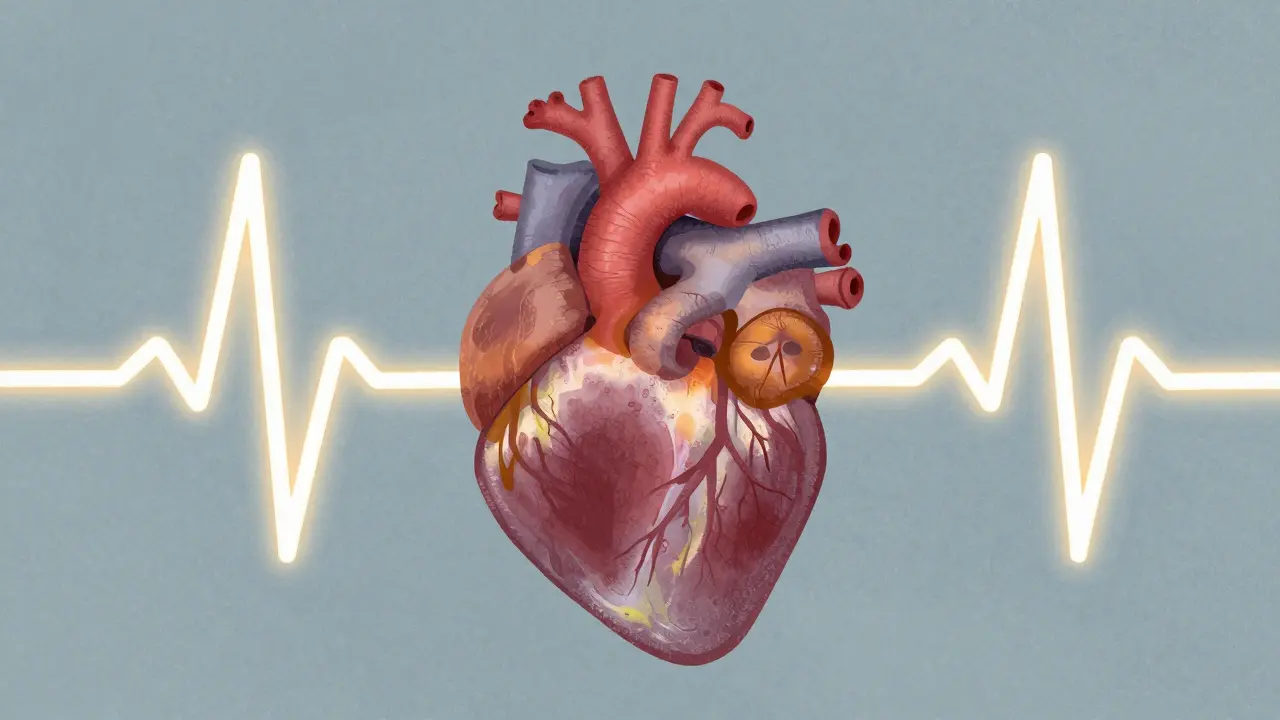
Starting Methadone is a long-acting synthetic opioid agonist used primarily for pain management and opioid use disorder treatment can be a life-changing step toward stability. It reduces cravings, cuts down on criminal activity, and significantly lowers the risk of fatal overdose. But there is a hidden catch that many patients and even some providers overlook: methadone affects your heart’s electrical system. Specifically, it can slow down the repolarization phase of the heartbeat, leading to something called QT interval prolongation is a delay in the heart's electrical reset cycle visible on an electrocardiogram (ECG). If this delay gets too long, it opens the door to dangerous arrhythmias like Torsades de Pointes, which can cause sudden cardiac death.
This isn't just theoretical fear-mongering. The U.S. Food and Drug Administration (FDA) issued a major safety alert back in 2006 because these risks were under-recognized. Today, we have clear data showing how to balance the incredible benefits of methadone maintenance therapy with the need to keep your heart safe. The key isn't to avoid the medication-it’s to monitor it correctly. Let’s break down exactly what you need to know about ECG monitoring, risk factors, and when to worry.
Understanding the Mechanism: Why Methadone Affects the Heart
To understand why you need an ECG, you first need to know what methadone does inside your body beyond blocking opioid receptors. Methadone inhibits specific potassium channels in the heart muscle cells. These are known as hERG potassium channels are heart-specific ion channels responsible for repolarizing cardiac cells after each beat, encoded by the KCNH2 gene. Normally, these channels open during Phase 3 of the cardiac action potential to let potassium out, resetting the cell for the next beat. When methadone blocks them, that reset takes longer.
On an electrocardiogram (ECG), this delay shows up as a longer QT interval. The QT interval measures the time from the start of the Q wave to the end of the T wave-essentially, how long it takes your ventricles to contract and then relax. If this window stretches too far, the heart muscle becomes electrically unstable. This instability can trigger premature beats that spiral into Torsades de Pointes, a specific type of ventricular tachycardia. While rare, this condition is serious. The good news? It is largely preventable with proper screening and monitoring.
Reading Your Numbers: What Is a Normal QTc?
When you get an ECG, the doctor won’t just look at the raw QT interval. Because heart rate changes the length of the QT interval naturally, they correct it using a formula, usually Bazett’s or Fridericia’s, to give you a Corrected QT interval (QTc) is the QT interval adjusted for heart rate to allow for standardized comparison across different patients. This number is crucial for decision-making.
Here is how experts classify these numbers based on guidelines from the University of Rochester Medical Center and Medsafe:
| Category | Men (ms) | Women (ms) |
|---|---|---|
| Normal | ≤430 ms | ≤450 ms |
| Borderline Prolongation | 431-450 ms | 451-470 ms |
| Clinically Significant Prolongation | >450 ms | >470 ms |
| High Risk (Action Required) | >500 ms | >500 ms |
If your QTc is above 500 milliseconds, your risk of developing Torsades de Pointes increases fourfold. This is the red line where clinicians typically intervene immediately. However, even numbers between 450 and 500 ms require attention, especially if you have other risk factors.
Risk Factors: Who Needs Closer Watch?
Not everyone on methadone will experience significant QT prolongation. In fact, studies show prevalence rates vary widely, from 9% to 88%, depending on the population and dosing. But certain groups are much more vulnerable. The American Heart Association and the American College of Cardiology highlight several key risk factors that stack up against you.
- Dose Dependency: Higher doses generally mean higher risk. Patients taking over 100 mg per day are flagged for closer scrutiny. One study found that daily doses >100 mg increased the odds of significant QT prolongation by 3.7 times.
- Gender: Women are naturally at higher risk. Female patients have a baseline QTc that is slightly longer than men’s, making them 2.5 times more likely to develop issues compared to men on the same dose.
- Electrolyte Imbalances: Low potassium (<3.5 mmol/L) or low magnesium (<1.5 mg/dL) severely exacerbates the problem. Dehydration, diarrhea, or poor nutrition can drop these levels quickly.
- Other Medications: This is a big one. Taking other drugs that also prolong the QT interval creates a compounding effect. Common culprits include certain antibiotics (like moxifloxacin), antipsychotics (like haloperidol), and tricyclic antidepressants. Additionally, drugs that inhibit the CYP3A4 enzyme, such as fluconazole or fluvoxamine, can increase methadone levels in your blood by up to 50%, indirectly raising cardiac risk.
- Heart Conditions: Pre-existing structural heart disease, heart failure, or congenital Long QT Syndrome puts you in the high-risk category automatically.
- Sleep Apnea: About 50% of people on methadone maintenance have sleep apnea. The resulting intermittent hypoxia (low oxygen) stresses the heart and further increases arrhythmia risk.
Monitoring Guidelines: When and How Often?
You might wonder, "Do I need an ECG every week?" The answer is no. Current best practices, supported by the Substance Abuse and Mental Health Services Administration (SAMHSA) and recent JAMA Internal Medicine research, advocate for a risk-stratified approach. Blanket screening everyone monthly is inefficient; ignoring high-risk patients is dangerous.
Here is the standard protocol most clinics follow:
- Baseline ECG: Before starting methadone, or within the first few days, you should have a baseline ECG. This establishes your normal QTc. If you are starting at a high dose (>100 mg/day), this is non-negotiable.
- Steady-State Check: After starting or changing your dose, wait 2 to 4 weeks. This allows the drug to reach steady-state concentration in your body. Get another ECG then.
- Ongoing Monitoring Frequency:
- Low Risk: QTc <450 ms (men) / <470 ms (women) and no other risk factors → Monitor every 6 months.
- Moderate Risk: QTc 450-480 ms (men) / 470-500 ms (women) OR 1-2 risk factors → Monitor every 3 months.
- High Risk: QTc >480 ms (men) / >500 ms (women) OR ≥3 risk factors → Monitor monthly.
A 2023 study published in JAMA Internal Medicine showed that implementing these structured protocols reduced serious cardiac events by 67% compared to standard care. That is a massive improvement in safety without stopping effective treatment.

What Happens If Your QTc Is Too High?
If your ECG comes back with a concerning QTc, don’t panic. There is a clear pathway to manage it. Clinicians rarely just stop methadone cold turkey, as that leads to withdrawal and relapse. Instead, they take a stepwise approach.
First, they check for reversible causes. Are your electrolytes low? They will prescribe potassium or magnesium supplements. Are you taking an interacting medication? They might switch your antibiotic or antidepressant to a safer alternative. Sometimes, simply reducing the methadone dose by 10-20% and splitting it into two doses per day can lower the peak plasma concentration enough to bring the QTc down.
If the QTc remains above 500 ms despite these adjustments, or if you have multiple unmanageable risk factors, the conversation shifts to alternatives. Buprenorphine is a partial opioid agonist used for addiction treatment with a significantly lower risk of QT prolongation compared to methadone is often the go-to alternative. It has a ceiling effect on respiratory depression and, crucially, does not block hERG channels to the same extent. Switching to buprenorphine can maintain your recovery progress while protecting your heart.
Patient Advocacy and Access Issues
Despite clear guidelines, access to consistent monitoring varies wildly. Surveys from patient communities reveal that nearly 70% of users report inconsistent ECG monitoring across different treatment centers. Some clinics treat it as optional; others make it routine. This inconsistency is dangerous.
As a patient, you have the right to ask for your QTc number. You should know your baseline and your current status. If your clinic doesn’t offer regular ECGs and you fall into a moderate or high-risk category, consider discussing a transfer to a center with a comprehensive medical team. Remember, sudden deaths in this population are sometimes misattributed to overdose when they were actually cardiac events. Proper monitoring saves lives by catching these silent threats early.
Can methadone kill you through heart problems?
Yes, but it is rare. Methadone can cause a condition called Torsades de Pointes, a severe heart rhythm disorder, if it significantly prolongs the QT interval. This risk increases dramatically if your corrected QT interval (QTc) exceeds 500 milliseconds. Regular ECG monitoring helps prevent this by allowing doctors to adjust doses or switch medications before a crisis occurs.
How often should I get an ECG if I am on methadone?
Frequency depends on your risk level. Low-risk patients typically need an ECG every 6 months. Moderate-risk patients (those with borderline QTc or 1-2 risk factors) should be monitored every 3 months. High-risk patients (QTc >480-500 ms or multiple risk factors) require monthly monitoring. All patients should have a baseline ECG before starting and one at steady state (2-4 weeks after initiation).
Is buprenorphine safer for the heart than methadone?
Generally, yes. Buprenorphine has a much lower risk of causing QT prolongation because it does not block the hERG potassium channels in the heart as strongly as methadone does. For patients with significant cardiac risk factors or prolonged QT intervals, switching to buprenorphine is often recommended as a safer alternative.
What medications interact with methadone to increase heart risk?
Several classes of drugs increase risk. These include other QT-prolonging agents like certain antibiotics (moxifloxacin), antipsychotics (haloperidol), and antidepressants. Additionally, drugs that inhibit the CYP3A4 enzyme, such as fluconazole (an antifungal) or fluvoxamine (an SSRI), can raise methadone levels in your blood by up to 50%, indirectly increasing the strain on your heart.
Does my gender affect my risk of QT prolongation?
Yes. Women are at a significantly higher risk than men. Studies show women are 2.5 times more likely to develop QT prolongation on methadone. This is partly because women naturally have slightly longer baseline QT intervals. Consequently, the threshold for concern is lower for women (>470 ms) compared to men (>450 ms).
What should I do if my QTc is above 500 ms?
If your QTc exceeds 500 ms, immediate medical attention is needed. Your provider will likely reduce your methadone dose, correct any electrolyte imbalances (potassium/magnesium), review other medications for interactions, and consult a cardiologist. In many cases, switching to an alternative treatment like buprenorphine is necessary to ensure safety.
I think it's important to look at the holistic picture here 🌿 Methadone isn't just a chemical intervention, it's a bridge for the soul to find stability again. When we understand the energetic impact of substances on our physical vessel, we can better appreciate why monitoring is necessary. It's not about control, but about harmony between mind and body. Let us support each other in healing rather than judging those who struggle 💚
Oh great, another reason to feel guilty about existing. I suppose next they'll tell us breathing too hard might cause cardiac arrest. Thanks for the life advice, really needed that anxiety boost today.
The pharmacological implications of methadone-induced QT prolongation are often underestimated by laypersons who lack a foundational understanding of electrophysiology. It is imperative that patients adhere strictly to the prescribed monitoring schedules, as the hERG channel inhibition is a well-documented phenomenon that cannot be ignored without severe consequences. To suggest otherwise is medically negligent and demonstrates a profound ignorance of cardiovascular physiology. One must respect the scientific data presented herein, which clearly outlines the thresholds for clinical intervention based on gender-specific variations in baseline QTc intervals. Ignorance is not bliss; it is a precursor to preventable mortality.
You think this is just about medicine? Look closer. The FDA issued that alert in 2006, right when Big Pharma was consolidating power over addiction treatment. They want you dependent on their monitoring equipment, turning every patient into a data point for their profit margins. The 'safety' guidelines are a smokescreen to keep you locked into the system, afraid to leave because they've convinced you your heart will stop if you step out of line. Wake up. :)
i dont know why everyone is so uptight about this stuff honestly... like sure your heart might do a little dance but its not the end of the world right? maybe you just need to relax more and stop listening to all these scary stories... i mean who cares if its 500ms or whatever... live a little man...
Oh my goodness!! 😱 Do you realize how dangerous this is?! People are literally walking around with ticking time bombs in their chests and nobody is talking about it!!! 🚨🚨 You NEED to get an ECG immediately if you are on this medication!!! It is morally reprehensible that doctors aren't screaming this from the rooftops!!! I am so angry that people are ignoring this basic fact!!! 🤬💔 Please share this everywhere!!! #SaveHearts #MethadoneDangers !!!
Your heart rate matters more than your feelings. Stop complaining and get tested.
This is such valuable information! I'm so glad someone is sharing this because knowledge really is power when it comes to our health. I have a friend who started methadone recently and she was worried about her heart, so this gives her peace of mind knowing what signs to look for. It's amazing how much better we can manage our recovery when we understand the science behind it. Thank you for putting this together in such a clear way! 🌟
Ah yes, nothing says 'I love you' like a government-mandated electrocardiogram. Truly the pinnacle of modern romance. But sure, let's pretend this isn't just another way to micromanage our lives while pretending to save them. Bravo.
The ontological significance of the hERG potassium channel inhibition by methadone necessitates a rigorous epistemological framework for clinical assessment. When we consider the phenomenological experience of the patient juxtaposed with the empirical data of QTc prolongation, we see a dialectic tension between therapeutic efficacy and physiological risk. It is crucial that we engage in a hermeneutic analysis of the Bazett’s formula corrections to ensure that the corrected QT interval reflects the true repolarization dynamics of the myocardium. Furthermore, the sociocultural implications of gender-based risk stratification cannot be overlooked, as women exhibit a predisposition to arrhythmogenic events due to inherent electrophysiological variances. We must therefore advocate for a paradigm shift in how we conceptualize opioid maintenance therapy, integrating both biomedical precision and holistic patient-centered care models to mitigate the potential for Torsades de Pointes.
They say it's for safety but I bet the clinics are just trying to sell more tests. Who benefits when you're scared of your own heartbeat? The pharmaceutical companies. Always the pharma companies. Don't trust the numbers.
I appreciate the detailed breakdown here. It helps to have clear guidelines on what constitutes a normal versus high-risk QTc interval. I know many people who are hesitant to seek help due to fear of side effects, so having factual information like this can empower them to make informed decisions with their providers. It's good to remember that monitoring is a tool for safety, not a punishment.
Wait, so if I'm taking fluconazole for a yeast infection and I'm on methadone, does that automatically spike my risk? I didn't realize antifungals could interact like that. This changes everything about how I view minor prescriptions.