Medication Therapy Management: How Pharmacists Optimize Generic Drug Use

You have a prescription in hand. The brand-name version costs $300 a month. Your insurance says you can use the generic for $15. You pick up the cheaper box, but six months later, your condition isn’t improving. Did the drug fail? Or did something else go wrong?
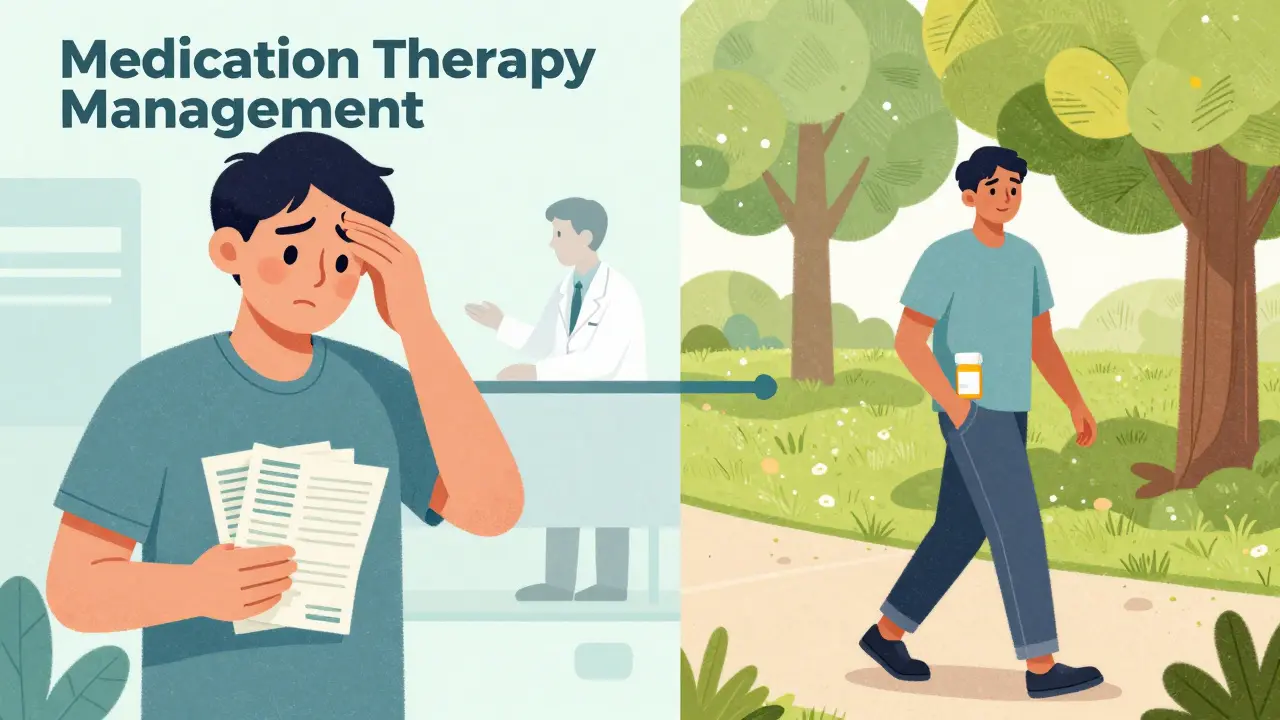
This is where Medication Therapy Management (MTM) comes in. It is not just about handing you pills at the counter. It is a structured service where pharmacists dig deep into your entire medication list to ensure everything works together safely and effectively. A huge part of this work involves navigating the world of generic drugs, ensuring you get the right therapeutic outcome without breaking the bank.
What Is Medication Therapy Management?
Think of MTM as a financial audit for your health. Instead of looking at one transaction, a pharmacist reviews your entire portfolio of medications. The American Pharmacists Association defines it as a service that optimizes therapeutic outcomes for individual patients. This means making sure every pill you take is necessary, effective, safe, and affordable.
In traditional pharmacy practice, interactions are often reactive and brief-averaging just 1.7 minutes per patient. In contrast, an initial MTM consultation takes 20 to 40 minutes. During this time, the pharmacist collects detailed information about your health history, lifestyle, and all prescriptions from every doctor you see. They look for problems like drug interactions, duplicate therapies, or doses that are too high or too low.
The goal is simple: prevent adverse events and improve how you feel. Studies show that when pharmacists intervene through MTM, medication errors drop by 61%, and hospital readmissions decrease by 23% within 30 days. That is a massive shift from simply dispensing drugs to actively managing your care.
The Pharmacist’s Role with Generic Drugs
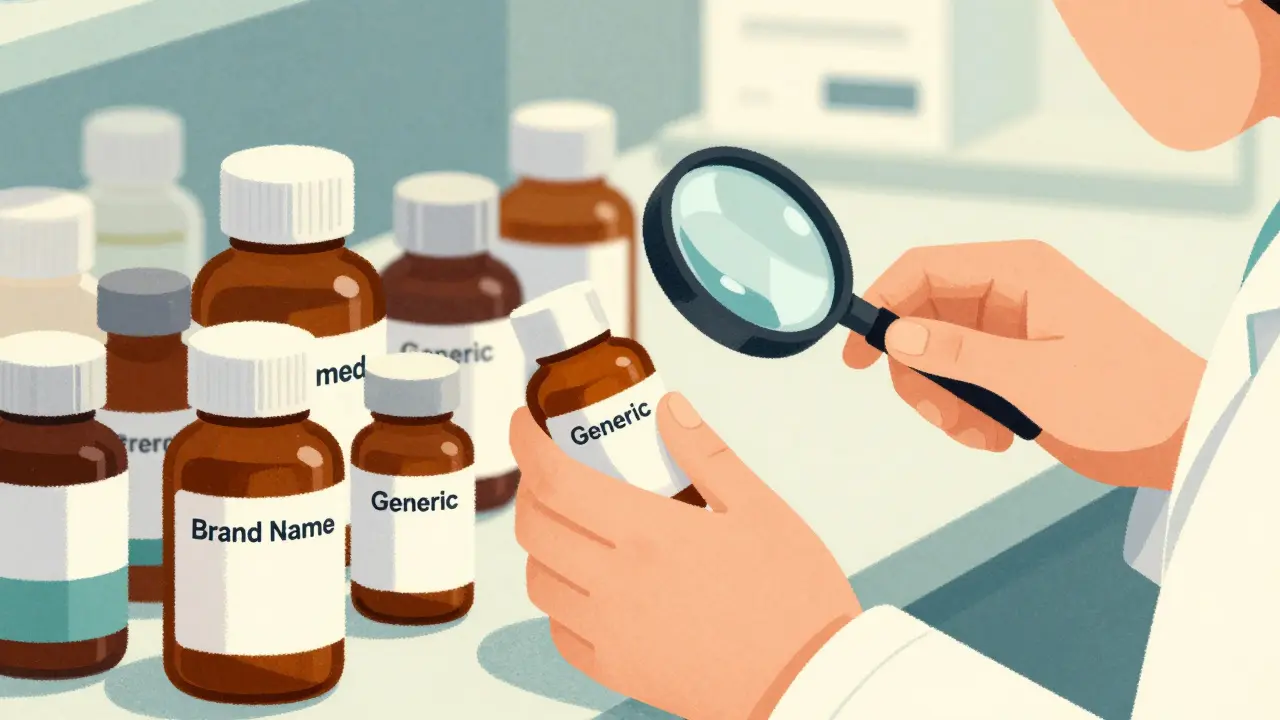
Generic drugs are the backbone of cost-effective healthcare. They contain the same active ingredients as brand-name drugs and must meet strict standards set by the Food and Drug Administration (FDA). However, not all generics are created equal in terms of patient perception and specific clinical nuances. This is where the pharmacist’s expertise becomes critical.
Pharmacists evaluate therapeutic equivalence using the FDA’s Orange Book ratings. An "A" rating means the generic is bioequivalent to the brand name and can be substituted safely. A "B" rating suggests some differences, which might matter for certain sensitive patients. For most drugs, generics reduce costs by 80% to 85%. But if a patient switches to a generic and experiences side effects due to inactive ingredients or slight absorption differences, they might stop taking it. This leads to non-adherence, which contributes to 26% of medication-related health issues.
During an MTM session, the pharmacist addresses these concerns head-on. They explain why a generic was chosen, monitor for any unexpected reactions, and switch back to the brand if clinically necessary and affordable. One HealthPartners study found that when pharmacists optimized generic utilization during MTM, patients saved an average of $287 per month while maintaining their treatment efficacy. Another patient shared on Reddit that switching from a $400 brand inhaler to a $15 generic equivalent during an MTM review literally saved them from choosing between medicine and groceries.
| Feature | Traditional Dispensing | Medication Therapy Management (MTM) |
|---|---|---|
| Focus | Transaction-based (filling prescriptions) | Patient-centered (optimizing outcomes) |
| Time Spent | Average 1.7 minutes | 20-40 minutes (initial), 10-20 minutes (follow-up) |
| Generic Approach | Automatic substitution based on insurance | Clinical evaluation of therapeutic equivalence and patient tolerance |
| Problem Identification | Reactive (issues arise after filling) | Proactive (systematic review identifies ~4.2 problems per review) |
| Cost Impact | Variable, often higher out-of-pocket | Significant savings ($1,247 avg annual reduction per patient) |
How the Comprehensive Medication Review Works
The core component of MTM is the Comprehensive Medication Review (CMR). This is not a quick check-in. It is a systematic process where the pharmacist builds a complete picture of your medication use. Here is what happens step-by-step:
- Data Collection: The pharmacist gathers all your prescriptions, over-the-counter drugs, vitamins, and herbal supplements. They also review your medical history and current symptoms.
- Assessment: Using tools like the Medication Appropriateness Index (MAI), they evaluate each drug against ten criteria, including indication, effectiveness, and cost. They specifically look for opportunities to substitute expensive brand names with therapeutically equivalent generics.
- Identification of Problems: On average, a CMR uncovers 4.2 medication-related problems. These could be unnecessary duplications, dangerous interactions, or affordability barriers.
- Action Plan Creation: The pharmacist develops a Medication-Related Action Plan (MAP). This document outlines clear steps for you to follow, such as "Take Drug A with food," "Switch Drug B to Generic C," or "Stop Drug D because it interacts with E."
- Follow-Up: The pharmacist schedules a follow-up appointment to ensure the changes are working and that you are adhering to the new plan.
This process requires significant documentation. Pharmacists typically spend 5 to 15 minutes documenting each case using the SOAP format (Subjective, Objective, Assessment, Plan). This ensures that your doctors and other providers are aware of the changes made, fostering a collaborative care environment.
Who Qualifies for MTM Services?
Access to MTM depends largely on your insurance coverage. Under Medicare Part D, 100% of sponsors are required to offer Comprehensive Medication Reviews to eligible beneficiaries. To qualify, you generally need to have three or more chronic conditions (like diabetes, hypertension, and asthma), take three or more covered Part D drugs, and project annual drug costs that exceed a certain threshold.
In 2022, CMS reported that 12.7 million Medicare beneficiaries received MTM services, representing 34.2% of all Part D enrollees. However, participation remains a challenge. Only 15% to 25% of eligible beneficiaries actually participate in offered CMRs. Many people simply do not know the service exists or believe their pharmacy does not offer it due to reimbursement complexities.
For those with commercial insurance, access varies widely. While the market serves approximately 85 million Americans through employer-sponsored plans, reimbursement rates are lower. Medicare pays $50 to $150 per CMR, whereas commercial insurers average only $25 to $75. Despite this, employers report a return on investment of $3.17 in healthcare cost savings for every $1 invested in pharmacist-provided MTM services.
Overcoming Barriers to Effective Care
Even with proven benefits, MTM faces hurdles. One major issue is inconsistent reimbursement. Some pharmacies choose not to offer MTM because the payment does not cover the time spent. If you want these services, ask your pharmacy directly if they provide dedicated MTM appointments rather than assuming they do.
Another barrier is integration with Electronic Health Records (EHRs). Currently, only 38% of community pharmacies have seamless EHR integration for MTM documentation. This means your pharmacist might struggle to share findings with your primary care physician unless they use standardized templates or direct communication protocols. High-performing programs use electronic templates to bridge this gap, ensuring 92% of interventions are properly communicated.
Patient misconceptions about generic drugs also pose a challenge. Some patients insist on brand names due to perceived superiority, ignoring the cost burden. Pharmacists trained in MTM spend time educating patients on bioequivalence and therapeutic interchangeability. Dr. William Ellis, a professor of pharmacy practice, notes that pharmacists identify problems other providers miss, particularly regarding appropriate generic substitution where cost barriers directly impact adherence.
The Future of Pharmacist-Led Care
The landscape of medication management is evolving rapidly. Telehealth has become a permanent fixture, with 63% of MTM programs now incorporating virtual platforms. This expands access for rural patients or those with mobility issues. Additionally, pharmacogenomics is entering the mix. Pharmacists are beginning to evaluate how genetic variations affect drug metabolism, helping to decide whether a generic or brand name will work best for your unique biology.
Regulatory changes are also on the horizon. The Pharmacist Medicare Benefits Act, passed by the House in 2021, aims to establish direct Medicare reimbursement for pharmacist services. If fully implemented, this could expand access to 38 million additional beneficiaries. With 78% of health systems planning to expand pharmacist MTM roles by 2025, the profession is moving firmly toward value-based care models where outcomes matter more than volume.
If you are managing multiple medications, especially with a mix of brand and generic drugs, seeking out an MTM service is a proactive step. It transforms your pharmacist from a dispenser into a partner in your health journey, ensuring you get the right drug, at the right price, with the right result.
How much does Medication Therapy Management cost?
For Medicare Part D beneficiaries who qualify, MTM services are typically covered with no additional cost. For those with commercial insurance, coverage varies; some plans cover it fully, while others may charge a copay ranging from $25 to $75 per session. Always check with your specific insurance provider and pharmacy before scheduling.
Are generic drugs always as effective as brand-name drugs?
In most cases, yes. The FDA requires generic drugs to be bioequivalent to their brand-name counterparts, meaning they deliver the same amount of active ingredient into your bloodstream in the same amount of time. However, inactive ingredients (like fillers or dyes) can differ, which may cause rare allergic reactions or tolerability issues. Pharmacists assess these risks during MTM.
Who qualifies for MTM under Medicare?
You likely qualify if you have three or more chronic conditions (such as diabetes, heart failure, or COPD), take three or more covered Part D drugs, and your projected annual drug costs exceed a specific threshold set by your plan. Your Part D sponsor will notify you if you are eligible.
Can my pharmacist change my prescription without talking to my doctor?
It depends on state laws and collaborative practice agreements. In many states, pharmacists can perform therapeutic substitutions (like switching to a generic) automatically. For more complex changes, such as adjusting doses or stopping medications, pharmacists typically consult with your prescriber as part of the MTM process to ensure coordinated care.
How long does an MTM appointment take?
An initial Comprehensive Medication Review usually lasts between 20 and 40 minutes. Follow-up appointments are shorter, typically ranging from 10 to 20 minutes. This dedicated time allows for a thorough review of your health status and medication list.