Managing Patient Hesitation About Generics: Proven Communication Strategies for Pharmacists
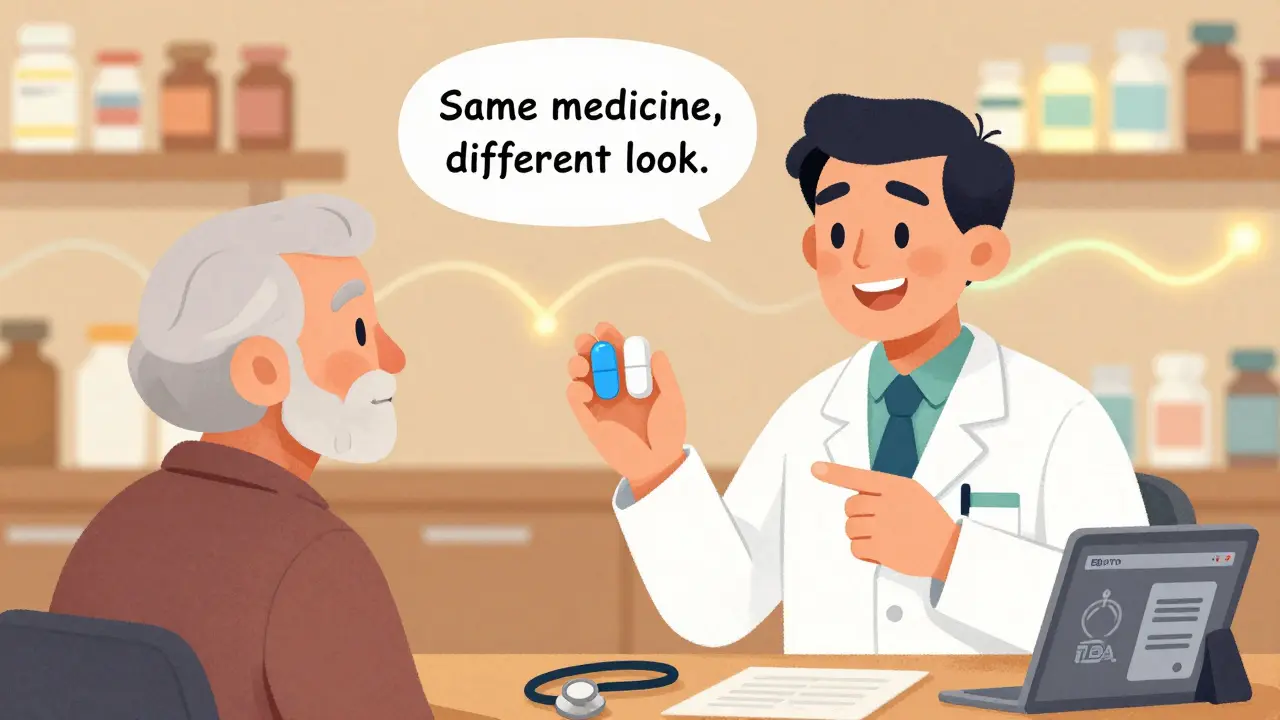
When a patient picks up a prescription and sees a pill that looks completely different from what they’ve taken before, it’s natural to pause. Generic medications are used in over 90% of all prescriptions in the U.S., yet nearly one in four patients still hesitate to take them. That hesitation isn’t about being difficult-it’s about confusion, fear, and broken communication. As a pharmacist, you’re not just filling a script. You’re the last line of defense against misunderstanding, non-adherence, and avoidable health risks.
Why Patients Doubt Generics (And Why It’s Not About Cost)
Many assume patients reject generics because they’re cheaper. That’s a myth. In fact, studies show that when cost is the only reason given, trust drops by 22%. Patients aren’t worried about price-they’re worried about safety. One patient in Halifax told me, "My blood pressure med used to be a blue oval. Now it’s a white rectangle. I thought they gave me the wrong drug." That’s not an isolated story. Over 78% of patients say pill appearance is their biggest concern. The real issue? Misinformation. A 2021 FDA survey found that 43% of patients believe generics contain only 80% of the active ingredient. That’s not true. The FDA requires generics to deliver 80-125% of the same active ingredient as the brand-name version. That’s not a range-it’s a guarantee. But patients don’t know that. They’ve seen ads that make brand-name drugs look like science miracles, while generics are just "the cheaper version."The Communication Gap: What Doesn’t Work
Saying "It’s the same drug, just cheaper" is the worst thing you can say. It reinforces the idea that generics are second-rate. A 2023 study in U.S. Pharmacist found that this phrase cut acceptance rates to just 31%. Another common mistake? Waiting until the patient asks. Only 47% of patients who wait to be told about generics actually accept them. Proactive communication-before the patient even notices the difference-boosts acceptance to 82%. Pharmacists often rush. They’ve got 12 patients waiting. They say, "This is fine," and move on. But that’s not enough. The FDA’s 2022 GDUFA report found that 89% of patients who got education at the time of prescribing-before they even got to the pharmacy-accepted the substitution. That’s because trust is built before the pill is in hand.The Ask-Tell-Ask Method: A Simple Framework That Works
There’s a proven way to turn hesitation into confidence. It’s called Ask-Tell-Ask. It takes three minutes. Here’s how:- Ask: "What are your thoughts about this medication?" Don’t assume they know what it is. Let them speak first. Maybe they’re afraid it won’t work. Maybe they had a bad experience before.
- Tell: Use clear, visual language. "This is the exact same active ingredient as [brand name]. The only difference is the name on the pill and the cost. The FDA tests these pills the same way they test the brand-name ones. They have to deliver the same amount of medicine into your bloodstream-no more, no less. Here’s a picture of both pills side by side."
- Ask again: "Can you tell me in your own words why this is safe?" If they can explain it back, they’ve internalized it. This "teach-back" method, used by Kaiser Permanente, increased acceptance from 54% to 81%.
Personal Endorsement: The Secret Weapon
One of the most powerful tools you have? You. Not the FDA. Not the manufacturer. You. A 2020 study in the Journal of General Internal Medicine showed that when providers said, "I prescribe this generic for my own family," acceptance jumped by 37 percentage points. That’s not fluff. That’s human trust. Try this: "I’ve been prescribing this generic for years. My wife takes it for her cholesterol. My dad takes it for his blood pressure. We’ve never had an issue. I trust it completely." That’s not selling. That’s sharing.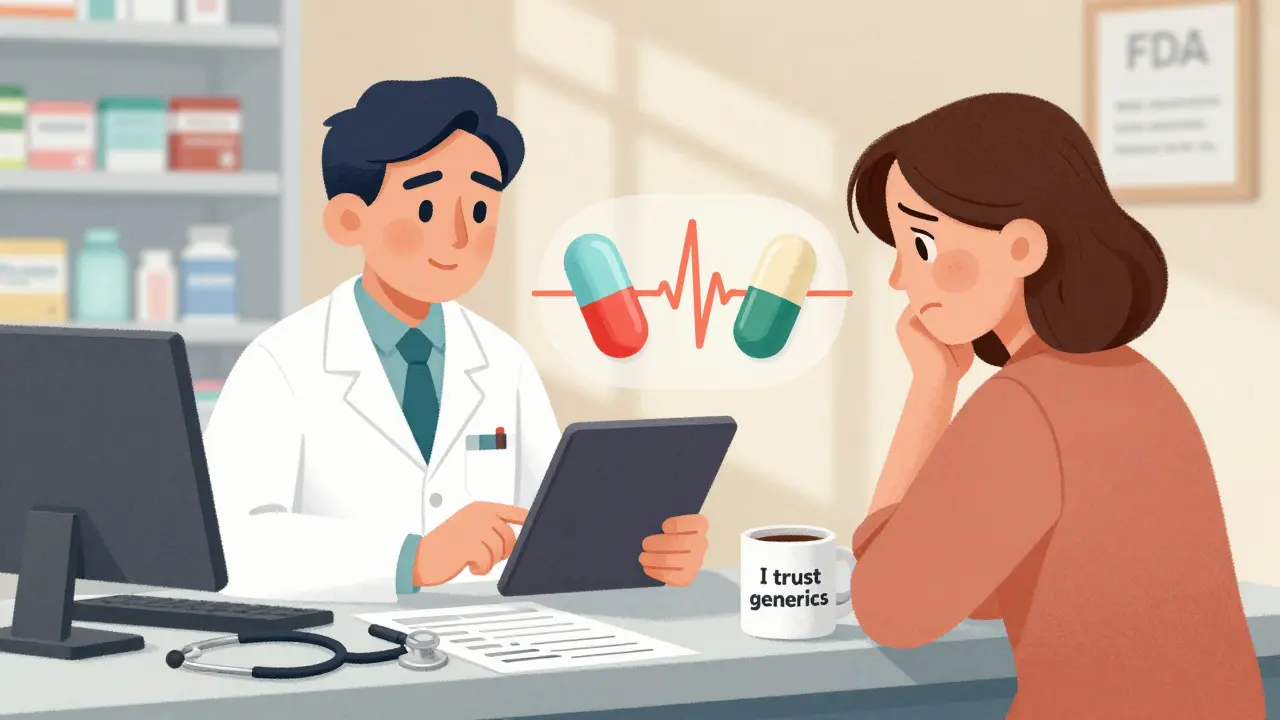
Use Visuals. Show, Don’t Just Tell.
Patients don’t understand bioequivalence. But they understand pictures. The FDA now offers free digital tools-3D pill comparisons, videos of manufacturing, side-by-side images. Use them. A 2022 Healthcare Hotline survey found that 68% of patients would accept generics if they could see the pills side by side. Keep printed images on your counter. Pull up the FDA’s online tool on your tablet. Point to the active ingredient. Say, "See this? This part is identical. The rest? Just filler. Same result, lower price."Timing Matters More Than You Think
The moment you talk about generics changes everything. If you wait until the patient is at the counter, you’re already behind. The best time? When the doctor writes the script. That’s why team-based care works. When the prescriber says, "We’re switching you to this generic because it’s just as effective and saves you money," and then the pharmacist follows up with visuals and reassurance, acceptance hits 85%. That’s the gold standard. If your pharmacy has a relationship with local clinics, ask if you can send a quick note with prescriptions: "We’ll be happy to explain this substitution when you pick it up. Just ask!"What to Say (And What Not to Say)
Here are real phrases that work-and ones that don’t:- DO say: "This contains the exact same active ingredient as [brand name], just without the brand name marketing costs."
- DO say: "The FDA requires these to meet the same strict standards as the brand-name version."
- DO say: "I’ve seen this work for hundreds of patients, including people with conditions like yours."
- Don’t say: "It’s the same thing."
- Don’t say: "It’s cheaper."
- Don’t say: "You’re overthinking this."
Overcoming the Biggest Objections
Patients say things like: - "I’ve tried generics before and they didn’t work." - "My doctor said I need the brand." - "I don’t trust these companies." Here’s how to respond:- "I’ve tried generics before and they didn’t work." → "Can you tell me what happened? Sometimes, switching between different generic manufacturers can cause slight differences in how the pill breaks down. Let’s check if this is the same one you took before. If not, we can ask your doctor about sticking with one manufacturer."
- "My doctor said I need the brand." → "That’s understandable. Sometimes doctors aren’t aware that generics are approved as equally effective. I can call your doctor’s office and confirm this substitution is okay. Most do."
- "I don’t trust these companies." → "I get that. But the FDA inspects every generic factory-same as brand-name ones. They use the same quality controls. The pill you’re taking was made in a facility that’s been inspected this year. Here’s the report." (Show the FDA inspection page if possible.)
Training and Tools Are Available-But Time Is Still the Enemy
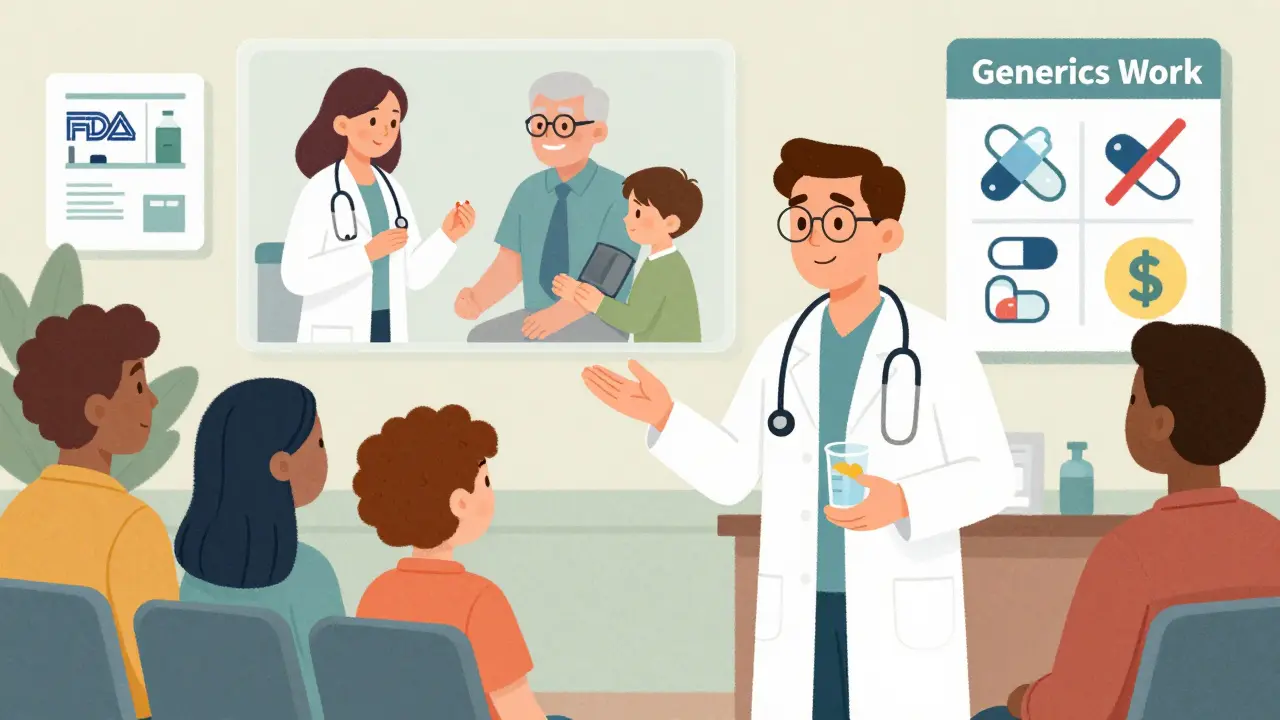
The American College of Clinical Pharmacy recommends 4-6 hours of role-playing to train pharmacists to handle 12 common objections. That’s not optional anymore. With Medicare Part D now including "generic substitution acceptance rate" as a quality metric in 2024, pharmacies are being scored on this. And the good news? Medicare now reimburses for 10-minute medication therapy management sessions. Use them. Block time. Don’t just rush through it. The FDA’s "Generics Smart" toolkit includes free videos, counter mats, and even VR demos of how generics are made. Your pharmacy can get them for free. Use them. Put them on your tablet. Let patients interact with them. That’s not extra work-it’s better care.The Bigger Picture: Why This Matters
Generic hesitation isn’t just about trust. It’s about money. Every time a patient refuses a generic, the system loses. In 2023, avoidable brand-name prescriptions cost the U.S. healthcare system $8.2 billion. That’s money that could go to more screenings, more mental health visits, more insulin for people who can’t afford it. But more than that-it’s about health. A 2023 Medscape case report tells the story of a patient who stopped taking warfarin after being given a generic without explanation. He developed a blood clot and was hospitalized. That’s preventable. You’re not just a pharmacist. You’re a safety net.What’s Next?
The future is personalized. The NIH is funding a $2.3 million study using AI to tailor generic explanations based on a patient’s beliefs, fears, and past behavior. But right now, the most powerful tool you have is still you-your voice, your honesty, your willingness to listen. Start tomorrow. Pick one patient. Use Ask-Tell-Ask. Show them the pill. Say, "I trust this for my family." You’ll be surprised how often that’s all they need to hear.Why do patients think generics are less effective?
Patients often believe generics are weaker because of misleading advertising, changes in pill appearance, or past negative experiences. Some think "cheaper" means "lower quality." In reality, the FDA requires generics to deliver the same amount of active ingredient as brand-name drugs, within a strict 80-125% bioequivalence range. The difference is only in inactive ingredients, packaging, and cost-not effectiveness.
Is it true that generics contain only 80% of the active ingredient?
No, that’s a common myth. The FDA requires generics to deliver between 80% and 125% of the active ingredient compared to the brand-name drug. This range ensures consistent absorption in the body. Most generics fall within 95-105%, meaning they’re nearly identical in how they work. The FDA tests thousands of samples each year to ensure this standard is met.
Can I switch between different generic brands?
Yes, but some patients may notice slight differences in how the pill works if they switch between manufacturers. This isn’t because one is unsafe-it’s because inactive ingredients (like fillers or coatings) can affect how quickly the drug is absorbed. If a patient reports a change, ask which generic they’ve been taking and whether they’ve switched recently. You can request the same manufacturer from your supplier, or consult the prescriber.
How can I convince a patient who says their doctor only prescribed the brand name?
Many doctors aren’t aware that generics are approved as equally effective. Politely call the prescriber’s office and ask if substitution is acceptable. Most will confirm it is. You can also show the patient the FDA’s official guidelines on bioequivalence. If the doctor has a specific reason (like a rare condition requiring tight control), document it and respect their judgment-but still explain why generics are generally safe.
Do pharmacists get paid more for dispensing brand-name drugs?
No. Pharmacists are paid the same amount regardless of whether they dispense a brand-name or generic drug. In fact, generics often cost the pharmacy less, meaning higher margins. Your incentive should be patient safety and adherence-not profit. Always explain that your goal is to help them get the best treatment at the right price.
What if a patient refuses the generic even after I explain everything?
Respect their decision. Document the conversation, including what you explained and their concerns. Offer to call the prescriber to discuss alternatives. Sometimes, a different generic manufacturer or a slightly different formulation can help. If cost is the barrier, check if they qualify for patient assistance programs. Never pressure them. Trust takes time to rebuild.
Are generic drugs made in the same factories as brand-name drugs?
Yes-often. Many brand-name companies manufacture their own generics under different labels. Even when made by a different company, the FDA inspects all facilities using the same standards. A 2023 FDA report found that over 50% of generic drugs are made in plants that also produce brand-name versions. The difference isn’t the factory-it’s the label.
so like... generics are literally the same drug but people act like they're made in a basement by ghosts? lol. the fda doesn't even let you use glitter as a filler. i swear, if you told me my blood pressure pill was a unicorn in disguise, people would believe it before they'd believe science. we live in a world where a blue pill = trustworthy, a white pill = scam. the real mystery is why we still have brand names. like, who's the genius who decided branding medicine was a good idea? 🤡
The data presented in this article is compelling and aligns with current clinical guidelines. Proactive communication, particularly through the Ask-Tell-Ask framework, has been shown in multiple peer-reviewed studies to significantly improve medication adherence. The emphasis on visual aids and provider personal endorsement is particularly noteworthy, as these strategies address cognitive and emotional barriers simultaneously. Implementing these practices systematically could reduce non-adherence-related hospitalizations by an estimated 18-22% annually in primary care settings.
oh wow another pharmacist who thinks talking nice will fix capitalism
you're telling me if i just say "my dad takes this too" people will stop being scared of white pills?
how cute. the real problem is that we live in a system where a pill costs $400 because it has a pretty logo and $4 because it doesn't
and you think your charm offensive fixes that?
you're not a pharmacist. you're a glorified sales associate with a stethoscope
As an Indian pharmacist working in a rural clinic, I see this every day. People here don't trust generics because they've seen fake medicines sold in markets. But once we show them the packaging with the government logo and the batch number, and explain how the FDA and CDSCO standards are similar, they relax. We use printed side-by-side images and even let them hold both pills. Trust is built with proof, not just words. Also, when we say, "This is what we use for our own families," they nod. No fluff. Just facts with heart.
OMG THIS IS SO IMPORTANT!! I JUST HAD A PATIENT YESTERDAY WHO THOUGHT HER GENERIC WAS "FAKE" BECAUSE IT WASN'T BLUE!! I HAD TO SHOW HER THE FDA WEBSITE, AND THEN I STARTED CRYING BECAUSE SHE SAID "OH I DIDN'T KNOW THEY WERE THE SAME" AND THEN SHE HUGGED ME!! I MEAN, LIKE, A HUG!! THAT'S NOT JUST A PHARMACY TRANSACTION, THAT'S A HUMAN MOMENT!! I'M STILL SHAKING!! THIS ARTICLE CHANGED MY LIFE!! 😭💖🫶
This is the kind of stuff that makes pharmacy meaningful. Seriously. I used to just hand out pills and hope for the best. Then I started using the ask-tell-ask method with visuals. One guy came in for his diabetes med, saw the new pill, and just said, "I'm not taking this." I pulled up the side-by-side image, showed him the active ingredient, and said, "This is what I give my sister. She’s been on it for 8 years. No issues." He looked at it, then at me, and said, "You really give this to your family?" I said, "Yeah." He took it. No argument. Just nodded. That’s the power of being real. We’re not just filling scripts. We’re holding people’s health in our hands. And sometimes, all they need is to know someone they trust believes in it too.
The entire premise of this article is built on the assumption that patients are irrational and need to be managed like children. The real issue isn't communication gaps-it's systemic distrust in institutions. People aren't confused about pill shapes. They're angry about being sold a system where the same drug costs 10x more with a logo. The fact that pharmacists are expected to be emotional salespeople instead of transparent professionals says more about the collapse of healthcare integrity than it does about patient ignorance. The Ask-Tell-Ask method isn't a solution-it's a bandage on a severed artery. And don't get me started on the "I prescribe this for my family" tactic. That's not trust. That's manipulation dressed up as authenticity. We're being asked to perform emotional labor to fix a broken system, not fix the system itself. And that's not professional. That's exploitation.
Okay but like... what if you're just bad at explaining? I mean I had this one patient who swore generics gave her headaches and I tried everything-ask-tell-ask, pictures, even showed her the FDA report-and she still said "no" and left. So like... what then? You just let her go? And what if she ends up in the ER? Is that on me? I feel like this article is written by someone who's never had a patient actually say "I don't trust you" to your face. It's easy to write this stuff when you're not the one getting yelled at at 4pm on a Friday. Also I think the "I prescribe this for my family" thing is kinda cringe? Like, are we supposed to lie? Or just... make up fake family members? I don't know. I'm tired.