Lithium Toxicity: How Diuretics and NSAIDs Affect Your Levels
Lithium Level Interaction Estimator
Estimated New Level: -- mmol/L
Select a medication to see the estimated impact.
Toxicity Thresholds
- Safe 0.6 - 1.2 mmol/L
- Mild 1.5 - 1.9 mmol/L
- Moderate 2.0 - 2.4 mmol/L
- Severe 2.5+ mmol/L
Red Flag Symptoms
Seek emergency care if you experience:
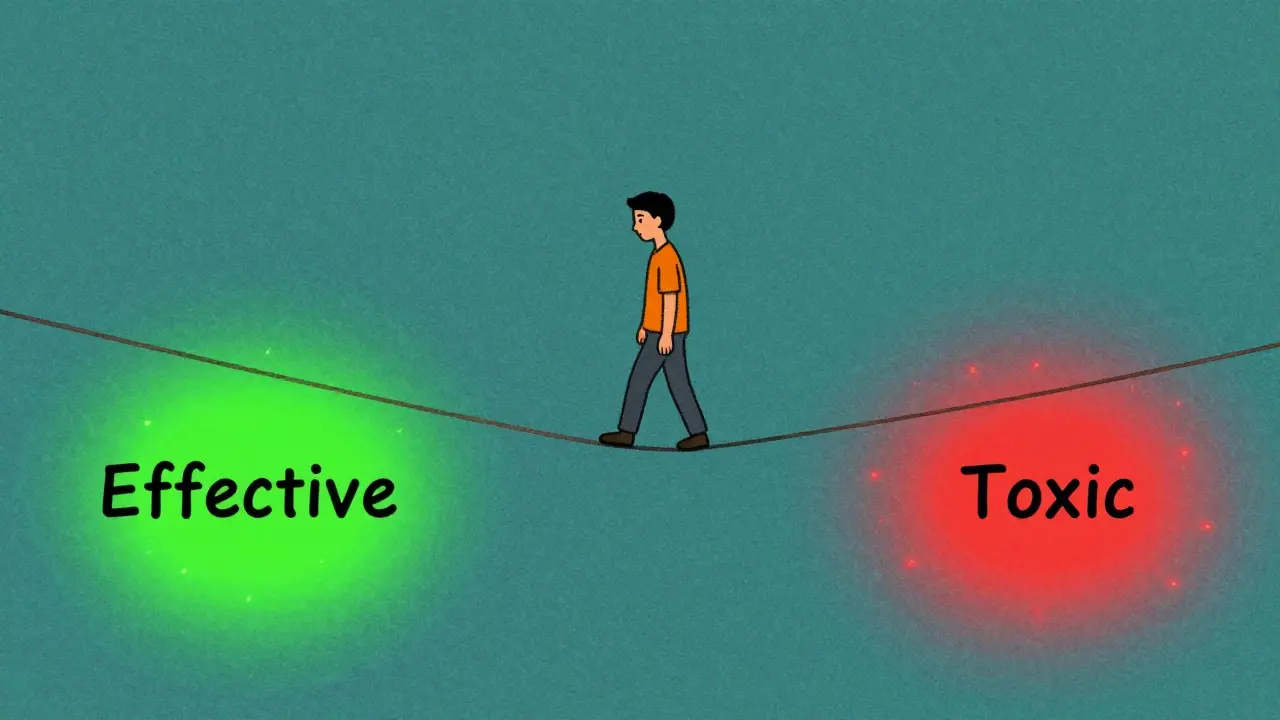
Taking Lithium is a bit like walking a tightrope. For people managing bipolar disorder, it is one of the most effective tools available, even helping to reduce suicide risk by 44% compared to a placebo. But there is a catch: the gap between a dose that works and a dose that is toxic is incredibly small. This is what doctors call a narrow therapeutic index. If your blood levels dip too low, the medicine doesn't work; if they climb just a little too high, you can end up in the emergency room.
The real danger isn't usually the lithium dose itself, but how other common medications interfere with how your body gets rid of it. Because Lithium Carbonate is handled almost entirely by your kidneys, anything that changes your kidney function or alters your salt balance can send your lithium levels skyrocketing. Two of the biggest culprits are diuretics (water pills) and NSAIDs (common painkillers). If you're taking lithium, you need to know exactly how these interact to avoid a medical crisis.
The Danger Zone: Understanding Lithium Levels
To keep things safe, doctors aim for a maintenance range of 0.6 to 1.2 mmol/L. Once you cross 1.5 mmol/L, you've entered the territory of mild toxicity. By the time you hit 2.0 mmol/L, it's moderate toxicity, and anything above 2.5 mmol/L is severe and requires immediate medical intervention, often involving hemodialysis to scrub the drug from your blood.
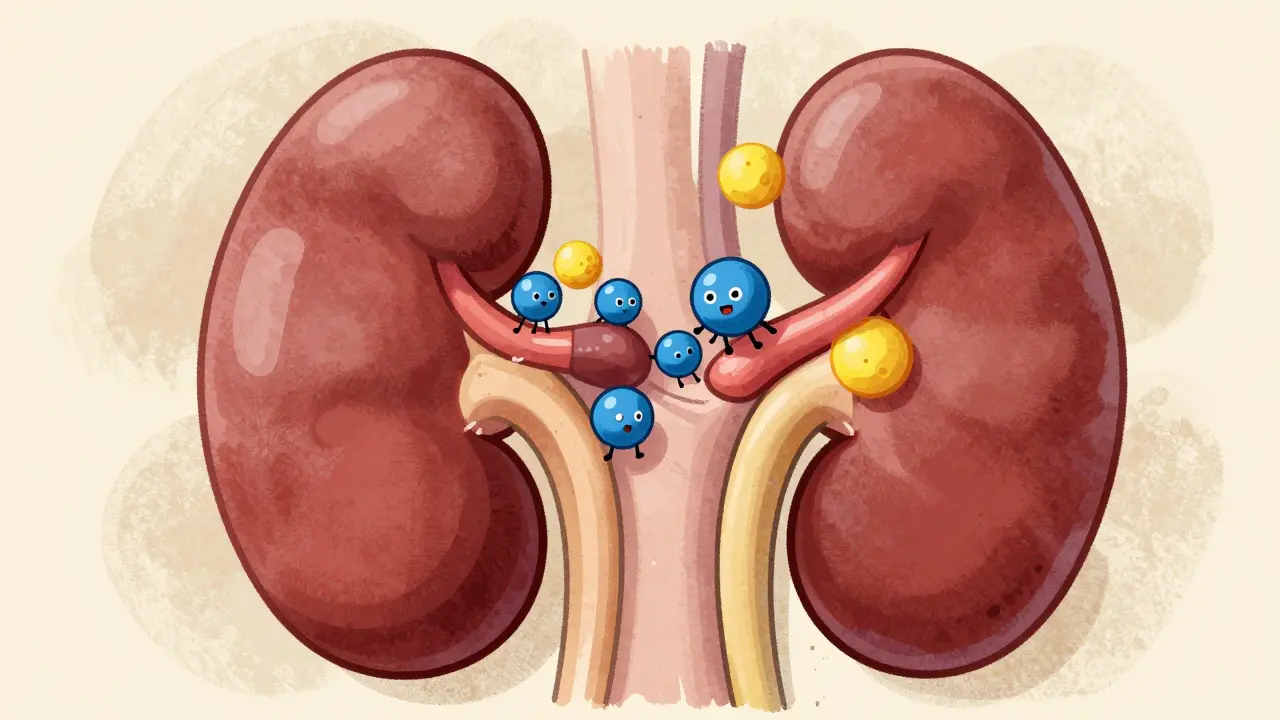
The problem is that lithium isn't metabolized by the liver; it's filtered by the kidneys. It hitches a ride with sodium. When your kidneys try to reabsorb sodium, they often accidentally pull lithium back into the bloodstream instead of letting it leave through your urine. Any drug that messes with sodium or blood flow to the kidneys makes this "accidental reabsorption" happen much more often, leading to Lithium Toxicity.
Diuretics: The High-Risk Water Pills
Not all diuretics are created equal, but Thiazide Diuretics (like hydrochlorothiazide) are particularly risky. They work on the distal convoluted tubule of the kidney, and because of where they act, they can increase lithium levels by an average of 25% to 40% within just a few days. In some extreme cases, levels have been seen to rise four-fold.
Loop diuretics, such as Furosemide, are generally a bit safer, but they still pose a risk-especially if you already have some kidney impairment (an eGFR below 60). While they typically only cause a 10% to 25% increase, they can still push a stable patient over the toxicity threshold.
| Diuretic Type | Example Drug | Average Lithium Increase | Risk Level |
|---|---|---|---|
| Thiazide | Hydrochlorothiazide | 25% - 40% | High |
| Loop | Furosemide | 10% - 25% | Moderate |
NSAIDs: The Hidden Risk in the Medicine Cabinet
This is where things get tricky because many people don't think of over-the-counter painkillers as "serious" drugs. However, NSAIDs (Non-Steroidal Anti-Inflammatory Drugs) inhibit prostaglandins in the kidney. Prostaglandins keep the blood vessels in the kidney open; when you block them, the glomerular filtration rate (GFR) drops by 10% to 20%. Essentially, your kidneys slow down, and lithium piles up in your system.
Different painkillers have different strengths of interaction. Indomethacin is one of the most potent, often bumping lithium levels by 30% to 40%. Common options like Ibuprofen and naproxen usually cause a 15% to 30% increase. If you absolutely need a painkiller, Celecoxib is often the preferred choice because it has a much weaker effect on lithium clearance, usually only causing a 5% to 10% rise.
Other Medications to Watch Out For
While diuretics and NSAIDs get the most attention, other blood pressure meds can cause trouble. ACE inhibitors like lisinopril can increase lithium levels by 15% to 25%. ARBs like valsartan are slightly less aggressive but still cause 10% to 20% increases.
Interestingly, Calcium Channel Blockers don't usually raise the actual concentration of lithium in your blood. Instead, they seem to amplify the neurological side effects. If you're on these, you might notice a sudden increase in tremors or tinnitus (ringing in the ears) even if your lab results look normal.
Spotting the Signs of Toxicity
You shouldn't wait for a blood test to tell you something is wrong. Lithium toxicity often sneaks up on you. Early warning signs include:
- A coarse tremor in your hands (different from the mild tremor some people always have on lithium)
- Nausea, vomiting, or persistent diarrhea
- Muscle weakness or a feeling of "sluggishness"
- Confusion or mental fog
- Difficulty coordinating your movements (ataxia)
A tragic case from Medsafe New Zealand involved a 72-year-old woman with kidney issues who started an NSAID. Within just seven days, her lithium levels jumped from a safe 0.8 mmol/L to a toxic 1.9 mmol/L, leading to a fatal outcome. The lesson here is that these changes happen fast, and if you feel "off" after starting a new med, get checked immediately.
How to Manage the Risk
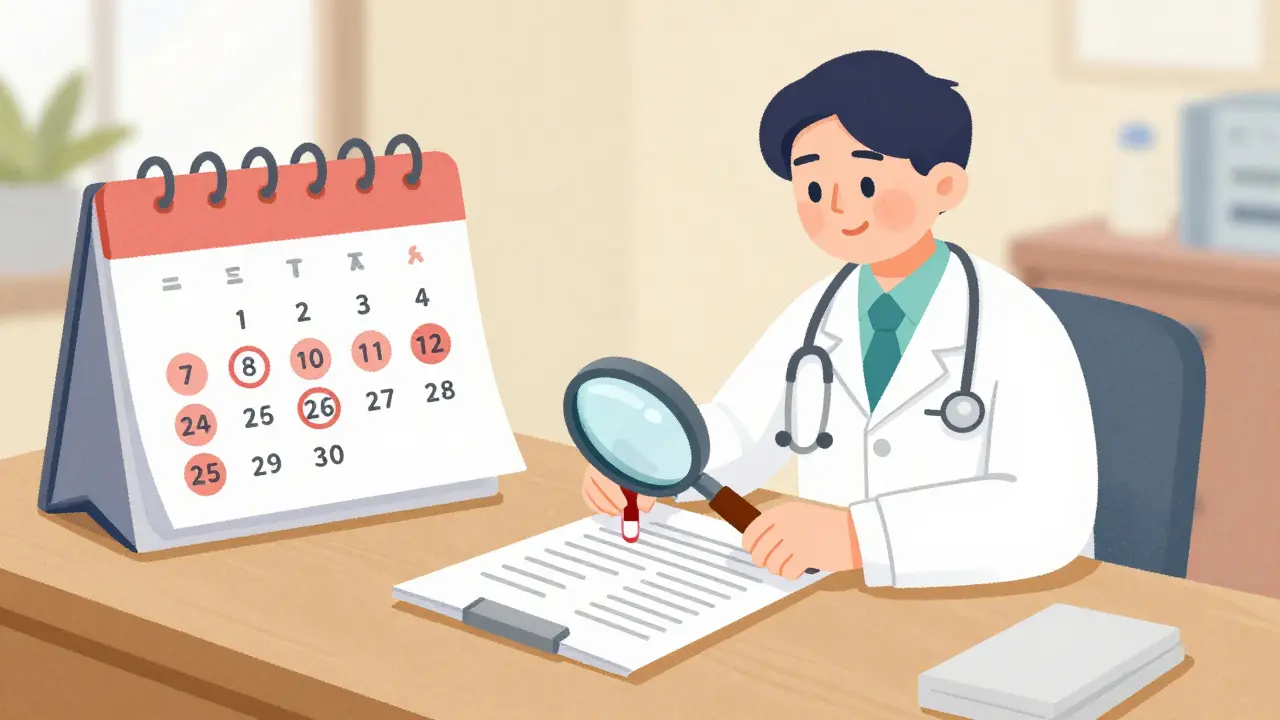
If you must take these medications, you can't just "set it and forget it." The American Psychiatric Association recommends a strict monitoring schedule. When you start an NSAID, your doctor should check your levels every 4 to 5 days. For diuretics, weekly checks for the first month are the gold standard.
Often, a dose adjustment is necessary. If you start a thiazide diuretic, your doctor might need to drop your lithium dose by 20% to 25% to compensate for the slower clearance. For NSAIDs, a 15% to 20% reduction is common. The key is to be proactive rather than reactive.
Can I take ibuprofen occasionally while on lithium?
While an occasional single dose may not cause a crisis, regular use of ibuprofen can significantly raise lithium levels by 15-30%. Because lithium has such a narrow safety window, even a small increase can lead to toxicity. It is always best to use acetaminophen (Tylenol) as a safer alternative, as it does not affect kidney function in the same way.
Why are thiazide diuretics more dangerous than loop diuretics?
Thiazides act on the distal convoluted tubule of the kidney, where a small but significant amount of lithium reabsorption happens. By altering sodium levels here, they force the body to keep more lithium. Loop diuretics act earlier in the kidney (the loop of Henle) and generally have a less drastic effect on lithium reabsorption, though they still require monitoring.
What should I do if I suspect lithium toxicity?
If you experience severe tremors, confusion, or persistent vomiting, stop taking lithium and contact your doctor or go to the emergency room immediately. Severe toxicity (levels >2.5 mmol/L) may require hemodialysis to quickly remove the drug from your system and protect your brain and kidneys from permanent damage.
How often should my lithium levels be checked?
For stable patients, every 3 to 6 months is standard. However, if you start a new medication-especially a diuretic or an NSAID-or change your dose of those drugs, you should have your levels checked every 4 to 5 days until a new stable baseline is established.
Are there any safer alternatives to NSAIDs for pain?
Acetaminophen is the safest common choice. If an anti-inflammatory is strictly necessary, Celecoxib is generally preferred by specialists because it has a much lower impact on lithium levels (typically only a 5-10% increase) compared to ibuprofen or naproxen.
Next Steps and Troubleshooting
If you are currently taking lithium and need a new medication for blood pressure or pain, start by requesting a baseline eGFR (kidney function) test. This tells your doctor how well your kidneys are filtering before any new drugs are added.
For those who struggle with frequent clinic visits, look into newer monitoring options. Some regions are starting to see the rollout of smartphone-connected monitoring devices that allow you to test your levels at home and send the data directly to your psychiatrist. This removes the guesswork and provides a safety net between official doctor visits.
Tylenol is definitely the way to go! 💊 I always tell people to double check their labels because some 'migraine' meds actually have NSAIDs hidden in them 😱 stay safe everyone ✨
helpful stuff.’s good to know about the tylenol alternative
One must ponder if these narrow therapeutic windows are truly biological imperatives or merely the result of pharmaceutical companies designing molecules that necessitate constant, profitable monitoring. It is quite a convenient system for the medical industrial complex, is it not? I find the insistence on these specific blood levels to be rather quaint, as if a human body could be reduced to a simple mathematical equation without accounting for the clandestine influences of environmental toxins. The narrative regarding the kidneys is well-established, yet one wonders what they aren't telling us about the long-term endocrine disruptions. It is a fascinating, if slightly sinister, arrangement of control. I shall remain skeptical of these 'gold standard' monitoring schedules while the true nature of these interactions is obscured by corporate interests. The precision claimed here feels almost too curated to be natural. Truly an elegant piece of propaganda for the pharmacy.
I think it's really important that we support each other in tracking these symptoms. If anyone is feeling overwhelmed by the clinic visits, maybe we can share tips on how to organize our lab results.
Listen, any idiot can see the healthcare system is a joke but at least we got the best meds in the world :-D Just follow the rules and don't be a dummy with the ibuprofen!
The sheer audacity of the glomerular filtration rate (GFR) fluctuations!!! 😱 It's an absolute nightmare for homeostatic stability!!! Who can possibly survive this pharmacokinetic chaos???!!!
The distinction between the distal convoluted tubule and the loop of Henle is a critical piece of pathophysiology here. It would be interesting to see if there's any updated data on how SGLT2 inhibitors might interact with lithium clearance given their effect on sodium handling.
SAY YES TO TYLENOL!!! STAY HEALTHY!!! KEEP FIGHTING!!!
idk why everyone acts like this is a secret. just dont take the pills that make you sick
The intersection of pharmacological necessity and bodily autonomy is a complex landscape. While the jargon of mmol/L defines the clinical boundary, we must remain mindful of how these interventions affect the holistic experience of the patient. It is a delicate balance of risk and stability.
Oh man, that story about the 72-year-old woman is just heartbreaking! 😢 We really need to be our own advocates in the doctor's office! Keep pushing for those tests! 💪
It's great that there are options like Celecoxib for those who really need anti-inflammatories. There's always a way to make it work safely if you have a good team behind you.
Omg the way our kidneys just 'grab' the lithium cuz they think its salt is so wildddd 🧂 it's like a little mixup in the plumbing of the soul lol!
I appreciate the clear breakdown of the different diuretic types. It helps to know exactly what to ask the pharmacist about when filling a prescription.