Kava and Liver Health: Safety with Other Medications
Kava Medication Interaction Checker
Check Your Medications
Enter the medications you're currently taking. This tool will check for dangerous interactions with kava.
Many people turn to kava for anxiety relief, drawn by its calming effects and natural reputation. But what they don’t always realize is that kava can seriously harm the liver-especially when mixed with common medications. This isn’t theoretical. Real people have needed liver transplants after combining kava with their prescriptions. If you’re taking any kind of medication, whether it’s for blood pressure, depression, or birth control, you need to know the risks before taking kava.
How Kava Affects the Liver
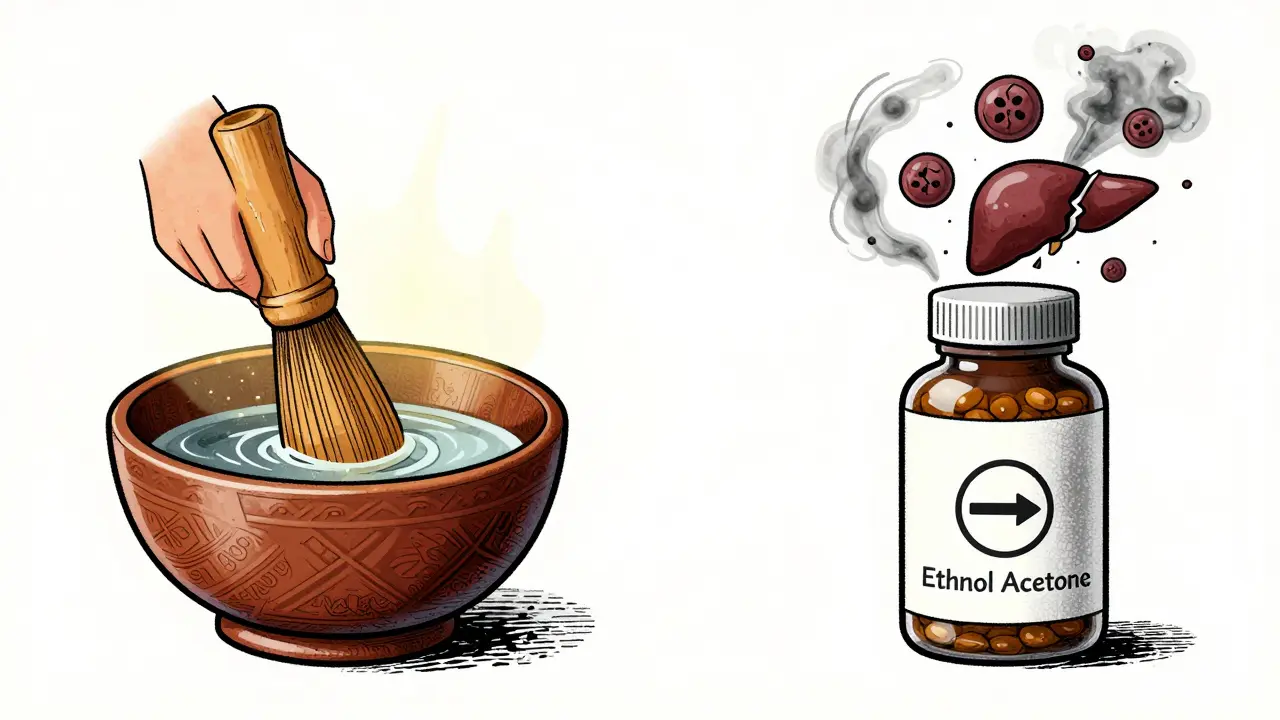
Kava comes from the roots of Piper methysticum, a plant native to Pacific islands like Fiji and Vanuatu. For centuries, people there made a drink by mixing powdered root with water. That traditional method is still used today in those cultures-and it’s generally considered safe. But the kava sold in North America and Europe isn’t the same. Most supplements use solvents like ethanol or acetone to pull out the active compounds, called kavalactones. These organic extracts are linked to liver damage.
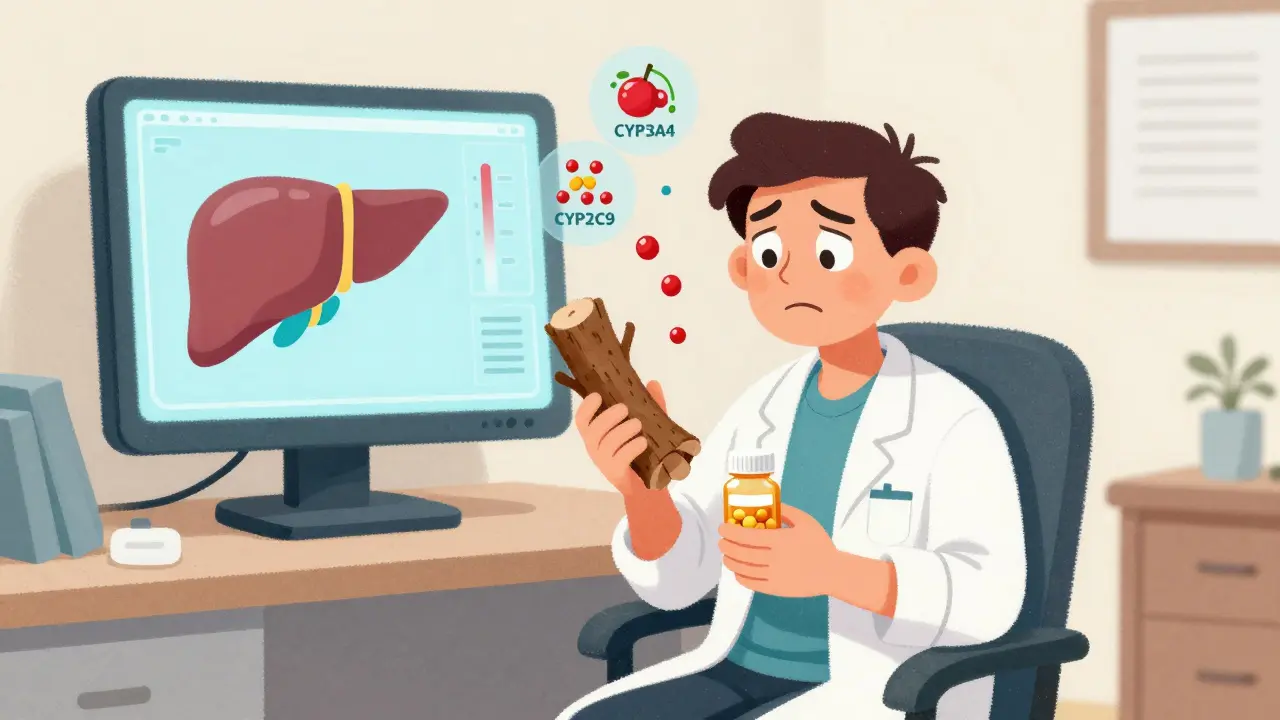
The problem isn’t just the kavalactones. Studies suggest other compounds in kava-like flavokawains-may be the real culprits. These chemicals interfere with liver function in two major ways. First, they drain glutathione, the liver’s main antioxidant. Without enough of it, liver cells become vulnerable to damage. Second, kava blocks key enzymes in the cytochrome P450 system, especially CYP3A4, CYP2C9, and CYP2C19. These enzymes break down about 80% of all prescription drugs. When kava shuts them down, medications build up in your bloodstream, increasing the chance of toxicity.
Medications That Dangerously Interact with Kava
It’s not just one or two drugs. Dozens of commonly used medications become risky when combined with kava. Here are the most dangerous categories:
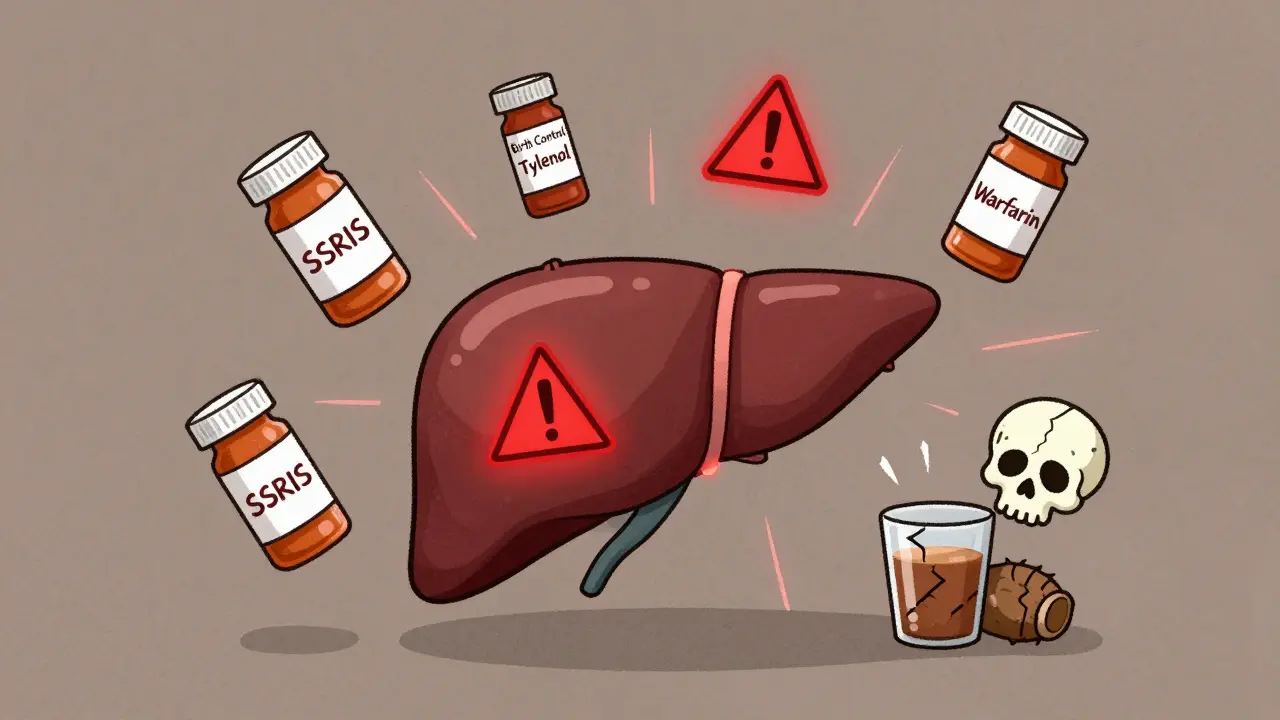
- Antidepressants and anti-anxiety meds-Like SSRIs (sertraline, fluoxetine) or benzodiazepines (alprazolam, clonazepam). Kava can intensify their sedative effects and increase liver stress.
- Birth control pills-Combining kava with ethinyl estradiol and norgestimate has led to acute liver failure. One documented case required a transplant after just 17 weeks of use.
- Pain relievers-Acetaminophen (Tylenol) is already hard on the liver. Add kava, and the damage multiplies. Even small doses of acetaminophen can become dangerous.
- Blood thinners-Warfarin and aspirin are metabolized by the same liver enzymes kava blocks. This raises bleeding risk and overwhelms the liver’s detox capacity.
- Antifungals and antibiotics-Drugs like ketoconazole and erythromycin are known hepatotoxins. Pairing them with kava creates a perfect storm for liver injury.
- Seizure medications-Carbamazepine and valproate are heavily processed by the liver. Kava can push their levels into toxic ranges.
A 2022 study from the American Association for the Study of Liver Diseases found that patients taking kava along with any of these drugs had liver enzyme levels that spiked 5 to 10 times above normal. In one case, ALT (a key liver enzyme) jumped from 15 U/L to 2,442 U/L in under two months. Normal is under 17.
Who’s at Highest Risk?
Not everyone who takes kava will get liver damage. But certain people are far more vulnerable:
- People with pre-existing liver disease-Even mild fatty liver or hepatitis increases risk dramatically.
- Heavy alcohol users-Alcohol and kava both tax the liver. Together, they’re a deadly combo.
- Those using organic solvent extracts-Ethanol-based kava supplements are 10 times more likely to cause injury than water-based ones.
- People with genetic variations in CYP enzymes-Some people naturally metabolize drugs slower. Kava makes this worse.
- Older adults-Liver function declines with age. Older users are less able to handle the extra stress.
One of the most disturbing facts? Many patients didn’t tell their doctors they were taking kava. They assumed it was “just a herbal tea” and didn’t think it counted as a medication. But it’s not harmless. In a 2021 review of 16 liver injury cases in Sacramento County, 13 people were hospitalized and 6 needed transplants. All had taken kava with other drugs. None mentioned it during their initial visit.
What Does the Science Say?
The evidence is overwhelming. The World Health Organization concluded that kava has a “significant concern” for causing liver damage, especially with other medications. The FDA issued consumer advisories in 2002 and updated its stance in 2020, noting that organic extracts are the biggest risk. Germany alone reported 20 cases of liver failure tied to ethanol-based kava products.
Canada and Australia have banned kava supplements outright. The European Union banned them in 2002 after over 50 cases of liver injury were reported. In the U.S., kava is still sold as a supplement, but the FDA warns consumers to avoid it if they’re on other medications. A 2019 study of 171 people found liver enzyme abnormalities were far more common in kava users than in placebo groups-despite earlier claims that kava was safe.
And it’s not just about dosage. Even small, “safe” amounts of kava-like 240 mg of kavalactones per day-can be dangerous if combined with other drugs. One patient took kava at the recommended dose, along with birth control pills and occasional Tylenol. Within four months, her liver failed. She needed a transplant.
What Should You Do?
If you’re thinking about trying kava-or already use it-here’s what to do right now:
- Check your medications. Look at the labels of everything you take daily. If it’s for anxiety, pain, blood pressure, hormones, or infection, you’re at risk.
- Stop kava immediately if you’re on any of the high-risk drugs listed above. Don’t wait for symptoms.
- Get a liver test. Ask your doctor for ALT, AST, and bilirubin tests. Normal levels don’t guarantee safety, but elevated numbers mean you need to stop kava now.
- Choose water-based extracts only. If you insist on using kava, look for products labeled “traditional water extraction.” These are less risky-but still not risk-free.
- Talk to your doctor. Tell them you’re using kava. Don’t assume they know. Many don’t ask about herbal supplements.
There’s no safe way to combine kava with medications. Even if you feel fine, damage can be building silently. Liver injury from kava often shows no symptoms until it’s too late. Jaundice, nausea, fatigue, dark urine, and abdominal pain are late signs. By then, it may be irreversible.
The Bottom Line
Kava might seem like a gentle, natural solution for stress. But it’s not harmless. Its interaction with medications is dangerous, well-documented, and sometimes deadly. The same compounds that calm your nerves can shut down your liver’s ability to process other drugs. And once the liver is damaged, it doesn’t always heal.
If you’re looking for anxiety relief without the risk, there are safer alternatives. Exercise, therapy, magnesium, and L-theanine have strong evidence behind them-with no liver toxicity. Kava’s risks far outweigh its benefits when you’re on any medication. It’s not worth the gamble.
Can I take kava if I’m on antidepressants?
No. Combining kava with antidepressants like SSRIs or SNRIs significantly increases the risk of liver damage and serotonin-related side effects. Multiple cases have been documented where patients developed acute liver failure after using kava alongside these medications. Even if you’ve taken kava before without issues, the risk grows with time and concurrent drug use. Stop kava if you’re on any antidepressant.
Is organic kava safer than synthetic kava?
No. In fact, the opposite is true. Organic extracts made with ethanol or acetone are the most dangerous. These solvents pull out more of the toxic compounds like flavokawains. Traditional water-based preparations used in the Pacific Islands have far fewer reported cases of liver injury. But even water-based kava isn’t safe if you’re on other medications. The risk isn’t just about extraction method-it’s about how kava interferes with liver enzymes.
How long does it take for kava to damage the liver?
Damage can happen as quickly as 4 to 16 weeks of regular use, especially when combined with other drugs. One documented case showed liver enzymes rising from normal to over 2,400 U/L in under four months. Symptoms often don’t appear until the damage is severe. Waiting for signs like yellow skin or dark urine means it’s already too late. Regular liver tests are the only way to catch early damage.
Can I drink alcohol while taking kava?
Absolutely not. Alcohol and kava both stress the liver and block the same detox pathways. Together, they multiply liver damage. Most cases of liver failure linked to kava involved alcohol use. Even one drink a day can push you into danger. Avoid alcohol completely if you’re using kava.
What should I do if I’ve been taking kava and now feel unwell?
Stop kava immediately. Go to your doctor and ask for liver function tests (ALT, AST, bilirubin). If your results are elevated, stop all supplements and medications that could stress the liver until you get medical advice. Early intervention can prevent permanent damage. If you have jaundice, nausea, confusion, or abdominal pain, go to the emergency room. Liver failure can progress rapidly.
I've been using kava for months and never thought twice. This post scared me. I'm off it tonight. No way I'm risking my liver for a chill vibe.
You people are panicking over a plant. My uncle in Fiji drinks kava daily. Never had a problem. It's the solvent extracts in Western supplements that are toxic. Stop generalizing.
I'm so glad someone finally broke this down. I was on sertraline and took kava for a week. Felt great... until I started vomiting bile at 3am. Liver enzymes through the roof. Don't be like me.
Kava's got this mystical rep - peace, calm, island vibes - but underneath? It's a quiet saboteur. Like that friend who says 'I'm just here for you' then steals your snacks. Except this one steals your liver cells. And they don't come back.
In South Africa we don't even have kava on shelves. But I read this and my heart sank. My sister died from a drug interaction no one saw coming. Don't wait until it's too late. This isn't hype - it's a funeral waiting to happen.
The scientific evidence presented here is methodologically sound and aligns with peer-reviewed hepatotoxicity studies. The inhibition of CYP450 enzymes by kavalactones and flavokawains is well-documented in clinical pharmacology literature. The correlation between solvent-extracted kava and transaminase elevation is statistically significant (p < 0.01).
Dear reader, I urge you to consult your primary care physician before continuing any herbal supplement regimen. The potential for hepatotoxicity is not speculative - it is empirically validated. Your health deserves rigorous, evidence-based consideration.
I just stopped kava after this 😱💔 I was taking it with my anxiety med and now I'm switching to L-theanine and yoga. My liver thanks me. 🌿✨
Oh great, another fear-mongering post from Big Pharma shills. Next they'll say sunlight causes cancer. I'll take my kava and my Tylenol and my birth control and my freedom thank you very much
An important and sobering overview. I've recommended kava to patients in the past. This has changed my perspective. I will now actively discourage its use alongside pharmaceuticals. Thank you for the clarity.
This is all a government plot to control what we put in our bodies. Kava is ancient. They can't patent it. That's why they're banning it. The FDA is lying. Your doctor doesn't know what they're talking about.
Kava’s not the villain - it’s the scapegoat. The real crime? Pharma companies making billions off antidepressants while demonizing a plant that actually works. I’m not stopping. I’m fighting back.
There’s something haunting about how we treat nature as a tool to fix what we’ve broken inside. We take kava to numb the noise of modern life, but we ignore the noise it’s making inside our own bodies. Maybe the answer isn’t more substances - but more stillness.
I’ve been helping people with anxiety for 15 years. Kava? I’ve seen too many bad outcomes. But I’ve also seen people heal with breathwork, community, and routine. You don’t need a root to find peace. You just need to stop running.
So... you're saying I can't have my 'chill tea' while I'm on my blood pressure meds? Wow. Just... wow. I guess I'll just keep taking the 8 pills and hope for the best. What a world.