How to Use Patient Advocacy Foundations for Medication Grants
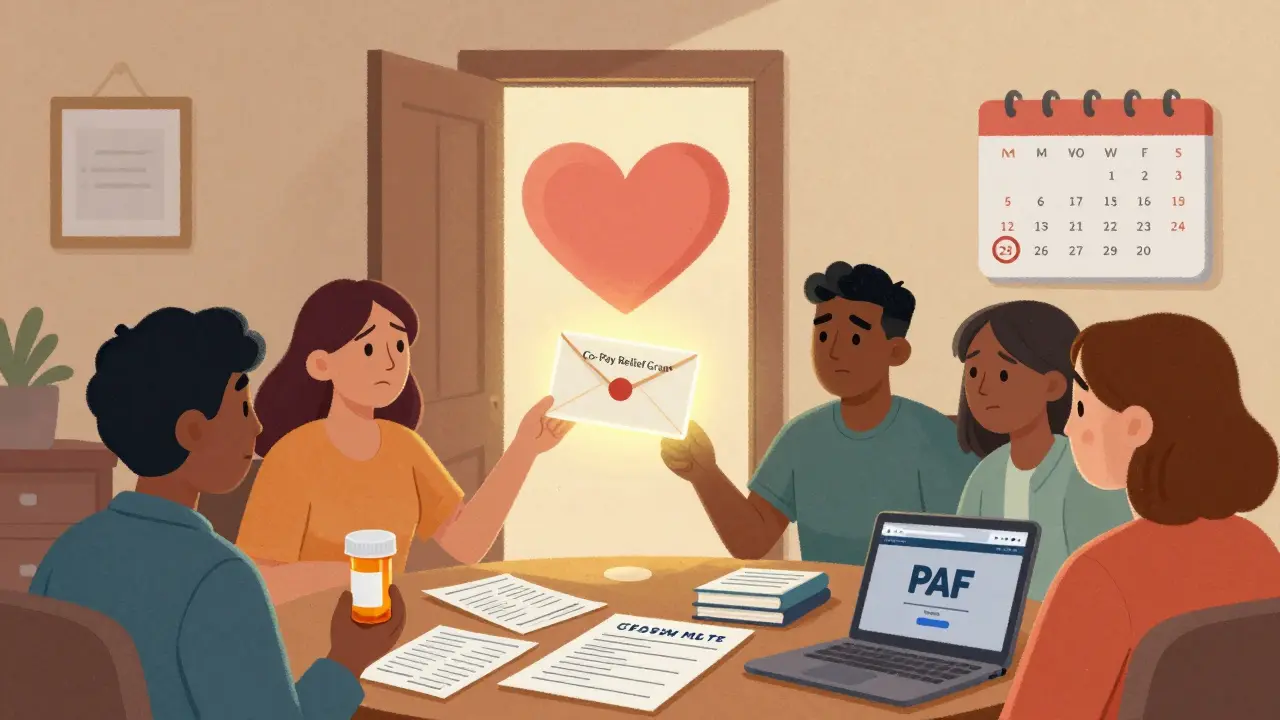
Getting the medication you need shouldn’t mean choosing between rent and refills. Thousands of people in the U.S. face this impossible choice every month. That’s where patient advocacy foundations come in. These nonprofits don’t just offer hope-they give real money to help people pay for life-saving drugs. If you’re struggling with high co-pays, deductibles, or out-of-pocket costs, you’re not alone. And there’s a system designed to help you.
What Exactly Do Patient Advocacy Foundations Do?
Patient advocacy foundations like the Patient Advocate Foundation (PAF) is a nonprofit that has been helping people since 1996. They don’t sell drugs. They don’t run insurance. What they do is simpler and more powerful: they give grants directly to patients who can’t afford their medications.Most of these grants come from donations. That means funding is limited. You won’t get a monthly check for life. But you can get enough to cover your co-pay for a few months, or even pay for a full prescription if funds are available. Their Co-Pay Relief Program (at www.copays.org) is especially important for people with commercial insurance. Even if you have coverage, high-deductible plans can leave you paying $300, $500, or more per prescription. PAF steps in to cover those costs.
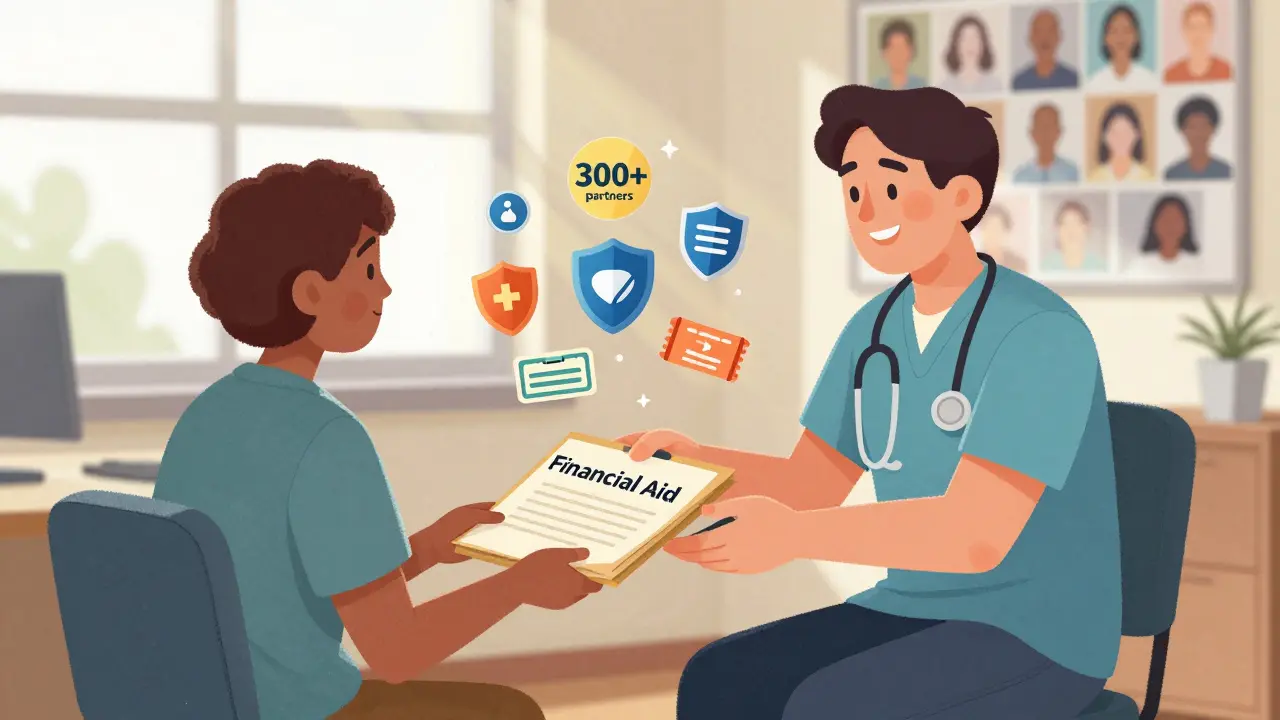
For those without insurance, PAF’s Financial Aid Funds offer direct financial help for treatment-related expenses-not just drugs, but also travel, lab tests, or even home care. These funds are condition-specific. For example, there’s a fund for sepsis, another for thyroid eye disease, and one for acute respiratory distress syndrome. Each has its own rules, but they all follow the same goal: keep you on your treatment.
Who Can Apply?
You might think only the poorest qualify. But the truth is more nuanced. Here’s what you need:- You must have a confirmed diagnosis of a serious condition (cancer, rare disease, autoimmune disorder, etc.)
- You must be in active treatment, starting treatment in the next 60 days, or finished treatment within the last 6 months
- You must be a U.S. citizen or permanent resident
- You must be receiving treatment in the U.S. or a U.S. territory
If you’re insured, the Co-Pay Relief Program requires proof that you have commercial insurance covering the specific drug you need. Medicaid and Medicare patients usually don’t qualify for this part-it’s meant for people with private insurance who still can’t afford their share.
Income matters too. Most funds have income limits based on federal poverty guidelines. For example, if you’re a single person making over $60,000 a year, you likely won’t qualify for some funds. But if you’re a family of four making $75,000, you might still qualify depending on the condition and the fund.
How the Application Process Actually Works
Applying sounds complicated. It’s not. But it takes effort. Here’s the real step-by-step:- Find the right fund. Go to www.patientadvocate.org. Look under "Financial Aid Funds" or "Co-Pay Relief." Match your condition to the fund. If you’re unsure, call 1-800-532-5274. They’ll guide you.
- Gather documents. You’ll need: proof of income (tax return, pay stubs, or a letter from your employer), proof of diagnosis (a letter from your doctor), proof of insurance (if applicable), and proof of residency (utility bill, lease, ID).
- Get your doctor to help. Your provider must complete a form confirming your diagnosis and treatment plan. Don’t wait-ask them early. Many doctors have a form they use regularly. If they don’t, PAF will send them one.
- Submit online or by phone. Most applications are done online. You can also call the dedicated number for your fund: 855-824-7941 for sepsis, 844-462-8072 for caregiver support, or 844-974-0257 for other funds.
- Wait for approval. If approved, the grant is sent directly to your pharmacy or caregiver-not to you. This ensures the money is used for medication.
Some funds reopen the first business day of each month. If you apply on the 2nd and the fund is already gone, you’ll have to wait until next month. That’s why timing matters. Apply early in the month if you can.
What You Can’t Expect
It’s easy to get hopeful. But you need to know the limits:- Funds run out. Every month. Some funds are depleted within hours of reopening.
- Grants aren’t automatic. You must reapply each time funds are available.
- They don’t cover everything. Only the specific drug listed in the fund. If you’re on three medications, you may need three separate applications.
- They don’t replace insurance. If you’re uninsured, PAF’s Financial Aid Funds might help-but pharmaceutical company programs (PAPs) often cover 100% of one drug for free.
That last point is key. If you’re uninsured and need one drug, look into the manufacturer’s Patient Assistance Program (PAP). Companies like Pfizer, Merck, and Novo Nordisk offer free drugs to qualifying patients. But if you’re on multiple drugs from different companies, or you have insurance but still can’t afford your co-pay, PAF is often your best bet.
Why PAF Stands Out
Most patient assistance programs are tied to one drug or one company. PAF is different. They’re a hub. They work with over 300 pharmaceutical companies, nonprofit partners, and even the American Cancer Society. That means:- You don’t need to apply to 10 different programs
- You can get help for multiple conditions at once
- You get case managers who walk you through insurance confusion
Case management is a hidden gem. If you’re stuck on why your insurance denied coverage, or you don’t understand your formulary, PAF assigns you a case manager. They call your insurer, fight denials, and explain your options. This alone saves many people thousands in unnecessary costs.
What to Do If You’re Rejected or the Fund Is Full
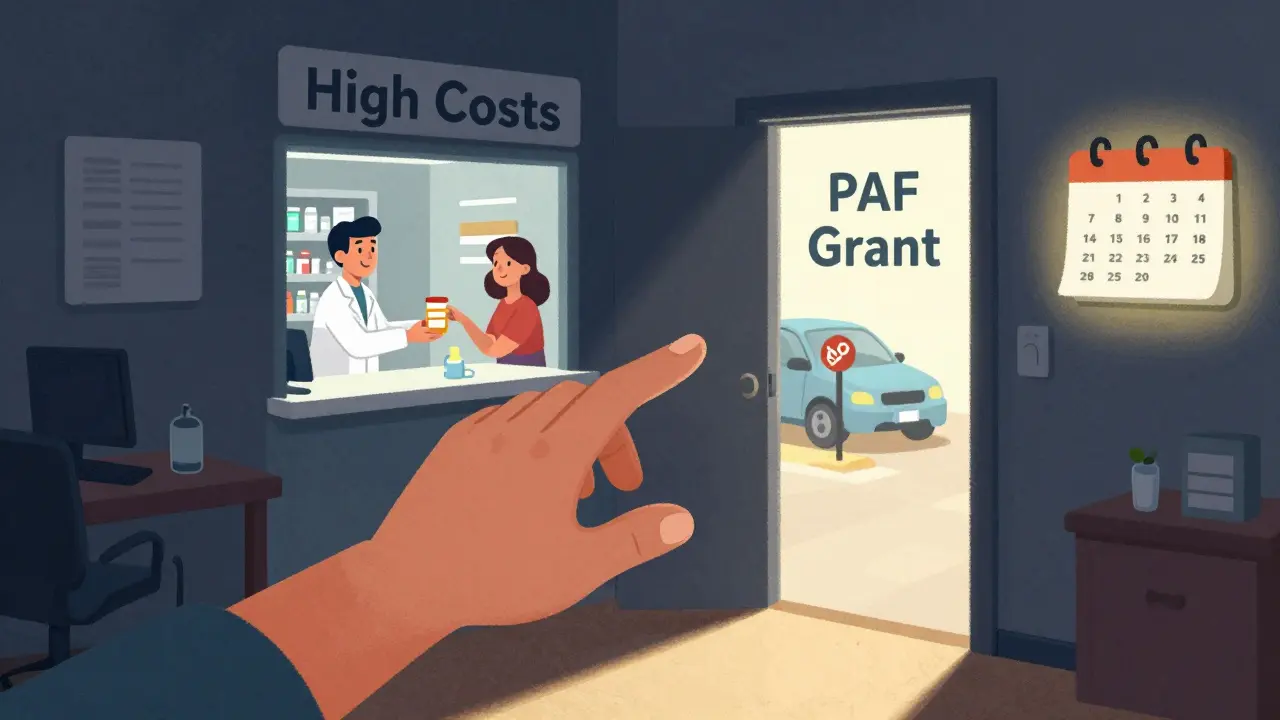
Rejection happens. Funding runs out. Don’t give up. Here’s what to do next:- Check back monthly. Most funds reopen on the first business day of the month. Set a calendar reminder.
- Try other foundations. The HealthWell Foundation, NeedyMeds, and the PAN Foundation also offer co-pay assistance. Each has different rules.
- Ask your pharmacy. Many pharmacies have discount cards or partnerships with nonprofits.
- Call your doctor. They might have samples, coupons, or connections to local charities.
- Look into state programs. Some states have drug assistance programs for residents. Medicaid expansion in some states also helps with prescriptions.
There’s no single solution. But there are many paths. The key is persistence.
Real Talk: What Patients Say
People who’ve used PAF say the same thing: “I didn’t know this existed.”One woman in Ohio had stage 4 breast cancer. Her co-pay for Herceptin was $450 per dose. She couldn’t afford it. She applied to PAF’s Breast Cancer Fund. She got approved. The grant covered her co-pays for six months. She finished treatment. She didn’t have to sell her car or take a second job.
A man in Florida with rheumatoid arthritis was paying $320 per month for Humira. His insurance didn’t cover it fully. He applied to PAF’s Autoimmune Fund. He got $1,800 in assistance over four months. He kept his job. He kept his mobility.
These aren’t rare stories. They’re common. And they happen because someone took the time to apply.
Final Tips
- Apply as soon as you’re diagnosed. Don’t wait until you can’t pay.
- Keep copies of everything. Letters, forms, emails.
- Use PAF’s case managers. They’re there to help you, not to gatekeep.
- Check PAF’s website weekly. New funds appear. Old ones reopen.
- Ask your pharmacist. They often know about local grants you won’t find online.
Medication shouldn’t be a luxury. It’s medicine. And there are people who want to make sure you get it. You just have to ask.
Can I apply for a medication grant if I have Medicare?
Medicare patients generally don’t qualify for PAF’s Co-Pay Relief Program, since Medicare already provides some drug coverage. However, you may still qualify for PAF’s Financial Aid Funds if you need help with non-drug costs like travel to treatment or home care. For drug costs, check if your medication’s manufacturer offers a Patient Assistance Program (PAP)-many do, even for Medicare users.
How long does it take to get approved for a grant?
Approval can take anywhere from 7 to 30 days, depending on how quickly your doctor submits their form and how complete your application is. Some funds process faster if you call and follow up. If you’re in urgent need, mention it when you apply-case managers can prioritize urgent cases.
Do I have to pay back the grant?
No. These are grants, not loans. You don’t have to repay them, even if your financial situation improves later. The money comes from donations, and the goal is to help you stay on treatment without debt.
What if my condition isn’t listed on PAF’s website?
If your condition isn’t listed, you may still qualify under their General Financial Aid Fund, which helps with a wide range of serious illnesses. Call PAF at 1-800-532-5274 to speak with a case manager. They can also refer you to other foundations that may cover your specific disease.
Can I apply to multiple funds at once?
Yes. If you have multiple conditions or need help with several medications, you can apply to multiple funds simultaneously. Just make sure each application is complete and accurate. PAF’s case managers can help you manage multiple applications without confusion.
Patient Advocate Foundation and similar organizations exist because the healthcare system leaves gaps. You don’t need to navigate them alone. Start with one phone call. One application. One step. That’s how people get the drugs they need-and keep living.
I applied for this thing last year. Took 3 weeks. Got $200. Covered one script. Then nothing. These nonprofits are just feel-good scams. They want you to beg for your own medicine. I’m tired of it.
The structural inadequacies inherent in the current pharmaceutical reimbursement framework necessitate the existence of such entities. However, the reliance upon discretionary grant funding as a substitute for systemic reform is both ethically problematic and economically unsustainable. One must question the moral hazard of institutionalizing charity in lieu of policy.
You people act like this is some miracle solution. Newsflash: if your insurance is so bad you need a nonprofit to pay your copay, you should’ve picked a better plan. Stop whining and get a job that actually offers decent coverage. This is what happens when you vote for socialism-lite.
Oh wow. A charity that actually helps people? How radical. I guess we should be grateful that corporations and politicians let us live long enough to need this. Meanwhile, insulin costs $300 in the US and $10 in Canada. But sure, let’s pat ourselves on the back for handing out crumbs.
they said it was for people who really need it... but then i heard they give money to people who just got a new house or drive a tesla. i think this whole thing is rigged. who even runs this? big pharma? the government? i dont trust any of it.
I got approved for 3 months of help last year. It saved my life. I cried when I got the email. I didn’t know anyone cared. If you’re reading this and you’re scared to apply - just do it. You’re worth it. 💔
Why should Americans get help while people in other countries die because they can’t afford meds? We have a system that lets people live in luxury while others beg for insulin. This isn’t charity. It’s a band-aid on a bullet wound. And we’re proud of it?
I just want to say thank you to the case managers. I was so lost after my diagnosis. One of them called me just to check in. No one else did. Not my insurance. Not my doctor. Just her. That’s the kind of humanity we need more of.
If you can’t afford your meds, you shouldn’t be taking them. Medical necessity ≠ personal desire. This system encourages dependency. You’re not sick because of biology. You’re sick because you chose bad insurance.
The PAF’s Co-Pay Relief Program operates within a value-based care paradigm, leveraging public-private partnerships to mitigate cost-related non-adherence. However, its efficacy is contingent upon eligibility thresholds aligned with the 2023 HHS poverty guidelines. Reapplication cycles are governed by fiscal year endowments and must be synchronized with CMS formulary updates.