How to Set Achievable Adherence Goals and Track Progress for Medication Compliance
Getting patients to take their meds as prescribed isn’t just about reminders-it’s about building habits that stick. For people managing diabetes, high blood pressure, or heart failure, missing doses isn’t a small mistake. It’s a risk to their health, their quality of life, and even their longevity. Yet, studies show nearly half of patients with chronic conditions don’t take their medications correctly. The problem isn’t laziness. It’s confusion, complexity, and lack of clear progress. The solution? SMART goals-simple, structured, and backed by real data.
Why SMART Goals Work for Medication Adherence
SMART isn’t just a buzzword. It’s a framework developed in the 1980s for business, but now used in clinics across North America to turn vague advice like “take your pill daily” into something patients can actually follow. A 2023 study from Vozo Health found that patients using structured SMART goals improved adherence by up to 35%. That’s not minor. That’s the difference between staying out of the hospital and needing emergency care. Here’s what makes SMART different from regular reminders:- Specific: Instead of “take your blood pressure med,” it’s “Take 10 mg of lisinopril every morning after brushing my teeth.”
- Measurable: You track it. Not just “did I take it?” but “how many days in a row did I take it?”
- Achievable: If someone works two jobs and forgets meals, setting a goal to take five pills at 7 a.m. won’t work. The goal must fit their life.
- Relevant: The goal connects to something they care about-like playing with their grandkids without getting winded.
- Time-bound: “This week, I’ll take my pill every day.” Not “sometime soon.”
Start with the Barriers First (B-SMART)
Many people fail before they even begin because no one asked: What’s stopping you? That’s where B-SMART comes in. It adds one critical step before the SMART structure: identify barriers. Think about it:- Can they afford the medication?
- Do they have trouble opening pill bottles?
- Do they forget because they don’t have a routine?
- Are they scared of side effects?
- Do they live alone and no one reminds them?
How to Track Progress-Without Overwhelming Patients
Tracking doesn’t mean logging every pill in an app. That’s where people quit. The best tracking is simple, visual, and tied to real outcomes. Here’s what works:- Smart pill bottles: These beep if not opened at the right time and send data to the provider. Accuracy? 98%.
- Pharmacy refill records: If someone hasn’t refilled their blood thinner in 60 days, that’s a red flag.
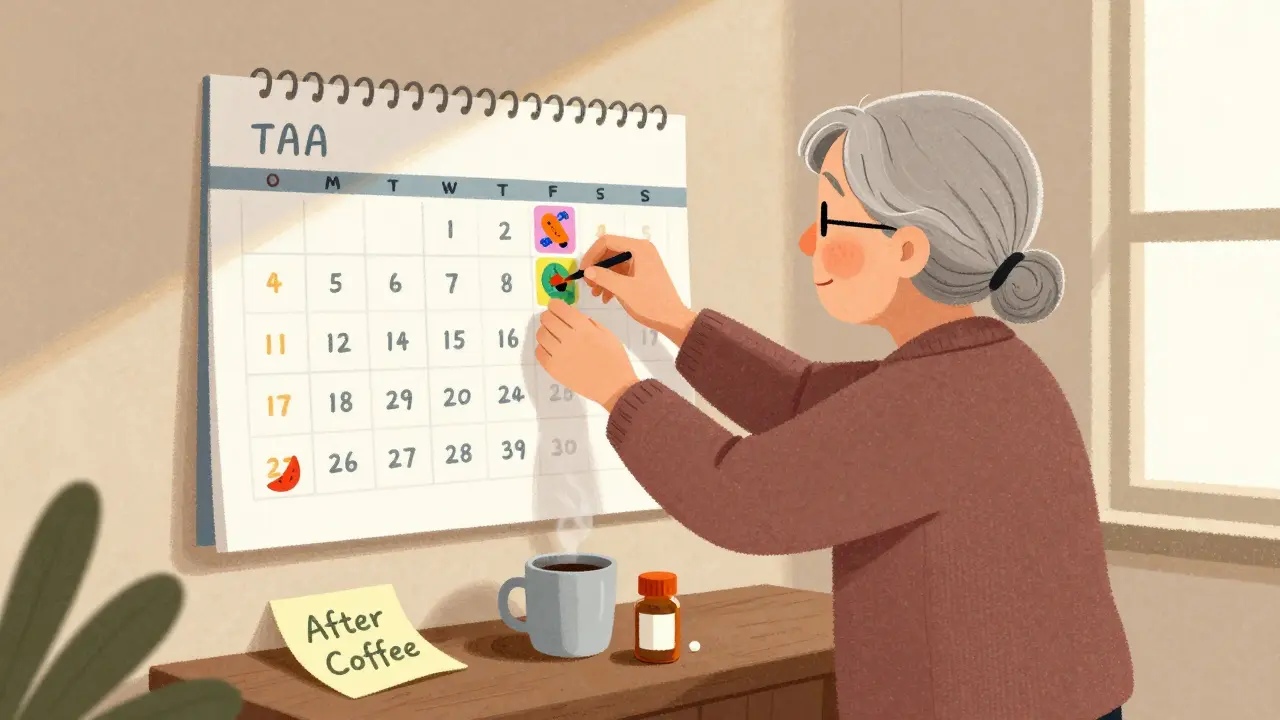
- Simple paper charts: A calendar with a sticker for each day they take their med. Patients over 65 prefer this-52% ditch apps after 30 days, according to PMC 8949687.
- Wearable sync: If they use a Fitbit or Apple Watch, link the goal to movement. “Take your heart med and walk 10 minutes.”

Real Examples That Actually Worked
Let’s say you’re helping someone with type 2 diabetes. Bad goal: “Eat healthier.” Good SMART goal: “For the next 14 days, I will eat one serving of vegetables with dinner and check my blood sugar before bed every night.” Now, track it. Use a printed checklist. Every morning, they mark an X. At the end of two weeks, they see: “I did it 10 out of 14 days.” That’s progress. Not perfection. Another example: A 72-year-old woman with hypertension struggled to remember her pills. Her goal: “Take my amlodipine at 8 a.m., right after I drink my coffee.” She put a sticky note on her coffee maker. She missed two days in the first month. Instead of scolding her, her nurse asked, “What happened those two days?” She said, “I was at my daughter’s. I didn’t bring my coffee mug.” So they switched the cue to “after I brush my teeth.” Result? 28 straight days of adherence.Tools That Help-And Which Ones to Avoid
There are dozens of apps. Most fail. Why? They’re too complicated. Or they don’t connect to the patient’s real life. Here’s what’s actually useful:| Tool | Best For | Accuracy | Ease of Use | Cost |
|---|---|---|---|---|
| Smart pill bottles (e.g., Hero, AdhereTech) | Patients with complex regimens | 98% | Medium | Often covered by insurance |
| Pharmacy refill data | Clinics with EHR access | 85% | High | Free |
| Medisafe app | Tech-savvy users under 65 | 80% | High | Free with premium options |
| Sticker calendar + paper log | Older adults, low-tech users | 70% | Very High | Free |
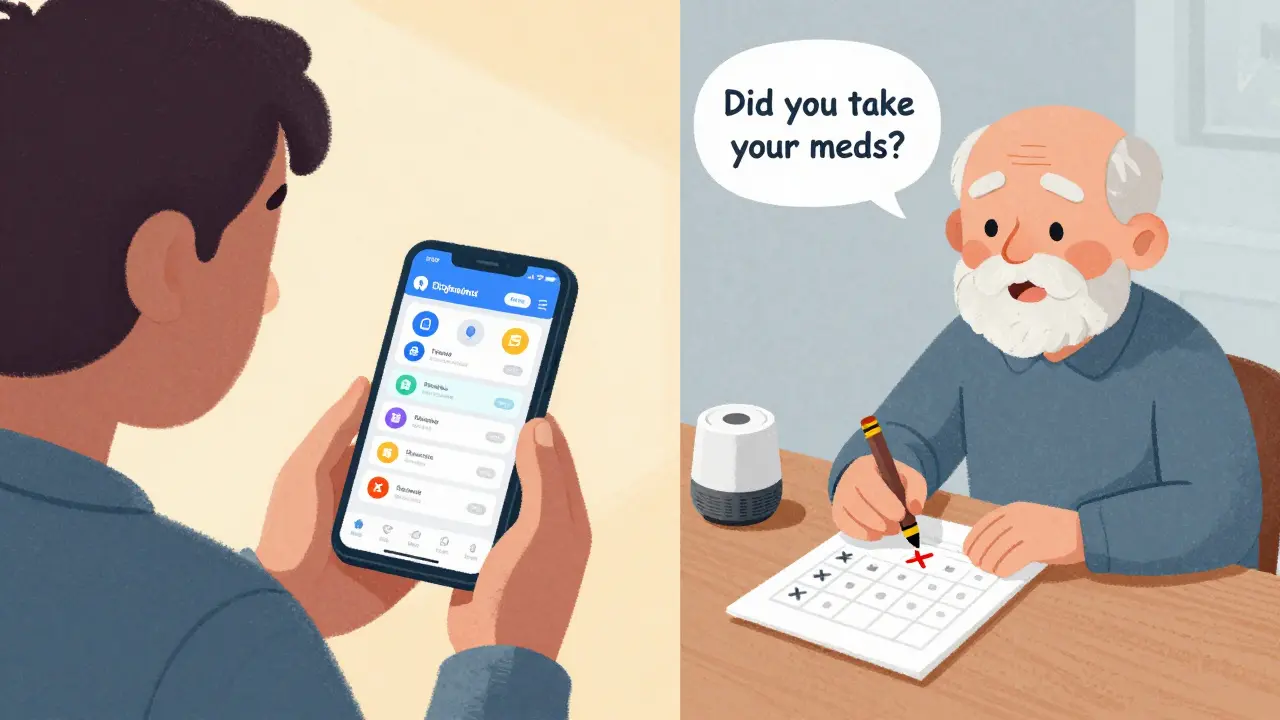
| Voice assistants (e.g., Alexa, Google Home) | People with vision or mobility limits | 75% | High | Free (if you own device) |
What to Do When Progress Stalls
It’s normal to slip. The goal isn’t perfection. It’s progress. If someone misses three days in a row:- Don’t assume they’re noncompliant. Ask: “What changed?”
- Check for new stressors-job loss, family illness, new side effects.
- Adjust the goal. Maybe “take pill every day” becomes “take pill 5 days a week, with two catch-up days.”
- Use small wins. Celebrate 5 days in a row with a text: “You did it! That’s huge.”
What Providers Need to Know
Doctors and nurses aren’t expected to be tech experts. But they do need to know how to start the conversation. Use this script: “Taking your meds regularly is one of the most important things you can do for your health. But I know it’s hard. What’s the biggest challenge for you right now?” Then listen. Don’t jump to solutions. Let them name the barrier. Then build the goal together. Also, use templates. Many EHRs now have built-in SMART goal fields. Epic, Cerner, and others support standardized data entry. That cuts documentation time by 37%, according to Vozo Health.What’s Coming in 2026
The future of adherence tracking is smarter-but not more complicated. By 2026, all major EHRs in Canada and the U.S. will be required to include standardized goal fields under the ONC’s Interoperability Rule. That means:- Your goal will be saved in your medical record-not just in a notebook.
- Your provider will see your progress without asking.
- AI will flag when you’re at risk of missing doses-before you miss them.
Final Thought: It’s Not About Compliance. It’s About Control.
People don’t want to be told what to do. They want to feel in charge of their health. SMART goals aren’t about policing behavior. They’re about giving people the tools to feel confident, capable, and heard. When someone says, “I took my pill every day this week,” that’s not just data. That’s pride. And that’s what keeps people alive.What’s the most common mistake when setting medication adherence goals?
The biggest mistake is making goals too broad or unrealistic. Saying “take your meds every day” without tying it to a daily habit (like brushing teeth or eating breakfast) doesn’t work. Also, skipping the barrier check leads to failure-many patients can’t afford pills, can’t open bottles, or forget because they’re overwhelmed. Start with what’s actually stopping them.
Can I use a phone app to track my medication adherence?
Yes, but only if it’s simple. Apps like Medisafe work well for people under 65 who are comfortable with technology. But for older adults, paper calendars, pill organizers with alarms, or even voice reminders on a smart speaker are often more effective. The key isn’t the tool-it’s whether the person will use it consistently.
How do I know if my adherence goal is achievable?
Ask yourself: Does this fit into my current routine? Can I do this even on a bad day? If your goal is “take 5 pills at 7 a.m.,” but you’re not awake until 9 a.m., it’s not achievable. Adjust it. Maybe it’s “take my morning pill right after I get out of bed.” Small changes make big differences.
What if I miss a dose? Does that mean I failed?
No. Missing a dose doesn’t mean failure-it means feedback. Track it. Ask why. Was it stress? A change in schedule? A side effect? Then adjust the goal. Progress isn’t about being perfect. It’s about learning and getting back on track. Celebrate the days you did it, not just the ones you didn’t.
Are SMART goals only for people with chronic diseases?
They’re most effective for chronic conditions like diabetes, hypertension, asthma, or depression, where daily habits matter over time. But they can also help with short-term regimens-like antibiotics after surgery-if you set a clear end date and tie the goal to a daily cue. The structure works for any behavior change that needs consistency.
How often should I check in on my adherence progress?
Start weekly for the first month. That’s when habits form. After that, check in every two weeks. Use automated reminders if you’re using an app or smart device. If you’re using paper, set a recurring calendar alert. The goal is to make tracking part of your routine-not a chore.
The notion that SMART goals are somehow revolutionary in adherence is laughably naive. We've had behavioral economics frameworks since the 90s-this is just rebranded nudge theory with a healthcare veneer. The real issue? Providers still treat patients as data points, not agents. Without addressing structural inequities-like insulin pricing or transportation deserts-your sticker chart is performative allyship at best. And don't get me started on 'smart' pill bottles costing $200/month. This is capitalism masquerading as care.
Interesting piece-though I’d argue the B-SMART model is where the real innovation lies. Identifying barriers first? That’s not just clinical-it’s humane. I’ve seen patients abandon regimens because they couldn’t open bottles, not because they were ‘noncompliant.’ A simple bottle opener, or even a pill splitter with a grip, can be life-changing. Also, pharmacy refill data is underutilized-why wait for a patient to miss a dose when the system can flag it automatically? Brilliant.
YES! This is exactly what we need! I work with seniors, and the paper calendar with stickers? Absolute gold. One lady cried because she finally saw her streak-17 days in a row. She said, 'I didn’t know I could do it.' That’s the magic. No apps, no tech, just a sticker and pride. We’re not fixing behavior-we’re rebuilding dignity. Keep this energy going!! 💪❤️
Clarity is key. The article nails it: specificity > motivation. 'Take your pill after brushing teeth' works because it piggybacks on an existing habit. No willpower required. That’s behavioral science 101. Also, avoid overcomplicating tracking. One checkmark per day is enough. More = dropout. Simplicity wins.
Let’s be real-this whole 'SMART goal' trend is just another way for clinicians to offload responsibility onto patients. You want adherence? Fix the cost. Fix the access. Fix the stigma. Stop asking people to 'build habits' when their life is a 12-hour shift, two kids, and no transportation. This isn’t psychology-it’s victim-blaming dressed up as innovation. And don’t even get me started on the 'sticker chart' nostalgia. It’s patronizing.
Oh my god, this is the spiritual awakening healthcare didn’t know it needed. We’ve been trapped in this toxic cycle of compliance culture-like patients are disobedient children who just need more reminders. But what if… we stopped seeing medication as a duty and started seeing it as an act of self-love? The sticker chart isn’t childish-it’s sacred. Each X is a whispered promise to your future self. And the fact that AI will soon predict non-adherence before it happens? That’s not tech-that’s destiny aligning. We’re not managing pills. We’re curating survival. 🌱✨
Let me cut through the fluff: this isn’t about SMART goals. It’s about power. Who gets to define what 'adherence' means? The provider? The algorithm? The pharmaceutical company? The patient? If your goal is 'take your pill after coffee,' but you don’t own a coffee maker because you’re homeless, then your goal is a lie. This framework assumes stability. It assumes privilege. It assumes you have a kitchen. That’s not healthcare. That’s a fantasy written by people who’ve never missed a meal to afford their meds.
While the framework presented is methodologically sound, the implementation remains context-dependent. In low-resource settings, even the sticker calendar may be inaccessible due to illiteracy or lack of printing resources. A culturally adapted approach-such as using color-coded beads or community health worker check-ins-may yield higher fidelity. The emphasis on patient autonomy is commendable, yet systemic support remains non-negotiable. We must bridge the gap between individual agency and structural equity.
I love how this shifts the narrative from 'noncompliance' to 'unmet needs.' One of my patients, a veteran with PTSD, stopped taking his meds because the bottle scared him-he associated it with hospital visits. We switched to a pill box with his grandkids’ photos on it. He takes it every morning now. No app. No pressure. Just love. This isn’t about tracking-it’s about connection. And that’s the real medicine.
Bro, this is the good stuff. I’m a med tech and I’ve seen it all-people forgetting meds because they’re high on anxiety, or too tired to open bottles, or just plain scared of side effects. The B-SMART thing? Game-changer. One guy said he didn’t take his BP med because he thought it made him ‘weak.’ We reframed it: ‘This pill lets you carry your grandkid without getting dizzy.’ He started taking it every day. Just changed the story. Also, voice assistants? YES. My grandma says, ‘Alexa, remind me to take my pill.’ And Alexa says, ‘Okay, Grandma. You got this.’ She cries every time. It’s not tech-it’s tenderness.
Smart goals work because they’re not about forcing behavior-they’re about designing environments that make the right choice easy. That’s why tying it to existing habits matters. Brushing teeth? Coffee? Walking to the mailbox? Those are anchors. The tool doesn’t matter. The consistency does. And when progress stalls? That’s not failure. That’s data. Listen. Adjust. Try again. No shame. Just science.
Let me tell you something-my cousin took her meds for 3 months using a calendar. Then she missed 4 days because her landlord kicked her out. You think a sticker chart fixes that? No. You think a smart bottle fixes that? No. What fixes that? Housing. Food. Safety. Stop putting the burden on the patient to be perfect when the system is broken. This article feels like a Band-Aid on a hemorrhage.
There’s a deeper philosophical layer here that’s being overlooked: adherence isn’t a behavior-it’s an identity. When someone says, ‘I’m the kind of person who takes their medicine,’ that’s when change sticks. The SMART framework doesn’t create discipline-it reveals self-worth. And that’s why the emotional component matters more than the algorithm. The pill is just the vessel. The meaning is the medicine. We’re not just tracking doses-we’re tracking dignity. And if AI can predict when someone’s about to slip… maybe it’s not just predicting behavior. Maybe it’s predicting hope.