How to Respond to a Suspected Overdose While Waiting for Help
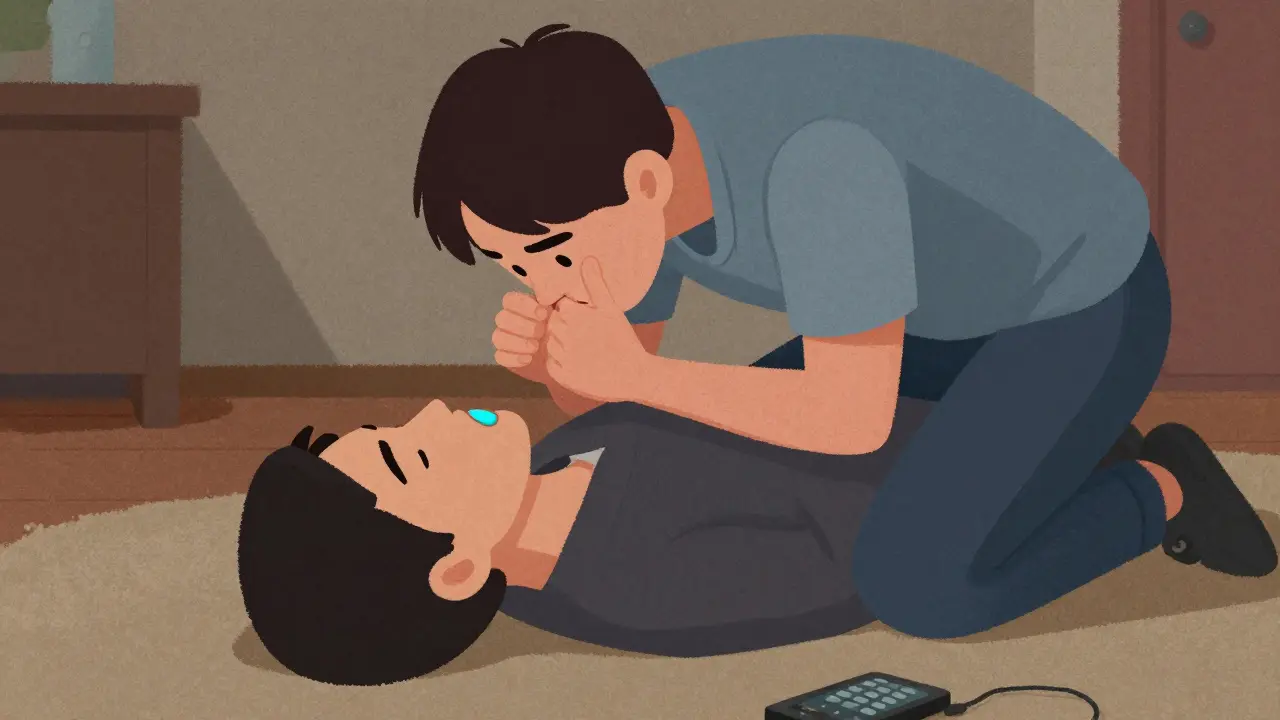
Someone you know is unresponsive. Their lips are blue. Their breathing is shallow, or maybe they’re not breathing at all. You’re scared. You don’t know if they’re sleeping, passed out, or dying. Overdose is happening right now - and every second counts.
You don’t need to be a doctor. You don’t need to wait for someone else to act. Your quick, calm response can save a life. In fact, bystanders who act within the first few minutes can cut overdose deaths in half. This isn’t theory. It’s proven by data from the CDC and the New England Journal of Medicine. What you do next matters more than you think.
Step 1: Check Responsiveness and Breathing
Shake them and shout - no. That delays help. Instead, tap their shoulder firmly and shout, "Are you okay?" If there’s no response, immediately check their breathing. Look at their chest. Listen near their mouth. Feel for air on your cheek.
Don’t mistake gasping or snoring for normal breathing. These are signs of severe oxygen deprivation. If they’re not breathing normally - or not at all - you’re dealing with an overdose. Time is measured in minutes. Brain damage starts after four minutes without oxygen. That’s less time than it takes to wait for an ambulance to arrive.
Step 2: Call 911 Immediately
Don’t wait. Don’t think, "Maybe they’ll wake up." Don’t worry about getting someone in trouble. Emergency responders are trained to help, not punish. In 49 states, Good Samaritan laws protect you from legal trouble if you call for help during an overdose.
When you call, say clearly: "Someone is unresponsive and not breathing. I suspect an overdose." Give your location. Stay on the line. The dispatcher will guide you through the next steps. If you’re with someone else, send them to call while you start helping.
Step 3: Give Rescue Breaths
Even if you’re not trained in CPR, rescue breathing alone can keep someone alive until help arrives. For opioid overdoses - which cause nearly 75% of drug deaths - the heart often keeps beating, but the lungs stop. Breathing for them is the most critical thing you can do.
Place one hand on their forehead. Tilt their head back slightly. Lift their chin with two fingers of your other hand. This opens the airway. Pinch their nose shut. Seal your mouth over theirs. Give one breath every 5 to 6 seconds. Each breath should last about one second and make their chest rise. Don’t blow too hard - you don’t want air in their stomach.
Keep going. Don’t stop unless they start breathing on their own or help arrives. Most people give up too soon. They think naloxone will fix everything. But naloxone takes 2 to 5 minutes to work. Rescue breathing keeps them alive until then.
Step 4: Administer Naloxone If Available
If you have naloxone - the opioid overdose reversal drug - use it. It’s safe, easy, and works fast. Naloxone won’t hurt someone who didn’t take opioids. It won’t reverse alcohol, cocaine, or benzodiazepine overdoses - but if you’re unsure, give it anyway. Most overdoses now involve fentanyl, which is an opioid.
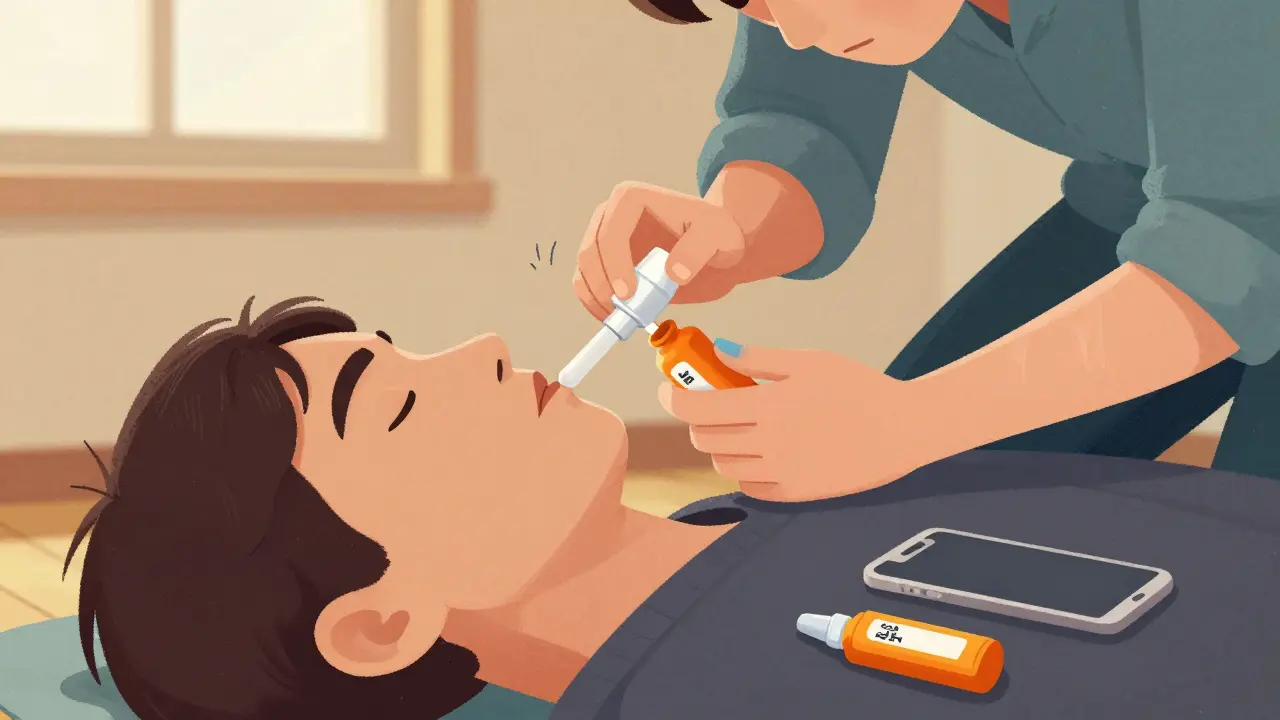
For nasal spray: Lay the person flat. Tilt their head back. Insert the nozzle into one nostril. Press the plunger firmly until you hear a click. Don’t spray into both nostrils at once. Wait 2 to 3 minutes. If they don’t respond, give a second dose in the other nostril. Keep giving rescue breaths while you wait.
Naloxone is now sold over the counter in pharmacies across the U.S. as of March 2024. You don’t need a prescription. Keep one in your bag, car, or home. It’s small. It lasts two years. And it’s cheaper than most pain relievers.
Step 5: Put Them in the Recovery Position
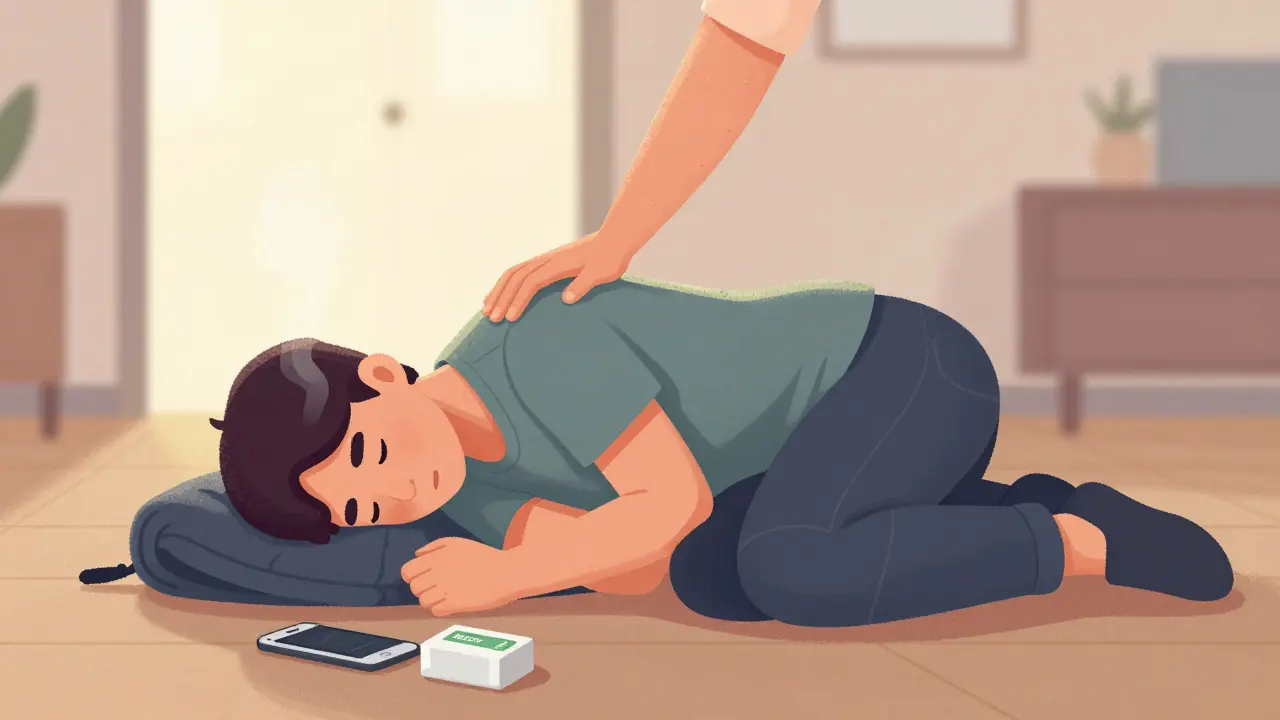
If they start breathing on their own, roll them onto their side. This is called the recovery position. It keeps their airway open and prevents choking if they vomit.
To do it: Kneel beside them. Straighten their legs. Place the arm closest to you at a 90-degree angle. Put their far arm across their chest. Bend their far knee up so the foot is flat on the ground. Gently roll them toward you, using the bent knee as a pivot. Tilt their head back slightly so their airway stays open. Check their breathing every few minutes.
Don’t leave them alone. Even if they wake up, they can slip back into overdose. Naloxone wears off faster than the drugs they took. Fentanyl can stay in their system for hours. They need medical care.
What NOT to Do
Don’t put them in a cold shower or ice bath. That can cause dangerous heart rhythms, especially with stimulant overdoses like meth or cocaine.
Don’t try to make them walk. Don’t slap them. Don’t give them coffee or food. These are myths that cost lives.
Don’t wait to see if they "get better." Overdose doesn’t always fix itself. One study found that 28% of people who died from overdose were mistaken for just "sleeping" by bystanders.
Special Cases: Stimulants and Alcohol
If you suspect a stimulant overdose - like cocaine, meth, or MDMA - the signs are different. They may be sweating, shaking, confused, or having a seizure. Their body temperature can spike above 104°F. Don’t use naloxone. It won’t help. Instead, keep them calm, cool, and still. Remove heavy clothing. Place cool, damp cloths on their neck and armpits. Don’t use ice. Call 911. They need fluids and medical monitoring.
If alcohol is involved, the biggest danger is choking. Alcohol shuts down the gag reflex. Keep their head tilted back. Don’t let them lie flat on their back. Use the recovery position. Watch for vomiting. If they throw up, roll them to their side immediately.
After Help Arrives
When EMS gets there, tell them what you did. When you called. When you gave naloxone. How many breaths you gave. What the person looked like. That info saves lives.
Even if they seem fine, they need to go to the hospital. Overdose can cause delayed complications - heart rhythm problems, lung damage, brain swelling. One person survived an overdose after being revived with naloxone - but had a stroke three hours later because they didn’t get checked out.
You Are Not Alone
More than 3 million Americans have been trained in overdose response. You’re not the first person to face this. You won’t be the last. Communities with naloxone programs and trained bystanders have reversed over 12,500 overdoses with a 98.7% survival rate.
You don’t need to be brave. You just need to act. One breath. One call. One dose of naloxone. That’s all it takes to turn a tragedy into a second chance.
Can naloxone be used for any type of overdose?
No. Naloxone only works on opioids like heroin, fentanyl, oxycodone, and morphine. It won’t reverse overdoses from alcohol, cocaine, meth, or benzodiazepines. But if you’re unsure what was taken, give naloxone anyway. It’s safe and won’t harm someone who didn’t take opioids. In fact, most modern overdoses involve fentanyl - an opioid - even when other drugs are mixed in.
What if I’m scared to call 911 because I’m using drugs?
You’re not alone in feeling this way. But in 49 states, Good Samaritan laws protect you from arrest or prosecution if you call for help during an overdose. Emergency responders are there to save lives, not punish people. Your call could save someone’s life - including your own. The risk of not calling is death. The risk of calling is a conversation. Choose life.
How do I know if someone is really overdosing and not just drunk or asleep?
Look for three signs: unresponsiveness, slow or stopped breathing, and blue or gray lips and fingernails. People who are just drunk or asleep usually respond to loud noises or shaking. Someone overdosing won’t. Gasping, snoring, or irregular breathing are red flags - not signs of sleep. If you’re unsure, assume it’s an overdose. Acting fast saves lives.
Can I give naloxone to a child or teenager?
Yes. Naloxone is safe for all ages, including infants and teens. The dosage is the same regardless of weight. Overdose doesn’t care how old you are. Fentanyl is so strong that even a tiny amount can kill a child. If you suspect an opioid overdose in anyone, give naloxone and call 911. It’s not just okay - it’s necessary.
What if I give naloxone and they wake up but seem angry or violent?
That’s common. Naloxone can cause sudden withdrawal, which feels like a bad flu mixed with panic. They might scream, fight, or try to run. Stay calm. Don’t argue. Keep them safe. Hold their hand. Say, "You’re safe. Help is coming." They’re not angry at you - they’re in pain. Keep giving rescue breaths if they stop breathing again. Stay with them until EMS arrives.
How long does naloxone last, and what if they overdose again?
Naloxone lasts 30 to 90 minutes. Many opioids - especially fentanyl - last much longer. That means someone can slip back into overdose after naloxone wears off. Always call 911. Always stay with them. Even if they wake up, they need medical care. Don’t assume they’re out of danger just because they’re conscious.
Is it better to do chest compressions or just rescue breathing during an overdose?
For opioid overdoses, rescue breathing is more important than chest compressions. The heart usually keeps beating - the lungs stop. Compression-only CPR is for cardiac arrest, not overdose. If they stop breathing but still have a pulse, focus on breaths. Only start compressions if they lose their pulse. That’s rare in early overdose. Most deaths happen because breathing stops, not the heart.
Where can I get free naloxone?
Many pharmacies sell naloxone without a prescription. Some community centers, clinics, and harm reduction programs give it out for free. You can also order it online from approved distributors. Check your state’s health department website - most have lists of free naloxone locations. It’s covered by Medicaid and many insurance plans. If you know someone who uses drugs, get one. It’s the most important thing you can carry.
Oh great, another feel-good guide for people who think they’re heroes if they don’t let someone die in their living room. Congrats, you didn’t ignore a corpse. Big deal. I’ve seen people do all this and still get charged because some cop decided to make an example out of them. Good Samaritan laws? More like Good Samaritan *myths*.
THIS. THIS IS WHY WE NEED MORE PEOPLE TO KNOW THIS. I’ve held my brother’s hand while he stopped breathing. I didn’t know what to do. I panicked. But then I remembered this exact guide. I gave him breaths. I used naloxone. He’s alive today because I didn’t wait for someone else to be brave. You don’t need to be a hero. You just need to act. ❤️
There are multiple inaccuracies in this post. First, the claim that rescue breathing alone cuts overdose deaths in half is misleading-studies show it's the combination of naloxone and ventilation that yields the highest survival rates. Second, the assertion that naloxone is "cheaper than most pain relievers" is context-dependent; in many states, it still costs $40-$120 without insurance. Third, the recovery position is not universally recommended for opioid overdose-some EMS protocols prioritize supine positioning with airway management until advanced care arrives. This guide, while well-intentioned, oversimplifies medical protocols that require nuance.
Good breakdown. I work in harm reduction in Bangalore and we teach this exact sequence. The biggest barrier isn’t knowledge-it’s fear. Fear of cops, fear of judgment, fear of being blamed. That’s why we hand out naloxone kits with a note: "You didn’t cause this. You’re helping." Simple. Human. Works every time.
My cousin OD’d last year. I didn’t know what to do. I cried. I screamed. I ran out of the house. I didn’t call 911. He didn’t make it. I wish I’d read this before.
YOU CAN DO THIS. Seriously. I trained at my local community center last month. I’ve got naloxone in my car, my backpack, even my purse. I’ve used it twice. Both times, the person woke up confused, mad, but ALIVE. One guy hugged me and said, "I didn’t think anyone cared." You do. You matter. 🙌
The assertion that "brain damage starts after four minutes without oxygen" is a generalization that fails to account for hypothermic or metabolic variations. Furthermore, the recommendation to administer naloxone regardless of suspected substance is medically irresponsible. While naloxone is safe, its indiscriminate use may delay appropriate treatment for non-opioid overdoses, particularly in polydrug scenarios. This guide lacks clinical rigor and risks promoting overreliance on a single intervention.
Just got my free naloxone from the health clinic today 🎉 I put it in my wallet next to my ID. I’m not waiting until it’s someone I love. It’s for everyone. And if you’re scared to call 911? I get it. But your silence costs lives. You’re not a bad person for being scared. But you’re a hero for acting anyway. 💙
I used to be the guy who walked past someone passed out on the sidewalk. I thought they were just drunk. Then I saw a kid, maybe 16, blue as a bruise, not breathing. I did the breaths. I used the spray. He woke up screaming at me. I didn’t care. He’s alive. I still see him sometimes at the food bank. He says thanks every time. That’s all I need.
My sister’s boyfriend OD’d last winter. We had naloxone. We used it. He woke up. He threw up. We rolled him. We stayed. He’s in recovery now. This isn’t just info-it’s a lifeline. Thank you for writing this clearly. No fluff. Just facts. That’s what people need.
Found this guide when I was scared to call for my friend. I did it. He’s okay. I still get shaky thinking about it. But I’m glad I didn’t do nothing. Thanks for writing it. I’ll share it.