How to Report Counterfeit or Tampered Medications: Step-by-Step Guide for Patients and Pharmacists
Finding a pill that looks wrong-wrong color, weird smell, or packaging that doesn’t match what you’ve taken before-can be terrifying. You’re not imagining it. Counterfeit or tampered medications are real, and they’re more common than most people think. The World Health Organization estimates that 1 in 10 medical products in low- and middle-income countries is fake or substandard. Even in places like Canada and the U.S., counterfeit drugs are slipping through, especially through online pharmacies. The good news? You don’t have to just accept it. Reporting suspicious medication isn’t just helpful-it can save lives.
What Counts as a Counterfeit or Tampered Medication?
A counterfeit medicine is made to look like the real thing but isn’t. It might have no active ingredient, the wrong ingredient, or too much of it. Tampered medication has been altered after leaving the manufacturer-maybe the bottle was opened and refilled, the expiration date changed, or the seal broken and resealed.Common signs include:
- Packaging with misspelled words, blurry logos, or mismatched colors
- Pills that look different from previous refills-wrong shape, size, or imprint
- Unusual taste, smell, or texture
- Missing or altered batch or lot numbers
- Expiration dates that don’t match what your pharmacy printed
- Packages without tamper-evident seals, or seals that look reused
If you’re unsure, compare your medication to the description on the manufacturer’s official website. Many companies like Novo Nordisk and Eli Lilly post images of their authentic products online. If something feels off, trust your gut.
What to Do Immediately After Finding a Suspicious Medication
Don’t take the pill. Don’t throw it away. Don’t flush it. Here’s what to do right away:- Keep the medication-all of it. The pill, the bottle, the box, the leaflet, and the receipt.
- Don’t handle it more than necessary. If you touched it, wash your hands. Avoid spreading any potential contamination.
- Take a photo of the packaging from all angles, including the lot number, expiration date, and any irregularities.
- Write down where you got it. Was it a local pharmacy? An online site? A friend’s leftover supply? Note the name of the pharmacy, the date, and any other details.
This evidence is critical. According to Dr. Paul Newton of Oxford University, reports with batch numbers and clear photos are 68% more likely to lead to a successful investigation.
How to Report in the United States
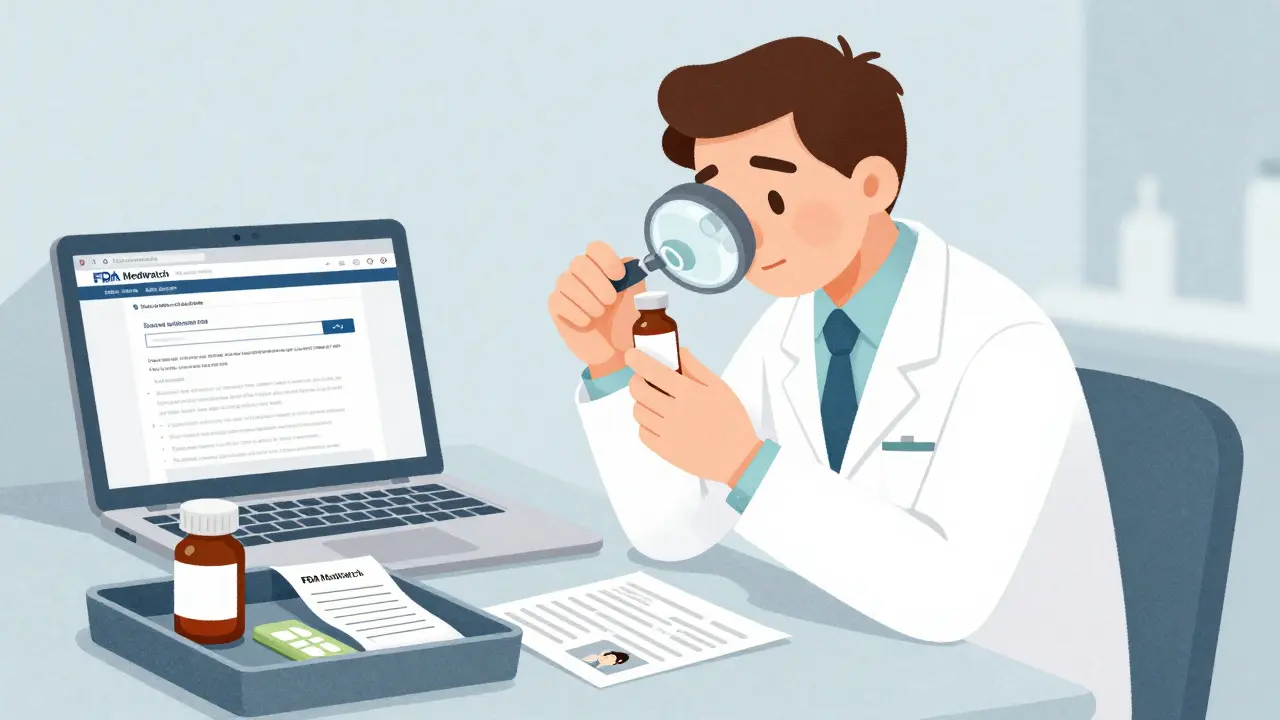
In the U.S., the FDA runs the MedWatch program-the main system for reporting drug safety issues, including counterfeit products. You don’t need to be a doctor to use it.Option 1: Online Report (Fastest)
- Go to fda.gov/medwatch
- Download and fill out Form 3500
- Attach your photos and any documentation
- Submit it electronically
Option 2: Phone Report
- Call 1-800-FDA-1088
- Available 24/7
- Have your medication details ready: name, batch number, where you bought it
If you’re a pharmacist, doctor, or part of the drug supply chain, you’re legally required to report under the Drug Supply Chain Security Act (DSCSA). You must notify the FDA within 24 hours of discovering a suspect product. Use the 3911 platform in CDER NextGen or email Form FDA 3911 to [email protected].
The DEA also runs a separate anonymous tip line for suspicious drug activity: (571) 324-6499 or online at dea.gov. This is especially useful if you suspect illegal distribution, forged prescriptions, or pill mills.
How to Report in Canada
In Canada, reporting depends on what kind of drug you’re dealing with.For regular prescription drugs:
- Contact your provincial health authority. In Ontario, pharmacists must report forged prescriptions to [email protected]
- Include: prescriber name, drug name, prescription copy, and contact info
For controlled substances (like opioids, Adderall, Xanax):
- Report to Health Canada’s Office of Controlled Substances within 10 days
- Follow Guidance Document CS-GD-005 (March 2020)
- Use the official reporting form
Patients can also report directly to Health Canada via their MedEffect Canada portal. It’s similar to MedWatch-fill out the form, upload photos, and describe what happened.
What Happens After You Report?
Once you report, the agency reviews your information. If it’s flagged as high-risk, they may:- Issue a public warning
- Order a recall of the batch
- Shut down a website selling fake drugs
- Coordinate with customs to block shipments
The FDA says reports submitted within 24 hours lead to product removal 4.2 times faster than those reported after three days. That’s why timing matters.
But here’s the hard truth: you might not hear back. The FDA’s 2022 survey showed only 56% of consumers felt they got adequate follow-up. That doesn’t mean your report didn’t help. It means the system is overwhelmed. Your report adds to a growing database that helps authorities spot patterns and target bad actors.
What Not to Do
Don’t:
- Take the medication, even if you think it’s "probably fine"
- Give it to someone else
- Try to return it to the pharmacy without reporting first
- Post photos of it on social media without reporting to authorities
Posting online might raise awareness, but it won’t remove the product from the market. Only official reports trigger investigations and recalls.
How to Protect Yourself Going Forward
Prevention is the best defense. Here’s how to avoid counterfeit meds:
- Only buy from licensed pharmacies. Look for the VIPPS seal (Verified Internet Pharmacy Practice Sites) in the U.S. or the Canadian International Pharmacy Association (CIPA) logo in Canada.
- Avoid buying drugs from websites that don’t require a prescription. The National Association of Boards of Pharmacy found 96% of online pharmacies operating without proper licensing.
- Check the manufacturer’s website for authentic product images and batch number verification tools.
- Ask your pharmacist: "Is this the same brand I’ve had before?" If they hesitate, ask for a second opinion.
Online marketplaces like Amazon are also stepping up. In 2022, they handled over 7,800 pharmaceutical counterfeit reports. If you buy meds online and suspect fraud, use their "Report a Product" feature.
Why Your Report Matters
One report might seem small. But in 2022, the FDA removed over 2,300 counterfeit drug products from the U.S. market-most of them because of public reports. The DEA’s tip line in San Diego found that 73% of successful investigations started with a tip from someone like you.
Every time you report, you help:
- Stop someone else from taking a dangerous pill
- Force bad actors out of the market
- Improve the system for the next person
It’s not about blame. It’s about protection.
Frequently Asked Questions
Can I report a counterfeit medication if I didn’t buy it myself?
Yes. If you saw someone using a suspicious pill, found a fake bottle in a public place, or heard about it from a friend, you can still report it. The FDA and Health Canada accept reports from anyone who has reason to believe a product is counterfeit-even if you’re not the original purchaser.
Will my identity be kept private?
Yes. Both MedWatch and MedEffect Canada allow anonymous reporting. You can choose not to provide your name, phone number, or email. The DEA’s tip line is also fully anonymous. Your privacy is protected by law.
What if I already took the suspicious medication?
Stop taking it immediately. Contact your doctor or go to an emergency room if you feel unwell. Then, report the product through MedWatch or MedEffect Canada. Even if you’ve already used it, your report can still help prevent others from being harmed. Keep the packaging and any remaining pills for evidence.
Do I need to contact my pharmacy first?
It’s a good idea to let them know-they may have seen others with the same issue. But you don’t need to wait for them to act. If you suspect a counterfeit, report directly to the FDA or Health Canada right away. Pharmacies are required to report too, but they might not catch every case.
How long does it take to get a response?
There’s no guaranteed timeline. Some reports lead to action within days; others take weeks. The FDA says consumer reports typically take 14 days on average to be reviewed. Don’t wait for a reply to know your report mattered. Authorities use aggregated data to spot trends-even one report adds to that picture.
Are online pharmacies ever safe?
Only if they’re verified. In the U.S., look for the VIPPS seal. In Canada, check for CIPA certification. Avoid sites that offer "no prescription needed," sell drugs at prices that seem too good to be true, or don’t list a physical address or phone number. If you’re unsure, ask your local pharmacist to verify the site.
Next Steps
If you’ve found a suspicious medication, take action now. Save the packaging. Take photos. Report it. Don’t wait for someone else to do it.
If you’re a healthcare provider, make sure your team knows the reporting process. Post the MedWatch and MedEffect Canada links in your break room. Train staff to recognize red flags like mismatched batch numbers or altered labels.
And if you’ve never reported before-start now. Your report could be the one that stops the next dangerous batch from reaching someone’s medicine cabinet.
Wow. Finally someone who gets it. I found a bottle of metformin that looked like it was printed on a dot-matrix printer from 1997. No batch number, weird blue tint, tasted like chalk and regret. Reported it same day. FDA called me back two weeks later. Didn’t say much. But my report was linked to a nationwide recall. I didn’t do it for thanks. I did it because someone’s grandma could’ve died.
YAS. 🔥 This is the kind of post that makes me believe humanity hasn’t completely collapsed yet. If you’re reading this and you’ve got a weird pill in your hand-STOP. DO NOT SWALLOW. Take a pic. Report it. You’re not being paranoid. You’re being a hero. And if you’re a pharmacist? You’re basically a superhero with a white coat and a printer. Keep doing the work. I’m sending virtual cupcakes to everyone who reports. 🧁
I used to work in a pharmacy back in Ohio. We had this one guy come in every month for insulin. One day, the vial looked off-slightly cloudy, label peeling. We didn’t say anything at first. Then we checked the lot number online. Turned out it was a fake batch. We called the FDA, held onto the vial, and the next day, three other pharmacies reported the same thing. It was a big deal. Just… don’t ignore the weird stuff. Even if it’s just one bottle. It matters.
This is all a cover-up. The FDA doesn’t want you to know that most drugs are laced with rat poison now. They’re letting it happen so you’ll keep buying. The real solution? Stop trusting corporations. Stop trusting pharmacies. Start growing your own herbs and brewing tinctures in your basement. The government’s lying to you. Always has been.
Okay but why is this even a thing? Like… who’s out there making fake insulin? And why? 😭 I just want to take my pills without having to become a forensic chemist. Can we just make it illegal to sell pills without a QR code that auto-verifies with the manufacturer? I’m tired.
Let us not romanticize the reporting mechanism. The MedWatch portal is a bureaucratic labyrinth designed to discourage participation. The 68% statistic cited is cherry-picked-what of the 32% that yield no action? The system is reactive, not proactive. And let us not forget: the majority of counterfeit drugs originate from unregulated supply chains in Asia, yet no systemic trade policy reform accompanies these individual reports. Your photo? It is a drop in an ocean of indifference.
And yet… you still buy from Amazon? You still click "Buy Now" on that $50 bottle of Viagra from "GlobalPharmaDeals.com"? You think a QR code saves you? You think a "VIPPS seal" is anything but a marketing gimmick? The system is rigged. The regulators are asleep. The only thing that matters is your instinct. And if you’re reading this, you already know what you saw was wrong. So why are you still here? Go report. Now. Before it kills someone else.
Just wanted to say thank you for writing this. I’m from India, and my mom got a fake blood pressure pill last year. We didn’t know what to do. I found this guide months later and cried. I reported it. Two weeks later, the local pharmacy got shut down. It’s small, but it’s something. To everyone reading: your voice matters. Even if you’re scared. Even if you think no one will care. Someone will. And it might be me.
Reported a fake Xanax bottle last month. No reply. Didn’t expect one. Still did it. That’s all.
As a licensed pharmacist with 18 years in community practice, I can confirm: counterfeit medications are an escalating crisis. The majority of cases we encounter originate from online vendors operating under false licenses. We have protocols-document, isolate, report. But institutional inertia is real. I urge every patient: if you suspect falsification, do not rely on your pharmacy to act first. Report directly to MedWatch or MedEffect Canada. Your initiative is the first line of defense. And yes, your anonymity is protected. You are not alone in this.
So… if I find a weird pill in my purse and I don’t remember buying it… do I still report? 😅 I think it might’ve been in there since last year. Maybe it’s just a candy? But also… what if it’s not?
How quaint. You all treat this like a moral imperative. As if the average consumer has the time, literacy, or bandwidth to dissect pharmaceutical supply chains. In the Global South, where 80% of the population relies on informal drug vendors, reporting is a luxury. You speak of FDA forms and MedWatch portals as if they’re accessible to a woman in rural Bihar who walks 5 kilometers to buy her hypertension pills from a roadside stall. This guide is written for the privileged. It’s not a solution-it’s a performance of virtue. The real problem? Corporate greed, weak regulation, and the commodification of health. Your report won’t fix that. But it makes you feel good. And that’s the real drug here.