How to Keep Medications Safe from Kids and Pets: Storage, Disposal & Tips
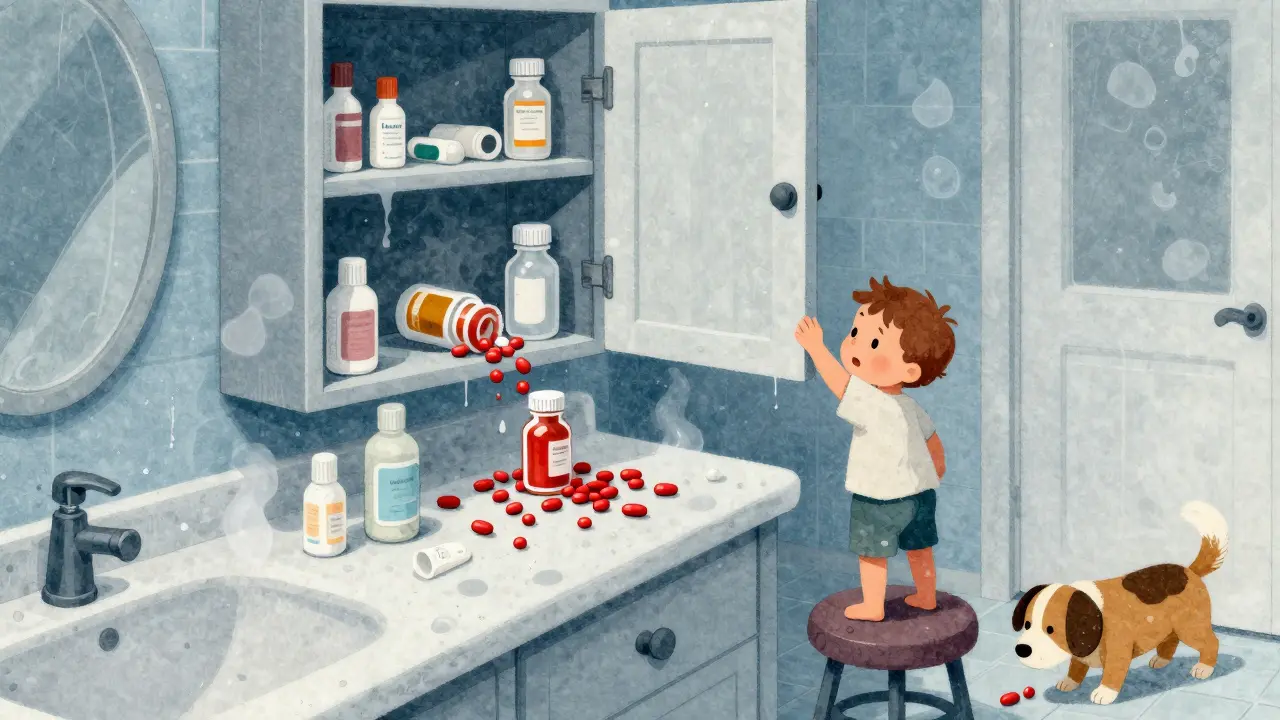
Medicine cabinets are often the most dangerous places in a home. While we store life-saving drugs there, we also create a hazard zone for curious toddlers and scavenging pets. Every year, thousands of children end up in emergency rooms after swallowing pills they found lying around. Pets face similar risks, with dogs and cats accidentally consuming medications that can be fatal even in small doses. The good news? You don't need expensive gadgets or a complete home renovation to fix this. Simple changes in how you store and dispose of medications can drastically reduce these risks.
This guide covers exactly where to put your meds, how to lock them up effectively, and the safest ways to throw away leftovers. We’ll break down the differences between human and pet medications, explain why bathroom cabinets are a bad idea, and give you practical steps to secure your home today.
The Reality of Accidental Ingestions
It’s easy to think, "My kid isn’t that curious" or "My dog only eats food." But statistics tell a different story. According to data from the American Association of Poison Control Centers, roughly 60,000 young children are treated in emergency departments annually for accidental medication ingestions. Children under age 5 account for 75% of these cases. For pets, the Veterinary Emergency and Critical Care Society reports that accidental medication ingestions make up 12% of all pet emergency visits, with dogs representing nearly 80% of those incidents.
Why does this happen so often? It’s usually convenience. Parents leave pills on countertops while giving a dose. Pet owners drop a tablet near the couch because it’s easier than walking to the kitchen. Seattle Children’s Hospital data shows that improper storage accounts for 78% of pediatric medication poisoning cases. The most common error? Temporary placement on surfaces during administration. That few seconds is all it takes for a toddler to grab a pill or a dog to snatch it off the floor.
How many children get poisoned by medicine each year?
Approximately 60,000 young children are treated in emergency departments annually for accidental medication ingestions, according to the American Association of Poison Control Centers.
Where NOT to Store Medications
Before finding the right spot, let’s clear out the wrong ones. Most people default to the bathroom cabinet or the kitchen counter. Both are terrible choices.
Bathroom Cabinets: Bathrooms are humid. The average humidity level in a bathroom ranges from 60% to 80%. This moisture degrades medication efficacy, turning effective drugs into useless chalk. VCA Animal Hospitals specifically advises against storing meds here. Plus, bathrooms are often low-traffic areas where kids might play, making access easier.
Kitchen Counters: These are high-traffic zones. Pills left here are visible and reachable. If you’re cooking or prepping food, distractions are high. A dropped pill can roll under appliances, where pets love to dig.
Nightstands: Many adults keep sleep aids or painkillers next to their beds. This is risky if children climb into bed or if pets jump up. It creates a false sense of security because it’s “out of sight” during the day but fully accessible at night.
The Golden Rule: Up, Away, and Locked
The CDC’s “Up and Away” campaign has been the gold standard since 2010. Here’s what it actually means in practice:
- Up: Store medications higher than 5 feet. Research shows children can typically reach objects up to 4 feet high. Going higher ensures they can’t stand on furniture to grab them.
- Away: Keep meds out of sight. Clear glass cabinets defeat the purpose because kids see the bottles and want them. Use opaque containers or closed doors.
- Locked: Child-resistant caps (the twist-and-push lids) are not enough. Experts from HealthyChildren.org emphasize that these provide only temporary protection. A determined 4-year-old can open them. You need physical locks.
Dr. Lara McKenzie, an injury research expert, notes that children are adept climbers. Storing meds high up without a lock is like leaving a cookie jar on top of the fridge-it delays the inevitable. Combine height with a lock for optimal protection.
Separating Human and Pet Medications
If you have pets, you have a second layer of risk. Never store human and pet medications together. The FDA warns that human heart medications can be deadly to dogs, while canine arthritis drugs can harm humans. Cross-contamination isn’t just about mixing pills; it’s about confusion.
Pet medications often contain flavorings like chicken or beef to encourage consumption. To a dog, a bottle of flavored joint supplements smells like a treat. Dr. Christine K. Meyers, a veterinary toxicologist, warns that a determined pet with a good nose can find pills hidden deep in cabinets, especially if they’re flavored.
Implement a three-zone system recommended by VCA Animal Hospitals:
- Zone 1 (Immediate Access): Only the current dose, placed on a flat surface while administering. Never leave it unattended.
- Zone 2 (Short-Term Storage): Locked containers at least 5 feet high. Use separate locks for human and pet meds.
- Zone 3 (Long-Term Storage): Separate, labeled locations. For example, human meds in a locked bedroom closet and pet meds in a locked garage shelf or high pantry.
This separation prevents accidental swaps. Imagine grabbing your blood pressure pill instead of your dog’s flea treatment. The consequences could be severe.
Choosing the Right Locks and Containers
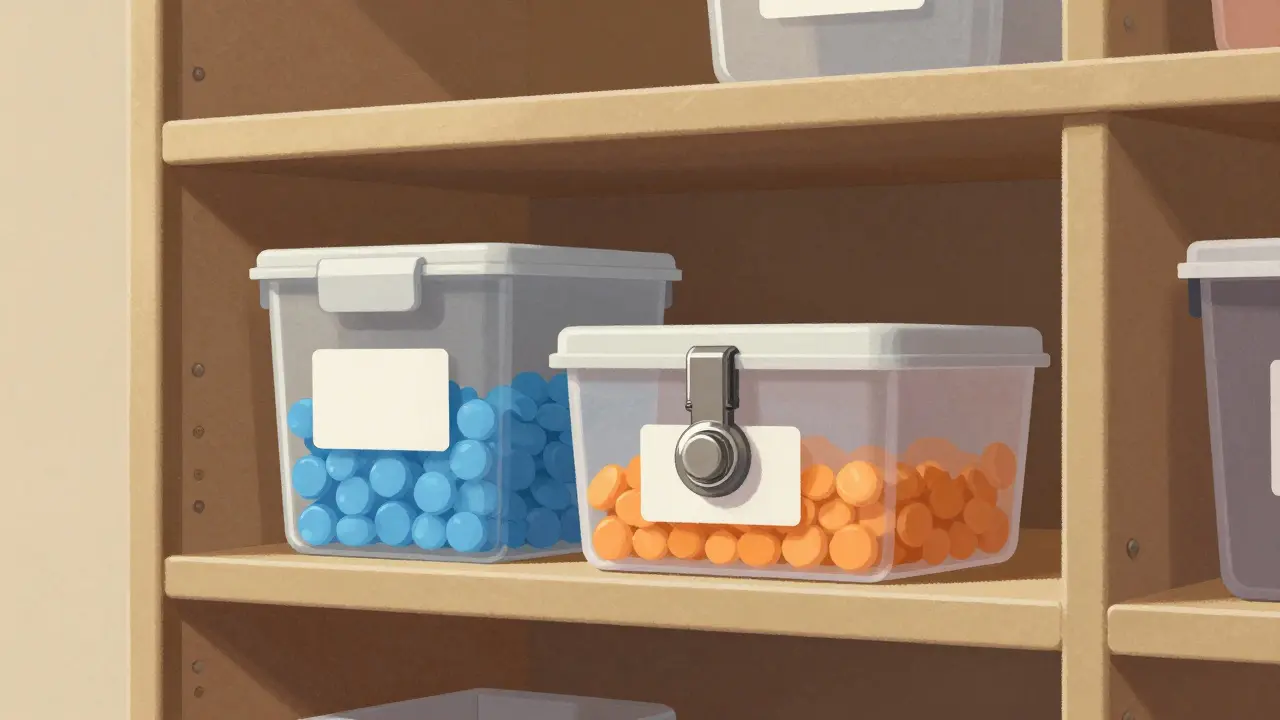
You don’t need a bank vault, but you do need reliable security. Here are proven options:
- Cabinet Locks: Magnetic or slide-bolt locks installed inside upper cabinets. They’re invisible from the outside and hard for kids to figure out.
- Combination Lock Boxes: Portable boxes that fit in drawers or closets. Look for sizes like 11" x 6" which hold most prescription bottles. Avoid simple key locks-keys can be lost or found by kids.
- Biometric Safes: Fingerprint safes offer quick access for adults but are impenetrable for children. One parent reported that while it added 10 seconds to their routine, it prevented a potential disaster after their 3-year-old opened a “childproof” cabinet.
- Weekly Pill Organizers with Locks: Great for managing daily doses. Ensure the organizer itself has a locking lid, not just individual compartments.
Avoid cheap plastic latches that pop open easily. Test your locks regularly. If your 4-year-old can open it, upgrade immediately.
The Gummy Trap: Why Candy-Looking Meds Are Risky
Gummy vitamins and medications look like candy. They taste like candy. And kids (and pets) treat them as such. CDC data indicates gummy vitamins account for 30% of childhood supplement ingestions, despite being only 15% of the market. Sixty-two percent of parents mistakenly believe gummies require less strict storage than pills.
This is a dangerous myth. Gummies are often more appealing than bitter tablets. Store them in the same locked, high-up location as your prescription drugs. Do not leave them in jars on counters or in purses. Treat every medication, regardless of form, as a potential poison.
Safe Disposal: Don’t Just Flush It
When medications expire or are no longer needed, proper disposal is critical. Flushing pills down the toilet contaminates water supplies. Throwing them in the trash invites scavenging by pets or curious kids.
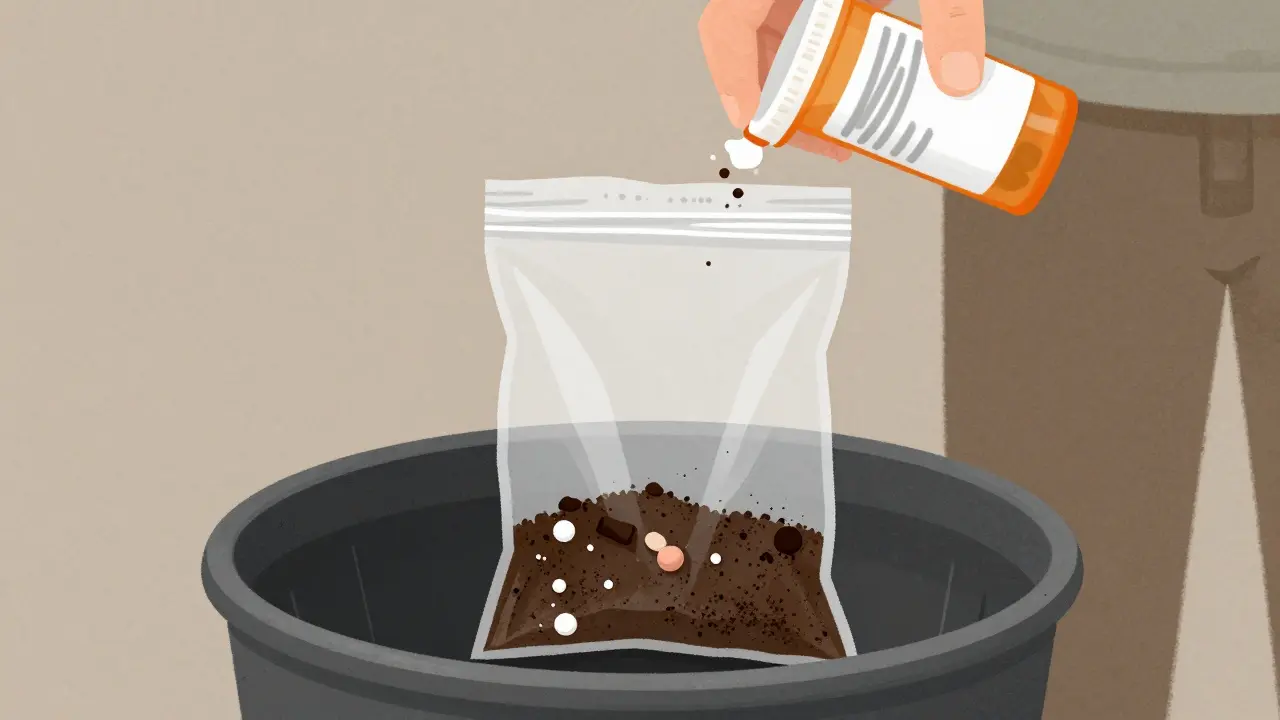
Follow this EPA-backed method:
- Mix medications with an unpalatable substance like coffee grounds, cat litter, or dirt. Use a minimum 1:1 ratio by volume.
- Seal the mixture in a plastic bag or sealed container to prevent leaks.
- Throw the sealed bag in your household trash.
This method has a 92% effectiveness rate in preventing reuse. It masks the smell and taste, making the pills unappealing to animals and humans alike. Always scratch out personal information on prescription labels before disposing of the bottles.
For certain highly dangerous drugs like opioids, look for local take-back programs. Many pharmacies and police stations host collection bins. Check with your local health department for schedules.
Daily Habits That Save Lives
Storage solutions only work if you use them consistently. Adopt these habits:
- The Two-Minute Rule: Immediately secure medications after every use. Even between doses. 52% of childhood ingestions occur during temporary placement. Put the bottle back in its locked spot within two minutes of opening it.
- Flat Surfaces Only: Open medication containers on flat, stable surfaces. Never over sinks or couches where pills can fall and roll away. A Labrador once retrieved a dropped pill from between couch cushions, highlighting how quickly things go wrong.
- Regular Audits: Once a month, check your storage areas. Remove expired meds. Ensure locks are functioning. Verify that no new items have been left out.
- Educate Visitors: Tell babysitters, relatives, and pet sitters where meds are stored and how to operate the locks. Assume they won’t know unless you show them.
Consistency builds safety. It takes 15-30 minutes to set up a secure system, but then it takes only 2-3 seconds per access. Make it automatic.
What to Do If an Ingestion Happens
Despite best efforts, accidents can occur. Stay calm and act fast:
- For Children: Call Poison Control immediately at 1-800-222-1222 (US). Have the medication bottle ready to provide details. Do not induce vomiting unless instructed by a professional.
- For Pets: Contact your veterinarian or the ASPCA Animal Poison Control Center (1-888-426-4435). Note the time of ingestion and amount consumed. Watch for symptoms like vomiting, lethargy, or seizures.
Time matters. The sooner you seek help, the better the outcome. Keep these numbers saved in your phone and posted near your phone.
Summary of Key Actions
Securing your home doesn’t require perfection, just vigilance. Move meds up high, lock them securely, separate human and pet drugs, and dispose of leftovers properly. Small changes in habit create massive reductions in risk. Your family and pets deserve a safe environment-start organizing today.
Is it safe to store medicine in the bathroom?
No. Bathrooms have high humidity (60-80%) which degrades medication efficacy. They are also often accessible to children. Store meds in a cool, dry, locked place above 5 feet.
Can I store human and pet medications in the same cabinet?
No. The FDA warns against this due to cross-species toxicity risks. Human meds can kill pets, and vice versa. Use separate, clearly labeled, locked storage areas for each.
Are child-proof caps enough to protect kids?
No. Child-resistant caps provide only temporary protection. Determined children aged 4-5 can often open them. Use additional physical locks like cabinet locks or combination boxes for true safety.
How should I dispose of old medications safely?
Mix meds with unpalatable substances like coffee grounds or cat litter (1:1 ratio), seal in a plastic bag, and throw in the trash. Do not flush unless specifically instructed. Check for local take-back programs for opioids.
What is the "Two-Minute Rule" for medication safety?
The Two-Minute Rule means securing medications back in their locked storage within two minutes of use. This prevents accidental ingestions that often occur when pills are left temporarily on counters or tables.
man i never thought about the humidity thing in the bathroom. always kept my stuff there cause its convenient but now imma move it to a high shelf in the closet. thanks for the tip
The two-minute rule is genuinely the most important takeaway here. Most accidental ingestions happen because parents are distracted and leave pills on a counter while they answer the phone or check something else. It’s not about having the best lock, it’s about closing the loop immediately after opening the bottle. I keep a small locking box right next to my coffee maker so I don’t have to walk away with meds in hand.
In our culture we respect elders and their wisdom regarding health matters. This western obsession with locking everything up seems paranoid and distrustful of family members. Children should be taught respect not fear of objects. The statistics you cite are likely exaggerated by media sensationalism to sell more security gadgets. We manage fine without such excessive measures in our households.
Oh please 🙄 as if anyone actually reads these generic safety guides. Real people know that childproof caps are useless but still use them because they look nice. And let's not forget that your average suburban home is a minefield of hazards anyway. You might as well wear a helmet inside. But sure, put your pills in a biometric safe like you're storing nuclear codes 😂🔒💊
I must agree with the previous points regarding the importance of consistency; however, I believe the philosophical underpinning of this issue lies in our collective neglect of domestic orderliness. When we fail to secure our environment, we invite chaos into our sanctuaries. It is not merely about preventing ingestion; it is about maintaining a boundary between the medicinal and the mundane. One must cultivate a mindset where every object has its place, and that place is secured against the whims of curiosity.
hey everyone! just wanted to say that separating pet meds from human ones is super crucial especially if you have a dog who thinks everything is a treat. my golden retriever once ate an entire bottle of ibuprofen because it was left on the nightstand. luckily we got him to the vet fast but it was such a scary experience. please dont wait till it happens to you to take action! your pets love you and depend on you to keep them safe 💖
This is incredibly helpful information, thank you for sharing! I’ve always been a bit lax about where I put my prescriptions, often leaving them on the kitchen counter until I remembered to put them away. After reading this, I’m definitely going to invest in some magnetic cabinet locks. It’s scary to think how easily things could go wrong, but I feel empowered to make changes now.
Society blames storage methods instead of parenting failures. If children are curious enough to find pills, the real issue is lack of discipline. Locking cabinets is a band-aid solution for lazy guardians. True safety comes from teaching children boundaries, not hiding objects. This article promotes dependency on technology rather than character development.
I cannot believe how many people ignore the basic fact that gummy vitamins are essentially candy to a child. The article states that 62% of parents think they are less dangerous, which is frankly astonishing. It is not a myth; it is a statistical reality. Stop treating supplements like harmless snacks. They are medications, and they require the same level of security as prescription opioids. Ignorance is not bliss; it is negligence.
i totally agree with the disposal tips. mixing with coffee grounds is genius. i used to just throw empty bottles in the trash but now i mix the leftover pills with cat litter first. makes sense to make it unappealing. good read overall
What a fantastic and eye-opening article! I have to say, the section on the 'Two-Minute Rule' really resonated with me on a deep level. It is so easy to get caught up in the whirlwind of daily life and forget these small but critical habits. I am going to implement the three-zone system immediately, starting today! Let us all strive to create safer environments for our loved ones, both human and furry. Together, we can make a difference!
You think flushing meds contaminates water? Try looking at what the pharmaceutical industry is actively dumping into our groundwater supplies legally. The EPA guidelines are just a smokescreen to keep you compliant while big pharma profits from chronic illness caused by environmental toxins. Your 'safe' disposal method is irrelevant when the source itself is compromised. Wake up. The locks won't save you from the systemic poisoning already in your blood.