How to Get Free Samples Ethically and Track Lot Expiration
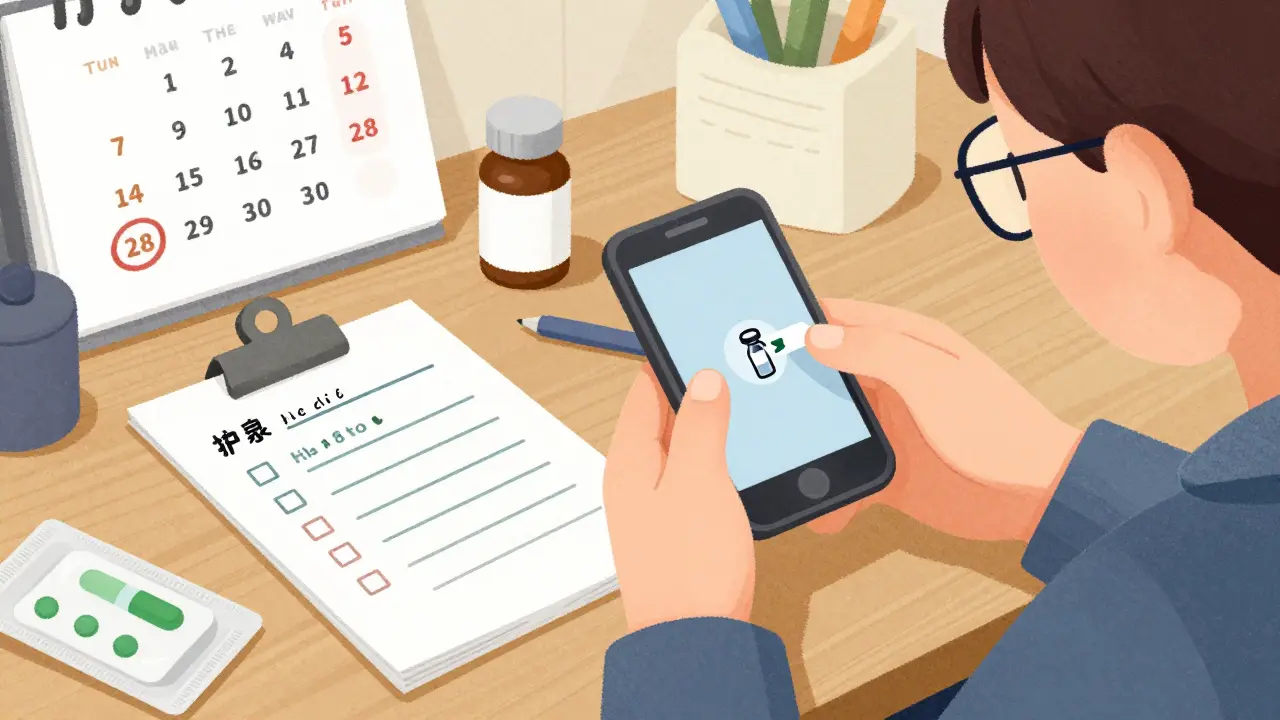
Getting free samples of medications or health products isn’t just about saving money-it’s about trying something new before you commit. But there’s a fine line between smart sampling and crossing ethical boundaries. Many people treat free samples like a free-for-all, hoarding them or reselling them. That’s not just unfair to brands-it’s risky for your health. The real goal? Use samples the way they were meant to be used: to test a product honestly, give honest feedback, and make better choices for your body. And if you’re going to take them, you absolutely need to track expiration dates. Using expired medication or supplements isn’t just wasteful-it can be dangerous.
Why Ethical Sampling Matters
Ethical sampling isn’t a buzzword. It’s a system built on trust. Brands send out free samples because they want real feedback from real people. They’re not giving away product just to be nice-they’re looking for insights that help them improve. If you take samples and never use them, or worse, sell them online, you’re breaking that trust. And when enough people do it, brands cut back on sampling programs entirely. According to the Journal of Consumer Marketing (2022), ethical sampling programs see 38.7% higher conversion rates to full-size purchases. That means when people actually try a product, give honest feedback, and don’t abuse the system, brands are more likely to keep offering samples. It’s a cycle: integrity leads to more access. The FTC requires all sampling platforms to clearly state that products are given in exchange for feedback. Violations can cost up to $43,792 per incident. That’s not a fine you want to risk-especially since many of these platforms now use AI to detect suspicious behavior. If you’re consistently signing up, never reviewing, and always getting the same high-demand products? You’ll get flagged.Where to Find Legitimate Free Samples
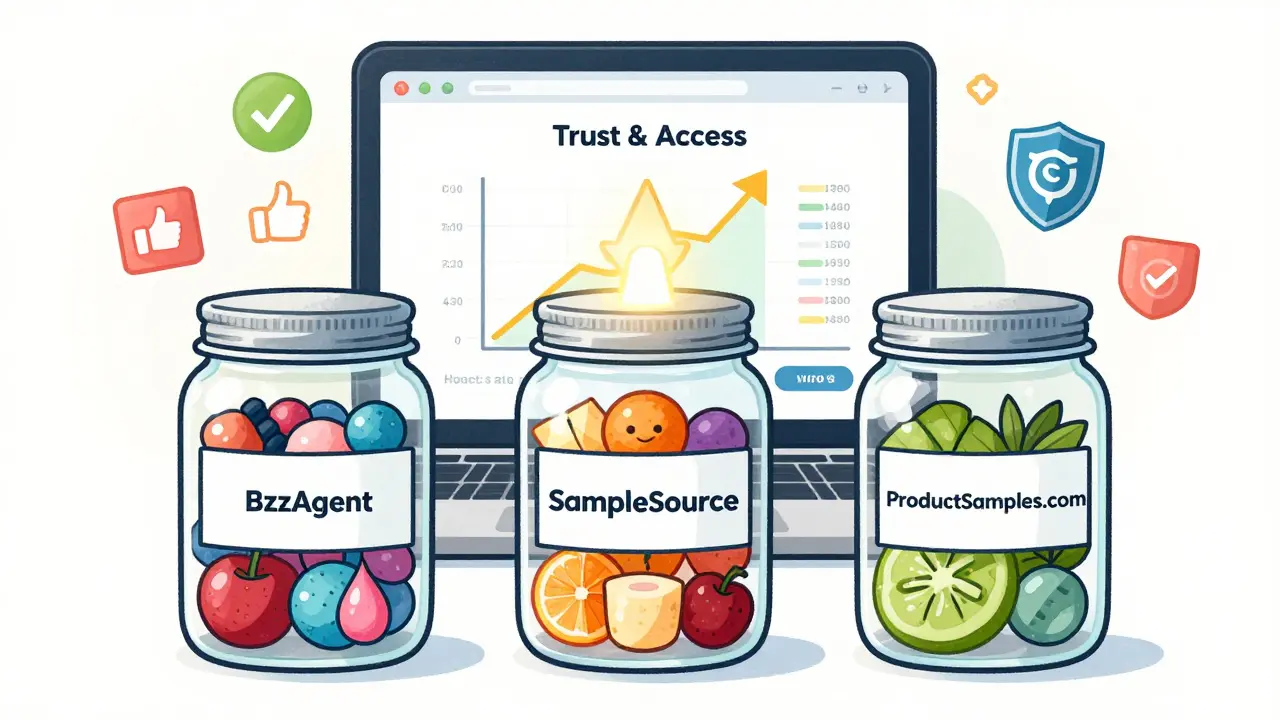
Not all sample services are created equal. Some are transparent. Others are just sneaky subscription traps. Here are the most reliable platforms based on user data, industry benchmarks, and transparency reports:- BzzAgent (since 2007): This is the gold standard. Over 90% of what they send is full-size, not mini-samples. You get real products-skincare, vitamins, even prescription-grade supplements-and you’re asked to post honest reviews on social media. Their 2023 impact report says 78.4% of members tried products not yet on store shelves. Fulfillment rate: 38.4% of applicants.
- SampleSource.com (founded 2011): Based in Toronto, they ship free samples across health, beauty, pet, and home categories. Their 4.2/5 rating on Trustpilot comes from 1,842 verified reviews. They require detailed profiles, including allergies and medical conditions, which actually increases your chances of getting relevant samples.
- ProductSamples.com (2023 redesign): Offers a simple four-step process: sign up, get notified, receive, review. Their launch kit included a tote bag, stickers, and a metal water bottle-no credit card needed. They focus on health and wellness products, with 32 categories.
- Daily Goodie Box, Healthy Snack Boxes, and TryProducts: These are all owned by the same parent company. You don’t sign up-you comment on their social media posts. Selection is random, but fulfillment is low (only 12.7% of applicants get anything). Still, no payment info is ever required.
Avoid any service that asks for your credit card for a "free" trial. That’s a classic trap. If it’s truly free, they won’t need your card. Stick to platforms that clearly state their terms and have public reviews.
How to Track Expiration Dates Like a Pro
Here’s the hard truth: 3.2x more likely to receive samples nearing expiration, according to MIT supply chain expert Dr. Marcus Chen. That’s not a coincidence. Brands want to clear out stock before it goes bad. So if you don’t track expiration dates, you’re playing Russian roulette with your health. Start the moment you open the package:- Photograph the lot number and expiration date. Don’t just glance at it-take a clear photo. Many lot codes are tiny and hard to read.
- Input into a tracker within 24 hours. Delaying this means forgetting. Use a spreadsheet, app, or notebook-just don’t wait.
Here’s what to track:
- Product name
- Brand
- Date received
- Lot number
- Manufacture date (if available)
- Expiration date
- Feedback deadline
- Review status (submitted, pending, ignored)
Lot numbers aren’t always obvious. Procter & Gamble uses YYWWDD (year, week, day). L’Oréal uses DDMMYY. Some brands use codes only they can decode. That’s why 76.8% of experienced samplers keep a personal cheat sheet of brand-specific formats. You can find these on Reddit threads, brand forums, or even by calling customer service.
Tools That Actually Work
You don’t need fancy tech to track this. But you do need consistency.- Google Sheets: Used by 62.7% of active samplers. Free, accessible, and easy to share. Template suggestion: color-code rows by expiration month (red = within 30 days, yellow = 30-90 days, green = safe).
- SampleTracker App: Available on iOS and Android. Has barcode scanning, expiration alerts, and auto-reminders. Rated 4.1/5 with over 1,240 reviews.
- Bullet journal: Preferred by 28.3% of users over 45. If you like writing by hand, this works. Draw a calendar, write the expiration date next to the product name. Simple, tactile, and effective.
BzzAgent launched a "Freshness Guarantee" in August 2023-meaning all products must have at least 75% of shelf life remaining. SampleSource added QR codes in September 2023 that link directly to manufacturer expiration databases. ProductSamples.com now sends app alerts 30 days before expiration. These aren’t gimmicks-they’re industry standards now.
What Happens When You Ignore Expiration
Expired supplements lose potency. Expired antibiotics can become toxic. Expired nasal sprays can harbor bacteria. In October 2023, a Reddit user from Halifax (u/SnackSavvy) received a Daily Goodie Box with three expired snack bars-six months past date. They contacted the manufacturer, got a $10 gift card, and reported the issue. That’s how it should work: you notice, you report, you get accountability. The FDA’s Cosmetic Products Platform (launched 2022) now requires all cosmetic samples to clearly display lot and expiration info. 94.7% of major sampling services comply. That means if you get a product without clear dates, it’s either fake or illegal.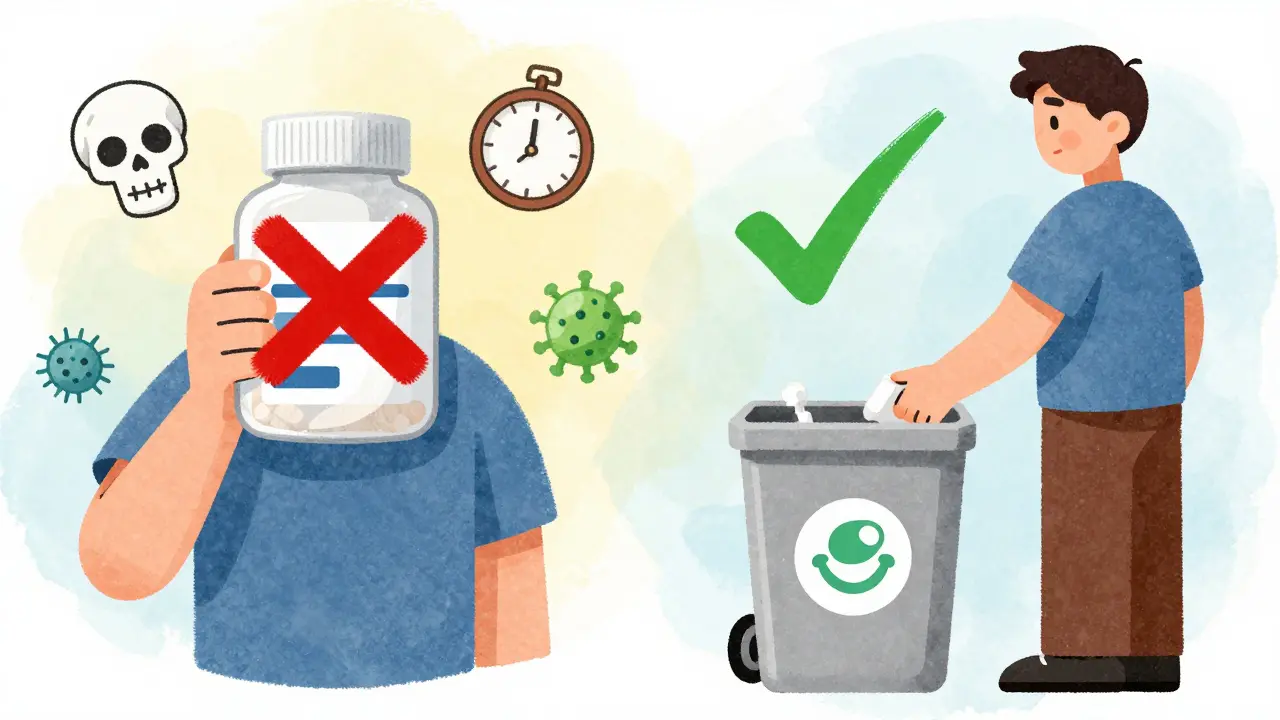
Don’t Flip Samples
Reselling free samples is a growing problem. A September 2023 investigation by The Counter found 12.8% of popular beauty products on Amazon were traced back to sample recipients. That’s not just unethical-it’s illegal. Many brands track serial numbers. If you list a product as "new" when you got it for free, you’re violating FTC rules. Instead, use the product. If you don’t like it, say so in your review. If you love it, buy the full size. That’s how sampling is supposed to work.Final Checklist: Ethical Sampling in 5 Steps
- Sign up for 2-3 trusted platforms (BzzAgent, SampleSource, ProductSamples.com).
- Fill out your profile completely-including allergies, medications, and health conditions.
- Check for new samples daily-15 minutes is enough.
- Track every sample immediately-photo, date, lot number, expiration.
- Review honestly-mention if you got it free, and say what you really think.
If you do this, you’ll get more samples over time. Brands notice who gives real feedback. They remember who doesn’t hoard. And they’ll keep inviting you.
Can I really get free medication samples without giving my credit card?
Yes, absolutely. Legitimate platforms like BzzAgent, SampleSource, and ProductSamples.com never require payment information. If a site asks for your credit card for a "free" sample, it’s likely a subscription trap. Stick to services with high Trustpilot ratings and clear terms.
What if I get a sample with no expiration date?
Don’t use it. The FDA requires all cosmetic and supplement samples to display expiration dates. If it’s missing, the product may be counterfeit, improperly stored, or expired. Contact the brand directly with the lot number and ask for clarification. Most will replace it.
How do I decode a lot number?
Lot numbers vary by brand. Procter & Gamble uses YYWWDD (year, week, day). L’Oréal uses DDMMYY. Check the brand’s website, call customer service, or search Reddit for "[Brand] lot number decoder." Many samplers maintain a personal guide-keep one too.
Is it okay to give negative feedback on a free sample?
Yes, and it’s encouraged. Brands value honest feedback more than flattery. Saying "this didn’t work for me because of X" helps them improve. In fact, reviewers who give balanced feedback (both pros and cons) are 3x more likely to be selected for future campaigns.
Can I use expired samples if they still look fine?
No. Even if it looks okay, potency drops over time. Liquid medications can grow bacteria. Supplements lose effectiveness. The risk isn’t worth it. Always dispose of expired products safely-don’t flush them. Many pharmacies offer take-back programs.
I love how this post treats sampling like a sacred ritual. Like, yeah, I get it - don’t be a hoarder. But also? Stop acting like brands are saints. They’re corporations. They send samples because it’s cheaper than ads. And 38.7% conversion rate? That’s not ethics, that’s marketing math. I take samples, use them, trash the ones I hate, and buy the ones I love. No guilt. No spreadsheets. Just real life.
Also - why is everyone so scared of expired supplements? I’ve taken vitamins 2 years past date. Still worked. My body didn’t turn into a pumpkin. Chill.
You people are overthinking this. Just take the damn samples. If you dont like em dont review. If you do like em buy em. No one cares about your spreadsheet. No one. The system works because people use it. Not because they worship it.
I’ve been doing this for 5 years. BzzAgent is legit. SampleSource? Their customer service is slow but reliable. I track everything in a Google Sheet. Color coded. I even tag which ones I gave to my mom or sister. It’s not about being perfect. It’s about being consistent. Brands notice. They really do.
I’m sorry but I have to say this - the fact that you’re even asking if it’s ethical to take samples makes me sad. You think brands care about your ‘honest feedback’? They care about your Instagram likes. They care about your TikTok unboxings. They don’t care if you used the product or threw it in the closet. You’re not saving the system. You’re just another content farm. Stop pretending you’re noble.
Ah, the moral architecture of free samples… a microcosm of late-stage capitalism’s paradoxes. One cannot ethically consume without commodifying one’s own agency. The brand offers a sample-not out of benevolence, but as a vector for data extraction. The tracker? A digital confession booth. The review? A penance. We are not users. We are nodes in a feedback loop. And yet… we keep clicking ‘request’. Why? Because hope is cheaper than therapy.
I just started tracking my samples last month and it changed everything. 🌟 I used to toss stuff without checking dates. Now I take a pic the second it arrives. I even made a little calendar on my fridge. Last week I caught a serum that was expiring in 11 days - used it, loved it, reviewed it. Felt like a superhero. 🙌 Also - yes, expired nasal spray = bacteria city. Don’t risk it.
I got a sample of this new probiotic last week. Took one pill. Felt like my gut was having a rave. So I wrote a 5-star review. Then I gave the rest to my cousin who’s on antibiotics. She’s fine. No one got hurt. No one lied. I didn’t sell it. I didn’t hoard it. I just… shared. Is that wrong? Or is that just being human?
The metrics presented are statistically significant and align with industry benchmarks. However, the emphasis on personal tracking systems may be over-engineered for the average user. A simple digital calendar with push notifications suffices. The core objective is compliance with FTC guidelines and brand trust metrics. No need for bullet journals or QR code decoders. Efficiency > aesthetics.
I’m from the U.S. but I’ve sent samples to friends in India, Mexico, and Nigeria. We all do this. It’s not about the product. It’s about connection. I got a sample of this crazy Korean serum. Sent it to my cousin in Delhi. She had a breakout. We laughed. Then she bought the full size. That’s the cycle. Not spreadsheets. Not reviews. Just people sharing. Brands should be grateful for that.
I love this so much 😍 I’ve been doing this for 3 years and I’ve never paid a cent. I got a free face oil last month that changed my skin. I reviewed it honestly - said it was too oily for my combo skin. They replied with a thank you and a discount code. That’s the magic. Not the system. The people behind it.
Stop making this so complicated. You dont need a tracker. You dont need a spreadsheet. You dont need to photograph lot numbers. You just need to use the stuff. If you dont like it say so. If you do buy it. Done. The rest is performative virtue. You’re not a saint. You’re a consumer. Own it.
I appreciate the structure here. The data is solid. The tone is calm. And the checklist? Perfect. I’m 52 and I use a bullet journal. I write the expiration date in pencil so I can erase it if I use the product. It’s tactile. It’s slow. It’s mine. I don’t need an app. I need presence.
You say don’t resell samples. What if I resell them to someone who can’t afford them? Like, I got a free $80 moisturizer. I gave it to a homeless woman at the bus stop. She cried. Is that unethical? Or is that just kindness with a receipt?