Goldenseal and Metformin Interaction Risks for Blood Sugar Control
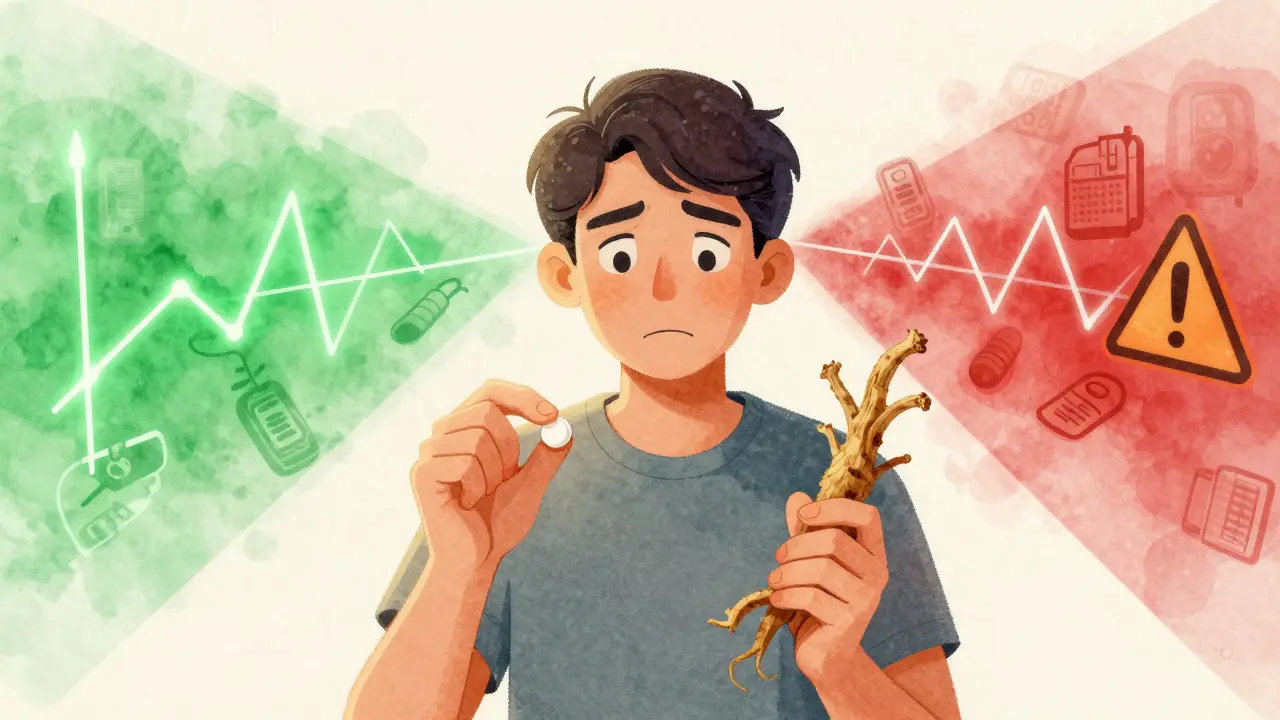
When you're managing type 2 diabetes with metformin, your blood sugar levels depend on consistency. You take your pill at the same time every day, track your carbs, and monitor your numbers. But what happens when you add a natural supplement like goldenseal to the mix? It sounds harmless-after all, it’s herbal, plant-based, and marketed as a immune booster. But for people on metformin, goldenseal might be quietly sabotaging your treatment.
What’s Actually Happening in Your Body?
Goldenseal isn’t just a simple herb. Its main active ingredient is berberine, a compound that’s been studied for its ability to lower blood sugar. In fact, some clinical trials show berberine can reduce fasting glucose and HbA1c almost as well as metformin when used alone. That sounds promising-until you realize it doesn’t play nice with metformin when taken together. A 2025 clinical study published in Clinical and Translational Science found that goldenseal reduces how much metformin your body absorbs. Specifically, when people took goldenseal along with low doses of metformin (500-750 mg per day), the amount of metformin in their bloodstream dropped by 20-25%. That’s not a small change. It’s enough to make your medication less effective. And if your blood sugar starts creeping up without explanation, this could be why. The kicker? This effect doesn’t happen with higher metformin doses. At 2000 mg or more daily, the interaction disappeared. Why? Because both metformin and berberine use the same transport system in your intestines-called OCT1-to get absorbed. When you take them together, they compete for space. At low doses, metformin loses the race. At high doses, there’s enough of it to overwhelm the competition.Why This Isn’t Just About Absorption
You might think, “If berberine lowers blood sugar on its own, then maybe it’s making up for the lost metformin.” And that’s partly true. In the same study, participants’ HbA1c levels actually dropped from 6.8% to 6.5% overall-even with less metformin in their system. That’s because berberine has its own glucose-lowering effects. But here’s the problem: you can’t predict how much it will help. Berberine’s effect varies by person. Age, liver function, how long you’ve been taking it, and even your gut bacteria all change how well it works. Some people get strong results. Others see almost nothing after 90 days. And if you’re older than 60, the benefits fade faster. So while your HbA1c might look okay now, it could spike next month when your body adjusts-or when you skip a dose of goldenseal. This creates a dangerous illusion of control. You think your regimen is working. Your doctor sees stable numbers. But underneath, you’re riding a tightrope: one foot on metformin, the other on berberine, with no clear sense of how much each is contributing. That’s not management-that’s guesswork.The Hidden Risk: Unstable Blood Sugar
The real danger isn’t just that goldenseal lowers metformin levels. It’s that it makes your blood sugar unpredictable. Imagine this: You’ve been feeling great. Your fasting numbers are in range. You start taking goldenseal for “immune support.” A week later, you wake up with a blood sugar of 180 mg/dL. You check your diet, your sleep, your stress levels. Nothing changed. But you didn’t realize that the goldenseal you took last night is now blocking your metformin from being absorbed. Meanwhile, berberine’s effect is wearing off by midday. You’re caught in a swing between too little control and too much. The MSD Manual Professional Edition and The Merck Manual both warn about this exact scenario. They state clearly: goldenseal may decrease metformin levels and increase hypoglycemic effects. That’s a double-edged sword. You could end up with low blood sugar one day and high the next-without knowing why.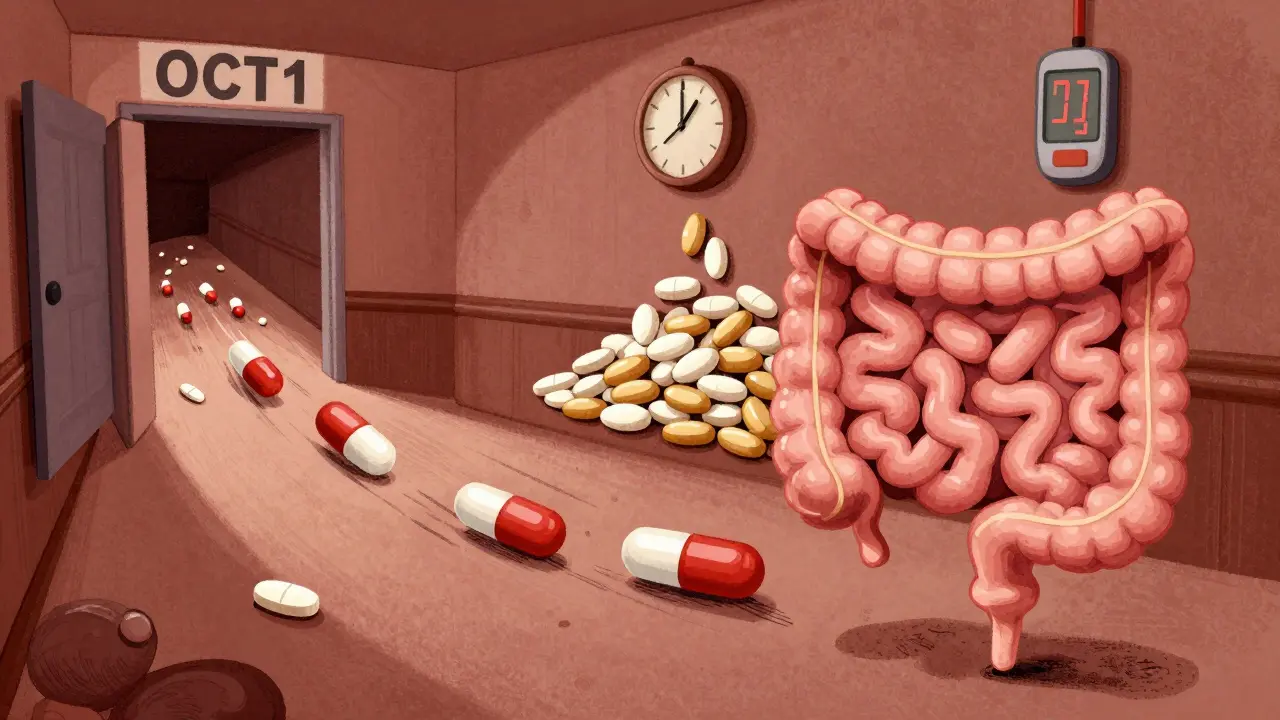
What Do the Experts Say?
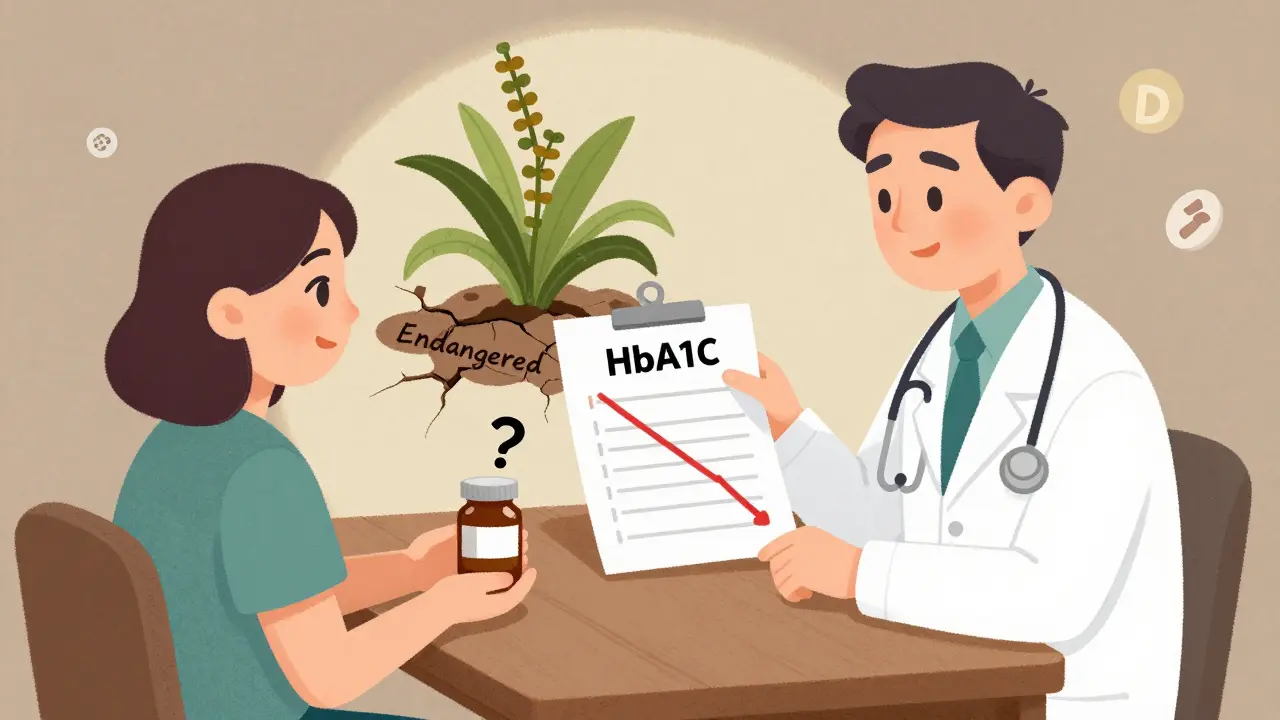
The American Diabetes Association doesn’t list goldenseal as a known interaction in its 2024 guidelines. But it does say you should ask every patient about all supplements they’re taking. That’s not an accident. It’s a red flag. The Endocrine Society issued a formal advisory in 2022 urging doctors to be vigilant about herbal interactions with diabetes meds. Why? Because 35-40% of people with diabetes use herbal supplements. And goldenseal is in the top 20 most popular ones in the U.S., according to the 2022 National Health Interview Survey. Here’s the reality: most patients don’t tell their doctors about supplements. They assume “natural” means “safe.” They don’t think it counts as a medication. But goldenseal isn’t tea. It’s a potent botanical with measurable drug-level effects. And here’s something else: goldenseal is endangered in the wild. Harvesting it for supplements is contributing to its decline. So even if it were perfectly safe, there’s an ecological cost to using it.What Should You Do?
If you’re on metformin and taking goldenseal, here’s what to do:- Stop taking it immediately if you’ve noticed unexplained changes in your blood sugar.
- Talk to your doctor-not a pharmacist, not a naturopath. Your endocrinologist or primary care provider needs to know.
- Don’t switch to berberine supplements thinking it’s a “cleaner” version. Berberine alone still interferes with metformin absorption the same way.
- Ask about alternatives. If you want immune support, consider vitamin D, zinc, or probiotics-all have better safety profiles and no known interaction with metformin.
What About Other Herbal Supplements?
Goldenseal isn’t the only one. Other herbs like bitter melon, fenugreek, and cinnamon can also affect blood sugar. Some lower it. Some raise it. And none of them come with dosage instructions tailored to your metformin regimen. The truth is, there’s no such thing as a “safe” herbal supplement when you’re on diabetes medication-not unless it’s been tested in people like you, with your exact dose, your exact health profile, and your exact routine. And very few have been.Bottom Line
You don’t need goldenseal to manage your diabetes. Metformin works. Lifestyle changes work. Monitoring works. Adding an untested herb introduces risk without clear benefit. If you’re taking goldenseal, stop. Tell your doctor. Get your blood sugar checked. And if you’re tempted to start it because you heard it “helps with blood sugar,” remember this: what helps one person might hurt another. And when your life depends on stable numbers, you can’t afford to gamble.There’s no shortcut to good diabetes control. And no herb is worth the risk of losing it.
My grandma took goldenseal for years thinking it was 'natural medicine'-ended up in the ER with wild blood sugar swings. No one told her it could mess with her metformin. Please, if you're on this stuff, stop and talk to your doctor. It's not worth the risk.
Oh wow, so now herbs are 'dangerous' because they're not FDA-approved? Next you'll tell me aspirin is a conspiracy and sunlight causes cancer. People have used berberine for centuries-your pharmaceutical overlords just hate that it's cheap and doesn't require a prescription.
Wait so you're saying if I take 2000mg of metformin I can just chug goldenseal tea and call it a day? That’s the most ‘I read one study’ logic I’ve seen all week.
I’ve been on metformin for 8 years, and I started goldenseal last winter for colds… and honestly? My A1c dropped from 7.1 to 6.4. I didn’t change my diet, I didn’t change my meds-just added the herb. I get that it’s risky, but I’m not gonna stop something that’s clearly helping me. My doctor knows. She didn’t freak out.
Maybe it’s not for everyone, but it’s not a blanket ‘danger’ either. People need nuance, not fear-mongering.
Also-goldenseal is endangered? I had no idea. That’s heartbreaking. Maybe we need lab-grown berberine instead of harvesting wild plants.
Thank you for writing this with such care. I’m a nurse and I see this all the time-patients assume ‘natural’ = ‘safe’ and never mention supplements. I’ve had people come in with A1cs climbing, and when I ask about teas or powders, they say, ‘Oh, that’s not medicine.’ But it is. It’s pharmacology with a pretty label.
Please, if you’re reading this and taking goldenseal: tell your provider. Don’t be embarrassed. We’re not here to judge. We’re here to help you stay safe. You deserve stable numbers, not guesswork.
And yes, the ecological angle matters too. We can’t save people’s health by destroying the planet’s.
I get the science, but I also get that people are tired of being told what to do. Some of us have been fighting diabetes for decades. We’ve tried everything. If a plant helps-even if it’s not perfectly understood-why is that automatically wrong? Maybe we need better research, not blanket bans.
Also, I love that you mentioned vitamin D and zinc. Those are real, safe, and actually work. Why aren’t we pushing those harder instead of just saying ‘stop the herb’?
i read this and i cry. my mom took goldenseal and her sugar went crazy. she didnt tell doctor. now she in hospital. pls tell people. natural dont mean safe.
OCT1 transporter competition is the key mechanism here. Berberine’s affinity for OCT1 is higher than metformin’s at low concentrations, which explains the non-linear interaction. At supratherapeutic metformin doses, saturation kinetics kick in and absorption normalizes. This isn’t anecdotal-it’s pharmacokinetics 101.
But the bigger issue? Lack of patient education. Most don’t know what OCT1 is, let alone how herb-drug interactions work. We need better labeling, not just ‘stop taking it.’
So you’re telling me a $10 herb from Walmart is more dangerous than Big Pharma’s $300/month insulin? Sounds like a woke drug company propaganda piece. I’m not stopping my goldenseal. I’m not a lab rat.