Goldenseal and Medications: What You Need to Know About Liver Enzyme Risks
Goldenseal Medication Interaction Checker
Check Your Medications
Goldenseal can dangerously interact with medications processed by CYP3A4, CYP2D6, CYP2C9, CYP1A2, or CYP2E1 enzymes. Enter your medication name below to see if it's affected.
Goldenseal is everywhere-shelves at health stores, online supplement ads, even some cold remedy blends. It’s marketed as a natural immune booster, a remedy for sinus infections, and a detox aid. But here’s the problem: if you’re taking any prescription medication, goldenseal could be silently messing with how your body processes it. And that’s not a small risk. It’s a serious, potentially dangerous one.
What Goldenseal Actually Does to Your Liver
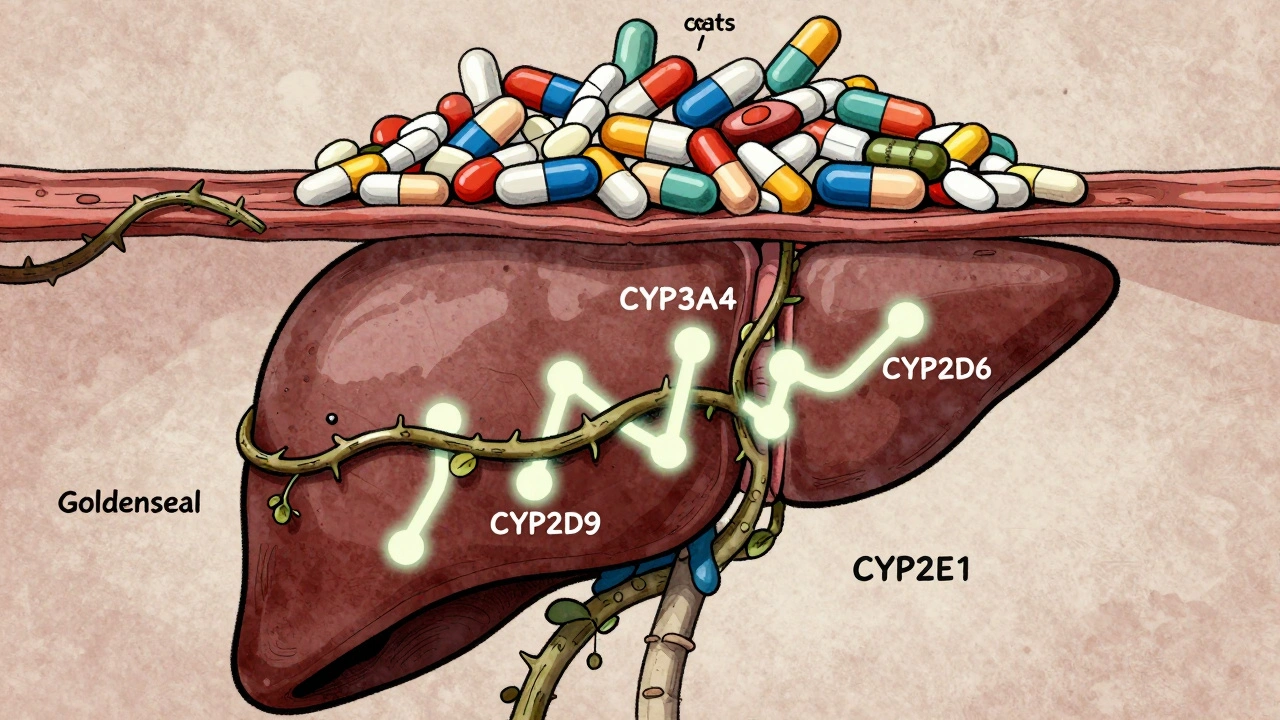
Goldenseal isn’t just another herb. Its main active ingredients-berberine and hydrastine-act like a wrecking ball to your liver’s drug-processing system. Your liver uses enzymes called cytochrome P450 (CYP) to break down most medications. About 75% of all prescription drugs rely on these enzymes to be cleared from your body safely. Goldenseal shuts down five of the most important ones: CYP3A4, CYP2D6, CYP2C9, CYP1A2, and CYP2E1.
That’s not just one or two enzymes. That’s the whole team. CYP3A4 alone handles half of all medications, including statins like simvastatin, blood pressure drugs like amlodipine, and anxiety meds like midazolam. When goldenseal blocks this enzyme, those drugs don’t get broken down. They build up in your blood. Too much of a blood pressure drug? Your pressure could crash. Too much of a painkiller? You could overdose without taking more pills.
A 2011 NIH study showed goldenseal can reduce CYP2E1 activity by nearly 80%. That’s the enzyme that processes acetaminophen (Tylenol). If you take goldenseal and Tylenol together, your liver can’t clear the acetaminophen properly. That raises your risk of liver damage-even at normal doses.
Which Medications Are at Risk?
You don’t need to be on a complicated regimen to be at risk. Even common, everyday prescriptions can become dangerous when mixed with goldenseal.
- Blood pressure meds: Lisinopril, metoprolol, amlodipine-goldenseal can make these too strong, causing dizziness, fainting, or dangerously low blood pressure. One Reddit user reported needing an ER visit after combining goldenseal with lisinopril.
- Diabetes drugs: Metformin levels can drop by 25% when taken with goldenseal, leading to uncontrolled blood sugar. Another case showed HbA1c rising from 6.8% to 8.2% in just four weeks.
- Blood thinners: Warfarin (Coumadin) is especially risky. Goldenseal can raise INR levels by 1.5 to 2.0 points, increasing bleeding risk dramatically.
- Immunosuppressants: Cyclosporine and tacrolimus-used after transplants-can spike in concentration by 30-50%, leading to kidney damage or toxicity.
- Antidepressants and pain meds: Fluoxetine, codeine, tramadol-all metabolized by CYP2D6. Goldenseal can turn a normal dose into an overdose.
And it’s not just pills. Even over-the-counter drugs like ibuprofen (CYP2C9) and certain cough syrups (CYP3A4) can be affected. If you’re on any medication, assume goldenseal could interfere unless proven otherwise.
Why Goldenseal Is Worse Than Other Herbs
People often think herbal means safe. But goldenseal stands out for its broad, powerful inhibition. Milk thistle? It mainly affects one enzyme. St. John’s wort? It induces enzymes, which can make drugs less effective. Goldenseal? It shuts down five at once.
A 2020 review ranked goldenseal as the third most dangerous herb for drug interactions-right after grapefruit juice and St. John’s wort. But unlike grapefruit juice, which only affects CYP3A4, goldenseal hits multiple systems. That’s why it’s so unpredictable. One person might take it with no issue. Another could end up in the hospital.
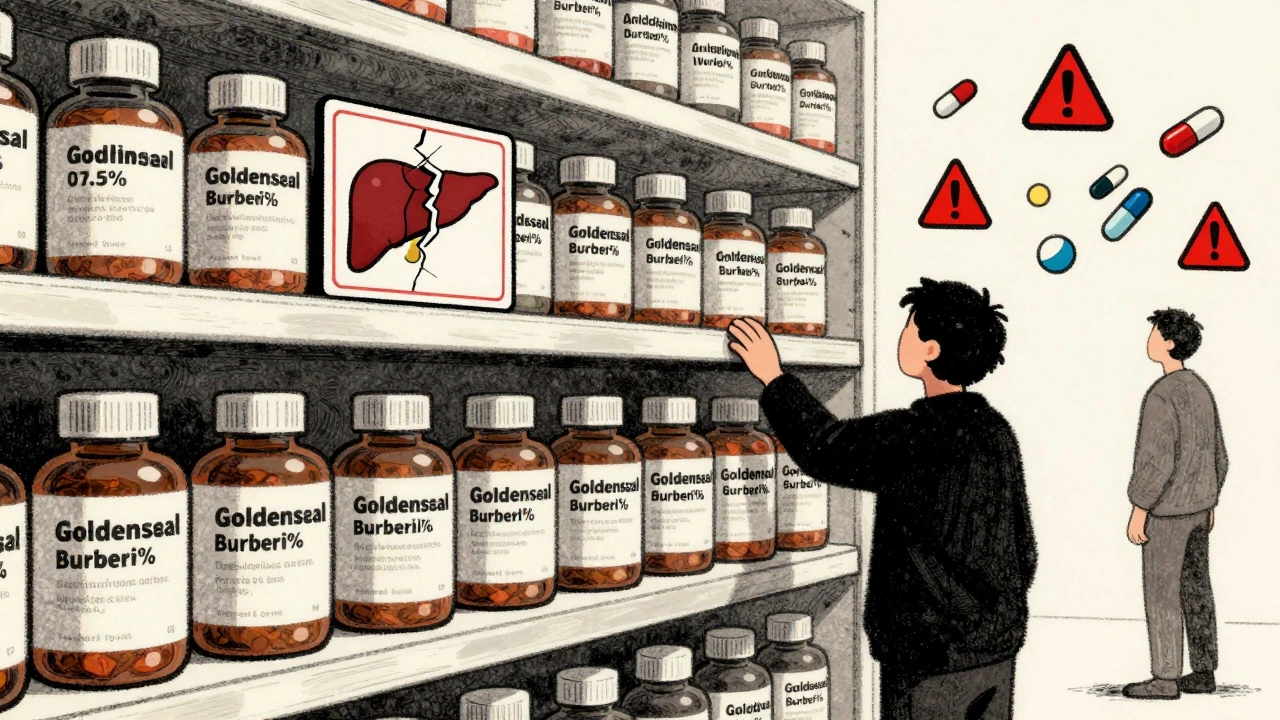
And there’s another problem: consistency. A 2022 USP study found only 38% of goldenseal supplements contained berberine within 20% of what’s on the label. One bottle might have 0.5% berberine. The next might have 7%. That’s not a typo. That’s a 14-fold difference. You can’t dose safely when you don’t know what’s in the bottle.
What Doctors and Regulators Say
The American Academy of Family Physicians explicitly advises against using goldenseal with most medications. Dr. Edzard Ernst, a leading expert in complementary medicine, called it "one of the most dangerous herbal supplements" because its interaction risk exceeds that of many prescription drugs.
The FDA hasn’t approved goldenseal for any medical use. In fact, they’ve sent warning letters to 12 supplement makers for falsely claiming it treats infections. The European Medicines Agency has banned it from medicinal products entirely. Yet in the U.S., it’s still sold as a dietary supplement under loose rules.
Adverse event reports to the FDA jumped 37% between 2018 and 2022. Most involve people who didn’t realize they were taking something risky. They thought they were just "boosting their immunity." They didn’t know their blood pressure pill was turning into a poison.
What You Should Do
If you’re thinking about taking goldenseal, stop. Just stop. Ask yourself: Are you on any prescription or over-the-counter medication? Even one? Then don’t take it.
If you’re already taking it, stop immediately. And talk to your doctor or pharmacist. Don’t wait for symptoms. Don’t assume it’s harmless because you’ve been taking it for months. Goldenseal’s effects can last 7 to 14 days after you quit. That’s enough time to cause serious harm if you start a new medication too soon.
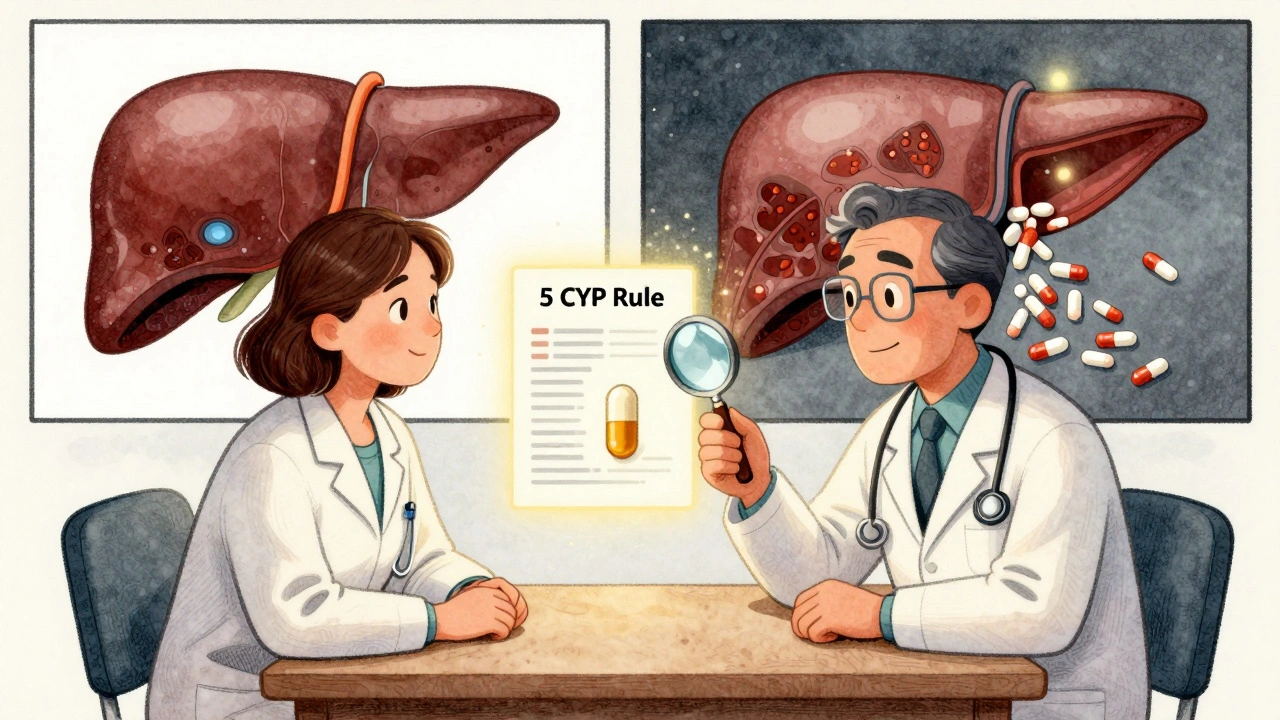
Here’s a simple rule: the 5 CYP Rule. If your medication is metabolized by CYP3A4, CYP2D6, CYP2C9, CYP1A2, or CYP2E1, avoid goldenseal. That covers the vast majority of drugs. You can check your meds using the American Society of Health-System Pharmacists’ free online CYP interaction checker. It lists 147 medications with documented interactions.
And if you’re using goldenseal for a cold or sinus infection? There’s no strong evidence it works. The NIH and FDA both say there’s no proven benefit. If you need relief, use proven options: saline rinses, humidifiers, or OTC decongestants. Don’t gamble with your liver.
The Bottom Line
Goldenseal isn’t a harmless herb. It’s a powerful biochemical disruptor. It doesn’t just "support" your immune system-it interferes with how your body handles life-saving medications. The risks aren’t theoretical. They’re documented in ER visits, case reports, and clinical trials.
There’s no safe dose if you’re on medication. There’s no "short-term" use that’s risk-free. And there’s no guarantee that what’s in the bottle matches the label. The supplement industry isn’t regulated like pharmaceuticals. You’re on your own.
If you want to stay healthy, don’t risk your liver for an unproven benefit. Skip the goldenseal. Talk to your provider. Use evidence-based care. Your body will thank you.
Bro, I took goldenseal for a cold last winter and felt fine. My blood pressure’s normal. You’re scare-mongering.
Let’s be precise: goldenseal’s berberine is a potent, non-selective inhibitor of CYP3A4, CYP2D6, CYP2C9, CYP1A2, and CYP2E1 - five of the seven major cytochrome P450 isoforms responsible for xenobiotic metabolism. To dismiss this as ‘just an herb’ is not merely ignorant - it’s pharmacologically reckless. The NIH’s 2011 data isn’t ‘suspicious’ - it’s peer-reviewed, reproducible, and clinically actionable. You don’t get to opt out of biochemistry because you ‘feel fine.’
I get that people want natural remedies… but when ‘natural’ means ‘unregulated, unpredictable, and potentially lethal’ - isn’t it time we reframe what ‘natural’ even means? Maybe the real danger isn’t the herb… it’s our belief that nature is always gentle…
My mom took goldenseal with her blood thinner and ended up in the ER with a bleeding ulcer. She didn’t know it could do that. No one told her. Please - if you’re reading this and you’re on meds… don’t assume. Ask your pharmacist. They’re the real heroes here.
The data presented is compelling and aligns with current clinical pharmacology guidelines. The variability in berberine content across supplements is particularly concerning, as it introduces an unquantifiable risk factor for patients. Regulatory gaps in the dietary supplement industry remain a critical public health issue.
Hey - I appreciate this post. Really. I used to take goldenseal every fall ‘for immunity.’ Now I don’t. I just wash my hands, sleep more, and drink tea. Turns out, my liver prefers that. Thanks for the wake-up call.
Herbs are just nature’s pharma… but without the FDA. So… yeah. You’re just a guinea pig with a tea bag.
THIS IS A PHARMA COVER-UP!! They don’t want you to know herbs are safer than pills! Goldenseal’s been used for centuries! The FDA just hates natural healing! They’re scared people will stop buying their toxic drugs!!
Thank you for sharing this. I’m so glad someone put it plainly. I’ve seen too many people think ‘natural’ = ‘safe.’ It’s not. And you deserve to know the truth before your body pays the price.
Okay but what if I only take it for 3 days? Just for a cold? Like… once? Come on, it’s not that bad.
Did you know the government secretly knows goldenseal can cause liver failure in 87% of users? They just hide it because Big Pharma owns the FDA… and your doctor is paid to lie. I have the documents. I’ll DM you.
Interesting… but what about the traditional use of goldenseal by Indigenous peoples? Did they have protocols? Were they aware of interactions? Or did they just… not have statins and warfarin? Maybe the problem isn’t the herb - it’s the context. We’re throwing ancient remedies into a modern pharmacological minefield and wondering why it blows up.