Generic Pill Appearance Changes: What You Need to Know About Safety, Legality, and Patient Impact
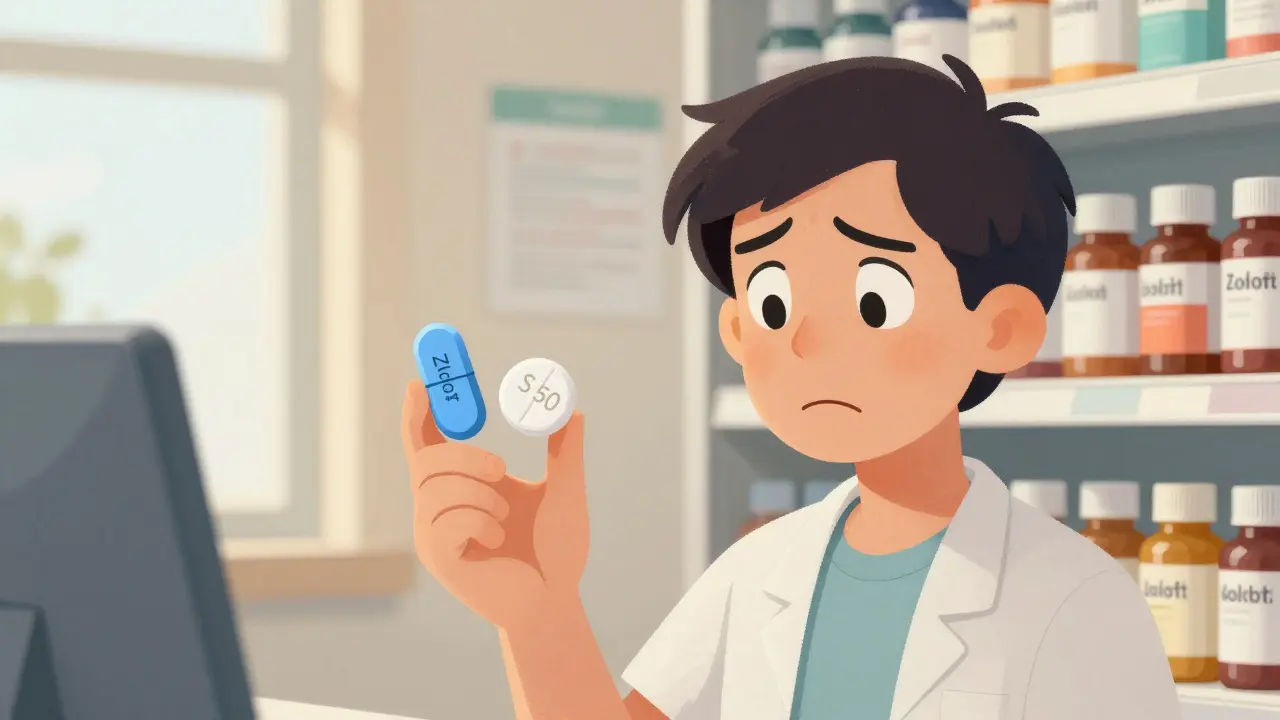
Why Your Generic Pill Looks Different This Month
You’ve been taking the same medication for years. Then one day, you open your bottle and the pill looks completely different-maybe it’s white instead of blue, or round instead of oval. You panic. Did they give you the wrong drug? Is it fake? Is it less effective?
This happens more often than you think. In fact, 42% of patients in the U.S. report at least one change in the look of their regular generic medication within a year. And it’s completely legal.
Generic drugs aren’t inferior. They’re the same medicine-same active ingredient, same strength, same effect. But they don’t have to look the same. And that’s where the real problem begins.
Why Do Generic Pills Look Different?
The reason isn’t about quality. It’s about the law.
In the U.S., trademark rules prevent generic drug makers from copying the exact color, shape, or markings of brand-name pills. So if you take Zoloft (brand name), the generic version must look different-even though it contains the exact same chemical: sertraline.
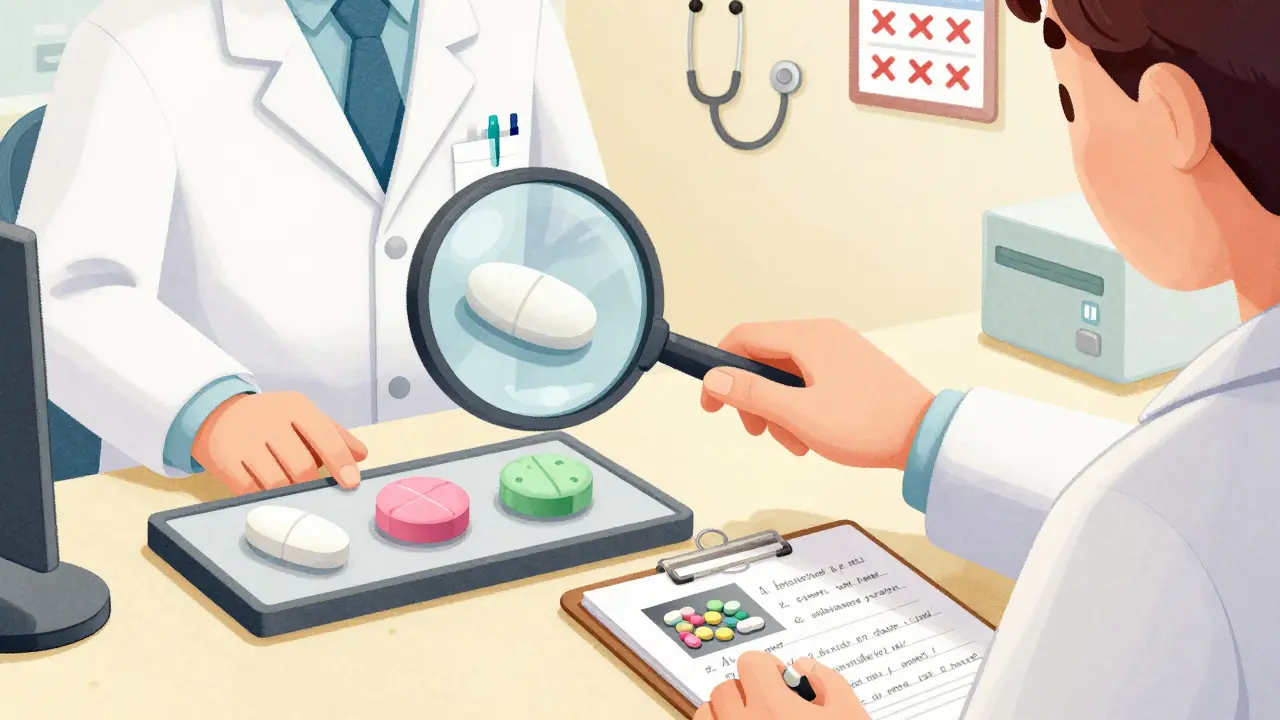
Each generic manufacturer picks their own design. One company makes metformin as a white oval. Another makes it pink and round. A third might make it green and scored. All are FDA-approved. All work the same. But they look nothing alike.
That’s why you might get a different-looking pill every time your pharmacy restocks. Pharmacies choose the cheapest option available, and that changes monthly. One month, you get the blue tablet from Company A. Next month, the pharmacy switches to the peach-colored one from Company B. Same drug. Different pill.
Is It Safe? Yes-But Not Always
The FDA requires every generic drug to prove it’s bioequivalent to the brand name. That means it delivers the same amount of medicine into your bloodstream at the same rate. The active ingredient? Identical. The strength? Exact. The purity? Held to the same strict standards.
But the fillers? The dyes? The coatings? Those can change. That’s why the shape, color, and size vary. These inactive ingredients don’t affect how the drug works-but they can affect how you feel about it.
Here’s the catch: your brain doesn’t care about bioequivalence. It cares about what the pill looks like. If it doesn’t match your mental image of "my medication," you might think it’s wrong. Or fake. Or weaker.
That’s not paranoia. It’s psychology. And it’s dangerous.
The Real Danger: Stopping Your Medication
A study in the Annals of Internal Medicine found something startling:
- 34% of patients stopped taking their medication after a simple color change.
- 66% stopped after a shape change.
These aren’t rare cases. They’re common. One patient reported her potassium pills changed appearance nine times over 15 years. Another thought her blood pressure pill had been swapped for something else when it turned from white to pink-so she stopped taking it.
That’s not just inconvenient. It’s life-threatening. Missing doses of blood pressure meds, antidepressants, or diabetes drugs can lead to hospitalization-or death.
Patients don’t distrust generics because they’re ineffective. They distrust them because they look different. And that’s a problem the system hasn’t fixed.
What the FDA Says (And Doesn’t Say)
The FDA knows this is an issue. In a 2014 letter published in ACP Journals, experts wrote: "Bioequivalent generic drugs that look like their brand-name counterparts enhance patient acceptance."
That’s not just a suggestion. It’s an admission: appearance matters. And the current system is failing patients.
The FDA doesn’t require matching appearances because of trademark laws-not because of safety. If the law allowed it, generics could look identical to brand names. But they don’t. And that’s a policy choice, not a medical one.
There’s been progress. Since 2018, the number of pharmacies that notify patients about appearance changes has jumped from 45% to 78%. Some pharmacies now include photos of the pill on the label. Others have pill identifiers on their websites.
But it’s still patchwork. And patients are left to figure it out on their own.
What You Can Do: Protect Yourself
You don’t have to guess. Here’s what actually works:
- Keep a medication list-not just names, but what each pill looks like. Write down: color, shape, markings (like "500" or "A 215"). Take a photo of the pill in the bottle.
- Ask your pharmacist every time you pick up a refill: "Is this the same pill I got last time?" They’re trained to explain changes.
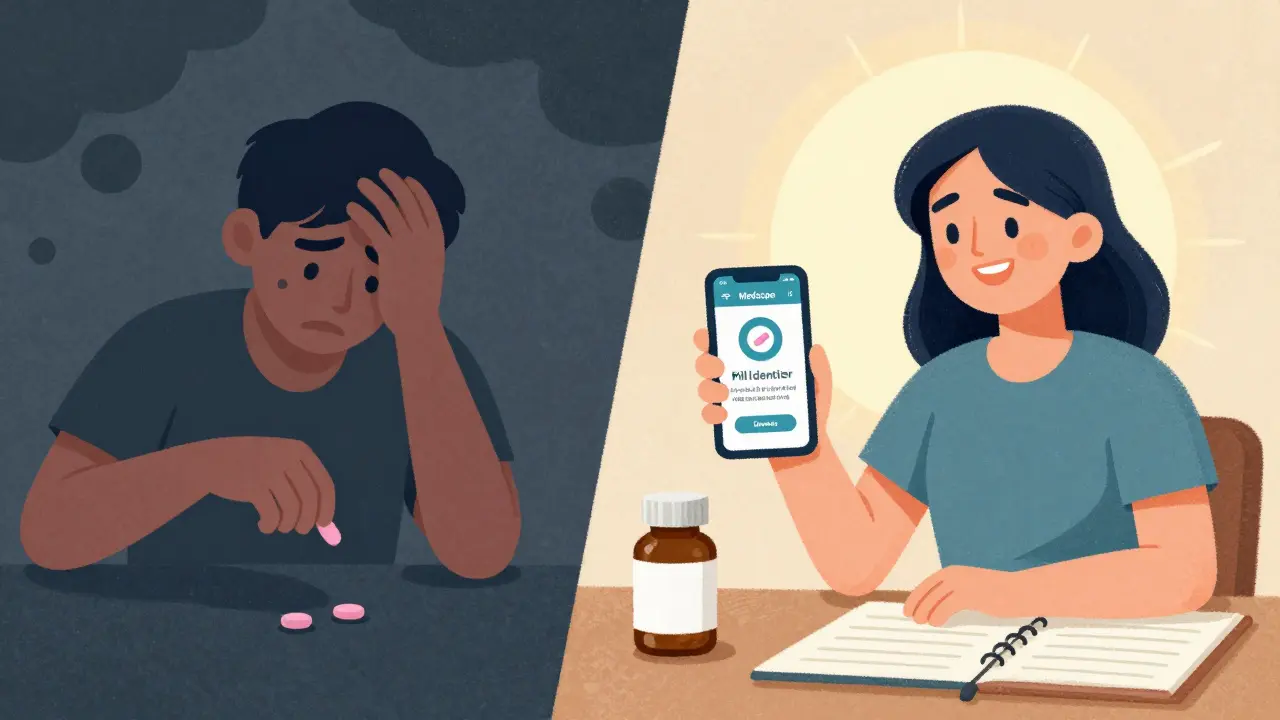
- Use online tools. The Medscape Pill Identifier lets you search by color, shape, and imprint to confirm what you have.
- Bring your bottles to appointments. Your doctor can’t help if they don’t know what you’re actually taking.
- Flag changes immediately. If you’re unsure, don’t guess. Call your pharmacy or doctor. Better safe than sorry.
Some patients keep a small notebook or use a phone app to track changes. That simple habit has kept people from stopping their meds.
What Pharmacists Are Doing About It
Pharmacists are on the front lines. They’re the ones who get the panicked calls: "I think I got the wrong pills!"
Now, most pharmacies have systems in place:
- Appearance change alerts on refill labels
- Pill identification stations in-store
- Staff trained to explain why the pill looks different
- Free pill identifiers available on tablets or kiosks
In 2023, 63% of independent pharmacies had formal pill ID programs-up from 32% in 2020. That’s real progress.
But it’s still reactive. They’re fixing the problem after it happens. What’s needed is prevention.
What’s Changing? And What Could Change Next
The MODERN Labeling Act of 2020 gave the FDA more power to update generic drug labels when new safety info emerges. That’s important. But it doesn’t fix appearance.
There’s growing pressure to change trademark laws so generics can match brand-name looks. Some experts argue it would cut confusion and improve adherence without lowering quality.
Other countries do this. In Canada and the UK, many generics look nearly identical to brand names. Patients there don’t have the same panic over color changes.
The U.S. system isn’t broken. It’s outdated. The rules were written for a time when generics were rare. Now, they make up over 70% of all prescriptions. It’s time the rules caught up.
Bottom Line: The Pill Isn’t the Problem. The System Is.
Your generic pill is safe. It’s effective. It’s the same medicine.
But the system that lets it change shape, color, and size without warning? That’s the problem.
You’re not crazy for being confused. You’re not weak for worrying. You’re just a person trying to stay healthy in a system that doesn’t make it easy.
Knowledge is your best defense. Keep track. Ask questions. Don’t assume. And if you ever feel unsure-call your pharmacist. They’re there to help you, not just fill a prescription.
Medication adherence saves lives. Appearance shouldn’t be the thing that breaks it.
Are generic pills with different colors less effective?
No. Generic pills with different colors, shapes, or sizes are just as effective as brand-name versions. The FDA requires them to have the same active ingredient, strength, dosage form, and bioequivalence. Only inactive ingredients like dyes and fillers change-and those don’t affect how the medicine works in your body.
Why do pharmacies switch generic manufacturers?
Pharmacies choose the lowest-cost generic option available. Since multiple companies make the same generic drug, the pharmacy may switch suppliers based on price, availability, or contract terms. This is why your pill might look different from one refill to the next-even if you haven’t changed doctors or prescriptions.
Can I request a specific generic brand?
Yes. You can ask your pharmacist or doctor to prescribe a specific generic manufacturer. Some insurance plans may require prior authorization, but many will approve it if you explain that appearance changes cause confusion or affect your adherence. Bring your pill bottle or photo to support your request.
What should I do if I think I got the wrong pill?
Don’t take it. Don’t throw it out. Call your pharmacy immediately. Have your pill bottle ready and describe the color, shape, and any markings. Most pharmacies can verify the pill using an online database or by contacting the manufacturer. If you’re unsure, bring the pill to the pharmacy in person-they’ll check it for you.
Is it legal for a generic pill to look exactly like a brand-name pill?
No. U.S. trademark law prohibits generic drugs from copying the exact appearance of brand-name drugs. This includes color, shape, and imprint. Even if a generic manufacturer wanted to make a pill that looks identical, the law doesn’t allow it. This is why appearance differences are common, even though they’re not medically necessary.
How common are appearance changes in generic medications?
Very common. Over 70% of prescriptions in the U.S. are for generic drugs, and many have multiple manufacturers. Studies show 42% of patients experience at least one appearance change in their regular medication within a year. Some patients report changes multiple times a year, especially for commonly prescribed drugs like metformin, lisinopril, or sertraline.
Do other countries handle generic pill appearance differently?
Yes. In countries like Canada, the UK, and Australia, many generic drugs are allowed to look nearly identical to their brand-name counterparts. This reduces patient confusion and improves adherence. The U.S. is an outlier because of its trademark laws, which prioritize brand protection over patient experience.
Can appearance changes affect how a drug works in my body?
No. The FDA requires generic drugs to be bioequivalent, meaning they deliver the same amount of active ingredient into your bloodstream at the same rate as the brand name. Differences in color, shape, or size don’t affect absorption or effectiveness. Only the active ingredient matters for how the drug works.
What should I do if I stop taking my medication because of a change in appearance?
Contact your doctor or pharmacist right away. Don’t restart the medication without checking. Explain what happened and why you stopped. They can help you confirm the new pill is safe and get you back on track. Missing doses can be dangerous-especially for blood pressure, diabetes, or mental health medications.
Are there any tools to help identify pills by appearance?
Yes. The Medscape Pill Identifier and the National Library of Medicine’s Drug Information Portal let you search by color, shape, and imprint. Many pharmacies also have in-store kiosks or tablets with this tool. Taking a photo of your pill and using one of these tools can quickly confirm you have the right medication.
I used to freak out every time my metformin changed color. Then I learned to check the imprint. Now I just snap a pic of the pill and keep it in my phone. Life’s so much easier.
Pro tip: If you’re unsure, call your pharmacy. They don’t mind. Seriously.
This is why I always ask for the manufacturer name on the prescription. Not every pharmacy will do it, but if you say, 'I have adherence issues due to visual changes,' they usually comply. It’s not hard. Just be polite and firm.
Let’s be real. Big Pharma doesn’t want generics to look the same because then you’d realize they’re all the same. The color changes? That’s a psychological lock-in tactic. You think you’re getting something different, so you pay more for the brand. It’s corporate manipulation.
I work at a pharmacy. We get 3-5 calls a day from people convinced they got the wrong meds. Half the time it’s just a new manufacturer. We have pill ID kiosks, brochures, even QR codes. But people don’t look. They panic. Then they stop taking it.
I keep a small notebook in my wallet with photos of all my meds. Color, shape, imprint, even the bottle cap color. I’ve saved myself from multiple mistakes. It’s not glamorous, but it’s saved my health.
OMG I thought my antidepressant was switched for something else when it turned from blue to yellow. I cried. I called my mom. I Googled if it was a placebo. Turns out it was just a different generic. I’m so embarrassed. But also... why is this even allowed??
I swear, if one more person tells me 'it’s the same medicine' I’m going to scream. Do you know how many times I’ve been told that while holding a pill that looks like a candy from a 90s cartoon? I’m not paranoid. I’m just trying not to die.
Just ask your pharmacist. Always. It takes 10 seconds. Don’t guess.
The FDA’s position is legally defensible but ethically indefensible. Trademark law, a relic of 19th-century commerce, is being weaponized against patient safety in the 21st century. The disconnect between regulatory logic and human psychology is not merely a gap-it is a chasm.
It’s frankly scandalous that we tolerate this level of patient confusion in a country that spends $4 trillion on healthcare. If your pill looks like a Skittle, you’re not getting a 'generic'-you’re getting a psychological gamble. And the people who lose? They’re the ones who can’t afford to be wrong.
The data is unequivocal: appearance changes correlate with non-adherence. The FDA has acknowledged this. The industry has the technical capability to standardize. The only barrier is trademark law. This is not a medical issue. It is a policy failure of monumental proportions.
In India, generics look almost identical to brands. No one panics. No one stops taking meds. We just take the pill. It’s the same medicine. Why does the US make this so complicated? Is it the lawyers? The trademarks? Or just... chaos?
I started using the Medscape app after my blood pressure pill turned from white to green. It saved me. Now I screenshot every new pill. My partner thinks I’m obsessed. I say: better obsessed than dead.
I wish more pharmacies would include a QR code on the label that links to a photo of the pill. Simple. Instant. No guesswork. 🙏
I asked my doctor to prescribe a specific generic manufacturer. Insurance said no. I appealed. They approved it. Took 3 weeks. Worth it. My anxiety dropped 80%. If you’re struggling, fight for it. You deserve stability.