Free or Low-Cost Community Clinic Medications: Where to Find Them in 2026
If you’re struggling to pay for your prescriptions, you’re not alone. Over 30 million Americans don’t have health insurance, and millions more are underinsured-meaning they have coverage but still can’t afford copays, deductibles, or the full cost of their meds. For people living paycheck to paycheck, skipping a dose of blood pressure medicine or insulin isn’t a choice-it’s survival. But help exists, and it’s closer than you think.
Where Free and Low-Cost Clinic Medications Come From
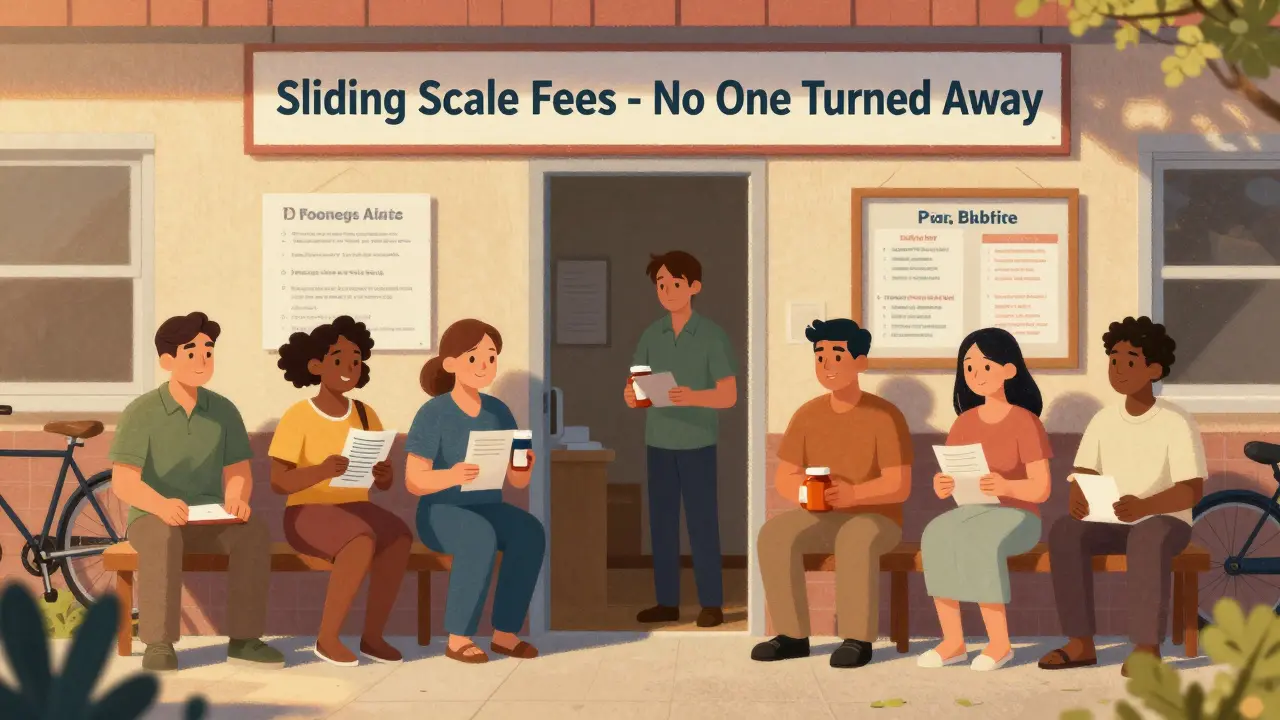
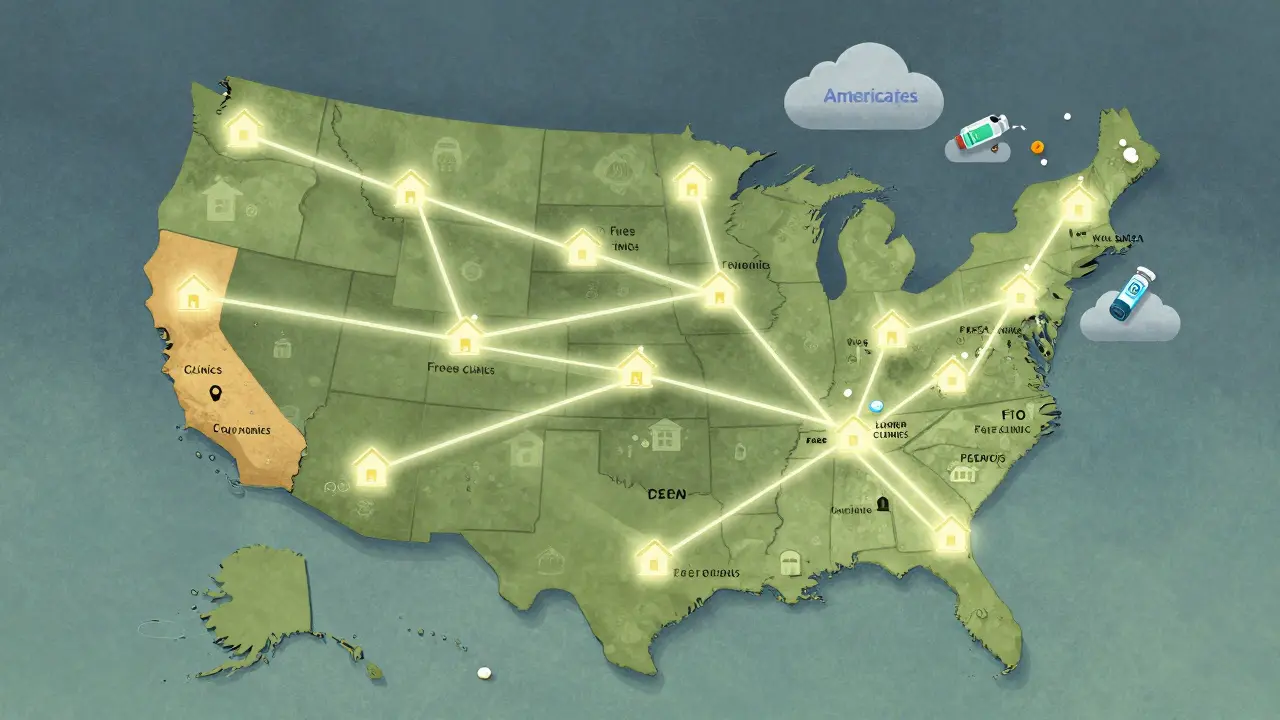
Community clinics don’t magic up free meds out of thin air. They rely on a network of donations, partnerships, and government-backed programs. The biggest player? Americares, which in 2023 distributed $190 million in medications and medical supplies to nearly 1,000 clinics across the U.S. These aren’t generic or expired drugs-they’re brand-name and generic prescriptions for chronic conditions like diabetes, asthma, hypertension, and depression, donated directly by pharmaceutical companies. Many clinics also work with pharmaceutical patient assistance programs (PAPs). These are run by drug makers like Pfizer, Merck, and Teva, who give away medications for free to people who meet income guidelines. Clinics help you apply, fill out paperwork, and even pick up the meds on your behalf. Some clinics have their own on-site pharmacies, while others partner with local pharmacies to fill prescriptions at reduced prices. Federally Qualified Health Centers (FQHCs) are another major source. These are government-funded clinics that serve everyone, regardless of insurance. They charge you based on your income using a sliding scale. For someone earning under $29,160 a year (200% of the federal poverty level in 2023), a visit might cost $20-or nothing at all. Medications are priced the same way. You won’t get everything free, but you’ll pay far less than retail.How to Find a Clinic Near You
The first step is knowing where to look. Don’t just Google “free clinic near me”-you’ll get outdated or incomplete results. Use these trusted tools instead:- HRSA’s Find a Health Center tool (findahealthcenter.hrsa.gov) - This is the official government directory for FQHCs. It shows locations, hours, services offered, and whether they have on-site pharmacies.
- National Association of Free & Charitable Clinics (nafcclinics.org) - This site lists over 1,400 free clinics nationwide. Each listing includes contact info, eligibility rules, and whether they offer medication assistance.
- State-specific directories - Many states have their own networks. For example, Virginia’s Virginia Association of Free & Charitable Clinics lists member clinics with details on which ones handle diabetes meds, mental health prescriptions, or asthma inhalers.
Don’t skip the FQHCs just because they’re not labeled “free.” Even if you have insurance, if your plan has high deductibles or doesn’t cover your meds, an FQHC can still save you hundreds a month.
What You’ll Need to Qualify
Most clinics have strict rules. You won’t walk in and get meds on the spot. You need to prove you qualify. Here’s what most require:- Proof of income - Last 30 days of pay stubs, tax returns from the previous year, or a letter from your employer. Some accept unemployment benefit statements.
- Proof of residency - A utility bill, lease agreement, or state ID with your current address. Clinics serve specific zip codes or counties.
- Proof of no insurance or underinsurance - If you have insurance but your plan doesn’t cover your meds, bring your explanation of benefits (EOB) showing denied claims or high copays.
- Current medication list - Bring the bottles or a written list of what you’re taking. Clinics need to know what you need before they can help.
Some clinics also require you to be at or below 200% of the federal poverty level. For a single person in 2023, that’s $29,160 annually. For a family of four, it’s $60,000. Many people don’t realize they qualify-even if they work full-time.
What Medications Are Available?
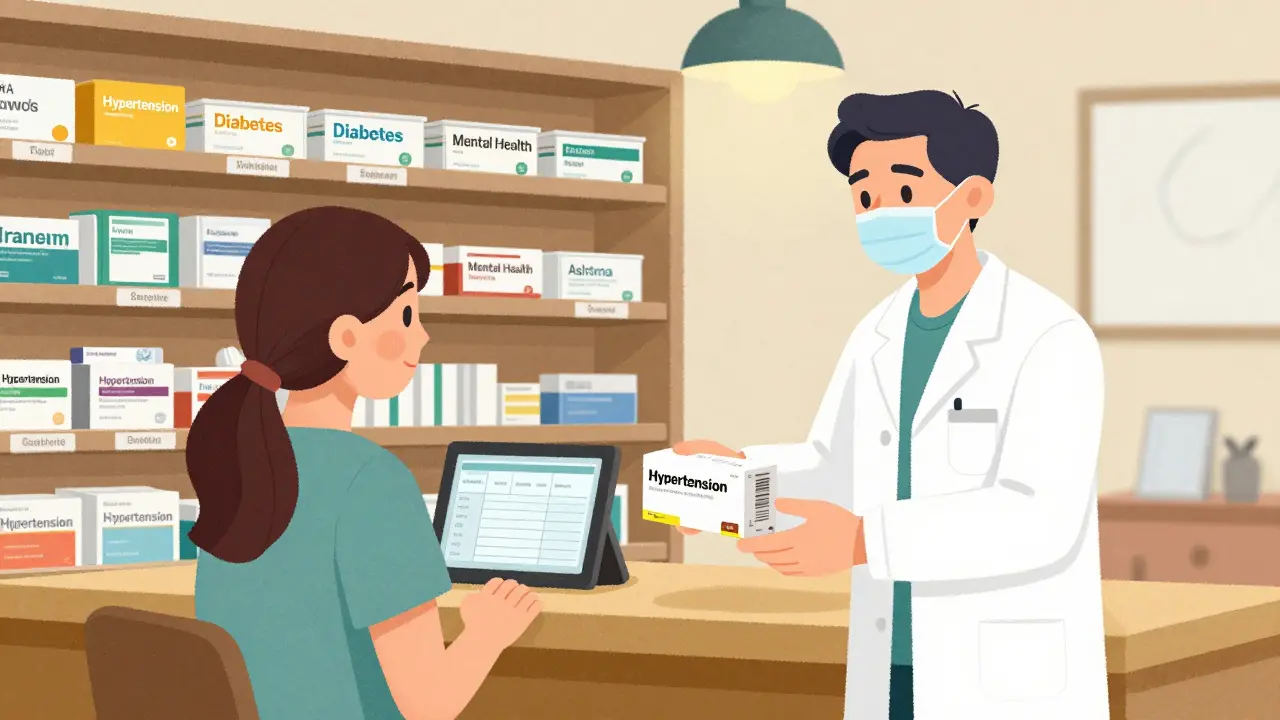
Not every drug is available for free. Clinics focus on the essentials-medications for chronic, life-threatening, or disabling conditions. Common ones include:- Insulin and metformin for diabetes
- Lisinopril, amlodipine, and hydrochlorothiazide for high blood pressure
- Albuterol inhalers for asthma
- Fluoxetine, sertraline, and other antidepressants
- Levothyroxine for thyroid conditions
- Statins like atorvastatin for cholesterol
Specialty drugs-like biologics for rheumatoid arthritis or cancer treatments-are harder to get. But some clinics now partner with programs like Community Routes: Access to Mental Health Care, a $2 million initiative between Direct Relief, NAFC, and Teva Pharmaceuticals. That program specifically funds mental health meds for uninsured patients in California, Florida, New Jersey, and six other states.
Don’t assume your med isn’t covered. Ask. Clinics often have a list of available medications on their website or can call Americares or a pharmaceutical donor on your behalf.
What to Expect When You Walk In
Free clinics aren’t like regular doctor’s offices. They’re often run by volunteers-medical students, retired doctors, nurses, and community health workers. Hours are limited. Many only open two evenings a week. Wait times can be 4 to 6 weeks for a first appointment.When you arrive, you’ll fill out paperwork. Be honest about your income and meds. The staff will review your situation and determine what assistance you qualify for. Some clinics will give you a prescription to fill at a partner pharmacy. Others have in-house pharmacies where you pick up your meds right there.
One big tip: Bring your current prescriptions with you. If you’re taking something expensive like Humalog insulin or a brand-name inhaler, the clinic might be able to switch you to a generic version that’s covered under their donation program. They don’t always have your exact brand-but they have something that works.
Why Some Clinics Can’t Help Everyone
It’s not all perfect. Many clinics face serious challenges. In a 2022 survey by NAFC, 42% reported medication shortages. One clinic might have plenty of blood pressure pills but run out of insulin. Another might have mental health meds but no diabetes supplies.Volunteer dependence is another issue. If a resident doctor who ran the clinic leaves for a job, the program might shut down temporarily. Funding comes from grants and donations, which can dry up. That’s why clinics with mixed funding-some government money, some donations, some small patient fees-have a 37% higher survival rate than those relying only on donations.
And rural areas? They’re hit hardest. A clinic in rural West Virginia might serve 10,000 people but have only one part-time pharmacist. You might need to drive 50 miles for your meds.
What You Can Do Right Now
Don’t wait until your meds run out. Here’s your action plan:- Go to findahealthcenter.hrsa.gov and enter your zip code. Look for FQHCs with pharmacy services.
- Visit nafcclinics.org and search for free clinics in your area. Call ahead to ask about medication availability.
- Call your local hospital’s community health department. Many run free clinics or know which ones do.
- Bring your meds, pay stubs, and ID to your first appointment. Don’t assume they’ll have your exact prescription-ask what alternatives they offer.
- If you’re on a waiting list, ask if they can help you get a 30-day emergency supply from a pharmacy while you wait.
And if you know someone who’s skipping meds because they can’t afford them? Share this. A simple text or phone call could save a life.
What’s Changing in 2026
More pharmaceutical companies are stepping up. Teva’s $2 million partnership with NAFC is just one example. Americares has expanded its network from 850 to nearly 1,000 clinics in just one year. Some states are starting to fund medication assistance programs directly through public health departments.But the biggest shift? More clinics are now helping working families. The AAFP Foundation reports that most new patients aren’t homeless or unemployed-they’re cashiers, warehouse workers, teachers, and gig workers who have jobs but no employer insurance. That’s why programs like Family Medicine Cares USA give up to $25,000 to new clinics every year. Applications open March 15 to July 15-so if you’re thinking of starting a clinic, now’s the time.
Medication access isn’t about charity. It’s about keeping people alive. No one should choose between rent and insulin. The system isn’t perfect-but it’s working for millions. And you can be one of them.
Can I get free medications if I have insurance?
Yes-if your insurance doesn’t cover your meds or your copay is too high. Many clinics help underinsured patients. Bring your explanation of benefits (EOB) showing denied claims or high out-of-pocket costs. FQHCs use sliding scale fees, so even with insurance, you might pay less than your current copay.
Do I need to be homeless to qualify for free clinic meds?
No. Most clinics serve people who are employed but earn under 200% of the federal poverty level. That includes single parents, gig workers, and people with low-wage jobs. Homelessness isn’t a requirement-financial hardship is.
How long does it take to get meds after applying?
It varies. Some clinics have on-site pharmacies and can give you meds the same day. Others need to order from donation programs like Americares, which can take 1-3 weeks. If you’re in urgent need, ask if they can provide a short-term emergency supply while you wait.
Are generic medications available at free clinics?
Yes-most of the medications offered are generics, which are just as effective as brand-name drugs. In fact, clinics often prefer generics because they’re cheaper and more widely available through donation programs. If you’re on a brand-name drug, the clinic may help you switch to a generic version.
Can I get mental health medications at a free clinic?
Absolutely. Programs like Community Routes: Access to Mental Health Care are expanding access to antidepressants and anti-anxiety meds in over 10 states. Many free clinics now have counselors and prescribe medications like sertraline, fluoxetine, and buspirone. Mental health is a top priority for clinics in 2026.
What if my clinic doesn’t have my medication?
Ask if they can request it through Americares or another donor program. Many clinics can order specific medications on your behalf. If they can’t, ask for a referral to another clinic in your region. Some clinics specialize in certain conditions-like diabetes or mental health-and may have better stock.
Can I go to more than one clinic for help?
Yes, if you’re still struggling to get your meds. Some people visit an FQHC for primary care and a free clinic for prescriptions. Others use one clinic for insulin and another for mental health meds. Don’t feel guilty-this is how the system is designed to work.
So wait-you’re telling me I can get insulin for $5 a month if I make under $29k?? I’ve been paying $400 for Humalog and crying in the pharmacy aisle every month… this is the first time I’ve felt even a little hope. I’m calling my nearest FQHC tomorrow. Thank you for listing the exact forms I need. I’m printing this out.
Respected community, this is a truly noble initiative 🙏
India too has similar programs under Ayushman Bharat, where free medicines are distributed at primary health centers for chronic diseases. However, the lack of awareness remains a critical barrier. In rural areas, people often walk 20 kilometers to reach a clinic, only to find it closed due to staff shortages. I urge policymakers to adopt a hybrid model-digital registration + mobile pharmacy vans-to bridge this gap. Knowledge is power, and this post is a beacon. 🌟
As someone from Delhi, I’ve seen how Indian pharma companies donate to slum clinics-but here in the US, the system feels like a maze. 😅 The fact that Americares gets brand-name meds? That’s wild. In India, we’re lucky if we get generics on time. But hey-kudos to the U.S. system for at least trying. Also, if anyone needs help filling out forms in Hindi or Urdu, I’m your guy. 🙌
Let’s be real-this is just a PR stunt by Big Pharma. They donate expired stock, then write it off as a tax deduction. You think they care about you? They care about their stock price. And those ‘sliding scale’ clinics? They’ll still charge you $15 for a blood pressure pill because ‘we have overhead.’ You’re being manipulated into thinking charity is enough. The real solution is single-payer. But no one wants to talk about that, do they?
Y’all are acting like this is some miracle. We’re talking about a system built on charity and goodwill. That’s not a system-that’s a band-aid on a gunshot wound. America’s healthcare isn’t broken, it’s designed this way. Corporations profit from sickness. The government lets them. And now we’re supposed to be grateful because some retired nurse hands you a bottle of metformin on a Tuesday night? Wake up. This isn’t help-it’s humiliation wrapped in a ribbon.
So… the same pharma companies that raised insulin prices 500% in 10 years are now ‘donating’ meds? 😏 And you believe them? They’re just buying goodwill before Congress investigates them. Plus-did you notice how every clinic says ‘call ahead’? That’s because they don’t have enough. They’re running on fumes and hope. And the government? They’re watching. Waiting for someone to die so they can say ‘see? We tried.’ 🤡
Look, I get it. People are struggling. But let’s not pretend this is some noble crusade. The fact that we need 1,400 free clinics just to keep people alive is a national shame. I’m a veteran-I’ve seen what happens when you don’t have coverage. My buddy died because he skipped his meds to pay rent. This isn’t about charity. It’s about a system that’s been gutted by greed and politics. And if you think voting for someone who says ‘let’s expand Medicaid’ is radical-you’re the problem. Get off your phone and call your rep. Now.
Just got off the phone with my local FQHC-they have sertraline and lisinopril in stock! 🎉 I brought my pay stubs and my husband’s EOB (he’s underinsured) and they said we qualify for sliding scale. They even offered to call Americares for my husband’s asthma inhaler. I didn’t know where to start, but this post literally saved us. One thing though-I think they meant ‘2023 poverty level’ not ‘2026’-just a typo, but it tripped me up for a sec. Thanks for sharing this!