Ethnicity and Drug Response: How Genetics Shape Medication Safety
Pharmacogenomics Risk Estimator
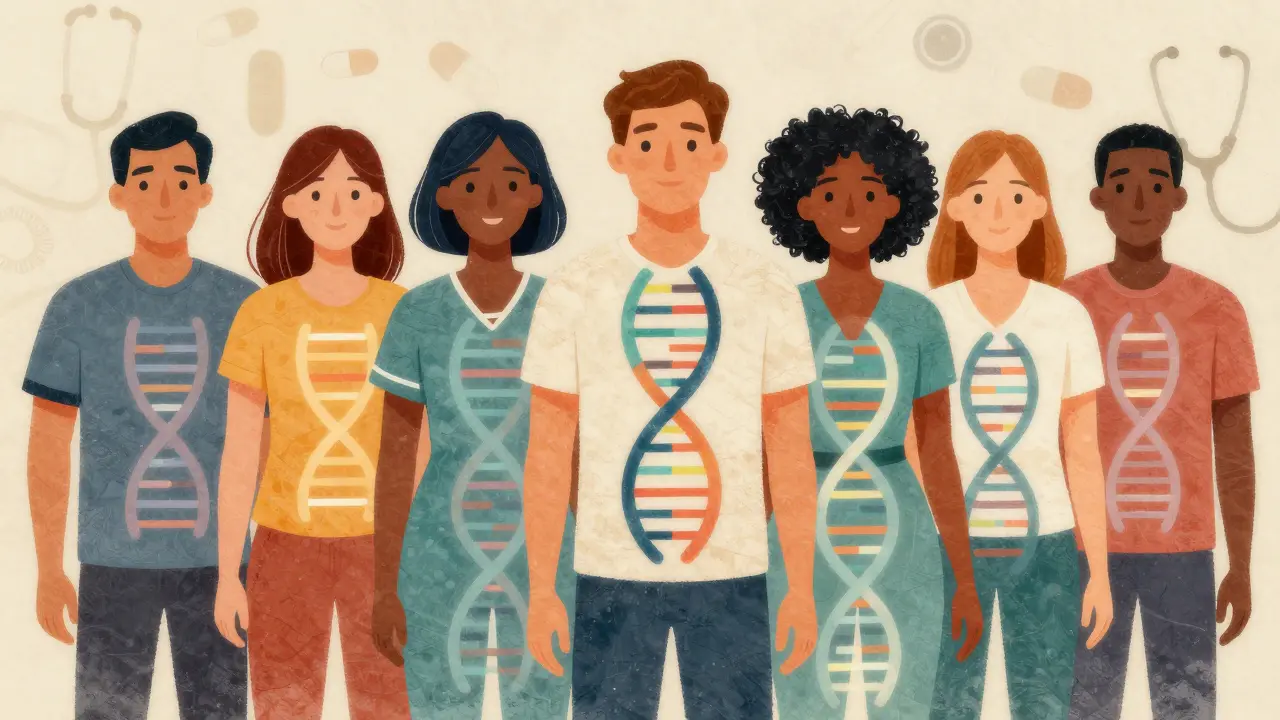
Have you ever wondered why a medication works wonders for your neighbor but leaves you feeling sluggish or causes side effects? It’s not just about luck. The way your body processes drugs is deeply tied to your DNA. This field, known as pharmacogenomics, which studies how genes affect a person's response to drugs, has revealed that ethnicity often serves as a proxy for specific genetic variations. These variations can dramatically change how effective a treatment is or how dangerous it might be.
For decades, doctors prescribed medications based on average responses in clinical trials. But averages don’t fit everyone. Today, we know that genetic polymorphisms-small changes in our DNA-create distinct metabolic profiles. Understanding these differences isn't about stereotyping; it’s about precision. It’s the difference between a one-size-fits-all approach and a tailored key that fits your specific biological lock.
The Engine Room: Cytochrome P450 Enzymes
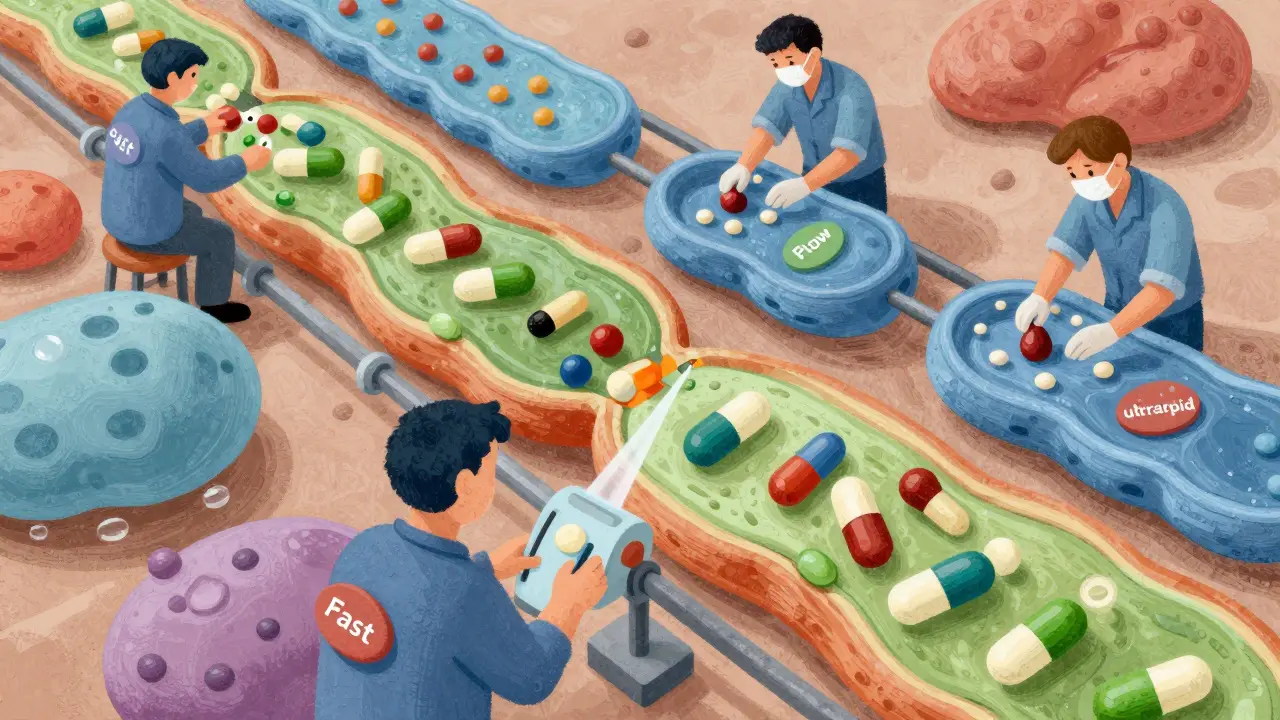
To understand drug response, you first need to look at the liver’s cleanup crew: the Cytochrome P450 (CYP450) enzyme family. These enzymes are responsible for metabolizing roughly 70% of all clinically prescribed cardiovascular drugs. Think of them as workers on an assembly line. Some people have fast workers, some have slow ones, and some have none at all. These differences aren’t random; they cluster heavily along ethnic lines due to evolutionary history.
Consider CYP2C19, an enzyme crucial for activating blood thinners like clopidogrel (Plavix). If you’re a "poor metabolizer," the drug never activates, leaving you unprotected against clots. Research shows the loss-of-function allele for CYP2C19 appears in 15-20% of East Asian populations. In contrast, only 3-8% of European Americans carry this variant. This means an East Asian patient is significantly more likely to experience treatment failure with standard dosing than their European counterpart. Without knowing this genetic background, a doctor might assume the drug simply wasn’t working well enough, potentially switching to a different therapy unnecessarily.
Then there’s CYP2D6, which handles everything from antidepressants to painkillers. Here, the variation goes both ways. While many groups have "normal" metabolizers, some populations have a higher frequency of "ultrarapid metabolizers." These individuals process drugs so quickly that therapeutic levels drop before the medication can do its job, or conversely, they convert pro-drugs into active forms too aggressively, leading to toxicity. For example, codeine is a pro-drug that needs CYP2D6 to become morphine. Ultrarapid metabolizers can turn a standard dose of codeine into a lethal amount of morphine, a risk that disproportionately affects certain Middle Eastern and North African populations.
Beyond Metabolism: Immune Reactions and Transporters
It’s not just about speed; it’s also about safety triggers. Some genetic markers act like alarm bells for severe immune reactions. The most famous example involves HLA-B*15:02, a gene variant linked to Stevens-Johnson Syndrome, a life-threatening skin condition caused by the anticonvulsant carbamazepine.
This allele is found in 10-15% of Han Chinese, Thai, and Malaysian populations. However, it is virtually absent in Japanese, Korean, European, and African groups. Because of this stark difference, regulatory bodies now recommend screening for this marker before prescribing carbamazepine to patients of Southeast Asian descent. Ignoring this ethnic context could lead to catastrophic outcomes. Conversely, testing every single patient globally would be inefficient and costly, highlighting why understanding population genetics matters.
Another critical area is Glucose-6-phosphate dehydrogenase (G6PD) deficiency. This condition affects red blood cells, making them vulnerable to breaking down when exposed to certain oxidative stresses. G6PD deficiency is highly prevalent in malaria-endemic regions, affecting up to 40% of men in parts of Africa and the Mediterranean. When patients with this deficiency take drugs like primaquine (used for malaria) or dapsone (used for leprosy), they risk severe hemolysis-a rapid destruction of red blood cells. Recognizing this link allows clinicians to avoid these specific drugs in high-risk ethnic groups, opting for safer alternatives instead.
| Gene/Variant | Drug Class Affected | High-Risk Populations | Clinical Impact |
|---|---|---|---|
| CYP2C19*2 | Antiplatelets (Clopidogrel) | East Asians (15-20%) | Reduced efficacy, increased clot risk |
| HLA-B*15:02 | Anticonvulsants (Carbamazepine) | Southeast Asians (10-15%) | Severe skin reactions (Stevens-Johnson) |
| G6PD Deficiency | Antimalarials/Antibiotics | African/Mediterranean (up to 40%) | Hemolysis (red blood cell breakdown) |
| CYP2D6 Ultrarapid | Opioids (Codeine) | Middle Eastern/North African | Toxicity/Overdose risk |
Cardiovascular Care: A Case Study in Disparity
Nowhere is the impact of ethnicity on drug response more evident than in heart health. Blood pressure management has long shown disparities. African American patients, on average, show reduced responsiveness to ACE inhibitors and angiotensin II receptor blockers (ARBs) compared to European Americans. Studies suggest this group experiences 30-50% less blood pressure reduction with these standard first-line therapies.
Why does this happen? It’s partly due to lower renin activity, which is genetically influenced. As a result, thiazide diuretics and calcium channel blockers tend to work better in this demographic. This scientific insight led to a landmark decision in 2005: the FDA approved BiDil (isosorbide dinitrate/hydralazine) specifically for self-identified African American patients with heart failure. Clinical trials showed this combination reduced mortality by 43% in this group compared to placebo, whereas it did not show the same benefit in the broader, mixed-ethnicity population.
However, caution is needed. Just because a group averages a certain response doesn’t mean every individual within that group will respond identically. About 30-40% of African American patients still respond well to ACE inhibitors. Relying solely on race can miss opportunities for effective treatment. The goal is to use ethnicity as a starting clue, not a final verdict.
The Shift from Race to Genotype
Race is a social construct, not a biological absolute. Two people identified as "Black" may have vastly different genetic ancestries-one Nigerian, one Caribbean-and their drug responses could differ significantly. Dr. Sarah Tishkoff of the University of Pennsylvania points out that genetic diversity within Africa is greater than the total genetic diversity of the rest of the world combined. Using broad racial categories risks oversimplifying complex biology.
This is why the medical community is moving toward precision medicine based on actual genetic testing rather than self-reported race. Programs like Vanderbilt’s PREDICT project have genotyped over 120,000 patients, integrating results directly into electronic health records. This system alerts doctors if a patient’s genotype suggests a poor response to a specific drug, regardless of their ethnic label. Early data shows this approach reduces adverse drug events by 28-35%.
Despite the promise, barriers remain. Only 37% of U.S. hospitals offer comprehensive pharmacogenetic testing. Costs for panels range from $1,200 to $2,500, though prices are dropping. Furthermore, genomic databases are skewed; nearly 80% of participants in genome-wide association studies are of European ancestry. This lack of diversity means we still have gaps in understanding how variants behave in non-European populations. Initiatives like the NIH’s "All of Us" program aim to fix this by enrolling 3.5 million participants, with 80% representing racial and ethnic minorities.

Practical Steps for Patients and Providers
If you are concerned about how your body reacts to medications, here is what you can do:
- Know Your Family History: Ask relatives about severe reactions to common drugs. If multiple family members struggled with side effects from a specific medication, there may be a genetic component.
- Discuss Ancestry with Your Doctor: Be open about your ethnic background. It helps providers consider potential metabolic differences, especially for high-risk drugs like warfarin or carbamazepine.
- Inquire About Testing: Ask if pharmacogenetic testing is appropriate for your condition. It is particularly useful for psychiatric meds, cancer treatments, and chronic cardiovascular conditions.
- Monitor Responses: Keep a log of how you feel after starting new medications. Note any unexpected fatigue, bruising, or lack of effect. Share this with your healthcare team.
For providers, the Clinical Pharmacogenetics Implementation Consortium (CPIC) provides updated guidelines for 27 gene-drug pairs. Familiarizing yourself with these resources ensures you are prescribing based on the latest evidence, not outdated assumptions.
Looking Ahead
The future of drug therapy lies in polygenic risk scores, which analyze hundreds of genetic variants simultaneously rather than focusing on single genes. Early studies suggest this could improve dosing accuracy by 40-60% compared to race-based approaches. As costs decrease and databases diversify, we will move closer to a world where every prescription is tailored to your unique genetic blueprint, eliminating guesswork and maximizing safety.
Is pharmacogenetic testing covered by insurance?
Coverage varies widely by insurer and region. Many plans cover testing for specific high-risk scenarios, such as cancer chemotherapy or severe psychiatric reactions. However, routine preventive testing may not be covered. Always check with your provider and insurance company beforehand.
Can I get tested at home?
Direct-to-consumer kits exist, but they are often limited in scope. Medical-grade pharmacogenetic tests require interpretation by a healthcare professional to ensure correct clinical application. Home kits may provide raw data, but you should consult a doctor or genetic counselor to translate those results into actionable medical advice.
Does my diet affect drug metabolism?
Yes. Factors like grapefruit juice can inhibit CYP3A4 enzymes, increasing drug levels in the blood. Diet, smoking status, and other medications interact with genetics to shape your overall drug response. It’s a combination of nature and nurture.
Why do some drugs work differently in children?
Children’s livers and kidneys are still developing, meaning their enzyme activity changes rapidly as they grow. Additionally, certain genetic variants may express differently during development. Pediatric dosing requires careful calculation beyond just weight-based adjustments.
What is the cost of a full pharmacogenomic panel?
As of 2026, comprehensive panels typically range from $1,200 to $2,500. However, targeted tests for single genes, like HLA-B*15:02, can cost under $100. Prices are decreasing as sequencing technology becomes more efficient and widespread.