Epilepsy and Seizures: Types, Triggers, and Antiepileptic Medications
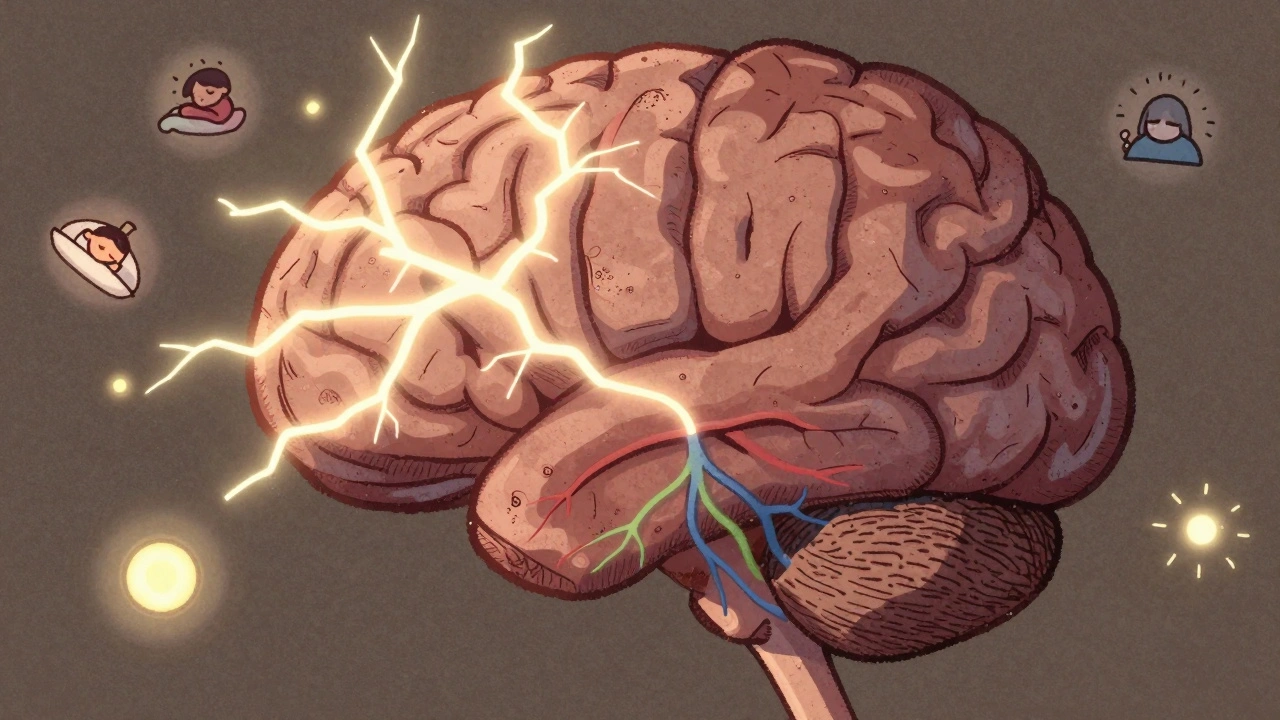
When someone has a seizure, it’s not just a momentary loss of control - it’s a sudden electrical storm in the brain. For over 50 million people worldwide, this isn’t a rare event. It’s part of daily life. Epilepsy isn’t one condition. It’s a group of disorders tied to how the brain generates seizures. And how we classify those seizures has changed dramatically - not just for doctors, but for patients trying to understand their own bodies.
What Really Counts as Epilepsy?
You don’t get diagnosed with epilepsy after one seizure. That’s a common myth. The International League Against Epilepsy (ILAE) says you need either two unprovoked seizures more than 24 hours apart, or one seizure with a 60% or higher chance of another. That’s not guesswork - it’s based on years of data showing recurrence patterns. Around 3.4 million people in the U.S. live with this diagnosis. Most of them - about 60% - have focal epilepsy, meaning the seizures start in one part of the brain. Another 30% have generalized epilepsy, where both sides of the brain are involved from the start. A growing number - 5 to 8% - have both types. That’s the new category: combined generalized and focal epilepsy. It’s not rare. It’s underdiagnosed.
And here’s the catch: misdiagnosis is shockingly common. About 15 to 20% of people initially told they have epilepsy don’t actually have it. Sometimes it’s migraines. Sometimes it’s fainting. Sometimes it’s psychogenic non-epileptic seizures - which look like epileptic seizures but come from stress or trauma, not abnormal brain electricity. That’s why eyewitness accounts matter. A doctor can’t diagnose a seizure from a patient’s memory alone. Someone who saw it happen? That’s gold.
The New Way to Classify Seizures (2025 Update)
The old terms - ‘partial’ and ‘complex partial’ - are gone. So is ‘simple partial.’ The ILAE’s 2025 update simplified everything. Now, seizures are grouped into four main types: focal, generalized, unknown onset, and unclassified. That’s it. No more 63 named types. Just 21. Why? Because doctors were drowning in jargon. A 2023 study found diagnostic accuracy jumped from 68% to 83% after the new system rolled out.
Focal seizures start in one area. They’re split into two: aware and impaired awareness. If you’re still conscious during the seizure - you know you’re having it - that’s aware. If you zone out, stare blankly, or can’t respond? That’s impaired awareness. These used to be called ‘simple’ and ‘complex’ partial. Now, it’s clearer. About 75% of focal seizures involve impaired awareness. That’s the majority.
Generalized seizures hit both brain hemispheres at once. There are six types:
- Absence: Brief staring spells - often mistaken for daydreaming. Common in kids. Lasts 5 to 10 seconds.
- Myoclonic: Sudden jerks. Think of someone jumping at a loud noise - but it’s their whole body.
- Tonic: Muscles stiffen. You might fall forward if standing.
- Clonic: Rhythmic shaking - usually arms and face.
- Tonic-clonic: The classic ‘grand mal.’ Stiffening, then shaking, often with loss of bladder control and tongue biting. This is what people picture when they think of seizures.
- Atonic: Sudden loss of muscle tone. You drop like a puppet with cut strings.
Childhood absence epilepsy - where kids have dozens of these staring spells a day - makes up 10 to 17% of all childhood epilepsy cases. It’s not harmless. It affects learning. And it responds well to specific meds.
The big shift? No more ‘motor vs. non-motor.’ Instead, doctors now ask: Is it observable? A staring spell? Observable. A feeling of dread rising in your chest? Not visible. But it’s still a seizure. That change lets patients describe what they feel - not just what they do.
What Triggers a Seizure?
Seizures aren’t random. They’re triggered. And triggers vary wildly from person to person. Some common ones:
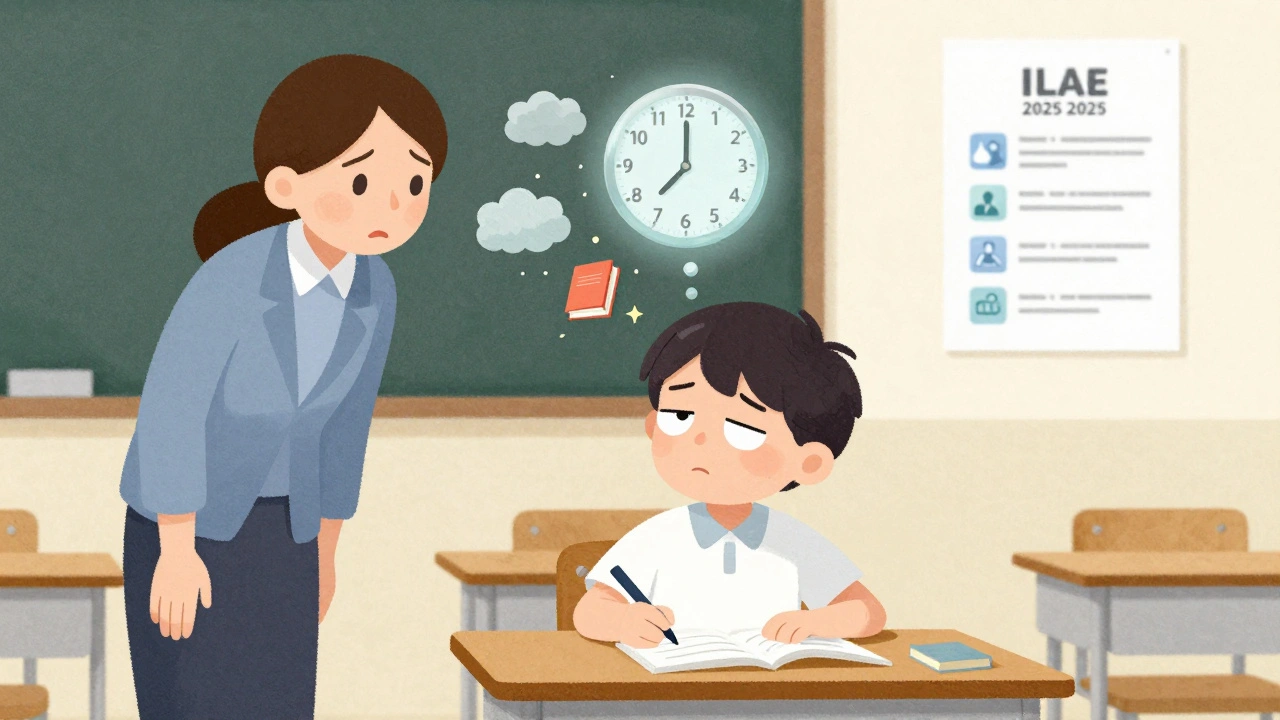
- Sleep deprivation: Skipping sleep is one of the top triggers across all epilepsy types. Even one bad night can lower your seizure threshold.
- Stress: Not just emotional stress - physical stress like surgery or illness can do it too.
- Flashing lights: Only 3% of people with epilepsy are photosensitive. But for them, strobe lights, video games, or even sunlight through trees can set off a seizure.
- Missed medication: This is the #1 avoidable cause. If you take your pill at 8 a.m. and forget one day? Your brain’s chemistry shifts. Seizure risk spikes.
- Hormonal changes: In women, seizures often cluster around menstruation. That’s catamenial epilepsy. Estrogen can excite neurons. Progesterone calms them. When progesterone drops, so does protection.
- Alcohol and drugs: Heavy drinking or withdrawal can trigger seizures. Even recreational drugs like cocaine or MDMA carry risk.
Here’s what doesn’t trigger seizures: loud noises, sudden movements, or being startled. Those myths cause unnecessary fear. And fear makes people avoid life - when they shouldn’t.
Antiepileptic Medications: What Works and What Doesn’t
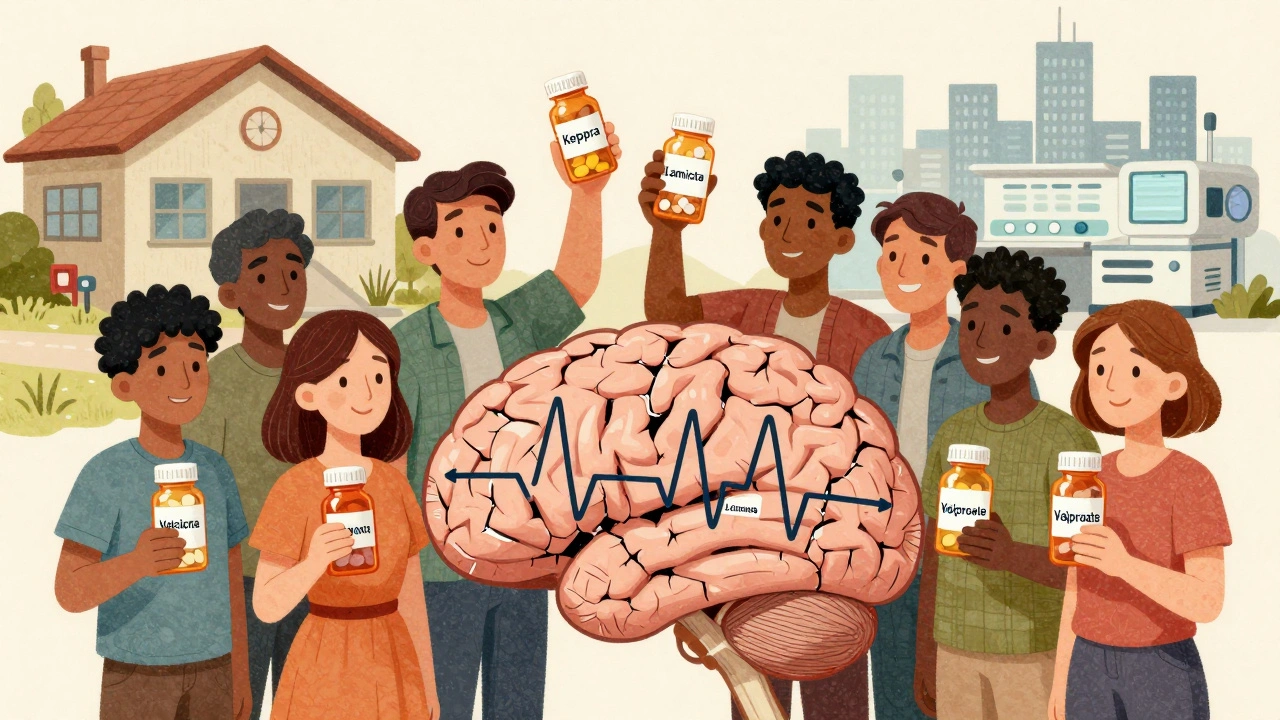
There are over 30 antiepileptic drugs (AEDs). Not all are created equal. The right one depends on your seizure type, your age, your gender, and whether you have other health issues.
For focal seizures, first-line options include:
- Levetiracetam (Keppra): Used in 60% of new focal epilepsy cases. Well-tolerated. Few drug interactions.
- Lamotrigine (Lamictal): Good for people with mood disorders too. Slow titration needed to avoid rash.
- Brivaracetam (Briviact): Similar to levetiracetam but faster acting. Less drowsiness.
For generalized seizures, especially absence or myoclonic:
- Ethosuximide (Zarontin): First choice for absence seizures in children. Doesn’t help tonic-clonic.
- Valproate (Depakote): Very effective for multiple seizure types - but dangerous in women of childbearing age. Can cause birth defects and liver damage.
- Topiramate (Topamax): Used for both focal and generalized. Can cause weight loss and cognitive fog.
For tonic-clonic seizures, options include:
- Lacosamide (Vimpat): Works on sodium channels. Good for people who can’t tolerate older drugs.
- Clobazam (Onfi): A benzodiazepine. Used as add-on therapy. Risk of dependence.
Here’s the hard truth: 30% of people with epilepsy don’t respond to the first two medications they try. That’s drug-resistant epilepsy. For them, surgery, nerve stimulation, or special diets (like the ketogenic diet) become options. But you can’t jump to those without accurate classification. If you’re misdiagnosed as having generalized seizures when you actually have focal ones, you’ll get the wrong meds. And that’s exactly what happens in 27% of cases, according to the American Academy of Neurology.
Why Getting It Right Matters
Getting the classification wrong isn’t just confusing - it’s dangerous. Take a 12-year-old with absence seizures. If they’re misdiagnosed with ADHD and put on stimulants? The stimulants can make seizures worse. Or imagine a woman with focal seizures from the temporal lobe. If she’s told she has generalized epilepsy and given valproate, she might not be able to have children safely. That’s life-altering.
Accurate classification also affects insurance. In the U.S., Medicaid and private insurers require precise seizure type codes to approve coverage for expensive drugs or devices like vagus nerve stimulators. A 2023 CDC report showed that patients with correct classification were 29% more likely to get the treatment they needed.
And adherence? People who understand their seizure type are 34% more likely to take their meds consistently. That’s not because they’re more disciplined. It’s because they finally get why it matters. One patient told me: ‘I used to skip pills when I felt fine. Then my neurologist showed me my EEG - the spikes only happened in my right temporal lobe. I realized: I’m not just ‘having seizures.’ I have a brain that needs this drug to stay quiet.’
What’s Next for Epilepsy Care?
The ILAE is working on a digital tool with AI that analyzes EEG patterns and predicts seizure type. Early tests show it boosts accuracy by 18% for non-specialists. That’s huge for rural clinics without neurologists. By 2028, genetic markers may be part of the classification system. Some epilepsies are caused by single gene mutations - like SCN1A in Dravet syndrome. Knowing that changes everything: treatment, prognosis, even family planning.
But technology won’t fix everything. In low-income countries, 75% of people with epilepsy have no access to diagnosis. No EEG. No MRI. No neurologist. They’re treated based on what they look like - and that’s often wrong. The 2025 classification was designed to work even without fancy tools. But it needs training. And resources. And time.
For now, the best tool is still a good history. A witness. A clear description. And a doctor who listens - not just to the brain, but to the person behind it.
The new ILAE classification is a game-changer. No more drowning in jargon. I’ve seen too many patients misdiagnosed because doctors clung to outdated terms like 'complex partial.' Clarity saves lives.
I’m a mom of a kid with absence seizures. We went through years of being told it was ‘daydreaming’ until an EEG confirmed it. The 2025 update? Finally, someone gets it. My daughter’s teacher now understands she’s not being lazy-she’s having 20+ seizures a day. Thank you for writing this.
It’s worth noting that the shift from ‘partial’ to ‘focal’ isn’t merely semantic-it reflects a neurobiological paradigm shift. The brain doesn’t operate in binary zones; it’s a dynamic network. Focal onset doesn’t imply isolation-it implies origin. The propagation dynamics are what matter clinically. The ILAE’s move toward observable phenomenology over anatomical localization aligns with predictive coding models in neuroscience. This isn’t just taxonomy-it’s epistemological evolution.
Wow. Finally, someone wrote something that doesn’t sound like a pharmaceutical ad. I’ve been on five different AEDs. Valproate made me gain 40 pounds and cry uncontrollably. Levetiracetam? I turned into a zombie who forgot how to spell ‘cat.’ But hey, at least I didn’t have a grand mal in front of my boss. Guess what? I still miss pills. Because ‘awareness’ doesn’t mean ‘motivation.’
Missed meds = biggest trigger. Period. I used to skip my lamotrigine if I felt fine. Then I had a tonic-clonic in the grocery store. Now I set 3 alarms. One for morning, one for night, one for ‘did you take it?’ You think you’re fine until your brain forgets how to be quiet. Don’t be that person.
As someone who’s lived with focal epilepsy for 18 years, I can confirm that the emotional toll is just as heavy as the physical. The stigma around ‘looking weird’ or ‘spacing out’ makes people isolate themselves. I used to avoid parties because I didn’t want to explain why I suddenly stopped talking mid-sentence. The fact that the new classification includes non-motor symptoms-like that rising dread feeling-is huge. It validates what we’ve been feeling for years, even when no one else could see it. Also, yes, flashing lights are real. I had a seizure at a concert last year. The venue had no warning. No one knew what to do. Please, if you’re organizing events, add a strobe light disclaimer. It’s not hard.
My brother was misdiagnosed with ADHD for three years. He was on stimulants. Then he had his first tonic-clonic seizure at 14. Turns out he had childhood absence epilepsy. The stimulants made it worse. It took a neurologist who actually listened to his teacher’s notes-‘he stares blankly for 10 seconds, then snaps back’-to get it right. This post? It’s the kind of thing every pediatrician should read. Not just neurologists.
Just had my first seizure last month. Got diagnosed as focal with impaired awareness. Still processing. But wow, the meds list is overwhelming. Levetiracetam? Brivaracetam? I feel like I’m choosing a new phone plan. Also, is it weird that I’m kinda relieved it’s not ‘just stress’? Like… I’m not crazy? 🤔
i had a seizure in the shower last year. no one saw it. i thought i just slipped. turns out i had a focal aware seizure. my brain just went offline for 12 seconds. i remember the soap slipping… then i was on the floor. no idea how i got there. now i use a shower chair. small changes save lives.
My sister has Dravet syndrome. SCN1A mutation. We found out through genetic testing after years of misdiagnosis. The ketogenic diet changed her life. No more daily clusters. But access? We’re lucky we live in a city with a good epilepsy center. In rural areas? Most families never get this far. The AI tools mentioned? They could be a lifeline-if they’re affordable. Don’t let tech be a privilege.
Let’s be real. Most people with epilepsy are just bad at self-care. You think skipping your meds is no big deal? It’s not a ‘brain thing’-it’s a discipline thing. And yes, some of you are just attention-seeking with your ‘I felt dread’ stories. Not every weird feeling is a seizure. I’ve seen people claim ‘non-motor seizures’ because they don’t want to go to therapy. Wake up.
Emmanuel, your comment is exactly why we need better education-not more judgment. People with epilepsy don’t need to be shamed into compliance. They need to understand why their brain needs the meds. That’s what this post does. And that’s what’s missing in 90% of doctor visits.