Eczema and Allergies: Understanding the Atopic March and How to Protect Your Child's Skin Barrier
Why Your Baby’s Eczema Might Be a Warning Sign
If your child has eczema, you’ve probably heard the term "atopic march"-a phrase that sounds scary, like a slow-moving storm heading straight for your family. The truth? It’s not a guaranteed path to asthma or food allergies. But it is a clue. A very important one. Eczema, or atopic dermatitis, isn’t just dry, itchy skin. In many kids, it’s the first sign that their immune system is learning the wrong lessons. And that’s where the skin barrier comes in. When the outer layer of skin breaks down-because of genetics, environment, or both-it lets in things it shouldn’t: dust, pollen, peanut particles, even milk proteins. The immune system sees these as invaders and starts reacting. That reaction doesn’t just cause rashes. It can set off a chain reaction: food allergies, then asthma, then hay fever. But here’s what most people don’t tell you: only about 3.1% of children with eczema follow the classic "march" from rash to wheezing to sneezing. That means 97 out of 100 kids with eczema won’t end up with all three conditions. The real risk? Severe eczema. Kids with intense, widespread, or early-onset eczema are 3 to 4 times more likely to develop asthma or multiple allergies. That’s not a guess. It’s from large, long-term studies like MAS and TOACS.The Skin Barrier Isn’t Just a Wall-It’s a Gatekeeper
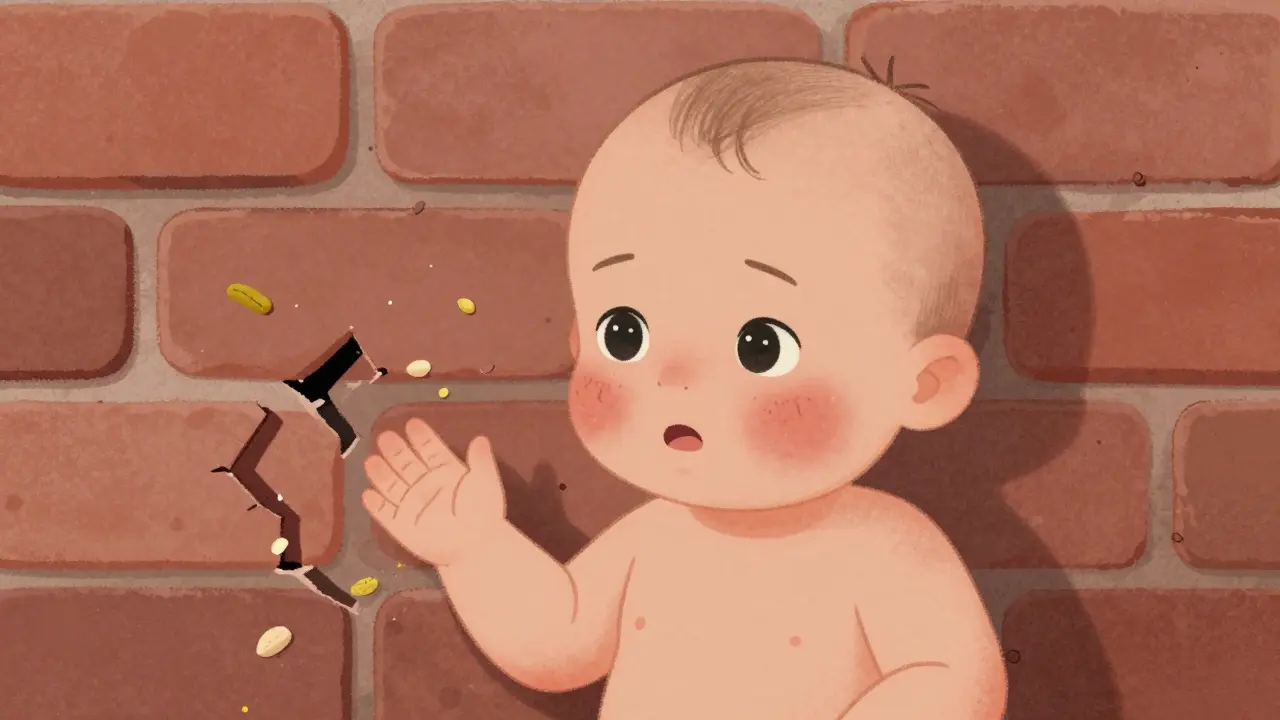
Think of your skin like a brick wall. The bricks are skin cells. The mortar? Proteins like filaggrin. When filaggrin doesn’t work right-because of a gene mutation-there are gaps. Allergens slip through. That’s not just a theory. It’s backed by genetics. About 1 in 5 people with eczema have a filaggrin mutation. And those kids? They’re more likely to develop peanut or egg allergies before they even eat them. How? Because they touch them first. A baby with cracked hands or cheeks rubs peanut butter off a sibling’s fingers. Or a parent wipes their face with a towel that had egg on it. The allergen enters through broken skin, not the gut. That’s the dual-allergen exposure hypothesis-and it’s changed everything. It explains why early skin care matters more than avoiding peanuts. The LEAP study proved it. High-risk infants with severe eczema who ate peanut protein early-between 4 and 11 months-had an 86% lower chance of developing a peanut allergy. But if you only avoid allergens and ignore the skin? You’re missing the point. The skin is the starting line. The gut is the finish line. You need to protect both.What Actually Works for Skin Barrier Care
You don’t need fancy creams or expensive oils. You need consistency. And the right kind of moisturizer. Look for products with: - Ceramides (they rebuild the mortar) - Cholesterol and fatty acids (they seal the gaps) - No fragrance, no alcohol, no parabens Apply it at least twice a day-right after a bath, when skin is still damp. Even if your child doesn’t have a rash. Prevention isn’t optional anymore. The PreventADALL trial showed that daily emollient use from birth reduced eczema incidence by 20-30% in high-risk babies. Don’t wait for cracks to form. Start early. Even if there’s no redness yet. Dry, flaky skin? That’s your warning sign. Treat it like a leaky roof-you fix it before the water gets in. Bathing matters too. Keep it short (5-10 minutes), lukewarm, and use a gentle, soap-free cleanser. Pat dry-not rub. Then moisturize within 3 minutes. That’s when your skin holds onto moisture best.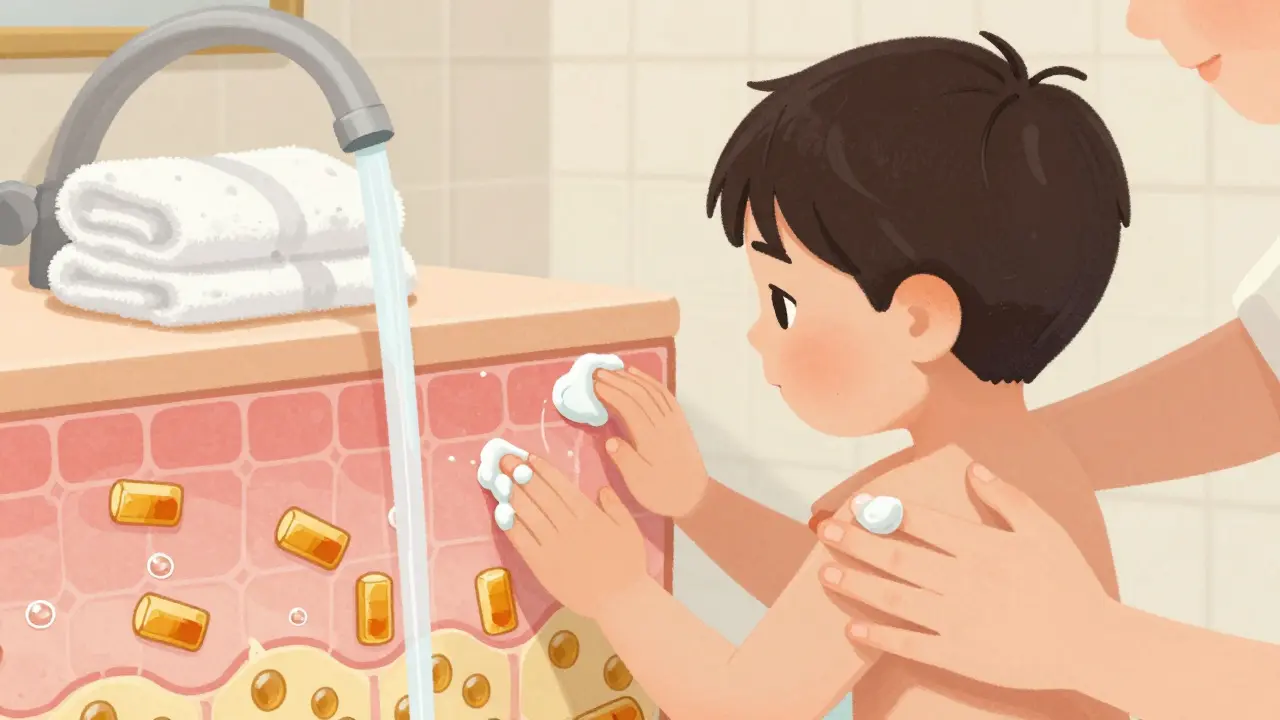
It’s Not Just the Skin-Your Baby’s Gut Matters Too
Here’s something surprising: the same gene mutations that weaken skin can also change your baby’s gut bacteria. Babies who go on to develop multiple allergies often have less of the good bacteria that make butyrate-a compound that calms the immune system. That doesn’t mean you need to give your baby probiotics right now. Not all of them work. But it does mean you should think about diet. Breastfeeding? Great. It supports healthy gut microbes. Introducing solids? Do it gradually, one at a time. And don’t delay allergenic foods like eggs, peanuts, or dairy. The evidence is clear: early, safe exposure through the mouth helps the immune system learn tolerance. If you’re unsure how to introduce peanut safely, talk to your pediatrician. For babies with severe eczema, they might recommend a skin test first. But don’t avoid these foods out of fear. The real danger isn’t peanut-it’s ignoring the skin barrier while worrying about food.When Should You Worry? Signs of Real Risk
Not every child with eczema needs a specialist. But some do. Watch for: - Eczema starting before 3 months old - Rash covering large areas (face, arms, legs) - Constant itching that disrupts sleep - Family history of asthma, hay fever, or severe food allergies - Eczema that doesn’t improve with basic moisturizers If you see two or more of these, it’s time to talk to an allergist or dermatologist. They can check for filaggrin mutations, track sensitization patterns, and help you build a prevention plan. Don’t panic. But don’t ignore it either. The goal isn’t to prevent all allergies. It’s to prevent the ones that could turn into lifelong problems.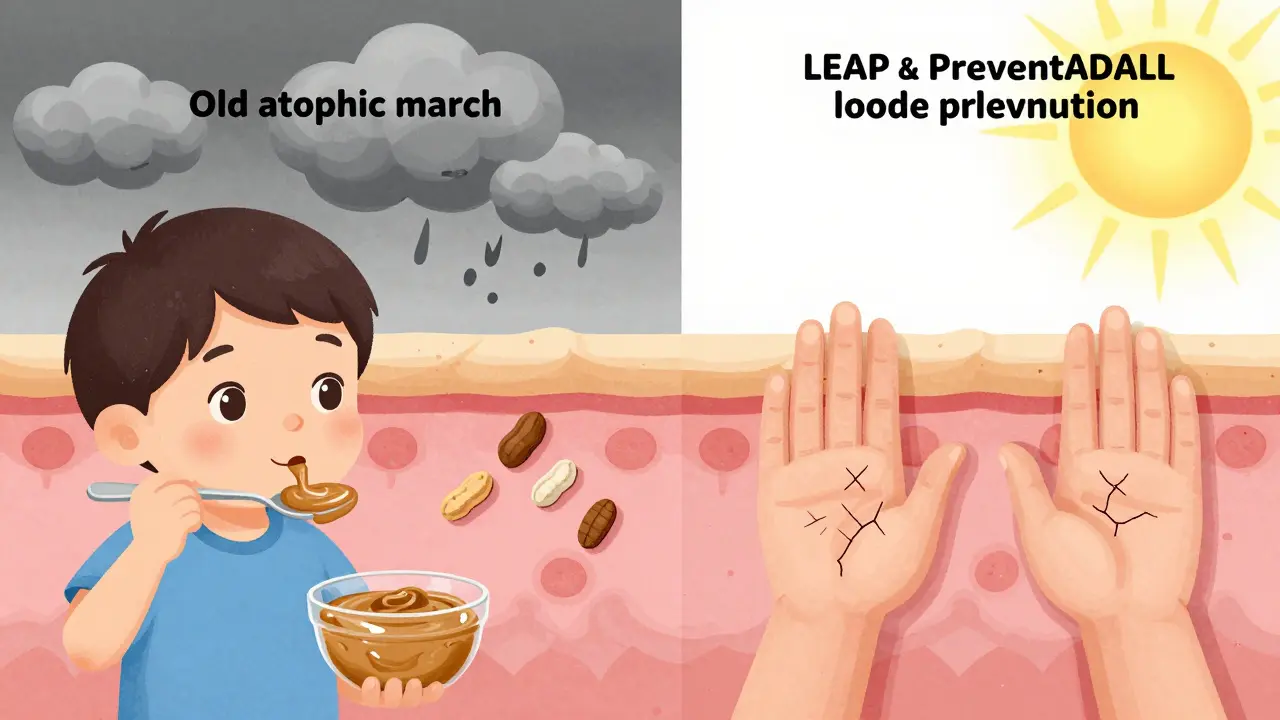
The New Way to Think About the Atopic March
Forget the old idea that eczema leads to asthma leads to hay fever. That’s outdated. Today, experts call it "atopic multimorbidity." It’s not a march-it’s a cluster. Some kids get eczema and food allergies together. Others get asthma and rhinitis without ever having a rash. It’s messy. And that’s okay. The real breakthrough? We now know who’s at risk-and how to help them. It’s not about treating every child the same. It’s about identifying the 25% who need extra support. That’s why skin care isn’t just about comfort. It’s prevention. It’s interrupting the process before it starts. And that’s powerful.What to Do Today
You don’t need a PhD to help your child. Start here:- Apply fragrance-free moisturizer twice daily-every day, even when skin looks fine
- Use lukewarm baths, not hot. Keep them under 10 minutes
- Introduce peanut, egg, and dairy between 4-6 months (if your pediatrician approves)
- Don’t delay solids because you’re afraid of allergies
- Watch for worsening eczema: if it’s not improving with basic care, see a specialist
What’s Next? The Future of Prevention
Researchers are now building tools to predict who’s most at risk-using genetics, skin tests, gut bacteria, and family history. In a few years, we might have a simple scorecard: "Your child has a 60% chance of developing asthma-here’s how to lower it." Until then, focus on what you can control: skin care, early food exposure, and staying informed. You’re not just treating a rash. You’re shaping your child’s immune future.Is eczema always a sign of future allergies?
No. Only about 3.1% of children with eczema follow the full "atopic march" to asthma and hay fever. But severe eczema-especially if it starts early or runs in the family-does increase the risk of developing food allergies or asthma. The key is not to assume all kids with eczema will progress, but to watch for signs of severity and act early.
Can moisturizing prevent food allergies?
Yes, in high-risk babies. The PreventADALL trial showed that daily emollient use from birth reduced eczema incidence by 20-30%. Since eczema is a major gateway to food allergies through skin exposure, protecting the skin barrier helps lower the risk. But moisturizing alone isn’t enough-early oral exposure to allergens like peanut is also critical.
Should I avoid peanuts if my baby has eczema?
No. The LEAP study showed that introducing peanut between 4 and 11 months reduced peanut allergy by 86% in babies with severe eczema. Avoiding peanut through the skin (like touching it) can cause sensitization. But introducing it orally-safely and early-teaches the immune system to tolerate it. Always check with your doctor first if your child has severe eczema.
What’s the best moisturizer for eczema-prone skin?
Look for products with ceramides, cholesterol, and fatty acids-ingredients that repair the skin barrier. Avoid anything with fragrance, alcohol, or parabens. Thick ointments like petroleum jelly or brands like CeraVe, Eucerin, or Vanicream work well. Apply right after bathing, while skin is still damp, at least twice a day.
Does breastfeeding prevent the atopic march?
Breastfeeding supports healthy gut bacteria and immune development, which may lower allergy risk. But it’s not a guarantee. The strongest protection comes from combining breastfeeding with early allergen introduction and daily skin barrier care. If you can’t breastfeed, formula is fine-just make sure to introduce allergens on time.
Can I fix my child’s skin barrier if it’s already damaged?
Yes. Even if your child has had eczema for months or years, consistent moisturizing with barrier-repairing ingredients can improve the skin over time. It won’t reverse genetics, but it can reduce flare-ups, lower infection risk, and reduce the chance of new allergies developing. The skin is resilient-especially in kids.
Just started using CeraVe on my 5-month-old after reading this and holy crap, the dry patches are gone in 3 days. No more midnight scratching. I didn’t think moisturizing could feel this revolutionary.
Look, I get that people want quick fixes, but let’s be real - this isn’t about slapping on lotion and calling it a day. The skin barrier is a biological gatekeeper, and when it’s compromised, your kid’s immune system is basically screaming into the void every time it touches dust or peanut butter on a toy. The LEAP study didn’t just prove peanut introduction works - it proved that *timing* and *route* matter more than we ever thought. Skin exposure = sensitization. Oral exposure = tolerance. That’s not opinion, that’s immunology. And if you’re waiting for a rash to appear before you start moisturizing, you’re already behind. PreventADALL showed 20-30% reduction in eczema just from daily emollients from birth. That’s not a ‘maybe,’ that’s a public health win. Stop treating this like a cosmetic issue. This is preventative medicine with a 97% success rate for not turning into asthma or food allergies. And yes, if your kid has severe eczema before 3 months, you’re in the 3% that needs a specialist, not just a cream.
This made me cry a little 😭 My son had eczema from 2 weeks old and we were so scared to introduce peanuts… but we did it at 5 months with the pediatrician’s guidance. No reaction. No hospital trips. Just a happy baby who now eats peanut butter straight from the jar. Thank you for explaining the science so clearly - I finally feel like I’m not just guessing.
so like... the whole 'atopic march' thing is just corporate pharma pushing moisturizers and peanut butter? like i get it, big pharma wants you to buy ceramides and pay for allergy tests but what if the real issue is glyphosate in the food? or 5g wifi frying kids' immune systems? they dont tell you that in the studies lol
I love how this post doesn’t scare you - it empowers you. I used to think my daughter’s eczema was my fault. Like I wasn’t bathing her right or using the ‘good’ soap. Turns out? It’s genetics, environment, and a broken skin barrier - none of which I chose. But now? I know what to do. Moisturize. Don’t delay peanuts. Keep baths short. It’s not perfect, but it’s something I can actually control. And that’s huge.
My niece got eczema at 1 month. Mom avoided all allergens. Kid got asthma by 2. Now she’s on inhalers. Don’t wait.
It’s wild to think that something as simple as rubbing cream on your baby’s skin could literally rewrite their immune future. We’re not just treating a rash - we’re teaching the body not to panic. It’s like giving the immune system a quiet room to learn instead of throwing it into a storm. And honestly? The fact that we can do this - that science has given us this tool - feels like a quiet miracle. We don’t need to fear every crumb on the floor. We just need to be consistent. One moisturizer, one meal, one bath at a time.
They want you to moisturize because the government doesn’t want to fix the real problem: vaccines and GMOs are poisoning children’s microbiomes. The atopic march is a distraction. Look at the data - countries with no moisturizer use have lower allergy rates. Coincidence? I think not.