Danshen and Heart Medications: Serious Interaction Risks You Can't Ignore
Blood Thinner Risk Calculator
This tool estimates your potential risk when taking Danshen with heart medications. NOT medical advice. Always consult your doctor before changing medications.
Based on NIH, Cleveland Clinic, and FDA data about Danshen interactions.
Risk Assessment
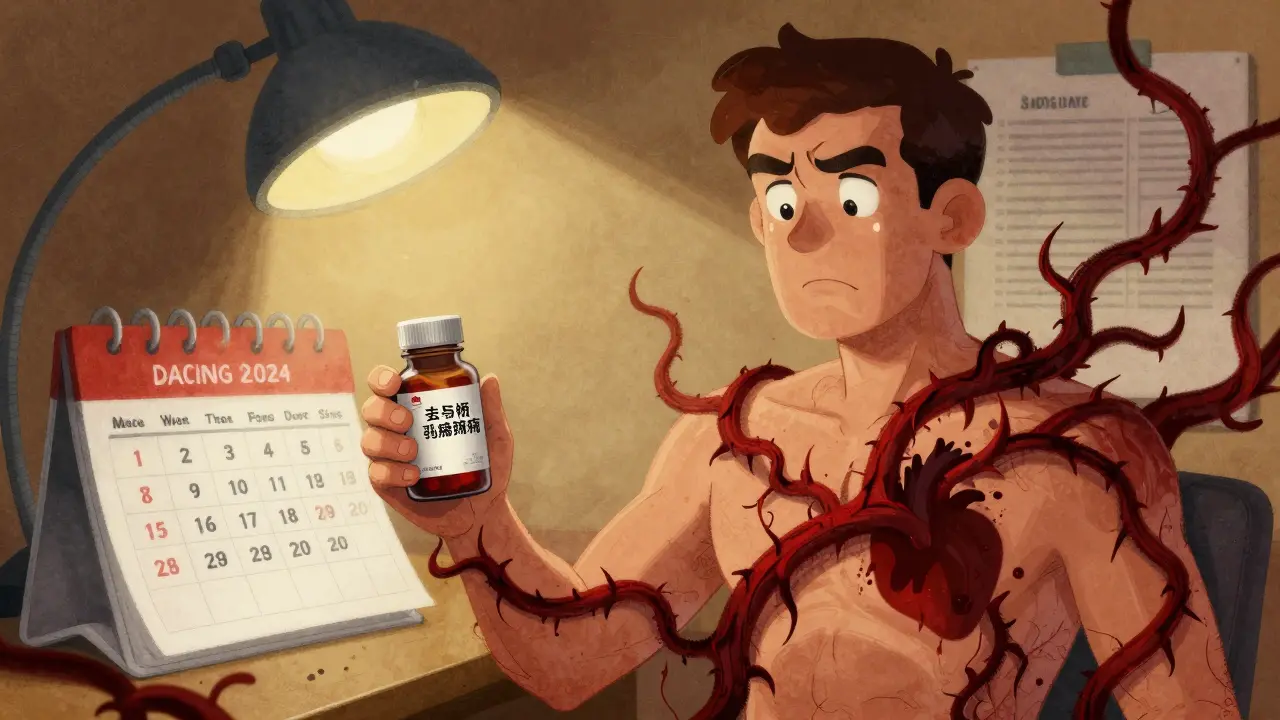
Every year, thousands of people take Danshen thinking it’s a safe, natural way to support their heart health. But what they don’t realize is that this popular herbal supplement can turn life-saving heart medications into dangerous, even deadly, combinations. If you’re on blood thinners like warfarin, rivaroxaban, or apixaban - or any other cardiac drug - taking Danshen could put you in the emergency room.
What Is Danshen, Really?
Unlike prescription drugs, Danshen isn’t standardized. One bottle might contain 0.05% tanshinones - the main active compounds - while another has 5.2%. That’s a 100-fold difference. And because it’s sold as a dietary supplement, the FDA doesn’t require manufacturers to prove it’s safe or effective before selling it.
Studies show Danshen works by thinning the blood, relaxing blood vessels, and lowering blood pressure. But here’s the problem: it does this unpredictably. Unlike warfarin, which doctors monitor with regular blood tests, Danshen’s effects vary wildly between brands, batches, and even individuals.
Why Danshen Is Dangerous With Blood Thinners
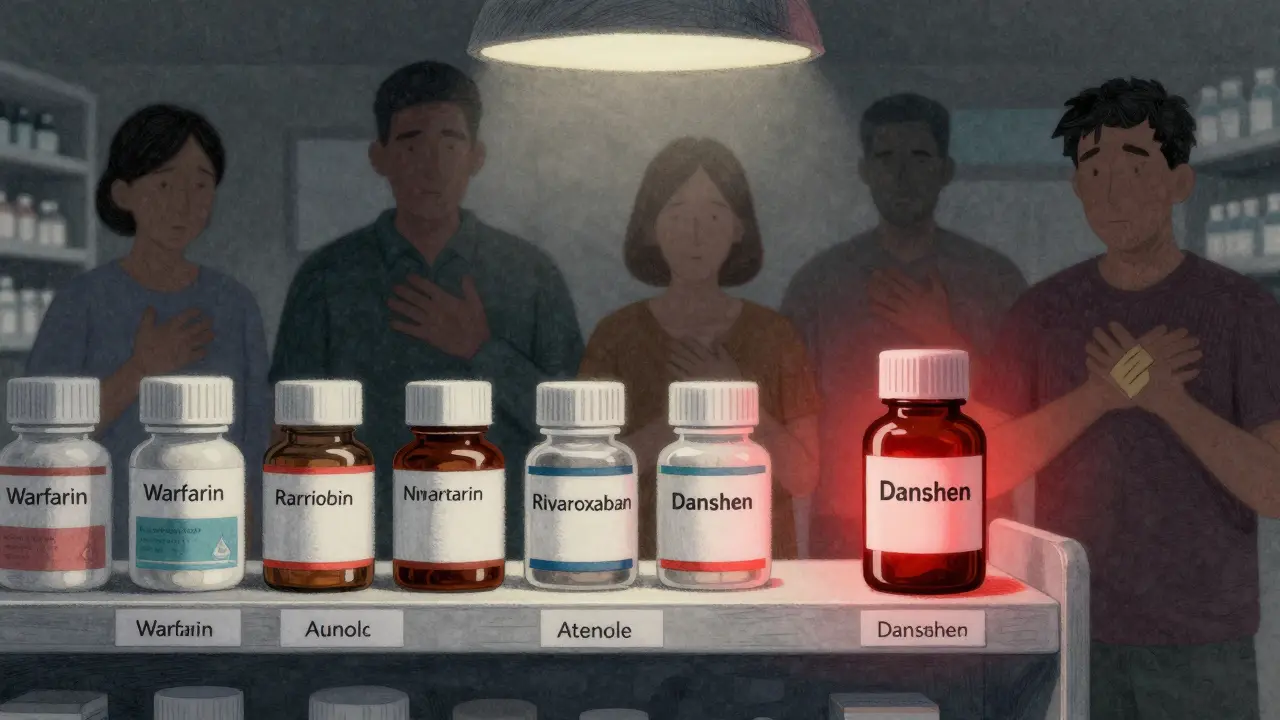
If you’re taking warfarin (Coumadin), rivaroxaban (Xarelto), apixaban (Eliquis), or dabigatran (Pradaxa), Danshen can turn your treatment into a ticking time bomb.
Research from the NIH and Cleveland Clinic shows Danshen strongly inhibits the liver enzyme CYP2C9 - the same enzyme that breaks down warfarin. When this enzyme is blocked, warfarin builds up in your body. Your INR - the blood test that measures clotting time - can spike from a safe 2.5 to over 8.0. At that level, even a minor bump or fall can cause internal bleeding.
Case reports are chilling:
- A 62-year-old man on warfarin for a mechanical heart valve took Danshen for two weeks. His INR jumped to 8.4. His hemoglobin dropped to 7.6 g/dL - a sign of severe internal bleeding.
- A 48-year-old woman on warfarin saw her INR rise from 2.0 to 5.6 after taking Danshen every other day for a month. She needed hospitalization.
- A 2020 study in Taiwan tracked 17 patients who took Danshen with warfarin. Their INR jumped from an average of 2.3 to 5.8 - all within weeks.
It’s not just warfarin. Newer blood thinners like rivaroxaban are also affected. A 2022 NIH study found Danshen inhibits the metabolism of rivaroxaban, increasing bleeding risk. And unlike warfarin, which has a reversal agent (vitamin K), there’s no antidote for Danshen. If you bleed, doctors can’t just give you a pill to stop it.
What About Other Heart Medications?
Danshen doesn’t just interfere with blood thinners. It can also mess with:
- Beta-blockers - Danshen lowers blood pressure. Combined with metoprolol or atenolol, it can drop your pressure too low, causing dizziness, fainting, or even heart failure.
- Calcium channel blockers - Danshen blocks calcium channels too. Taking it with amlodipine or diltiazem can overdo the effect, leading to dangerously slow heart rates or low blood pressure.
- Nitrates - Used for angina, nitrates widen blood vessels. Danshen does the same. Together, they can cause sudden, severe drops in blood pressure.
There’s no safe dose combination. Even if you’ve taken Danshen for years with your heart meds, that doesn’t mean it’s safe. The interaction isn’t always obvious until it’s too late.

Why People Don’t Tell Their Doctors
Most patients who take Danshen never mention it to their doctors. A 2019 JAMA study found only 28% of people using herbal supplements told their healthcare provider. Why? Many believe "natural" means "safe." Others think their doctor won’t understand or care.
It’s especially common among Chinese immigrants in the U.S. A 2021 study found 41.7% of them regularly took Danshen while on heart meds - but only 32.4% discussed it with their physician.
Doctors don’t always ask. Unless they’re trained in integrative medicine, they might not think to ask about herbal supplements. But they should. The American College of Cardiology now recommends screening all patients on anticoagulants - especially those of Asian descent - for Danshen use.
What the Experts Say
Every major medical organization warns against mixing Danshen with heart meds:
- WebMD: Classifies the interaction as "Major - Do not take this combination."
- Cleveland Clinic: States it’s "contraindicated" to use Danshen with warfarin.
- Natural Medicines Comprehensive Database: Rates the interaction as "Major - Do not take this combination."
- Mayo Clinic: Warns Danshen can "raise your risk of bleeding" with heart medications.
- Dr. Jun Xu (Shanghai Institute): Called Danshen’s multi-component system "unpredictable in clinical practice."
- Dr. Robert Lee (Johns Hopkins): Said without standardization, Danshen will keep causing "preventable adverse events."
The European Medicines Agency and China’s FDA both require warning labels on Danshen products about bleeding risks. But in the U.S., those warnings are often buried in tiny print - if they’re there at all.
What You Should Do
If you’re on any heart medication:
- Stop taking Danshen immediately. Even if you feel fine, the damage may already be happening inside your body.
- Tell your doctor. Don’t wait for your next appointment. Call now. Bring the bottle with you.
- Get an INR test. If you’re on warfarin, your doctor needs to check your clotting time right away.
- Don’t switch to another herbal supplement. Many others - like ginkgo, garlic, ginger, or ginseng - also thin the blood. They’re not safer.
- Ask your doctor about alternatives. If you want natural support for circulation, ask for evidence-based options like exercise, omega-3s, or blood pressure control - not unregulated herbs.
If you’re not on heart meds but take Danshen, ask yourself: Why? Is it for chest pain? Poor circulation? High blood pressure? Talk to your doctor first. There are proven, regulated treatments for all of these - and they’re far safer than Danshen.
The Bigger Picture
The Danshen market is booming - projected to hit $1.84 billion by 2027. Meanwhile, more Americans than ever are on blood thinners: 2.9 million on warfarin, 1.6 million starting newer ones each year. That’s a recipe for disaster.
Regulators are waking up. The FDA has issued multiple warnings about unapproved Danshen products. Researchers are trying to standardize extracts. But until there’s consistent dosing, clear interaction data, and mandatory labeling, Danshen remains a gamble with your life.
"Natural" doesn’t mean safe. It just means unregulated. And when it comes to your heart, you can’t afford to take chances.
Can I take Danshen if I’m not on any heart medication?
Even if you’re not on heart meds, Danshen isn’t risk-free. It can lower blood pressure, interfere with other drugs like diabetes or antidepressants, and cause liver issues in some people. It’s also not regulated - so you don’t know what’s really in the bottle. Unless you’re under the care of a doctor who understands herbal interactions, it’s best to avoid it.
How long does Danshen stay in my system?
There’s no clear answer. Because Danshen contains dozens of compounds and isn’t standardized, its half-life varies. Some effects may last days. The inhibition of liver enzymes like CYP2C9 can persist for over a week after stopping. That’s why doctors recommend stopping Danshen at least 7-10 days before any surgery or procedure.
Are there any safe herbal alternatives to Danshen for heart health?
Yes - but they’re not herbs. The safest, most proven ways to support heart health are regular exercise, a low-sodium diet, managing stress, and taking prescribed medications as directed. Omega-3 fatty acids from fish oil have solid evidence for reducing triglycerides and inflammation. Coenzyme Q10 may help with statin-related muscle pain. But don’t assume herbal supplements are better just because they’re "natural." They’re not.
What should I do if I accidentally took Danshen with my blood thinner?
Stop taking Danshen immediately. Call your doctor or go to the ER if you notice unusual bruising, bleeding gums, nosebleeds, dark stools, or sudden dizziness. Don’t wait. Even if you feel fine, your INR could be rising. A simple blood test can catch it early.
Why is Danshen legal if it’s so dangerous?
In the U.S., herbal supplements are regulated as food, not medicine. That means manufacturers don’t need to prove safety or effectiveness before selling them. The FDA can only act after harm is reported - which is why Danshen is still on shelves despite decades of warning. Other countries like China and the EU have stricter rules, but the U.S. lags behind.
Final Warning
Your heart medication is carefully calibrated to keep you alive. Danshen throws that balance off - and there’s no warning light, no alert, no easy fix when things go wrong. The risk isn’t theoretical. People have bled to death because they took a supplement they thought was harmless.
If you’re on heart meds, don’t risk it. Skip Danshen. Talk to your doctor. Choose science over tradition - especially when your life is on the line.
bro i took danshen for months cuz my abuela swore by it... i didn't even know it could mess with my blood thinners 😳 i'm gonna call my doc tomorrow. thanks for the wake-up call. 🙏🩹
This is not merely a cautionary note-it is a public health imperative. The regulatory vacuum surrounding herbal supplements in the United States constitutes a systemic failure of medical oversight. Patients are being exposed to unquantifiable risk under the false banner of 'natural wellness.' The FDA's reactive posture is indefensible. Mandatory pre-market safety certification must be enacted immediately.
I'm a nurse. I've seen INRs spike after patients start Danshen. Always ask. Always document. Always follow up. So many people think 'herbal = harmless.' It's terrifying how often we miss it.
in india we have similar stuff like ashwagandha and arjuna bark - people take 'em like candy. but here in usa? no one checks. funny how we trust a bottle from walmart more than our own doctor. 🤷♂️
The fundamental issue here is epistemological. The Western biomedical paradigm dismisses traditional medicine not because it lacks efficacy, but because it lacks quantifiable, reproducible data. Danshen is not inherently dangerous-it is misunderstood. The solution is not prohibition, but rigorous pharmacokinetic standardization and integration into clinical protocols.
i had a friend who took danshen with his warfarin and ended up in the er bleeding out his nose for 3 hours. he thought it was just 'herbal tea' and his doc didn't even ask. smh. people are dumb. stop trusting amazon reviews for your life.
I lost my uncle to this. He was 58. Took Danshen for 'better circulation' after his stent. Never told his cardiologist. One morning he collapsed. They found his INR at 9.2. No reversal. No second chance. I’m screaming into the void now, but someone had to say it: This isn’t just a warning-it’s a funeral notice waiting to happen.
so... you're saying natural doesn't mean safe? shocking. next you'll tell me water can kill you if you drink too much. 🤡