CRPS Rehabilitation: How Desensitization and Graded Motor Imagery Reduce Chronic Pain
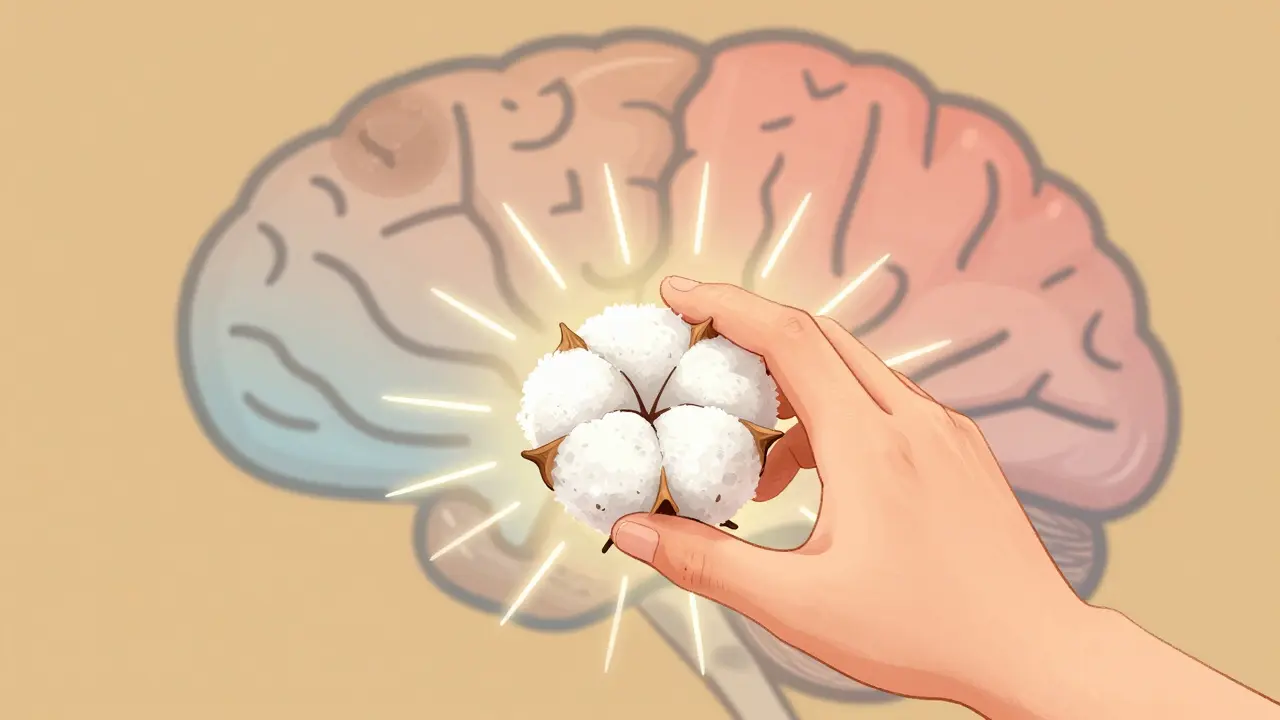
Complex Regional Pain Syndrome (CRPS) isn’t just a bad injury that won’t heal. It’s a malfunction in your nervous system-your brain and spinal cord keep sending danger signals even when there’s no real threat. This isn’t "all in your head." It’s a real, measurable change in how your brain processes pain, touch, and movement. And the good news? You can retrain it. Two of the most powerful, science-backed tools for doing this are desensitization and graded motor imagery. These aren’t quick fixes. They’re slow, deliberate rewiring processes that have helped thousands of people get back their lives.
What Exactly Is CRPS?
CRPS usually starts after an injury-like a sprain, fracture, or surgery. At first, the pain makes sense. But then, something goes wrong. The pain spreads. The skin becomes painfully sensitive to light touch. Even a breeze or a shirt sleeve can feel like fire. The limb might swell, change color, or feel icy cold or burning hot. This isn’t just nerve damage. It’s your nervous system stuck in overdrive. Studies show that in CRPS, the area of your brain that maps your hand or foot becomes "smudged." Neighboring brain regions invade the space meant for the injured limb, confusing your brain about where pain is coming from. That’s why even harmless contact can trigger a full-blown pain response.
It’s not rare. About 26 out of every 100,000 people in the U.S. develop CRPS each year. Most cases happen after trauma or surgery. The key window for effective treatment? The first year. After that, the brain’s changes become harder to reverse. That’s why starting the right rehab early makes all the difference.
Desensitization: Teaching Your Skin It’s Safe Again
Desensitization is all about retraining your skin and nerves to stop screaming "danger!" when they feel something light. It’s not about toughening up. It’s about convincing your brain that touch isn’t a threat.
The process starts incredibly gently. You begin with something soft-like a cotton ball or a piece of silk-touching the affected area for just 5 to 10 minutes at a time, 3 to 5 times a day. The pressure? Less than what you’d use to hold a feather. You don’t push through pain. If your pain score (on a scale of 0-10) goes above 3 during or after, you stop and try again tomorrow with less pressure or a lighter material.
Over weeks, you slowly move up: from cotton to silk, then to satin, then to a soft towel, then to denim, and eventually to normal clothing. Each step takes time. Some people take 4 weeks. Others take 12. Progress is measured by your pain level, not by how fast you can move to the next texture. A 2021 study of 127 patients found those who followed this method improved 42% more on functional hand scores than those who didn’t.
Why does this work? Brain scans show that after 8 weeks of consistent desensitization, the overactive areas in your brain’s sensory cortex calm down by 30-40%. Your spinal cord stops overreacting. Your nervous system learns that touch is normal again.
Graded Motor Imagery: Rewiring Your Brain Without Moving
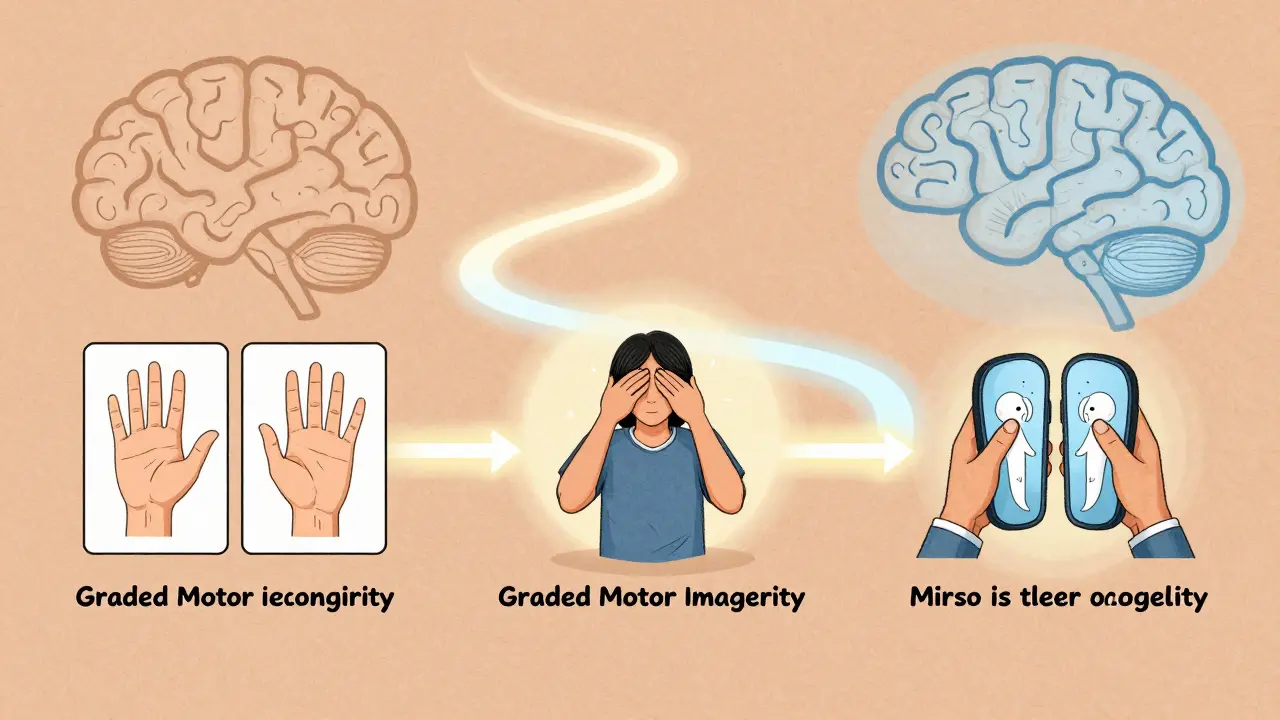
Graded Motor Imagery (GMI) is a three-step brain-training program designed to fix the "cortical smudging" that happens in CRPS. It’s called "graded" because you start with the easiest task and slowly build up-no jumping ahead. It’s called "motor imagery" because you use your imagination to activate movement areas in your brain… without moving your limb.
Stage 1: Left/Right Discrimination
This sounds simple: look at pictures of hands or feet and say whether they’re left or right. But in CRPS, your brain struggles. You might hesitate. You might guess. That’s okay. You start with 50 images a day, using flashcards or an app like Recognise Online. Your goal? 90% accuracy, with each answer taking no more than 1.5 seconds. If you’re slow or wrong, you don’t push harder-you go back and practice more.
Stage 2: Explicit Motor Imagery
Now, you imagine moving your affected limb-without moving it. Picture yourself picking up a cup. Rotating your wrist. Flexing your fingers. Do this for 5-10 minutes a day, eyes closed. Focus on the sensation of movement, not the pain. This activates the same brain areas as actual movement, but without triggering the pain response. Over time, you increase to 20-30 minutes daily.
Stage 3: Mirror Therapy
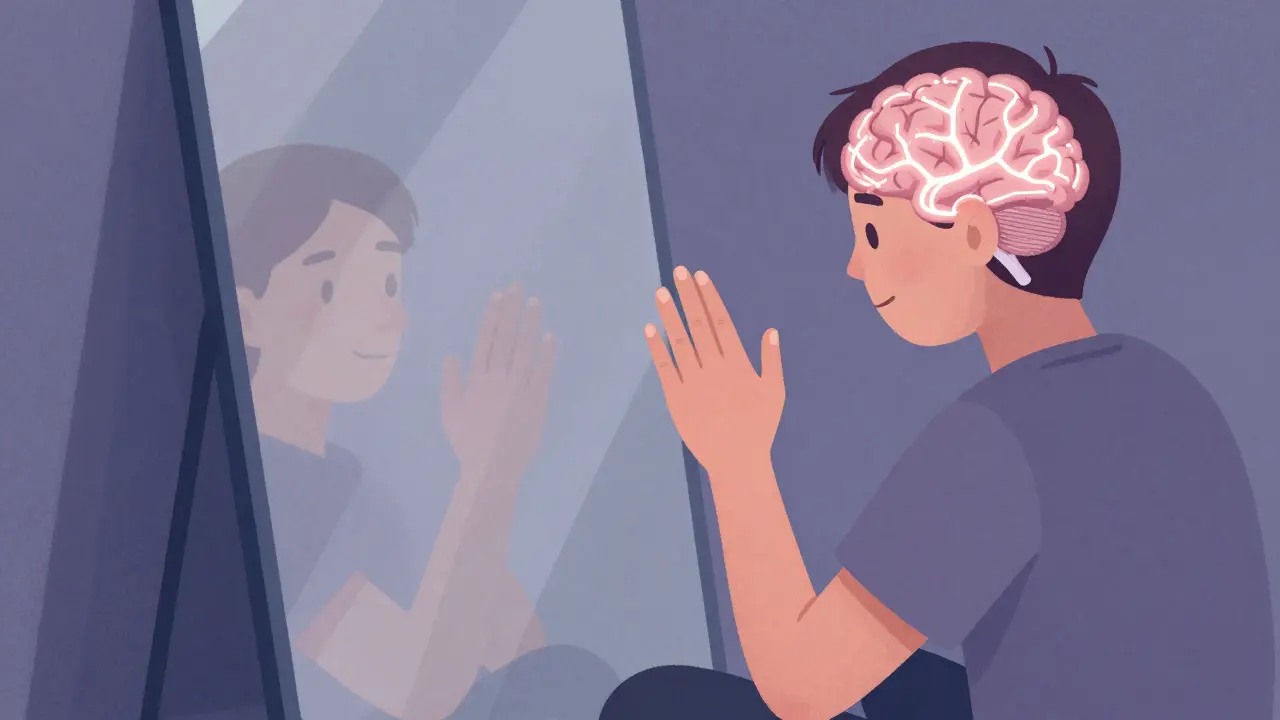
This is the most visual part. You sit with a mirror standing vertically between your arms (or legs). You place your unaffected limb in front of the mirror and your affected limb behind it, hidden. Then you move the healthy limb slowly while watching its reflection. Your brain sees the reflection and thinks it’s your painful limb moving smoothly and pain-free. This tricks your brain into believing the affected limb is moving normally. Sessions start at 5 minutes and build to 20-30 minutes daily over 6-12 weeks.
Research from Dr. G. Lorimer Moseley’s team showed that 70% of CRPS patients had at least 50% pain reduction after 4 weeks of GMI. Brain scans confirmed: the "smudged" area in their cortex returned to normal size. Other studies show GMI reduces pain scores by 2.8 points more than traditional therapy on a 10-point scale.
Why GMI Works Better Than Just Stretching
Traditional physical therapy for CRPS often focuses on stretching and moving the limb. But if your brain is screaming "danger!" every time you move, stretching alone won’t work. In fact, it can make things worse.
Studies comparing GMI to conventional therapy found GMI produced 2.8-point greater pain reduction. Mirror therapy alone improved upper limb function 40% more than standard rehab. Meanwhile, stretching alone typically only reduces pain by 1.5 points over 12 weeks.
The difference? GMI targets the root cause: the brain’s faulty map. Stretching just tries to fix the symptom. That’s why combining GMI with desensitization and cognitive behavioral therapy gives the best results-up to 5.2-point pain reduction over 24 weeks.
What Can Go Wrong-and How to Avoid It
These therapies are powerful, but they’re not foolproof. If done wrong, they can make pain worse.
- Advancing too fast: Jumping from cotton to sandpaper in a week? That’s a recipe for flare-ups. 35% of treatment failures happen because patients or therapists rush.
- Lack of education: If you don’t understand why you’re doing this, you’ll quit. 28% of people stop because they think it’s "not working." It’s not supposed to feel good right away.
- No psychological support: CRPS is exhausting. Anxiety and fear of movement can sabotage progress. 22% of failures happen when mental health isn’t addressed.
Experts say GMI should only be guided by therapists with at least 40 hours of specialized CRPS training. Look for credentials like Certified Hand Therapist (CHT) or Certified Pain Practitioner (CPP). The NOI Group’s training program is widely recognized as the gold standard.
Real Stories: Hope in the Middle of the Pain
A Reddit user named PainWarrior2020 wrote: "After 3 months of GMI, my hand temperature went from 82°F to 96°F. I could wear socks again-something I hadn’t done in 18 months." A YouTube creator, CRPS Warrior, shared: "The first two weeks were brutal. My pain spiked 30%. But by week six, I picked up a coffee cup without my brain screaming." In a 2023 survey of 1,200 patients, 68% reported meaningful pain reduction with GMI. 42% cut their pain in half.
But 32% had flare-ups at first. 18% quit because it felt too hard. That’s normal. This isn’t a cure. It’s a rebuild. And rebuilds take time.
Getting Started: What You Need to Know
If you’re considering this, here’s what matters:
- Start early. Success rates drop from 83% if you start within 3 months to 42% if you wait over a year.
- Use a certified therapist. Don’t try this alone. Find someone trained in CRPS rehab. Ask if they’ve completed the NOI Group’s GMI course.
- Be consistent. Daily practice-even 10 minutes-is better than one long session a week.
- Track your pain. Use a pain scale (0-10) after each session. If it stays below 3, you can progress. If it’s higher, slow down.
- Use tools. Apps like Recognise Online (for left/right discrimination) or FDA-cleared digital platforms like Miro Therapeutics can help guide your progress and improve adherence.
Access is still a problem. In rural areas, only 42% of clinics have therapists trained in these techniques. But telehealth is closing the gap-67% of remote patients report success with virtual coaching.
Final Thoughts
CRPS doesn’t have to be a life sentence. Desensitization and graded motor imagery aren’t experimental. They’re the most effective non-drug treatments we have, backed by brain scans, clinical trials, and real patient outcomes. They don’t promise instant relief. But they do promise change-if you stick with them. Your brain learned to hurt. It can learn to stop. And with the right approach, you can get your life back.
Desensitization sounds deceptively simple, but the science behind it is profound. I’ve seen patients who couldn’t tolerate a bedsheet regain the ability to wear socks after 10 weeks of consistent, patient retraining. It’s not about brute force-it’s about patience and precision. The brain doesn’t respond to pressure; it responds to consistency.
What’s fascinating is how the somatosensory cortex literally remaps itself. Functional MRI studies show the "smudged" area shrinking back to its original size. That’s not placebo. That’s neuroplasticity in action.
This is one of the most clinically sound approaches to CRPS I’ve encountered in years. The emphasis on gradual progression and avoiding pain escalation is critical. Too many practitioners push patients too hard, inadvertently reinforcing fear-avoidance behaviors. The data on GMI and desensitization is overwhelming, and yet, access remains limited. We need more certified therapists, especially in underserved regions.
Telehealth has been a game-changer-67% success rates remotely prove that expertise can be delivered beyond clinic walls.
I’ve been living with CRPS for five years and this is the first time I’ve read something that didn’t make me feel like a broken machine.
Just started desensitization last week with a silk scarf-tiny step, huge mental shift. My pain didn’t disappear, but it stopped screaming. That’s enough for now.
Let me be perfectly clear: this is nothing short of a medical revolution. The fact that we can now observe, in real time, the rewiring of the human brain through non-invasive, behavioral interventions-this is the future of pain medicine. No drugs. No surgery. Just the power of focused, deliberate mental engagement.
And yet, insurance companies still classify this as "experimental"? Are you kidding me? We have brain scans proving efficacy. We have longitudinal studies showing 70% pain reduction. We have patients who can finally hug their children without crying.
This is not just therapy. It’s liberation. And those who dismiss it are either ignorant or invested in the status quo of pharmaceutical dependency.
In India, CRPS is still largely misunderstood. Most doctors think it’s just "nerve damage" and prescribe painkillers. No one talks about brain mapping or mirror therapy. I’ve shared this article with three physiotherapists in Chennai-two didn’t know what GMI was.
We need more local awareness. Maybe we need to translate this into regional languages. This isn’t just science-it’s hope for people who’ve been told to "just live with it."
There’s a quiet elegance in how these methods work. They don’t fight the pain-they outsmart it. Desensitization doesn’t numb the skin; it reteaches the brain. GMI doesn’t force movement; it tricks the cortex into remembering safety.
I’ve worked with CRPS patients for over a decade. The ones who stuck with GMI didn’t just reduce pain-they regained identity. They stopped being "the one with the bad arm" and became themselves again. That’s the real win.
As a clinician in Cape Town, I’ve integrated GMI into our rehab protocols with remarkable outcomes. The neurophysiological mechanisms-cortical reorganization, thalamocortical dysrhythmia modulation-are well-documented. But what’s underreported is the psychosocial component: the reduction in catastrophizing scores post-GMI is as significant as the pain reduction itself.
Pair this with CBT and you’re not just treating symptoms-you’re altering the pain narrative at a cognitive level.
Who funds these studies? Who profits from teaching people to use silk and mirrors instead of opioids? The pharmaceutical industry doesn’t want you to know this works. They’ve spent billions on nerve blocks and ketamine infusions-none of which fix the root cause.
And don’t get me started on the FDA. They approve drugs in months but take years to validate behavioral therapies. Coincidence? Or is this about control? The brain doesn’t need a patent. It needs patience. And someone’s making money off the suffering.
Wake up. This isn’t science. It’s suppression.
If the brain’s sensory map is smudged, then desensitization and GMI are like erasers and fine-tipped pens. But here’s the deeper question: if the brain can rewire itself to create chronic pain, what else is it capable of rewiring? Trauma? Anxiety? Depression?
These techniques aren’t just for CRPS. They’re a blueprint for how we might one day treat the entire spectrum of maladaptive neural patterns. The implications are staggering. We’re not just treating pain-we’re learning how consciousness constructs suffering.
I’ve been doing GMI for six months. Week 1: I cried. Week 3: I felt numb. Week 12: I picked up my cat without flinching.
It’s not about being strong. It’s about being gentle. With yourself.
Thank you for writing this.