Clinical Outcomes with Biosimilars: Do They Work as Well as the Original Biologics?
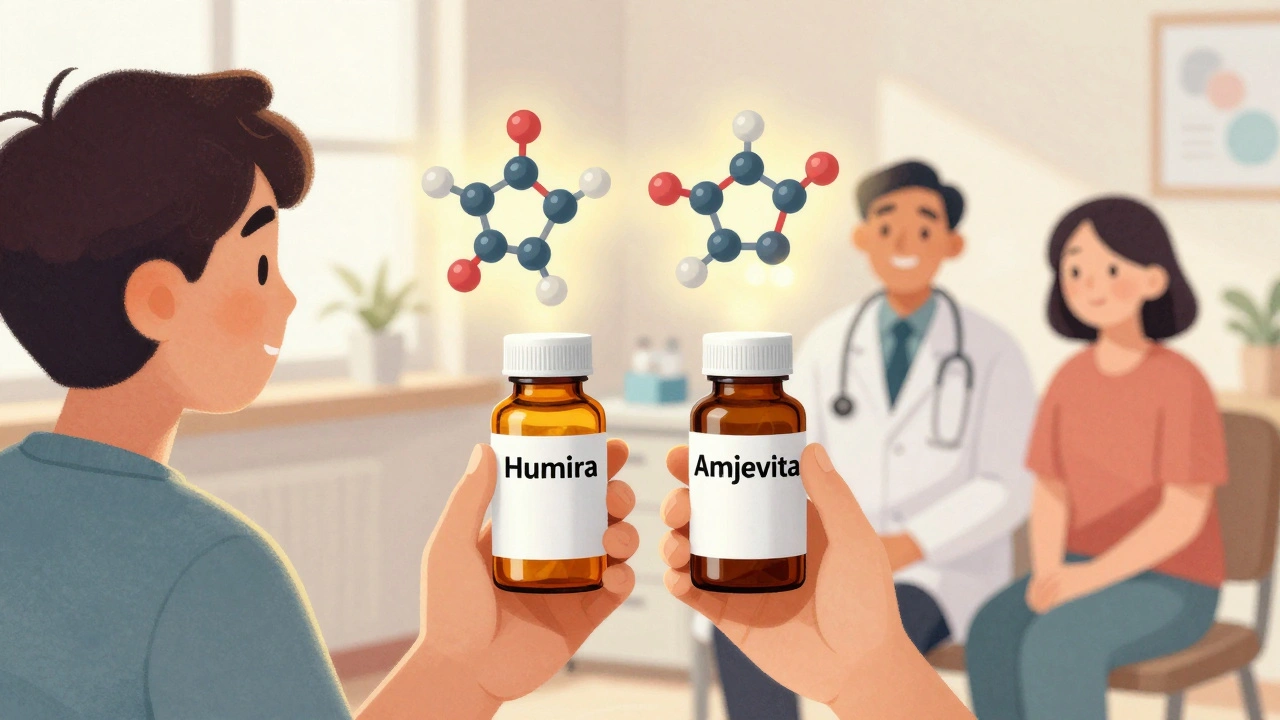
When you’re managing a chronic condition like rheumatoid arthritis, Crohn’s disease, or cancer, the right medication can mean the difference between daily pain and living well. But biologic drugs-those complex, protein-based treatments-are expensive. That’s where biosimilars come in. They’re not generics. They’re not copies. They’re highly similar versions of original biologic drugs, built with the same science, tested just as hard, and approved by the same agencies. And the question everyone asks: do they work as well? The answer isn’t just yes-it’s backed by real data from hundreds of thousands of patients across the globe.
What Exactly Is a Biosimilar?
Biologic drugs are made from living cells-yeast, bacteria, or animal cells-engineered to target specific parts of the immune system or cancer cells. Think of them as intricate machines built with proteins. Because they’re so complex, you can’t just reverse-engineer them like a pill. That’s why a generic version of Humira doesn’t exist. Instead, we have biosimilars: products designed to match the reference biologic in structure, function, and effect.
The FDA and EMA require more than 200 analytical tests to prove similarity. These aren’t just lab checks-they look at how the molecule folds, how it binds to targets, how it behaves in the body. Then come pharmacokinetic studies: do the biosimilar and the original get absorbed the same way? Do they last the same amount of time? The standard? A 90% confidence interval between 80% and 125% for key measures like how fast the drug enters the bloodstream. If it passes, they move to clinical trials.
And here’s the kicker: many of these trials are double-blinded, meaning neither the patient nor the doctor knows which drug is being given. That’s more rigorous than the original trials for many biologics, which often weren’t blinded at all.
Do Biosimilars Deliver the Same Results?
Let’s look at the numbers. A 2022 meta-analysis reviewed 1,711 patients across six cancers and found no meaningful difference in response rates. For example, the bevacizumab biosimilar matched the original in non-small cell lung cancer with a 1.02 ratio-meaning the biosimilar performed just as well, if not slightly better. In rheumatoid arthritis, a study of 3,450 patients showed 82.3% stayed on the adalimumab biosimilar after 12 months. The original? 81.7%. The difference? Statistically meaningless.
In inflammatory bowel disease, a Canadian study followed 1,200 patients for two years. Those switched from reference infliximab to its biosimilar (CT-P13) had identical rates of disease flare-ups, hospitalizations, and treatment discontinuation. The same pattern showed up in the NOR-SWITCH trial: 480 patients with various cancers switched from rituximab to its biosimilar. The response rate? 72.9% vs. 69.3%. No statistically significant difference.
And it’s not just clinical trials. Real-world data from the UK’s NHS tracked over 12,000 patients switched to a rituximab biosimilar for non-Hodgkin’s lymphoma. No spike in side effects. No drop in effectiveness. In the U.S., PatientsLikeMe surveyed 1,245 people using the adalimumab biosimilar Amjevita. 87% said their symptom control was the same as with Humira. The original? 89%. The gap? Not even statistically noticeable.
What About Safety and Side Effects?
One big worry is immunogenicity-whether the body might react to the biosimilar differently, creating antibodies that make the drug less effective or cause new side effects. That’s a valid concern, because even tiny changes in how a protein is folded can trigger an immune response.
But here’s what the data says: after more than 15 years of global use and over 500,000 patient-years of real-world experience, there’s no evidence that biosimilars are more immunogenic than their reference products. The EMA and FDA both require long-term safety monitoring, and so far, the signal is clear: no increased risk of serious infections, infusion reactions, or autoimmune complications.
Some patients report flares after switching. A Reddit user mentioned psoriasis worsening after switching to a biosimilar infliximab. But their dermatologist flagged it as likely coincidence-not a drug issue. That’s important. Flares happen. Stress, diet, infections, even weather can trigger them. The key is whether the flare rate is higher than with the original drug. And across dozens of studies, it isn’t.
A 2023 survey of 1,500 rheumatologists found 78% reported identical outcomes with biosimilars. Only 4% thought the biosimilar caused a drop in effectiveness. The rest? They saw no difference.
Why the Doubt? Perception vs. Evidence
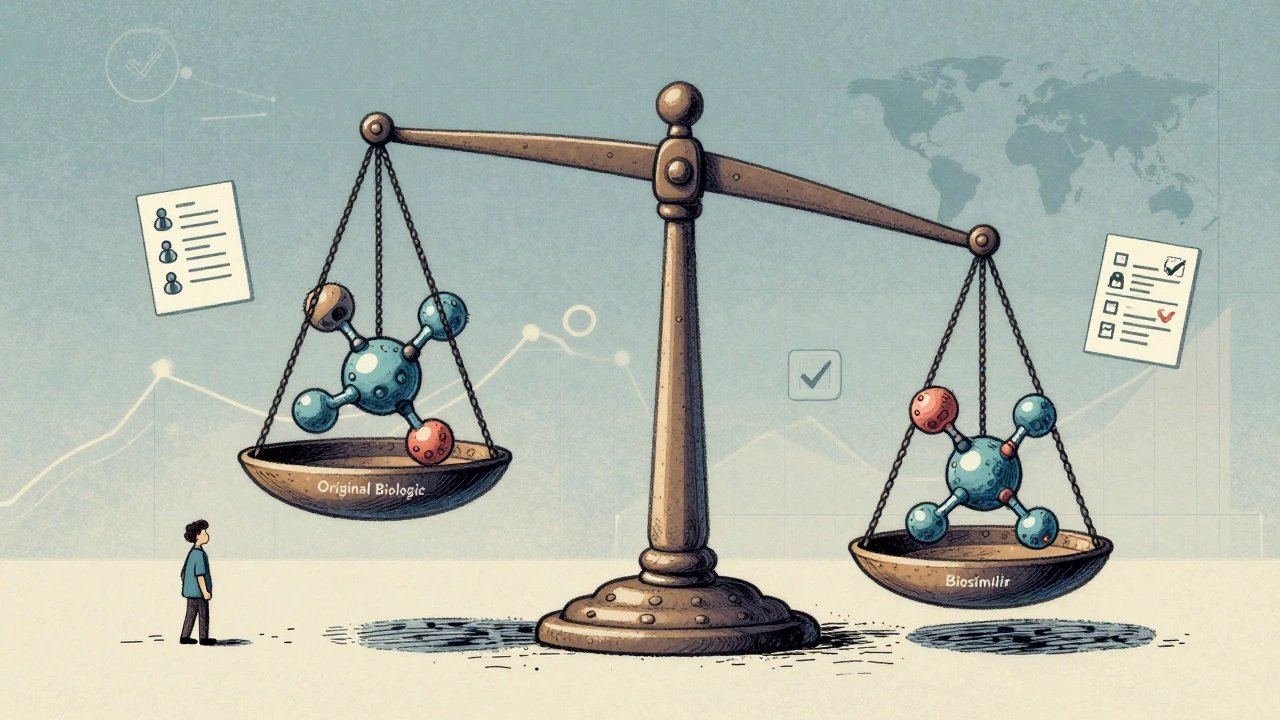
Despite all this data, 38% of U.S. physicians still express concern about biosimilar efficacy. Why? It’s not science-it’s perception. Many doctors trained on the original drugs. They know the brand names. They’ve seen patients respond well. Switching feels risky, even when the evidence says otherwise.
Patients, too, are hesitant. They’ve heard the word “generic” and assume biosimilars are the same-cheap knockoffs. But biosimilars aren’t generics. They’re not simpler. They’re not easier to make. They cost more to develop than traditional generics-sometimes hundreds of millions of dollars.
Education helps. Kaiser Permanente cut patient refusal rates from 22% to 5% by giving patients clear, simple materials explaining how biosimilars work. Providers who take 30 to 60 minutes to learn the science feel more confident prescribing them.
Cost Matters-A Lot
Here’s the real win: price. Biosimilars are typically 15% to 30% cheaper in the U.S. and 25% to 85% cheaper in Europe. That’s not just savings for insurers-it’s access for patients. In Canada, where biosimilar adoption is high, patients with autoimmune diseases report fewer delays in starting treatment because the drug is covered.
The Congressional Budget Office estimates biosimilars will save the U.S. healthcare system $169 billion over the next decade. Medicare Part B alone saved $1.3 billion in one year thanks to biosimilar competition. That money can go toward more patients, better care, or lower premiums.
How Are Biosimilars Being Rolled Out?
Successful adoption isn’t just about approval-it’s about implementation. Health systems that succeed use a few key tools:
- Provider education (mandatory CME training)
- Electronic health record alerts that flag when a biosimilar is available
- Standardized patient counseling materials
- Pharmacy formulary changes that make biosimilars the default option
One study found 98% of U.S. health systems hit over 75% biosimilar use within a year of launching a structured program. The trick? Making the switch easy and supported-not forced.
In Europe, biosimilar use for filgrastim (a drug used after chemotherapy) is over 80%. In the U.S., it’s around 52%. Why the gap? Regulatory rules, payer policies, and lingering physician hesitation.
What’s Next?
The future is getting even better. The FDA is moving toward eliminating the need for full clinical trials when analytical and pharmacokinetic data are strong enough. That means faster approvals, more options, and lower prices. In 2023, a study showed switching between two different adalimumab biosimilars had no impact on drug retention-meaning patients can switch between biosimilars safely, too.
Experts like Dr. G. Caleb Alexander from Johns Hopkins say the evidence is clear: “No clinically meaningful differences.” The International Society for Pharmacoeconomics and Outcomes Research, with 47 experts from 15 countries, confirmed it: biosimilars work just as well.
There’s one caveat: long-term immunogenicity data beyond five years is still limited for some products. That’s why ongoing safety monitoring matters. But so far, no red flags.
Final Answer: Do They Work as Well?
Yes. They work as well. Not “kind of.” Not “probably.” Not “in theory.” They work as well-based on clinical trials, real-world data, patient reports, and decades of global use. The science is settled. The savings are real. The only thing holding them back is outdated fear.
If you’re on a biologic right now, and your doctor suggests switching to a biosimilar, ask for the data. Look at the studies. Talk to your pharmacist. You’re not getting a lesser drug. You’re getting the same treatment, at a lower cost-with the same safety profile and just as good results.
And if you’re a provider? The evidence is there. The guidelines are clear. The patients are ready. It’s time to trust the science-not the brand name.
Biosimilars aren't some corporate scam-they're science that finally caught up with affordability. I've been on adalimumab for eight years, switched to Amjevita last year, and my joint pain hasn't flared once. The only thing that changed? My copay dropped from $450 to $85. If your doctor's scared, tell them to read the FDA's 200-page analytical dossier. It's not magic-it's math.
Wait, so you're telling me the same company that made Humira also made Amjevita? That's not a biosimilar-that's a rebrand. They're just milking the patent cliff. I've seen this movie before with generics. They cut corners, then blame the patient when things go wrong.
Let me be crystal clear: anyone who still doubts biosimilars is either paid by Big Pharma or hasn't read a single peer-reviewed paper since 2015. The meta-analyses are exhaustive. The real-world data from the NHS, Canada, and Germany is overwhelming. We're talking about 500,000 patient-years of safety data. The FDA doesn't approve drugs based on vibes. They require 200+ analytical tests, pharmacokinetic equivalence, and double-blind clinical trials. This isn't some shady off-brand soda-it's a molecularly identical twin with a cheaper price tag. If you're still hesitant, you're not being cautious-you're being willfully ignorant. And yes, I've read every study cited in that post. Twice.
Hey, I just want to say-this is one of those rare moments where science and compassion actually align. People with chronic illness deserve access, not a financial prison sentence. I had a cousin with Crohn’s who skipped doses because the brand-name drug cost more than her rent. She switched to the biosimilar, got her life back, and now volunteers at a patient advocacy group. It’s not just about dollars-it’s about dignity. The data says it works. The stories say it saves lives. Let’s stop letting fear decide who gets to feel better.
LOL biosimilars 😂 they're just placebo with a fancy label. Big Pharma knows people are dumb so they make a 'similar' version and call it science. I heard the FDA gets bribed by pharma giants. My uncle's friend's neighbor's cousin got a rash after switching-totally not coincidence. Also, why do they spell it 'biosimilar' like it's a brand? It's a scam. 🤡
💯 100% on board. Biosimilars = game changer. PK/PD profiles? Check. Immunogenicity data? Check. Real-world retention rates? Check. We're talking about non-inferiority trials with pre-specified margins-this isn't anecdotal fluff. And the cost savings? That's not just numbers-it's health equity. Pharmacies are now defaulting to biosimilars, and patients are thriving. The evidence isn't just strong-it's unassailable. Time to move past brand loyalty and embrace precision medicine that doesn't bankrupt you. 💪🩺
I switched to a biosimilar for my RA last year and was terrified. I cried before the first injection. But my rheumatologist sat with me for an hour, showed me the data, and even called my old doctor to compare notes. I didn’t just feel safer-I felt heard. And now? I’m hiking again. No flares. No new rashes. Just… me. Thank you to everyone who fought for this. It’s not just about drugs. It’s about being trusted to make a choice.
Okay, so let me get this straight-some lab in a basement in India makes a 'copy' of Humira, and now it's 'just as good'? Yeah right. And I'm supposed to believe the FDA didn't cut corners? They approved 37 biosimilars last year alone! That's not science-that's corporate greed wrapped in a lab coat. My insurance forced me to switch and now I'm getting migraines. Coincidence? I think not.
Let’s be honest: the only reason biosimilars exist is because the original manufacturers are lazy. They didn’t innovate-they just waited for patents to expire. And now we’re told to trust a molecule that’s ‘similar’? Similar doesn’t mean equivalent. If your car’s engine is ‘similar’ to the original, would you drive it on the highway? No. So why are you injecting it into your bloodstream? This is medical arrogance disguised as progress.
I was so nervous about switching. I thought I’d be the one who got worse. But my nurse practitioner sent me a video from a patient who’d been on the biosimilar for five years. She was gardening, traveling, playing with her grandkids. I watched it three times. That’s when I knew: it wasn’t just safe-it was hopeful. Thank you for making this accessible. I’m not just managing my disease anymore. I’m living.
The data presented here is methodologically robust and aligns with the consensus of international regulatory bodies. The meta-analyses cited, particularly the 2022 cancer cohort and NOR-SWITCH trial, demonstrate non-inferiority with high statistical power. Furthermore, the real-world evidence from the NHS and PatientsLikeMe corroborates clinical trial outcomes. The persistence of skepticism appears to stem from cognitive biases-anchoring to brand names and availability heuristic-rather than empirical evidence. A shift in prescribing behavior requires not only education but also systemic incentives. The $169 billion projected savings are not incidental-they are transformative for public health infrastructure.
Oh please. You think Americans are the only ones who get this? We’ve had biosimilars in Europe since 2006. You think we didn’t have the same fears? We had protests. We had lawsuits. We had doctors refusing to prescribe. And guess what? The patients didn’t die. They got better. And now Europe’s healthcare system is *actually* sustainable. Meanwhile, you guys are still arguing over whether a molecule is ‘close enough.’ It’s not a debate-it’s a moral failure. Stop making this about your comfort. Start making it about your neighbors.
Interesting how the FDA and EMA 'approve' these. But what about the real regulators? The ones in the shadows? The ones who control the patents, the clinical trial data, the CROs? Biosimilars are a controlled release mechanism to maintain market share under the guise of affordability. The '15% cheaper' claim? That's the sticker price. The real cost? You're being conditioned to accept 'good enough' so they can phase out innovation. This is how monopolies evolve. You're being played.
So I switched to the biosimilar and now my skin is breaking out, my joints are screaming, and my husband says I’m ‘not the same person.’ I’m not saying it’s the drug-I’m saying I’m not okay. And nobody listens. I just wanted to feel normal again. Now I feel like a guinea pig. And everyone’s like ‘trust the science’-but what about my trauma? What about my fear? Who’s holding space for that? I didn’t sign up for this experiment.