Clarithromycin Drug Interactions: Dangerous Combinations to Avoid
Clarithromycin Drug Interaction Checker
Check Your Medications
Clarithromycin inhibits liver enzyme CYP3A4, causing dangerous drug buildup. Check if any of your medications are in high-risk categories.
Important Safety Information
The FDA reports 22 fatal cases from clarithromycin-colchicine interactions alone. Do not take clarithromycin with any listed medications.
If you've already taken clarithromycin with any high-risk medication, call your doctor or go to the ER immediately. Toxicity can occur within 24 hours.
For most infections, azithromycin is safer with fewer interactions. Ask your doctor about alternatives.
Clarithromycin is an antibiotic used to treat infections like pneumonia, bronchitis, and skin infections. But what many people don’t realize is that it can be deadly when taken with other common medications. This isn’t a rare side effect-it’s a well-documented, preventable risk that has led to deaths. If you’re taking clarithromycin, or your doctor is considering prescribing it, you need to know which drugs you must avoid.
Why Clarithromycin Is So Dangerous With Other Drugs
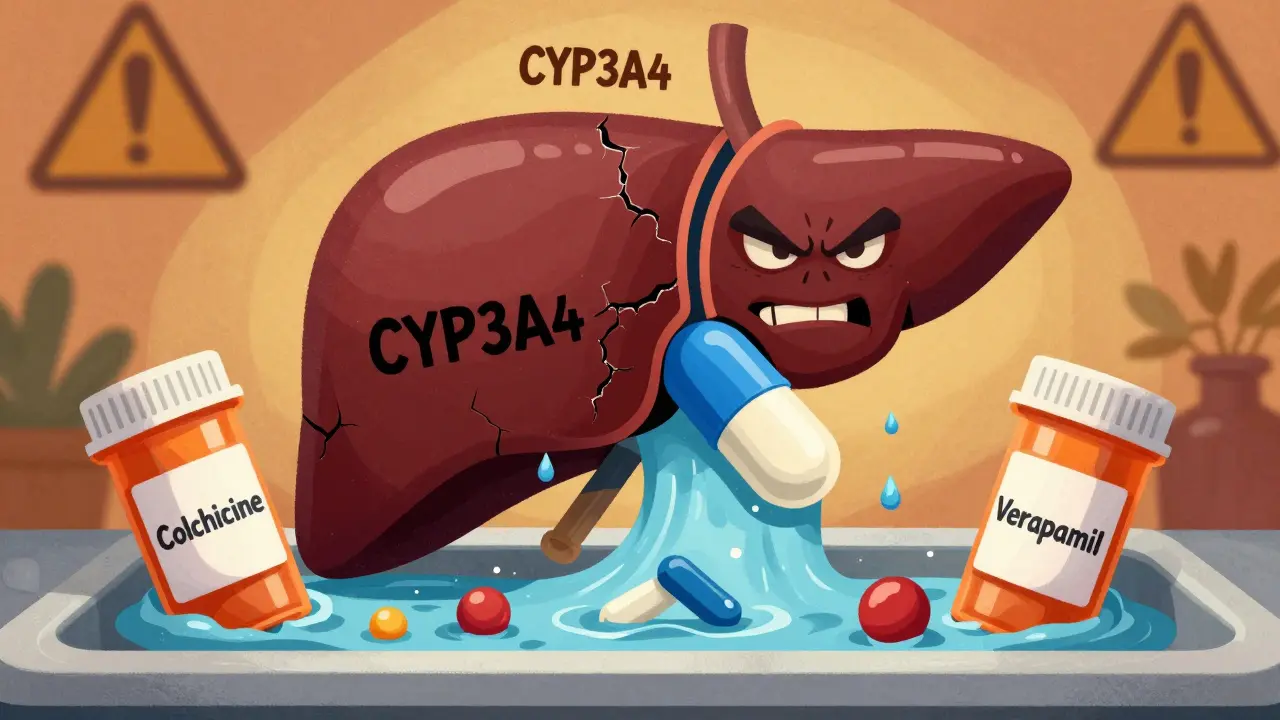
Clarithromycin doesn’t just kill bacteria. It also shuts down a key enzyme in your liver called CYP3A4. This enzyme is responsible for breaking down about half of all prescription drugs. When clarithromycin blocks it, those drugs build up in your bloodstream to toxic levels. It’s like turning off the drain in a sink while the tap is still running-eventually, it overflows. This isn’t a mild effect. Studies show clarithromycin can increase the concentration of some drugs by more than 200%. For example, when taken with colchicine (a gout medication), clarithromycin can cause a 282% spike in colchicine levels. That’s enough to trigger life-threatening toxicity. Compare that to azithromycin, another macrolide antibiotic. Azithromycin barely touches CYP3A4. That’s why doctors are switching to it. In 2023, azithromycin made up 63% of all macrolide prescriptions in the U.S. Clarithromycin? Just 22%. The reason? Fewer interactions.Top 5 Dangerous Combinations to Avoid
These five combinations are the most deadly. If you’re taking any of these with clarithromycin, stop and call your doctor immediately.- Colchicine - Used for gout and familial Mediterranean fever. When combined with clarithromycin, it causes severe diarrhea, muscle damage, kidney failure, and death. The FDA has documented 58 serious cases, 22 of them fatal, as of 2020. One case involved a 76-year-old woman who died 11 days after starting clarithromycin while on her usual colchicine dose.
- Simvastatin and Lovastatin - These statins are used to lower cholesterol. Clarithromycin can raise their levels by up to 500%, leading to rhabdomyolysis-a condition where muscle tissue breaks down and floods the kidneys with toxic proteins. One patient needed ICU care and dialysis after just 72 hours of taking both.
- Calcium Channel Blockers (Verapamil, Diltiazem, Amlodipine) - Used for high blood pressure and angina. When combined with clarithromycin, they can cause dangerously low blood pressure, slow heart rate, and heart failure.
- QT-Prolonging Drugs (Rivaroxaban, Amiodarone, Fluconazole) - These include blood thinners and heart rhythm drugs. Clarithromycin itself can prolong the QT interval. Together, they raise the risk of torsades de pointes, a chaotic heart rhythm that can kill within minutes.
- Digoxin - Used for heart failure and atrial fibrillation. Clarithromycin can raise digoxin levels by 25-50%, leading to nausea, confusion, visual disturbances, and cardiac arrest.
The Mayo Clinic lists 38 drugs that should never be taken with clarithromycin. The American Geriatrics Society says clarithromycin should be avoided in anyone over 65 who’s on even one of these drugs. Yet, studies show 42% of elderly patients on clarithromycin are also taking at least one dangerous medication.
Why Elderly Patients Are at Highest Risk
Older adults are more likely to take multiple medications. They’re also more likely to have reduced kidney or liver function, which makes it harder for their bodies to clear these drugs. A 2023 study found that 42% of patients over 65 taking clarithromycin were also on a drug with a narrow therapeutic index-meaning even a small overdose can be fatal. The Beers Criteria (2023 update) specifically warns against using clarithromycin in this group. It’s not just about the interaction-it’s about how fragile the system becomes with age. A 72-year-old man on warfarin and a blood pressure pill might be fine with azithromycin. With clarithromycin? He could end up in the ICU.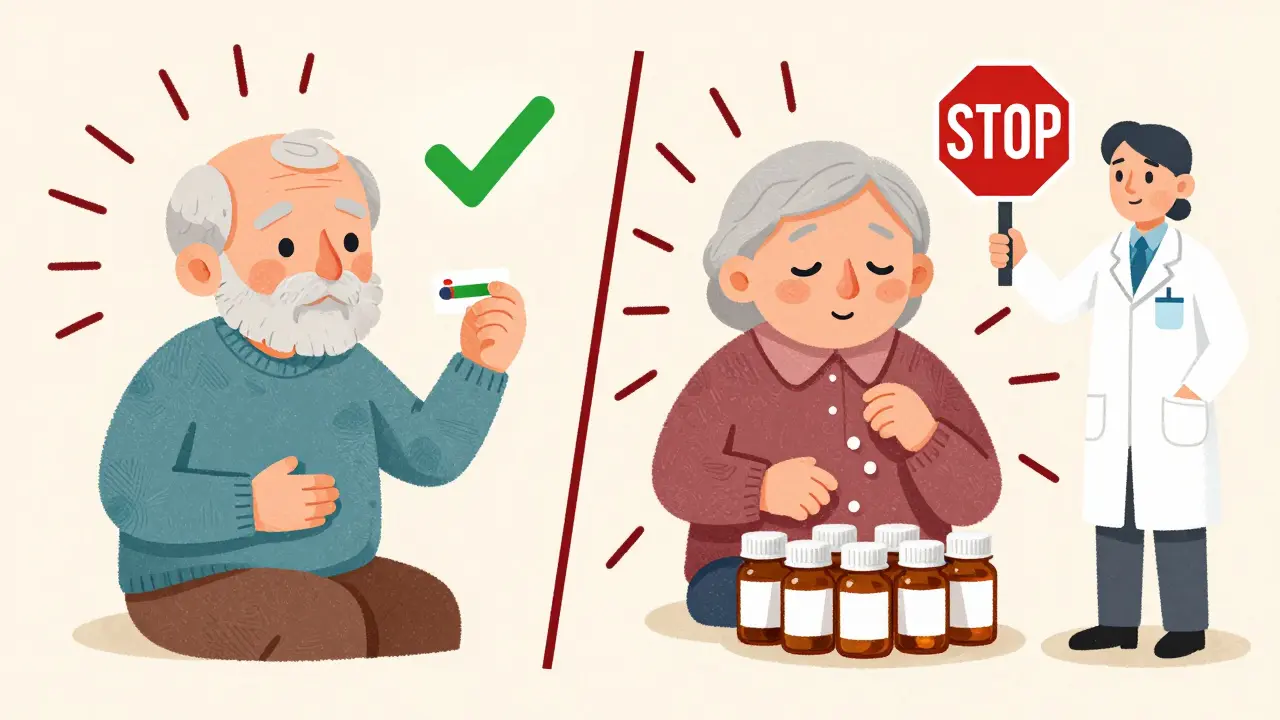
What Happens When These Interactions Go Unnoticed
Many of these interactions fly under the radar because symptoms appear slowly. A patient might start feeling weak, nauseous, or confused days after beginning clarithromycin. Doctors often blame it on aging or the infection itself. But the signs are clear: muscle pain or weakness (rhabdomyolysis), diarrhea that won’t stop (colchicine toxicity), irregular heartbeat (QT prolongation), or sudden dizziness (low blood pressure). These aren’t side effects-they’re warning signs of organ failure. One pharmacist in Toronto recalls a near-miss case in 2022. A 72-year-old with atrial fibrillation was prescribed clarithromycin for a sinus infection. She was also taking rivaroxaban and colchicine. The pharmacist caught it during the refill check. The doctor switched to azithromycin. The patient stayed out of the hospital.What to Do If You’re Already Taking Clarithromycin
If you’re currently on clarithromycin, here’s what to do right now:- Check your medication list. Look for any of the drugs listed above-especially colchicine, simvastatin, or calcium channel blockers.
- If you’re taking one of them, call your doctor today. Don’t wait for your next appointment. This isn’t something to ignore.
- Ask if azithromycin is an option. For most infections, it works just as well and is far safer.
- If your doctor insists on clarithromycin, ask if the dose of your other medication can be lowered. For example, if you’re on simvastatin, switching to 10mg instead of 40mg might be enough to prevent toxicity.
- Watch for symptoms. Muscle pain, vomiting, irregular heartbeat, or confusion? Go to the ER. Don’t wait.
There’s no safe window. Toxicity can happen within 24 hours. The FDA’s 2023 boxed warning says it plainly: "Concomitant use has resulted in fatal and near fatal colchicine toxicity."
Why This Problem Is Getting Worse
Despite the risks, clarithromycin is still prescribed. Why? Because it works. It’s effective against stubborn infections like Mycobacterium avium complex, which affects people with HIV or weakened immune systems. For those cases, it’s still necessary. But for common infections-sinusitis, strep throat, bronchitis-it’s rarely the best choice. And yet, many doctors still reach for it out of habit. A 2022 AMA survey found that 68% of physicians still prescribe clarithromycin for upper respiratory infections, even though they know azithromycin is safer. The real problem? No one checks. Pharmacists do. Nurses do. But primary care doctors? They’re rushed. Prescriptions are filled without a second look. That’s why the Institute for Safe Medication Practices ranks the clarithromycin-colchicine combo as a "Category A" high-alert interaction-the same level as insulin and heparin.The Bottom Line
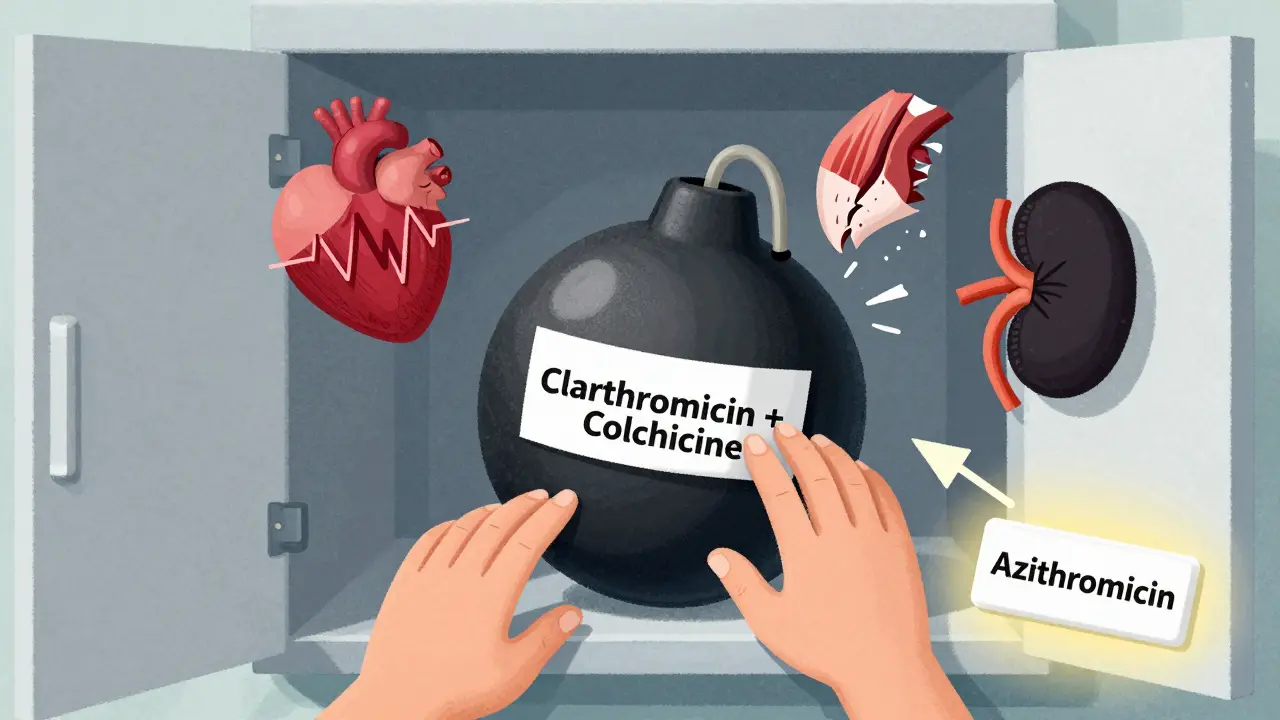
Clarithromycin isn’t inherently bad. But it’s a ticking time bomb when paired with common medications. You don’t need to avoid it forever. But you do need to know when it’s dangerous. Always tell your doctor and pharmacist about every medication you take-including supplements, OTC painkillers, and herbal remedies. Some herbal products, like St. John’s Wort, can also interfere with CYP3A4. If you’re over 65, or taking more than three medications, ask: "Is there a safer antibiotic?" If the answer is no, then make sure your other drugs are adjusted. And if you’re on colchicine? Never take clarithromycin. Period.The future of antibiotics isn’t about finding stronger drugs. It’s about choosing the safest ones. And right now, for most people, that’s not clarithromycin.
Can I take clarithromycin if I’m on a statin?
No-not if it’s simvastatin or lovastatin. These statins can reach toxic levels when mixed with clarithromycin, leading to muscle breakdown and kidney failure. Atorvastatin is less risky but still requires caution. The safest choice is to switch to azithromycin or temporarily stop the statin under medical supervision.
How long does the interaction last after stopping clarithromycin?
Clarithromycin’s effect on CYP3A4 can last up to 7 days after the last dose. Even if you stop the antibiotic, your body may still be unable to properly metabolize other drugs during this time. Wait at least a week before restarting medications like colchicine or statins, and only under your doctor’s guidance.
Is azithromycin always a better choice?
For most common infections-like sinusitis, strep throat, or bronchitis-yes. Azithromycin has minimal drug interactions and works just as well. The only exceptions are serious infections like Mycobacterium avium complex, where clarithromycin remains essential. In those cases, the risks must be carefully managed.
Can I take clarithromycin with ibuprofen or Tylenol?
Yes. Ibuprofen and acetaminophen (Tylenol) are generally safe with clarithromycin. They don’t rely on CYP3A4 for metabolism. But avoid long-term use of NSAIDs like ibuprofen if you’re also on blood thinners or have kidney issues, as that adds other risks.
What should I do if I accidentally took clarithromycin with colchicine?
Call your doctor or go to the ER immediately. Do not wait for symptoms. Early signs of colchicine toxicity include nausea, vomiting, diarrhea, muscle pain, and weakness. These can quickly lead to organ failure. Bring your medication list with you. The sooner you get help, the better your chances of avoiding serious harm.
As someone who’s worked in pharmacy across Nigeria and the US, I’ve seen too many elderly patients get caught in these drug interactions. It’s not just about clarithromycin-it’s about how we prescribe without checking the full picture. I once had a 74-year-old woman on warfarin and colchicine for gout, and her doctor prescribed clarithromycin for a sinus infection. She ended up in the ER with rhabdomyolysis. We switched her to azithromycin, adjusted her colchicine dose, and she’s been fine for two years now.
Pharmacists aren’t just gatekeepers-we’re the last line of defense. But we need better systems. EHRs should flag these combos automatically, not rely on a tired pharmacist catching it during a refill. And doctors? We need mandatory CYP3A4 interaction training in med school. This isn’t rare-it’s systemic.
I’ve trained 12 Nigerian nurses on this exact issue. They now check all prescriptions for macrolides before dispensing. It’s not hard. It’s just not taught. We can fix this. But we have to start treating drug interactions like the emergencies they are.
This is why I hate modern medicine 😒. They take a perfectly good antibiotic and turn it into a minefield. Just give me a Z-pack and stop overcomplicating everything. I don’t care about CYP3A4. I care about feeling better. 🤷♀️
I love how we’re suddenly shocked by drug interactions like it’s a new discovery. My grandma died in 2008 from a clarithromycin + simvastatin combo. The doctor didn’t even know they interacted. We’ve known this for decades. Why are we still having this conversation? 🤔 Also, thanks for the clear list-this should be printed on every prescription bottle.
yo so i was on clarithromycin last year for a chest infection and i was also takin ibuprofen for my back pain and i thought it was fine right? but like i got super dizzy and my legs felt like jelly for like 3 days and i thought i was just sick but now i think maybe it was the interaction?? like why dont they just put warning stickers on the bottle?? 🤯
Thank you for writing this with such clarity and urgency. As a clinical pharmacist in a large hospital system, I review medication regimens daily, and this interaction is one of the top three I flag. I’ve personally intervened in 14 cases this year alone where clarithromycin was prescribed alongside statins or colchicine.
One of the most frustrating parts? Patients often say, ‘My last doctor prescribed this fine.’ But medicine isn’t static. Guidelines evolve. Azithromycin is safer, cheaper, and just as effective for most infections. We need to stop thinking of clarithromycin as ‘the macrolide’ and start seeing it as a high-risk option.
I’ve created a one-page handout for patients-‘Clarithromycin: 5 Drugs to Avoid.’ I distribute it with every script. If every prescriber did this, we’d cut ER visits by 40%. Let’s make safety routine, not reactive.
America’s healthcare is a joke. People die because doctors don’t check. Just ban this drug. We don’t need it. AZITHROMYCIN IS BETTER. PERIOD.
You know, I think this whole thing is less about the drug and more about how we treat aging. We’re so quick to prescribe, so slow to question. That 76-year-old woman who died? She probably didn’t even know what colchicine was for. She just took it because her doctor said so.
What if we stopped treating older people as ‘medication collections’ and started treating them as whole people? What if we asked: ‘What’s the least risky way to help you feel better?’ Not just: ‘Which drug works best?’
I’m not saying stop using clarithromycin entirely. I’m saying we need to slow down. Listen more. Prescribe less. And always, always check the list.
i just took clarithromycin last week and i have a statin... i think im gonna be ok?? 🤞
Hey-I’m a pharmacist in Chicago. Just wanted to add something real quick: St. John’s Wort. Yeah, it’s herbal, yeah, it’s ‘natural,’ but it’s a CYP3A4 inducer. So if you’re on clarithromycin AND St. John’s Wort? You’re not just risking toxicity-you’re risking treatment failure. The drug gets broken down too fast.
I had a guy come in last month saying his sinus infection ‘didn’t clear up’ after clarithromycin. Turned out he was taking the herb for ‘mood.’ We switched him to azithromycin, stopped the herb, and he was fine.
Bottom line: Tell your pharmacist EVERYTHING. Even if you think it’s ‘just tea.’