CGM Use with Diabetes Medications: Adjusting Doses to Side Effect Alerts
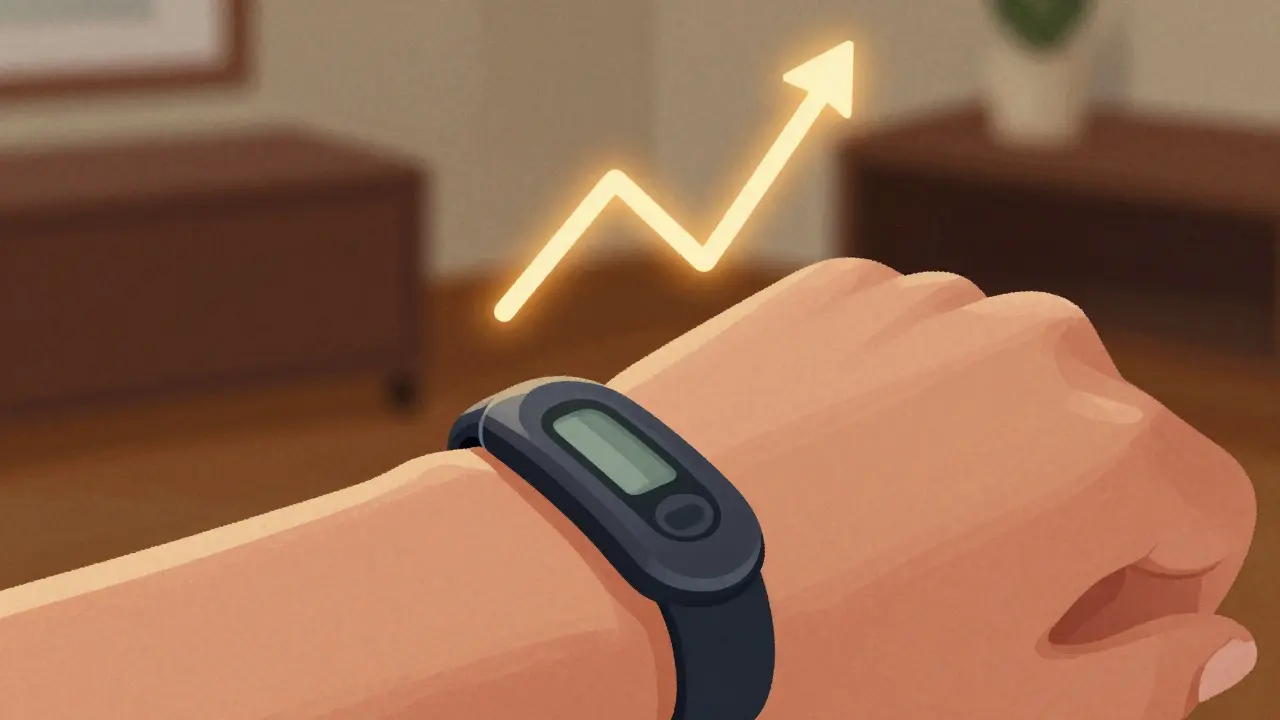
CGM Trend Dosing Assistant
Your Baseline Data
Recommended Adjustment
Based on Standard Correction Factor (1:50)
Additional Units Required
⚠️ Safety Check: Active Insulin?
You have selected a trend where you must reduce the dose. Ensure you do not stack insulin if you still have "Insulin On Board" from a dose taken less than 2 hours ago.
This tool calculates adjustments based on clinical averages for a Correction Factor of 1 Unit dropping BG by 50mg/dL. Always verify with your endocrinologist.
Have you ever felt like guessing when adjusting your medication? Many people managing diabetes treat their monitors like rear-view mirrors, looking only at where their blood sugar was ten minutes ago. That approach leaves you vulnerable to sudden crashes or spikes before you even see them coming. This gap between checking numbers and acting on trends is where the real danger lies.
The solution isn't just a better device; it's a better way to read the story the device tells you. When you pair continuous glucose monitoring with specific dosing protocols, you stop reacting to high or low sugar and start preventing them entirely. Recent guidance from major health organizations has made this possible without needing advanced math skills.
Understanding Continuous Glucose Monitoring
Continuous Glucose Monitoring (CGM) systems act as a constant window into your metabolism. Unlike traditional fingerstick tests that give you a single snapshot, a glucose sensor provides a live stream of data. The real power lies in the directional trend arrows displayed on the screen.
These arrows aren't random decorations. They indicate speed and direction. A flat arrow means stability. Up arrows show rising levels, while down arrows signal falling levels. Double arrows represent faster changes. In March 2026, we know that roughly 78% of insulin-dependent patients in North America rely on these signals. This adoption rate proves the value of predictive data over reactive data.
Think of the system as an early warning siren. If your glucose drops rapidly, the double-down arrow appears before the number itself hits the low range. This gives you a crucial 15 to 30-minute window to act. Without that warning, you would typically eat carbs after you already felt shaky or nauseous, which often leads to overshooting back into hyperglycemia later.
The Role of Correction Factors
Before changing any doses based on arrows, you need one specific personal number. We call this the correction factor (CF). It defines exactly how much one unit of insulin lowers your blood sugar. For many adults, a common starting point is 1 unit lowering levels by 50 mg/dL, though your doctor determines yours based on body weight and sensitivity.
This factor is the backbone of the adjustment method. You cannot blindly change insulin amounts without understanding your own sensitivity. If your CF is different, the arrow adjustments must scale accordingly. Ignoring this variable is the fastest way to turn a helpful tool into a hazard. Always confirm your current correction factor with your endocrinologist before implementing dose changes.
Historically, patients were told to increase doses by percentages, like "add 20% for a fast rise." That mental math takes too long during meal prep or stress. Newer protocols swap percentages for fixed unit adjustments. Instead of calculating 20% of 5 units, you simply add 1 unit if the arrow points a certain way. This reduction in cognitive load makes safe dosing much easier for daily life.
Standard Dosing Adjustments by Trend
| Trend Arrow Meaning | Recommended Insulin Change | ||
|---|---|---|---|
| Fast Rising (Double Up Arrow) |
Glucose Increasing Rapidly | Add 1.2 Units | |
| Rising (Single Up Arrow) |
Glucose Increasing Slowly | Add 0.8 Units | |
| Flat (Dash Line) |
Stable Levels | No Change | |
| Falling (Single Down Arrow) |
Glucose Decreasing Slowly | Subtract 0.8 Units | |
| Fast Falling (Double Down Arrow) |
Glucose Decreasing Rapidly | Subtract 1.2 Units | |
These values come directly from established clinical guidelines published by the Endocrine Society. They apply specifically to rapid-acting insulin taken before meals. Using a standard chart helps remove the anxiety of guessing. However, remember these numbers assume a stable environment. Illness, stress, or intense exercise can alter your body's reaction to both food and medication.
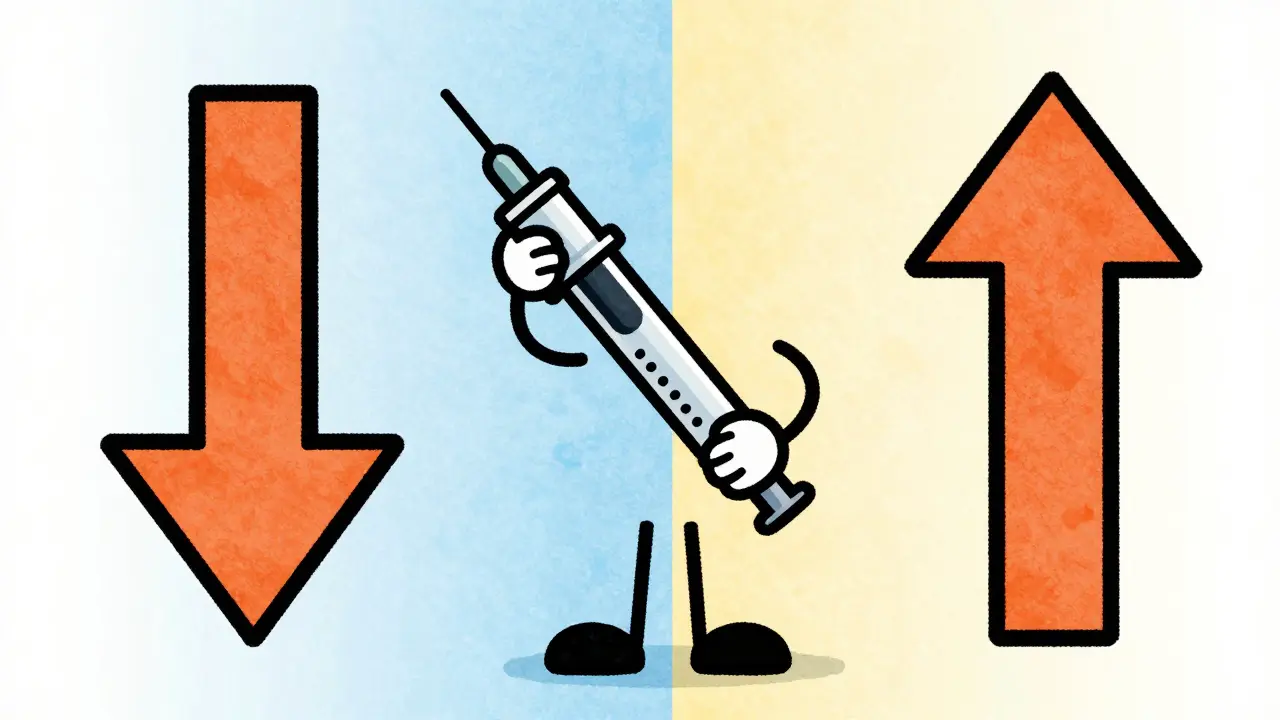
Safety First: Avoiding the Stacking Error
One of the biggest risks users face is called insulin stacking. This happens when you take a second dose because you see a downward trend, forgetting that active insulin from a previous dose is still working. It creates a domino effect where lows pile up dangerously.
To prevent this, check your insulin-on-board count every time you plan to inject. Most modern pumps and pen apps track this automatically. If the trend arrow is dropping quickly but you have less than two hours of action time left, do not correct the dose yet. Wait until the previous insulin finishes its work. Patience here saves you from waking up sweating cold and confused.
A study published in Diabetes Care highlighted that 12% of new users increased low-risk events initially because they over-corrected. They saw the down arrow and assumed they had too much sugar, when actually the arrow meant their previous bolus was peaking. Always distinguish between a drop caused by exercise versus a drop caused by active insulin.
Expanding Beyond Insulin: SGLT2 Inhibitors
While most discussions focus on insulin, newer medications like SGLT2 inhibitors also interact with these readings. In 2024, consensus reports expanded trend usage to these drugs. These medications help kidneys filter glucose, but they carry specific risks regarding ketosis.
If your sensor shows normal glucose levels (<180 mg/dL) but you suspect ketones are building up due to diet or illness, lower medication doses proactively. Persistent euglycemic ketosis is rare but dangerous. While the primary data focuses on insulin, maintaining awareness across all medication types ensures comprehensive care. Always consult your provider before altering oral medication regimens based on sensor data.

Real-Life Successes and Struggles
Technology works best when people understand its limits. On community forums, many report dramatic improvements. One user described cutting weekly low-blood-sugar events from three down to zero within a month of using trend arrows properly. Another shared that the specific unit adjustments removed the fear of calculation errors during dinner parties.
However, the learning curve is real. Some users experience paralysis when staring at conflicting arrows. You might see a down arrow while your stomach feels heavy from a late meal. In these cases, trust your physical symptoms alongside the data. Sensor lag is another culprit; during rapid changes, the fluid under the skin lags behind actual blood measurements.
If the screen is flashing error bars or you have been wearing the sensor for close to the maximum seven days, discard the reading. Verify with a finger stick test. Safety protocols demand verification when the technology signals uncertainty. The goal is to supplement your judgment, not replace it.
Getting Started with Your Provider
Your healthcare team should spend time teaching you these tools. Ideally, the first education session focuses on recognizing your insulin action peaks. The second covers interpreting arrows in the context of recent injections. By the third session, you should practice meal scenarios with paper guides.
Don't hesitate to ask for the printable reference cards. Having the adjustment tables physically available reduces anxiety when you are out shopping or traveling. If your provider hasn't mentioned trend arrows by now, bring them up. With over 80% of educated users reporting improved time-in-range, it is becoming the standard of care for active diabetes management.
Frequently Asked Questions
Can I adjust insulin solely based on the arrows?
No, always combine trend arrows with your current glucose number and carb count. Arrows show direction, not absolute value. Never ignore a high static number just because the arrow is flat.
What does a flat arrow mean for my dose?
A flat arrow indicates stability. According to guidelines, you make no adjustment to your pre-meal correction dose when this symbol appears. Proceed with your standard calculation based on carbs and current level.
Is this method safe for children?
Yes, there are specific pediatric protocols with smaller unit adjustments (e.g., +0.6 instead of +0.8). Parents must follow the pediatric table strictly as kids react faster to insulin changes than adults.
Do all brands use the same arrows?
Standards vary slightly between manufacturers. Dexcom and Abbott FreeStyle Libre sometimes define the rate differently for double arrows. Check your specific device manual to match the guideline tables correctly.
Should I trust the alert alarm over the visual arrow?
Always prioritize the threshold alarms for immediate safety, but use the visual arrow for proactive dosing planning. Alarms react to thresholds; arrows predict future movement.
People often misunderstand how correction factors actually function in daily life. You cannot just guess numbers without understanding your body chemistry first. The table in the post provides a baseline, yet individual variation remains significant. Your endocrinologist must verify these calculations before you apply them safely. Many patients skip this vital verification step due to frustration or haste. Skipping verification leads directly to dangerous hypoglycemic events later. Insulin stacking creates a cascade effect that overwhelms standard protocols. Active insulin tracking prevents this specific mechanism from triggering unnoticed. Modern apps handle this tracking automatically if configured correctly initially. Relying on memory alone is insufficient for managing rapid trend changes. Double down arrows require immediate attention before symptoms appear physically. Reacting too late negates the benefit of predictive monitoring technology entirely. Stress levels also influence insulin sensitivity during high glucose periods. Physical activity alters absorption rates significantly beyond standard predictions. Environmental heat can change subcutaneous insulin action speeds unpredictably. Always keep a log of adjustments made alongside sensor data trends.
Your disregard for precision is quite shocking! We must prioritize safety above all convenience!! How can anyone trust such vague protocols without strict oversight?
Honestly this whole thing sounds way too complicated to do manually every single time 😩📉
Oh sure, because nothing says "life saving" like a spreadsheet and a mood arrow. I bet the doctors love spending hours teaching us math instead of fixing the cause.
It appears the masses believe technology replaces biology. Such thinking ignores fundamental metabolic truths. When you rely on algorithms you surrender your own agency to a black box. This dependency is dangerous for the weak minded souls who populate these forums. True mastery comes from feeling your body not checking a screen constantly. The ancient wisdom of symptom recognition gets lost in this digital noise. We see a generation losing touch with internal cues completely. Patience is required to understand why arrows move slowly sometimes. Rushing the process creates the very spikes we wish to avoid. Discipline remains the cornerstone of any therapeutic regimen effectively.
Wow, another guru telling us we are dumb enough to forget our insulin is still working. Thanks for reminding us we cannot trust ourselves. Maybe try listening to actual science next time. Your arrogance is getting pretty old by now.
Listen simple math works best for most folks in India. Too much stress on tech breaks peace of mind. We need calm minds to manage sugar levels well. Technology helps but does not heal the patient fully.
Finding balance between data and intuition remains the true challenge here. The tools give us clarity but wisdom applies the knowledge. We must integrate both sides for lasting health outcomes.
I feel like my soul gets crushed when I have to calculate units before eating dinner properly. It steals the joy away from the meal experience entirely. Who designed these lives for us to live? It feels like a prison sentence disguised as healthcare.