CGM Use with Diabetes Medications: Adjusting Doses to Side Effect Alerts
CGM Trend Adjustment Calculator
Patient Data
Select CGM Trend Status
Choose the arrow currently displayed on your sensor.
↑↑ >+2
mg/m
↑ +1 to
+2
– <1
mg/m
↓ -1 to
-2
↓↓ <-2
mg/m
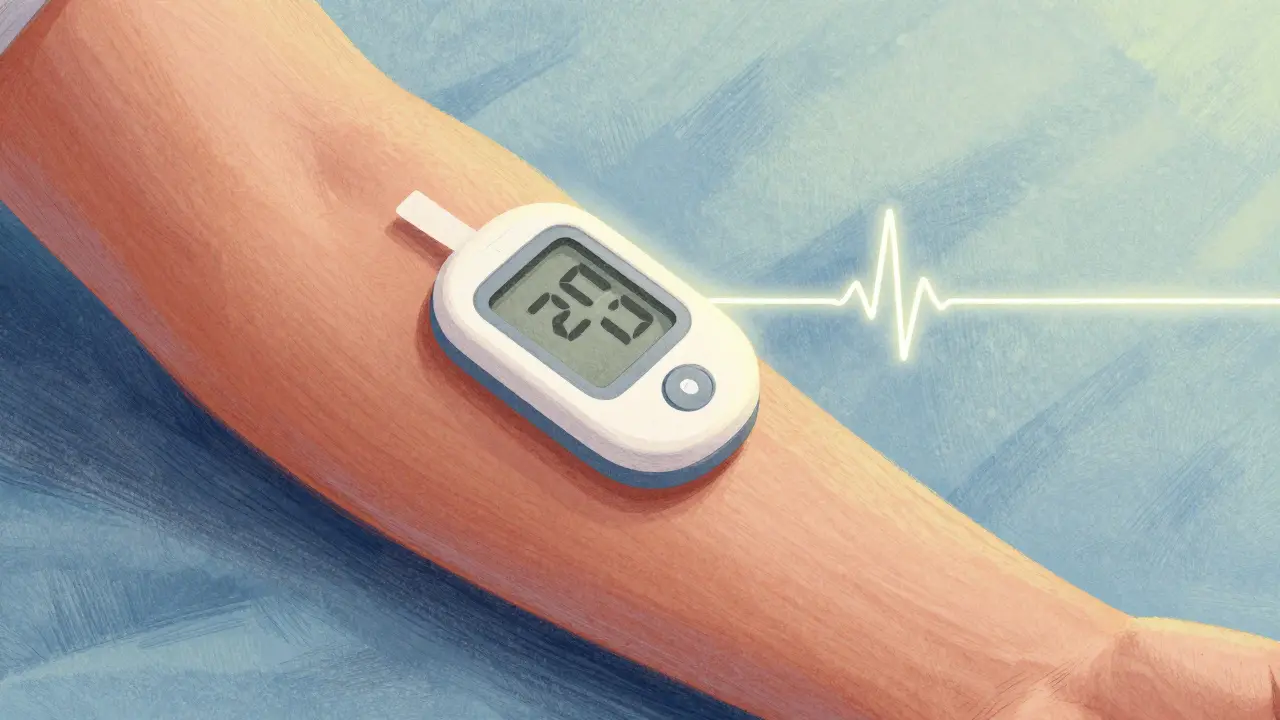
Have you ever woken up in a cold sweat, unsure if your blood sugar crashed overnight? For many people managing diabetes, that fear is a constant companion when taking powerful medications like insulin. We know that keeping glucose stable is key, but relying solely on finger-prick tests feels like driving a car while looking only at the rearview mirror. You see where you have been, but not exactly where you are going until it is too late.
This is where Continuous Glucose Monitoring changes the game. Instead of reacting to a number that might be hours old, modern sensors give you real-time data on the direction your body is moving. Think of it as having a GPS for your metabolism. The core challenge we face today isn't just getting an accurate reading; it is knowing exactly how to tweak our medication doses before a dangerous side effect hits. When a sensor flashes a downward arrow, does that mean we eat a snack immediately? Or do we reduce our insulin bolus? Getting this wrong leads to stacking errors and severe lows, while doing it right keeps us safe and healthy.
Decoding CGM Trend Arrows
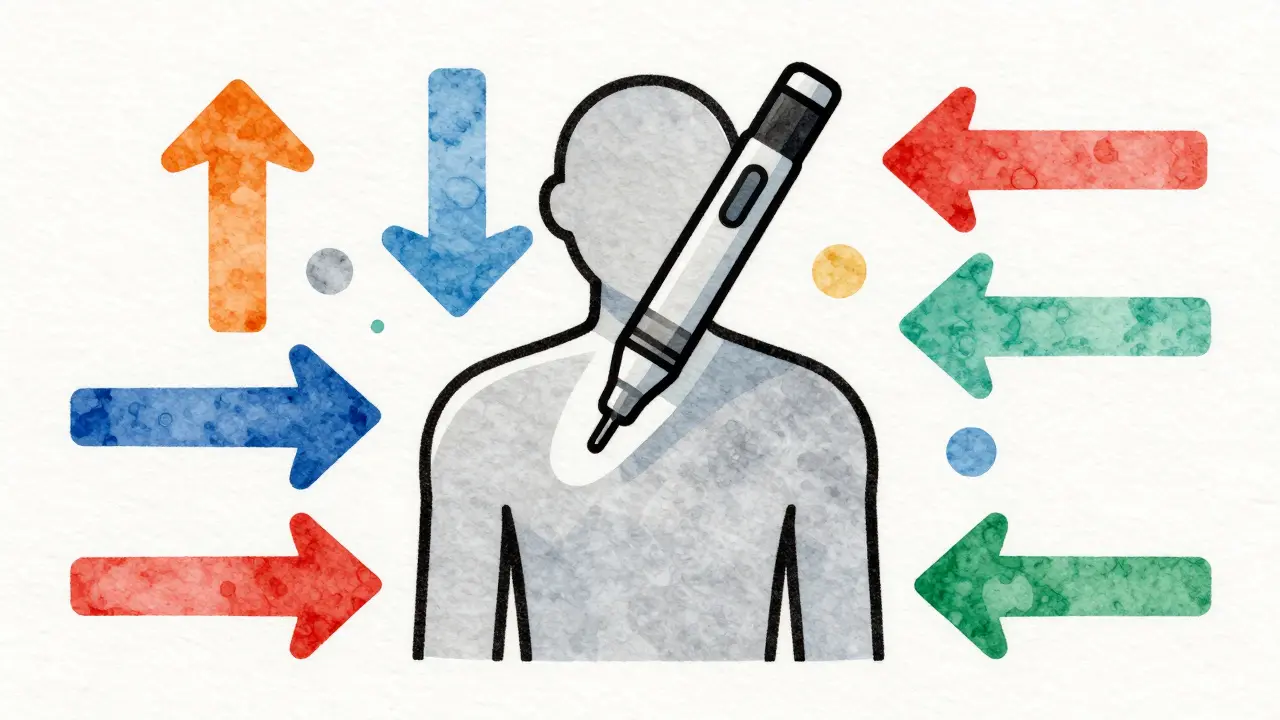
The heart of this strategy lies in understanding the symbols your device displays. Most systems, including popular ones like the Dexcom G7, utilize a set of eight specific directional indicators. These aren't random icons; they represent precise mathematical rates of change in milligrams per deciliter per minute. When you see a flat arrow, your glucose is stable within a range of less than 10 mg/dL per hour. However, the moment that changes to a double-down arrow, your glucose is plummeting faster than 2 mg/dL every minute.
These arrows serve as early warning systems for medication side effects. A sudden drop isn't usually caused by food; it is often the result of insulin action peaking or unaccounted physical activity. By recognizing the speed of the fall, you can intervene before you hit the danger zone. Research indicates that ignoring these trend lines is the most common reason users miss the opportunity to prevent hypoglycemia. It transforms the process from guessing to calculating.
To make this practical, we look at specific adjustment protocols. The Endocrine Society established guidelines that link these arrows directly to insulin unit adjustments. They broke down the complex percentage calculations into simple add-or-subtract rules based on your Correction Factor. This factor tells you exactly how much one unit of insulin lowers your blood sugar. For someone with a correction factor of 1 unit lowering 50 mg/dL, the math becomes straightforward.
| Trend Arrow Status | Rate of Change | Recommended Adjustment |
|---|---|---|
| Double-Up Arrow | Rising rapidly (>2 mg/dL/min) | Increase dose by 1.2 units |
| Single-Up Arrow | Rising (1-2 mg/dL/min) | Increase dose by 0.8 units |
| Flat Arrow | Stable (<1 mg/dL/min) | No adjustment |
| Single-Down Arrow | Falling (1-2 mg/dL/min) | Decrease dose by 0.8 units |
| Double-Down Arrow | Falling rapidly (>2 mg/dL/min) | Decrease dose by 1.2 units |
Medication Interactions Beyond Insulin
While rapid-acting insulin gets the most attention, other diabetes medications require similar vigilance when paired with monitoring technology. Newer guidelines now suggest that even oral agents like SGLT2 Inhibitors might need adjustment based on sensor data. If your device detects persistent euglycemic ketosis-meaning normal glucose levels but elevated ketone markers-reducing these medications can prevent dangerous metabolic shifts. This highlights a crucial point: CGM data helps manage the broader ecosystem of drugs, not just shots.
We also need to address the concept of "Time-in-Range." Studies show that patients utilizing these trend-based adjustments spend significantly more time between 70 and 180 mg/dL compared to those relying only on meter readings. One study published in Diabetes Technology & Therapeutics found a 28% reduction in hypoglycemic events simply by respecting the trend arrows. That is not just a statistic; it represents fewer emergency room visits and less anxiety for families. The predictive capability allows us to fix a high reading before we actually get high, and protect ourselves from a low before we feel shaky.
However, there is a limit to how far automation goes. Hybrid closed-loop systems are advancing rapidly, and the FDA has cleared apps that integrate with devices to calculate doses automatically. Yet, human oversight remains critical. The system knows the arrow direction, but it doesn't always know you are about to go for a run. Your brain processes the context that the software cannot, such as an upcoming workout or illness stress. This partnership between human intuition and machine precision is where the safety net truly lies.
Safety Protocols and Error Prevention
Even with clear tables, mistakes happen. The most frequent issue is "stacking," where a user corrects a high number without accounting for insulin that is already active in their body (Insulin On Board). When you inject again because you saw a double-up arrow, you must subtract the residual effect of the previous dose. Failing to do so turns a corrective measure into a recipe for a major crash. Experts recommend waiting at least three hours after a meal before applying correction doses based purely on trends.
Sensor lag is another reality we must respect. Sensors measure interstitial fluid, which trails behind blood sugar by roughly 5 to 10 minutes. During rapid fluctuations, the number on the screen might be 20 minutes out of sync with your actual physiology. The guidelines specify that we should verify readings with a traditional finger-stick test when the trend seems inconsistent or when symptoms don't match the display. Trust the data, but verify the critical moments. It saves lives.
Education plays the biggest role here. Surveys indicate that nearly half of users who never fully benefit from their monitors did so because their doctors didn't teach them how to interpret the arrows. It takes about three sessions of structured education to master this skill. Providers need to walk through scenarios, such as pre-dinner highs or overnight lows, so the theory becomes muscle memory. Without this foundation, the technology remains underutilized.
Implementation in Daily Life
Implementing these changes requires a shift in mindset. Many of us are trained to react to alarms, but the goal is to ignore the alarm until the trend confirms a pattern. An alarm can trigger for a single spike caused by coffee or stress, whereas a trend shows sustained movement. Start small. Perhaps you begin by watching your morning trends. Notice how your basal insulin interacts with dawn phenomenon. Once comfortable, move to meal boluses.
We see success stories everywhere. Users report dropping their weekly hypo-events from several times a week to almost none after adopting these calculation methods. It reduces the cognitive load, too. Instead of debating whether to take 50% more insulin, you have a clear table: increase by 0.8 units. Clarity reduces panic. As we look toward 2026, the integration of AI into these platforms promises to automate even more of this calculation, but the principles remain the same. Understanding the relationship between your medication kinetics and the rate of glucose change is the ultimate tool for safety.