Cardiac Rehabilitation After Heart Attack or Surgery: A Complete Recovery Guide

You survived the scariest moment. Whether you just walked out of the hospital after a heart attack (myocardial infarction) or recovered from coronary artery bypass graft surgery, your immediate danger has passed. But here is the hard truth: surviving the event is only half the battle. The real work begins now.
Many people think that once they leave the hospital, they are on their own. They assume resting at home is the safest path forward. It isn’t. In fact, skipping structured recovery can put you at higher risk for another cardiac event than staying active under supervision. This is where cardiac rehabilitation comes in. It is not just a gym membership with a doctor’s note; it is a medically supervised, evidence-based program designed to rebuild your heart’s strength, manage your risks, and get you back to living life fully.
What Is Cardiac Rehabilitation?
Think of cardiac rehab as a comprehensive roadmap for your new normal. According to the American Heart Association (2024), it is a long-term program that combines medical evaluation, prescribed exercise, education, and counseling. It addresses the whole person-your physical limits, your emotional state, and your daily habits.
The concept might feel modern, but the science behind it is solid. The modern model was established in the 1970s when research proved that structured exercise was safer and more effective than the old advice of prolonged bed rest. Today, guidelines from the World Health Organization and major cardiology bodies confirm that cardiac rehab reduces cardiovascular mortality by 20-30% and cuts the risk of recurrent events by 25%. That is a statistic worth paying attention to.
Who Qualifies for Cardiac Rehab?
If you are wondering if this program is for you, the answer is likely yes. The American Heart Association lists specific conditions that make you eligible:
- Acute myocardial infarction (heart attack) within the past 12 months
- Coronary artery bypass graft (CABG) surgery
- Coronary angioplasty or stenting
- Heart valve repair or replacement
- Heart or heart-lung transplantation
- Stable angina (chest pain)
- Stable chronic heart failure
However, there are exceptions. If you have unstable angina, uncontrolled arrhythmias, acute heart failure, or severe aortic stenosis, you may need to stabilize these issues before starting. Always check with your cardiologist first.
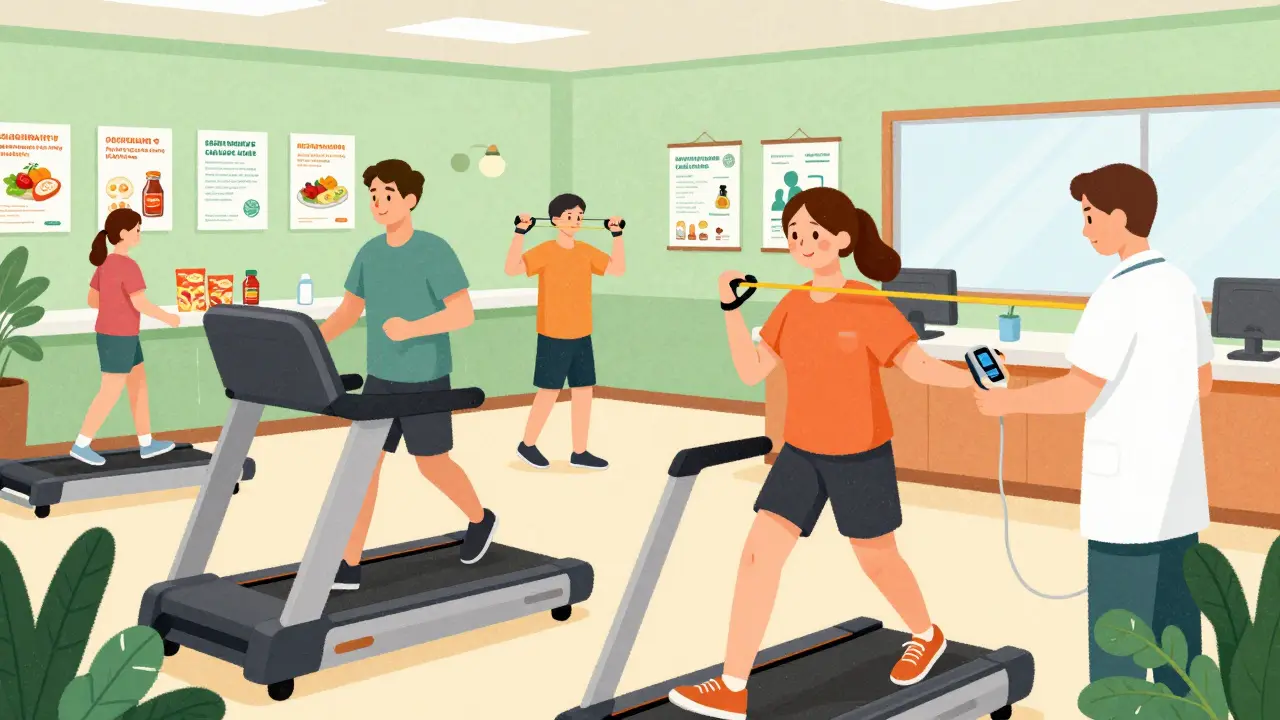
The Three Phases of Recovery
Cardiac rehabilitation is not a one-size-fits-all workout plan. It is divided into three distinct phases, each with specific goals and safety protocols.
Phase I: Inpatient Rehabilitation
This phase starts while you are still in the hospital, typically within 24 to 48 hours after your procedure or event. The goal here is early mobilization. You aren’t running marathons; you are sitting up, standing, and taking short walks. Under physician supervision, you might do intermittent exercise sessions lasting 3-5 minutes, followed by rest periods. The intensity is kept low-usually keeping your heart rate below 120 bpm or ensuring you don’t feel overly exerted (Rating of Perceived Exertion below 13 on the Borg scale).
Phase II: Outpatient Supervised Program
Once you are discharged, usually 1-3 weeks later, you move to Phase II. This is the core of cardiac rehab. The Million Hearts initiative recommends completing at least 36 one-hour sessions, occurring 3-5 days a week. During this time, you will undergo aerobic exercise, strength training, and education.
The exercise protocol is precise. You start with moderate-intensity aerobic activity (like walking on a treadmill) at 40-59% of your heart rate reserve. Over time, this progresses to 60-85% of your predicted maximum heart rate. Strength training is added 2-3 times a week, focusing on light weights and high repetitions to build muscle without spiking blood pressure dangerously.
Phase III: Long-Term Maintenance
After completing the supervised sessions, you enter Phase III. This is independent maintenance. The goal shifts to self-monitoring and lifestyle integration. You aim for 150 minutes of moderate-intensity aerobic activity weekly, as per WHO guidelines. This phase is about making heart-healthy choices a permanent part of your identity, not just a temporary prescription.
| Phase | Location | Duration/Frequency | Primary Goal |
|---|---|---|---|
| Phase I | Hospital | 24-48 hrs post-event; 3-4x/day | Early mobilization, prevent complications |
| Phase II | Outpatient Clinic | 12 weeks; 3-5 sessions/week | Build endurance, educate, monitor safety |
| Phase III | Home/Community | Ongoing; 150 mins/week | Maintain fitness, prevent recurrence |
Why Participation Rates Are So Low (And Why You Should Care)
Here is a frustrating reality: despite the proven benefits, cardiac rehab is severely underutilized. Data from the Million Hearts initiative shows that only 36.8% of eligible Medicare beneficiaries participated in 2021. Why? Often, it’s because doctors forget to refer patients, or patients assume they are too sick to exercise. Transportation issues and scheduling conflicts also play a role.
But consider this: Dr. Erin D. Michos from Johns Hopkins noted that closing this referral gap could save 11,000 lives annually in the U.S. alone. The safety profile of cardiac rehab is excellent. The complication rate is roughly 1 per 100,000 patient-hours of exercise. That makes it safer than many daily activities like grocery shopping or climbing stairs. Don’t let fear keep you from a treatment that saves lives.

Practical Tips for Starting Your Journey
Getting started can feel overwhelming. Here is how to approach it practically:
- Start Small: The NHS suggests beginning with 5-10 minutes of walking daily after discharge. Gradually increase this to 30 minutes over several weeks.
- Listen to Your Body: Use the "talk test." You should be able to speak in short sentences during exercise. If you are gasping, slow down. If you can sing, speed up.
- Warm Up and Cool Down: Never jump straight into intense activity. Spend 5 minutes warming up and 5 minutes cooling down to prevent sudden spikes in heart rate.
- Focus on Breathing: Especially during strength training, exhale during the effort. Holding your breath can cause dangerous blood pressure spikes.
If traditional center-based programs are hard to access, ask about telehealth options. Recent studies show remote monitoring programs yield comparable improvements in peak oxygen uptake to in-person visits. Technology is making cardiac rehab more accessible than ever.
Addressing the Mental Side of Recovery
Recovering from a heart event is emotionally taxing. Anxiety and depression affect 20-40% of cardiac patients. Cardiac rehab isn’t just about muscles; it’s about mindset. Counseling services included in the program help you cope with fear, stress, and lifestyle changes. Ignoring mental health can hinder physical recovery, so embrace the psychosocial support offered.
Is cardiac rehabilitation covered by insurance?
In the United States, Medicare covers up to 36 cardiac rehabilitation sessions following a qualifying event like a heart attack or bypass surgery. You typically pay 20% coinsurance after meeting your deductible. Most private insurance plans also cover cardiac rehab, but coverage limits vary. Always check with your provider to understand your specific benefits.
How soon can I start exercising after a heart attack?
You can begin very gentle movements, like sitting up and short walks, within 24-48 hours while still in the hospital (Phase I). More structured outpatient exercise (Phase II) typically begins 1-3 weeks after discharge, depending on your stability and your doctor's clearance.
What happens if I skip cardiac rehabilitation?
Skipping cardiac rehab significantly increases your risk of future cardiac events and mortality. Studies show a 20-30% reduction in death rates for those who complete the program compared to those who receive standard care alone. It also helps manage risk factors like cholesterol and blood pressure more effectively.
Can I do cardiac rehabilitation at home?
Yes, hybrid or remote cardiac rehabilitation programs are becoming common. These use wearable technology and video calls to monitor your progress. Research indicates these programs can be as effective as center-based ones for improving fitness, provided you are disciplined and have reliable equipment.
What are the signs that exercise is too intense?
Stop exercising and seek help if you experience chest pain, severe shortness of breath, dizziness, irregular heartbeat, or excessive fatigue. During supervised rehab, staff monitor these signs closely. At home, rely on the Rating of Perceived Exertion (RPE) scale; you should never exceed an RPE of 13-14 on the 6-20 scale without medical guidance.