Cannabis and Medications: Key Drug Interaction Risks to Watch
Imagine taking your morning prescription and adding a dose of CBD oil for anxiety. It sounds harmless, right? But for millions of people, this simple routine can quietly alter how their body processes life-saving drugs. Cannabis compounds, specifically Tetrahydrocannabinol (THC) and the primary psychoactive component in cannabis that affects the central nervous system and Cannabidiol (CBD) is a non-psychoactive compound derived from hemp used for therapeutic purposes, don't just sit in your stomach. They actively interfere with the liver's ability to break down other medications. This isn't just theoretical; clinical data shows that about 57% of commonly prescribed drugs have potential interactions with these compounds. If you are managing conditions like epilepsy, heart disease, or chronic pain, understanding these mechanics is no longer optional-it’s essential for staying safe.
The Liver’s Role in Mixing Medications
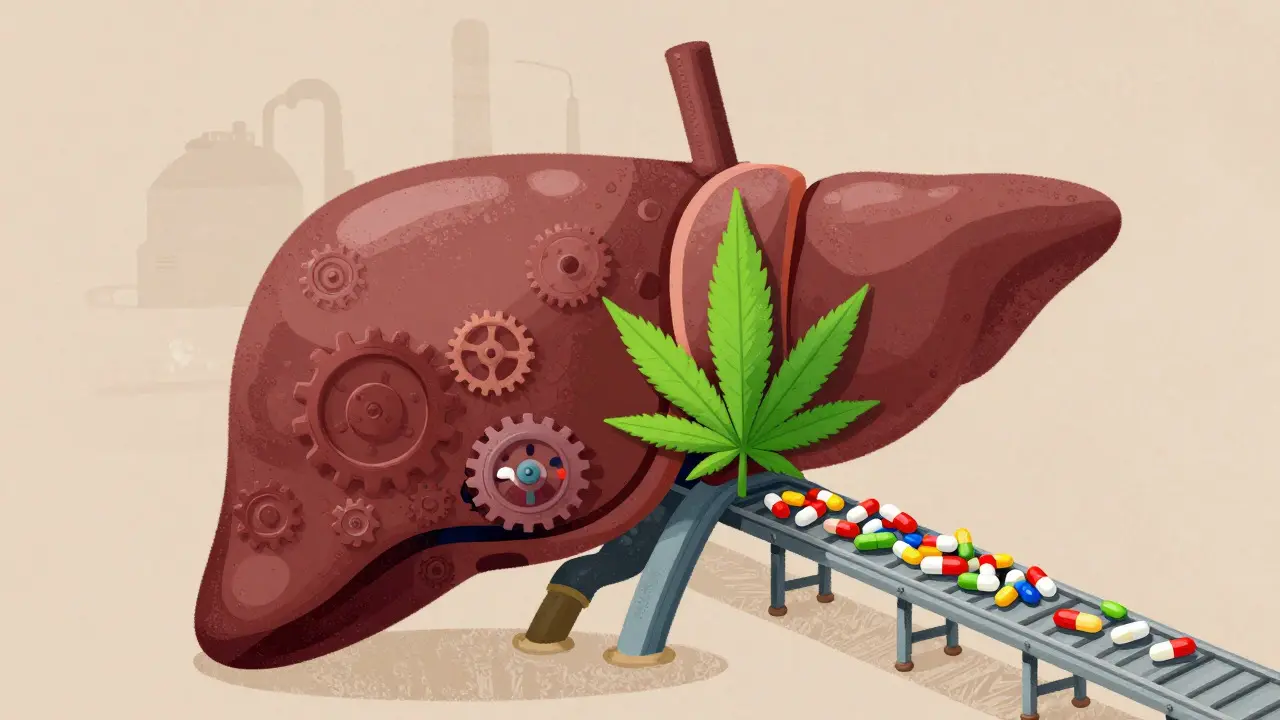
To understand why cannabis changes how your meds work, you have to look at your liver. Specifically, a group of enzymes called Cytochrome P450 (CYP450) is a family of liver enzymes responsible for metabolizing approximately 60% of all clinical medications. Think of CYP450 as a recycling plant. It breaks down drugs so your body can use them or flush them out. When you introduce cannabis, it acts like a traffic jam at that recycling plant. Research published in the Journal of Clinical and Translational Science confirms that CBD strongly inhibits two specific types of these enzymes: CYP3A4 and CYP2C19. Meanwhile, THC tends to slow down CYP1A2 and CYP2C9. When these engines slow down, the levels of your other medications build up in your blood instead of being cleared. This buildup is what causes side effects that feel like an overdose, even though you took your normal dose.
High-Risk Combinations That Demand Caution
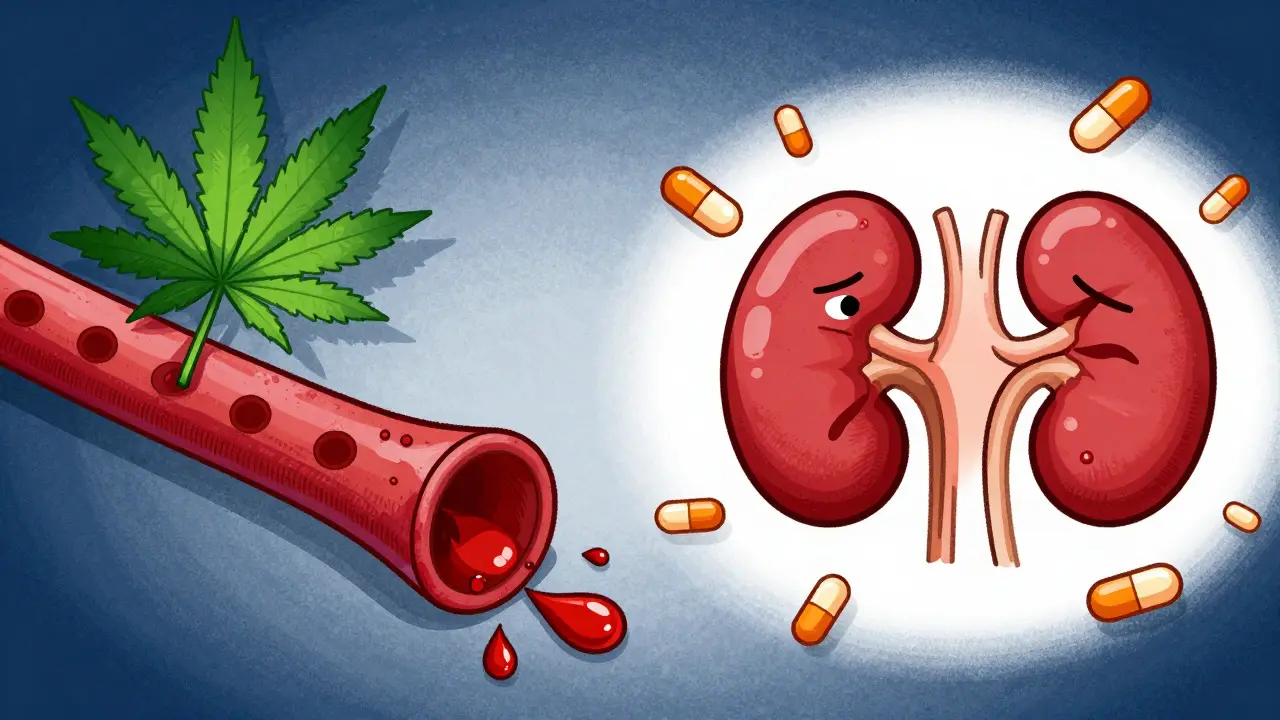
Not all interactions are created equal. Some combinations are dangerous enough that doctors recommend avoiding them entirely unless closely monitored. The most critical involves blood thinners. If you take Warfarin is an anticoagulant medication used to prevent blood clots, often prescribed for atrial fibrillation or deep vein thrombosis, adding cannabis can spike your International Normalized Ratio (INR). A systematic review found that concurrent use can increase INR by 29% to 48% within just three days. For context, a small jump in INR means a higher risk of bleeding. In severe cases, patients have experienced gastrointestinal bleeding because their blood wasn't clotting properly. Another high-risk area is organ transplants. Patients taking Tacrolimus is an immunosuppressant drug used to prevent rejection after organ transplantation need to be extremely careful. Studies show that CBD can raise tacrolimus levels by 300% to 500%. Since tacrolimus has a narrow window between effective and toxic doses, this massive increase can damage kidneys if not caught early. Always tell your transplant team if you are using any form of cannabis, whether it's medical or recreational.
Moderate Risks: Sedation and Blood Pressure
Beyond the life-threatening scenarios, many people face moderate risks that affect daily comfort and safety. The biggest culprit here is excessive sedation. If you are already taking Benzodiazepines are a class of psychoactive drugs that act on the central nervous system to produce a calming effect, commonly used for anxiety and insomnia like alprazolam or diazepam, adding cannabis amplifies the drowsiness. Controlled studies indicate that sedation scores can jump by 35% to 60%. For older adults, this isn't just about feeling sleepy; it significantly increases the risk of falls. One guideline noted a 47% increase in fall risk for elderly patients mixing alprazolam with cannabis. Similarly, opioids present a challenge. While some patients report no issues, pharmacokinetic data suggests that cannabis can decrease the clearance of morphine by 20% to 30%. This means the opioid stays in your system longer, potentially increasing the risk of respiratory depression, especially if you are new to either substance. If you manage high blood pressure with calcium channel blockers like amlodipine, watch for sudden drops in blood pressure. Cannabis can boost amlodipine levels by 30% to 40%, which might cause lightheadedness or fainting in a quarter of users.
How Product Type Changes the Risk
A common misconception is that all cannabis products interact the same way. They don't. The difference lies in what else is in the bottle. Full-spectrum products are cannabis extracts that contain multiple cannabinoids including trace amounts of THC, terpenes, and flavonoids contain trace amounts of THC (usually under 0.3%) along with other plant compounds. This mix creates what researchers call the 'entourage effect,' but it also means stronger enzyme inhibition. Data shows full-spectrum oils inhibit CYP3A4 enzymes 22% to 37% more than pure CBD isolates at the same dose. On the other hand, CBD Isolate is a purified form of cannabidiol that contains no THC or other plant compounds offers a cleaner profile with fewer interaction variables. However, dosage still matters. Interaction risks generally become clinically significant when CBD intake exceeds 20 mg per day. Below that threshold, the impact on most standard medications is minimal, though sensitive drugs like clobazam can react even at lower doses. Additionally, how you consume it changes the timeline. Smoking or vaping delivers THC to your brain within minutes, creating immediate interaction risks with sedatives. Oral oils take 2 to 4 hours to peak, meaning the interaction window lasts much longer throughout the day.

Practical Steps to Manage Your Safety
You don’t need to stop using cannabis or your medications, but you do need a plan. Here is a practical approach based on current clinical guidelines:
- Be Specific with Your Doctor: Don't just say "I use weed." Tell them exactly what product you use (full-spectrum vs. isolate), the milligram dose, and how often you take it. Vague answers lead to vague advice.
- Check Interaction Databases: Tools like the University of Washington’s 'Cannabis Drug Interactions' database are updated quarterly and provide specific pairings. Use these before starting a new regimen.
- Monitor Key Markers: If you are on warfarin, get your INR checked every 3 to 5 days for the first month of combined use, rather than the standard weekly check. For transplant patients, monitor trough levels 48 to 72 hours after starting cannabis.
- Adjust Timing: While evidence is mixed, taking CBD at least two hours apart from your other medications may help minimize peak concentration overlaps. This is a low-cost strategy worth trying.
- Start Low and Go Slow: If you are adding cannabis to an existing regimen, start with the lowest possible dose. Increase only if necessary, while watching for signs of toxicity like unusual bruising, extreme drowsiness, or confusion.
What the Future Holds for Safety Data
The landscape is shifting rapidly. With nearly 58 million Americans using cannabis annually, the volume of real-world data is growing. The FDA has received over 1,300 reports of potential interactions since 2018, though experts agree this number likely underrepresents the true scale. New studies, such as the NIH-funded trial at the University of Arkansas, are beginning to quantify these risks with larger patient groups. Preliminary data suggests that CBD doses above 25 mg/day consistently raise INR levels in warfarin users. By 2027, health organizations expect to have evidence-based guidelines for 85% of high-risk combinations, up from just 45% today. Until then, the best defense is communication. Pharmacists and doctors want to know what you’re taking. The stigma around cannabis use is fading, replaced by a focus on clinical precision. Treat your cannabis use with the same respect you give your prescription pills, and you’ll avoid the majority of potential pitfalls.
Does CBD interact with birth control pills?
Yes, potentially. Most hormonal contraceptives are metabolized by CYP3A4 enzymes. Since CBD inhibits this enzyme, it can theoretically increase hormone levels, which might change your cycle or reduce effectiveness. While rare, cases of breakthrough bleeding have been reported. If you rely on hormonal birth control, discuss your CBD dose with your gynecologist to see if additional backup contraception is needed during the first few weeks of use.
Can I take CBD with antidepressants like SSRIs?
Generally, the risk is low. SSRIs like sertraline or fluoxetine have modest interactions with CBD. Serum levels of the antidepressant might increase by 10% to 15%, but this rarely leads to clinical problems. Many patients combine them without issue. However, if you experience increased fatigue or nausea after starting CBD, mention it to your provider, as it could be a sign of elevated SSRI levels.
How long does it take for cannabis to affect my medication levels?
It depends on the method. Inhalation (smoking/vaping) causes acute changes within minutes to an hour. Oral products (oils/capsules) take 2 to 4 hours to reach peak concentration in the blood. For medications with long half-lives like warfarin, the cumulative effect builds over several days. You might not notice a change in the first 48 hours, which is why monitoring labs 3 to 5 days after starting is crucial.
Is it safer to use CBD isolate instead of full-spectrum?
For minimizing drug interactions, yes. Full-spectrum products contain trace THC and other terpenes that can enhance enzyme inhibition. If you are on high-risk medications like warfarin or tacrolimus, an isolate product reduces the variable load on your liver. However, if you are seeking the 'entourage effect' for symptom relief, full-spectrum may be more effective, provided you monitor your blood work closely.
What symptoms should I watch for if an interaction occurs?
Watch for signs of toxicity related to your specific medication. For blood thinners, look for unusual bruising, nosebleeds, or pink urine. For sedatives, watch for extreme drowsiness, confusion, or difficulty walking. For blood pressure meds, note dizziness upon standing. If you experience any of these after starting or changing your cannabis dose, contact your healthcare provider immediately.