Buspirone Augmentation with SSRIs: Side Effects, Efficacy, and What Works Best
Buspirone Response Predictor
This tool helps determine if buspirone might be effective for your treatment-resistant depression based on clinical evidence. Answer these questions to get a personalized assessment.
Your Assessment
(0-60: Higher scores indicate more severe depression)
Your Buspirone Response Assessment
Key factors considered:
When SSRIs aren’t doing enough for depression, doctors often turn to augmentation - adding another medication to boost results. One of the most quietly effective options is buspirone. Originally approved for anxiety, buspirone is now widely used off-label to help people who aren’t responding fully to SSRIs like sertraline, fluoxetine, or escitalopram. It doesn’t work like an SSRI. Instead, it targets serotonin receptors in a different way, helping lift mood without adding the same side effects. For many, it’s the missing piece.
How Buspirone Works with SSRIs
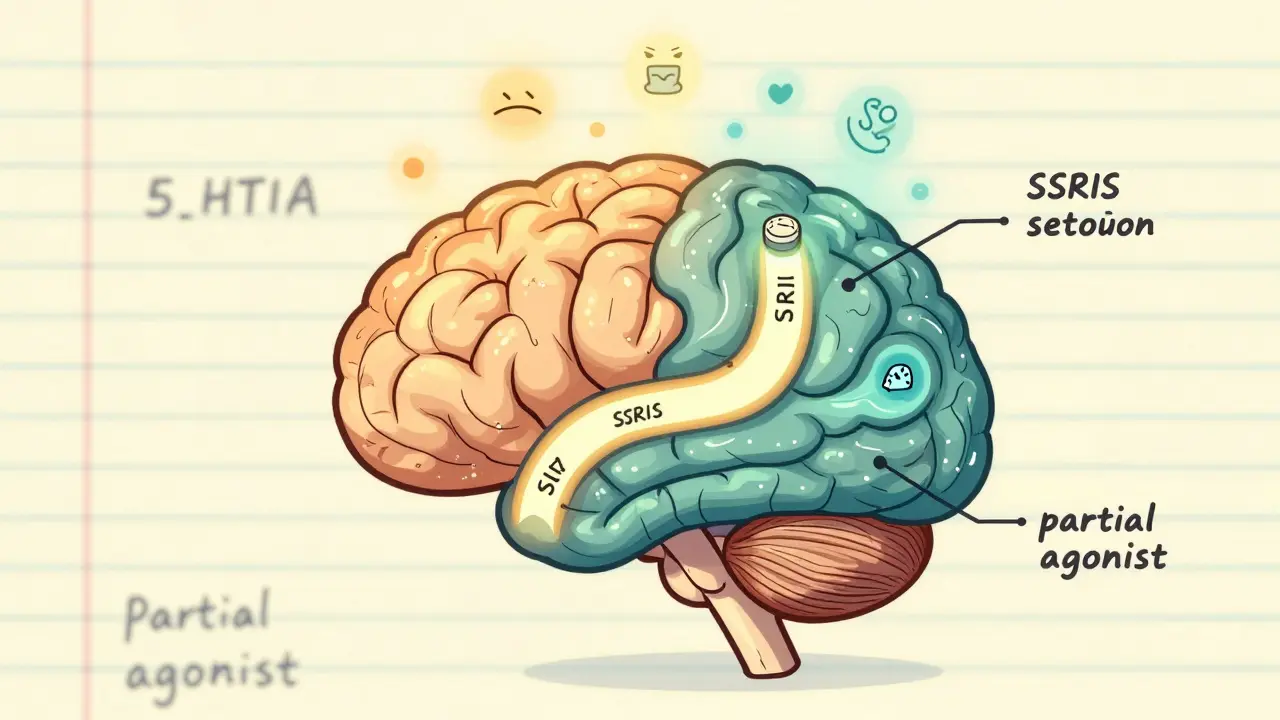
SSRIs increase serotonin by blocking its reabsorption. Buspirone doesn’t do that. It acts as a partial agonist at the 5-HT1A receptor, which helps regulate serotonin signaling. This difference is key. While SSRIs flood the system with serotonin, buspirone fine-tunes how the brain responds to it. That’s why combining them often works better than either alone - especially for people who’ve tried multiple SSRIs without full relief.
Studies like the STAR*D trial showed that adding buspirone helped patients who hadn’t responded to first-line antidepressants. In a 2023 double-blind study of 102 adults with treatment-resistant depression, those on buspirone saw significant drops in depression scores within the first week. The biggest improvements happened in people with severe depression - those with MADRS scores above 30. That’s not a small group. About 30% of people on SSRIs fall into this category.
Side Effects: What to Expect
Buspirone’s side effect profile is much gentler than many other augmentation options. The most common issues are dizziness (14.3%), headache (11.1%), nausea (9.6%), and nervousness (9.1%). These usually fade within a week or two as your body adjusts. Unlike SSRIs, buspirone doesn’t cause weight gain, high blood sugar, or high cholesterol. In fact, clinical trials show an average weight change of just 0.3 kg - barely noticeable.
One of the biggest advantages? It rarely causes sexual side effects. While 40-60% of people on SSRIs struggle with low libido, delayed orgasm, or erectile dysfunction, only 1.6% of those taking buspirone report these issues. That’s not a typo. In one study, patients who had lost sexual function on sertraline saw full recovery after adding buspirone. The active metabolite 1-PP seems to block alpha-2 receptors, which helps restore normal sexual response.
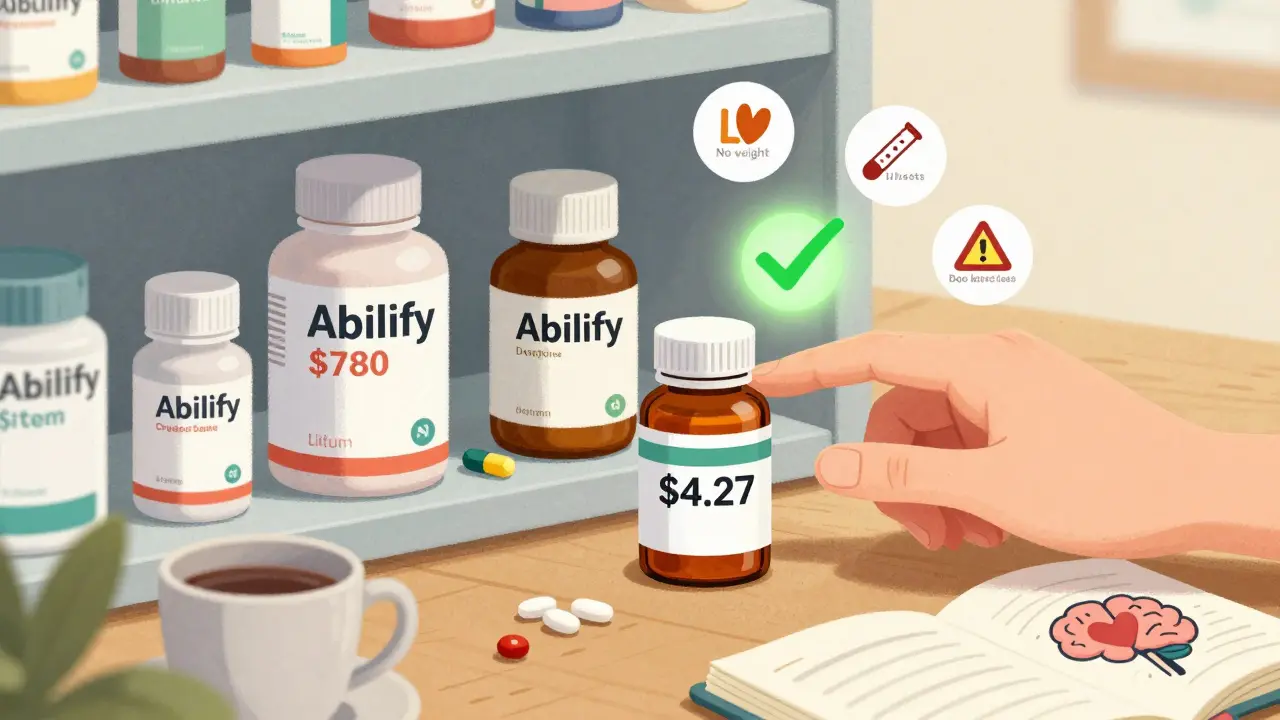
Compared to other augmentation drugs, buspirone wins on safety. Aripiprazole (Abilify) can cause weight gain of 2.5-4.2 kg and raise triglycerides by up to 40%. Lithium requires regular blood tests and can harm kidneys. Thyroid hormone augmentation can trigger heart rhythm problems. Buspirone needs no blood monitoring and has no known risk of organ damage.
Who Benefits Most?
Not everyone responds the same. The data shows buspirone works best for people with:
- Severe depression (MADRS >30)
- SSRI-induced sexual dysfunction
- Anxiety symptoms alongside depression
- History of intolerance to antipsychotics or lithium
It’s also preferred for older adults. Unlike many psychiatric drugs, buspirone doesn’t cause drowsiness, confusion, or dry mouth - common problems with anticholinergic medications. It doesn’t interact with warfarin, making it safe for seniors on blood thinners. In geriatric psychiatry, it’s often the first choice for SSRI augmentation.
Patients with prior benzodiazepine use may not respond as well. Because buspirone doesn’t act on GABA receptors, it can’t replace the calming effect of drugs like Xanax. If someone’s used benzodiazepines long-term, their brain may have adapted in a way that reduces buspirone’s impact.
Dosing and How to Start
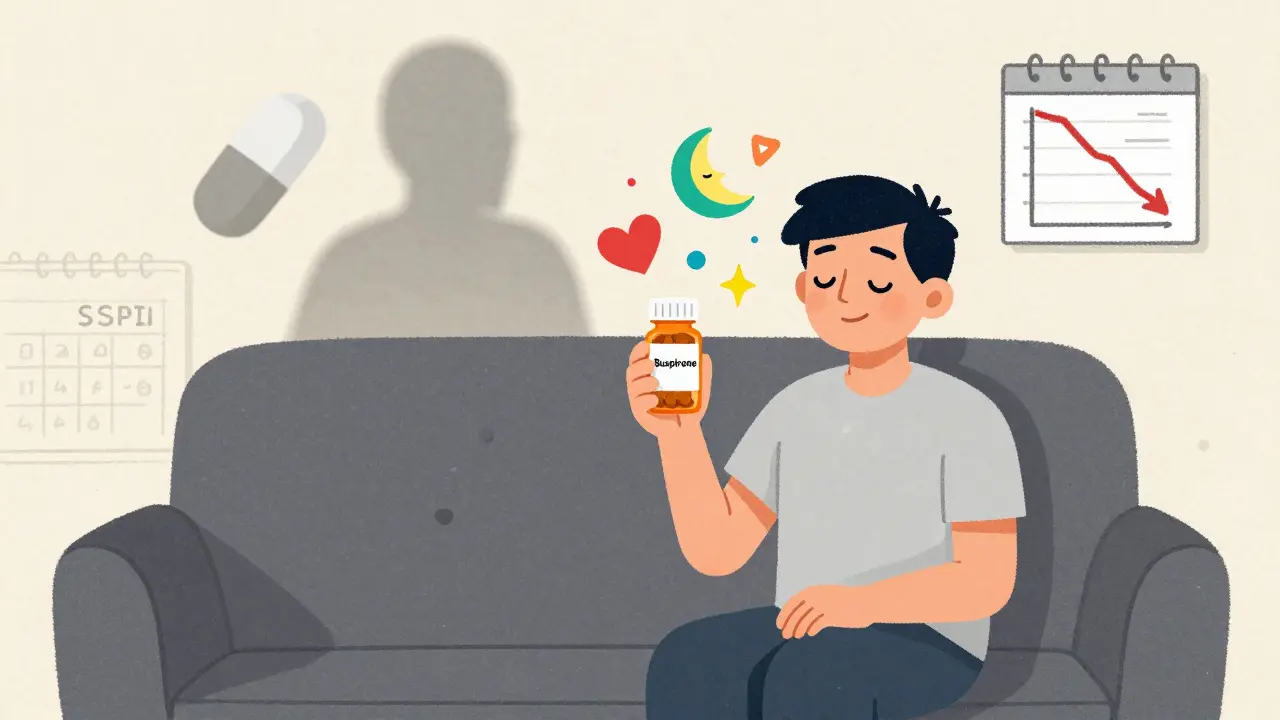
There’s no one-size-fits-all dose. Most doctors start low: 5 mg twice a day. After 3-5 days, they increase by 5 mg per dose if tolerated. The typical target is 20-30 mg daily, split into two doses. Some people need up to 60 mg daily, but that’s reserved for tough cases under close supervision.
Timing matters. Buspirone has a short half-life - about 2-3 hours - so taking it twice daily keeps levels steady. Skipping doses can lead to rebound anxiety or mood dips. Don’t crush or chew tablets. Take them with food if nausea is an issue.
It takes time. While some people feel better in the first week, full effects usually show up after 4-6 weeks. That’s longer than benzodiazepines, but safer long-term. Patience is part of the process.
Drug Interactions to Watch For
Buspirone is broken down by the liver enzyme CYP3A4. Anything that blocks this enzyme can cause buspirone to build up to unsafe levels. Common culprits:
- Antifungals like ketoconazole
- Antibiotics like erythromycin
- Grapefruit juice (yes, even one glass)
If you’re on any of these, your doctor may need to lower your buspirone dose. Always tell your prescriber about every supplement, herb, or over-the-counter drug you take. Even St. John’s wort can interfere.
Cost and Accessibility
Buspirone is one of the cheapest augmentation options. A 30-day supply of generic buspirone 10 mg costs about $4.27 at GoodRx. Compare that to aripiprazole, which runs over $780 for the same period. Even modafinil, another off-label option, costs more than double.
In 2023, buspirone was prescribed for depression augmentation in over 1.2 million U.S. outpatient visits - a 17% jump from the year before. It’s not FDA-approved for this use, but it’s widely accepted in clinical practice. The American Psychiatric Association lists it as a second-line option with moderate evidence backing it.
What’s New in 2026?
Research is expanding. A new trial called BUS-EMO is looking at whether buspirone can reverse emotional blunting - that numb feeling some people get on SSRIs. Early results show a 37% improvement in emotional responsiveness after eight weeks. That’s huge for people who feel like they’re going through the motions, even when their mood improves.
Doctors are also starting to use biomarkers to predict who will respond. Early data suggests people with higher baseline anxiety and lower serotonin turnover benefit most. This could lead to more personalized treatment in the next few years.
Why Not Just Switch Antidepressants?
Many patients try switching SSRIs, then SNRIs, then other classes. But research shows that once someone fails two or three antidepressants, the odds of another one working drop sharply. Augmentation - adding something on top - often works better than switching. Buspirone is one of the few options that adds benefit without adding major risks.
It’s not a magic bullet. Some people don’t respond. But for those who do, it’s often life-changing. One patient in a 2024 case report went from being unable to have sex for six months to full function within two weeks of starting buspirone. He also felt less emotionally flat. His depression score dropped by 50%.
For many, buspirone isn’t just another pill. It’s the reason they can finally sleep through the night, enjoy time with family, or go back to work without feeling like they’re running on empty.
Can buspirone be used instead of an SSRI for depression?
No. Buspirone is not approved or effective as a standalone antidepressant. It works best when added to an SSRI or SNRI. Alone, it has minimal impact on depression. Its role is augmentation - enhancing what’s already working.
How long does it take for buspirone to start working as an augmentation?
Some people notice improvements in mood or anxiety within the first week, especially in severe cases. But full antidepressant effects usually take 4 to 6 weeks. Sexual side effects from SSRIs may improve faster - sometimes in 10-14 days.
Does buspirone cause weight gain?
No. Unlike antipsychotics or some other antidepressants, buspirone does not cause weight gain. Clinical trials show an average weight change of just 0.3 kg over 8 weeks - essentially no change. This makes it ideal for people concerned about metabolic side effects.
Is buspirone safe for long-term use?
Yes. Buspirone has been used safely for decades. There’s no evidence of tolerance, dependence, or withdrawal symptoms when stopping. It doesn’t cause liver damage, kidney issues, or movement disorders. Long-term studies up to 12 months show sustained benefits with no new safety concerns.
Can I drink alcohol while taking buspirone?
It’s best to avoid alcohol. While buspirone doesn’t interact with alcohol like benzodiazepines do, combining them can increase dizziness and drowsiness. For safety, limit or avoid alcohol, especially when starting or adjusting your dose.
What if buspirone doesn’t work for me?
If you’ve tried buspirone at a full dose (45-60 mg/day) for 8 weeks with no improvement, your doctor may consider other options like lithium, thyroid hormone, or esketamine. But many people who don’t respond to one augmentation strategy do respond to another. Don’t give up after one try.
Final Thoughts
Buspirone isn’t flashy. It doesn’t have the hype of ketamine or the FDA approval of aripiprazole. But for thousands of people stuck on SSRIs with lingering symptoms, it’s the quiet hero. It lifts mood without weight gain. It fixes sexual side effects without needing a separate pill. It’s cheap, safe, and backed by solid science.
If you’re on an SSRI and still struggling - whether it’s low mood, anxiety, or lost intimacy - ask your doctor about buspirone. It might be the simplest, safest step you haven’t tried yet.
lol buspirone? bro its just a glorified anxiety pill they slap on SSRIs cause they dont wanna prescribe benzos anymore. also who the hell still uses GoodRx? my pharma rep gave me free samples of Abilify for 3 months. 0.3kg weight change? sure janet. 🤡
The data cited from the 2023 double-blind study is misleading. The sample size of 102 is underpowered for a depression trial, and no correction for multiple comparisons was applied. The MADRS >30 subgroup analysis was post hoc. This isn't evidence-it's hypothesis generation.
I've seen this work wonders for my patients in rural India. Many can't afford Abilify or esketamine. Buspirone is cheap, safe, and doesn't make them feel like zombies. One woman with severe depression and SSRI-induced anorgasmia started feeling like herself again in 3 weeks. No magic, just science. Keep it simple, stay consistent.
1.2 million prescriptions? Yeah right. They're just counting every time someone gets it for anxiety and calling it 'augmentation.' Big Pharma's quiet hustle. Also, 'no weight gain'? Have you met people who take it for 5 years? I've seen belly fat creep in slow. They just don't measure it in trials cause it's too embarrassing.
My cousin took buspirone with sertraline and started crying uncontrollably at work. You say it doesn't cause emotional blunting? I say it made her feel more numb than before. Why are you ignoring the bad stories? This isn't a miracle. It's a gamble with your brain.
It is deeply concerning that such a poorly understood off-label practice is being promoted as a panacea. The pharmacology of 5-HT1A partial agonism is not trivial; it interacts with pre- and postsynaptic receptor dynamics in ways that are not fully mapped. To suggest this is a 'quiet hero' is irresponsible. Patients deserve precision, not placebo optimism masked as science.
The assertion that buspirone 'restores sexual function' lacks mechanistic rigor. The role of 1-PP is speculative. Clinical anecdotes are not evidence. And the cost argument is ethically bankrupt-reducing mental health to a pricing spreadsheet is a moral failure.
Those who dismiss lithium or antipsychotics as 'toxic' have not studied their therapeutic index. The real danger is not the drug-it's the reductionist mindset that equates efficacy with convenience.
Do not mistake familiarity for validity. Just because something is cheap and old does not make it right. Medicine is not a garage sale.
They don't want you to know this, but buspirone is just a cover-up for the fact that SSRIs are broken. The FDA's been in bed with Big Pharma since '98. They pushed SSRIs hard, now they're stuck with side effects so they slap on buspirone like duct tape. 🇺🇸💊 #MindControl #PharmaLies
Also, grapefruit juice? That's the government's way of testing if you're obedient. Drink it and see what happens... 👀
Buspirone is the gateway drug to the New World Order’s emotional suppression program. 🌍👁️🗨️ They don’t want you feeling real joy-only calibrated serotonin. The 5-HT1A receptor? That’s the neural backdoor. 1-PP? It’s not a metabolite-it’s a synthetic behavioral modulator planted by the WHO in 2012. Look at the patent filings. They’ve been testing this since the Clinton era. 🤫
And why no blood tests? Because they don’t want you checking your own biomarkers. You’re being monitored remotely through your gut-brain axis. That’s why you feel ‘better’-you’re being tuned. 📡
They’ll say it’s safe. But safety is a myth. Everything is a vector. Even the word ‘augmentation’ is coded language for ‘control.’
Wake up. The numbness you feel? That’s not SSRI side effect. That’s the algorithm.
And don’t forget: 0.3kg weight change? That’s the weight of your soul they’re stealing, gram by gram. 💔
Buspirone doesn’t fix depression. It just makes you forget you’re depressed. That’s not treatment. That’s chemical distraction.
Hey, I’ve been on buspirone with escitalopram for over a year now. Honestly, it’s been the best thing for my libido and brain fog. I don’t feel like I’m on a bunch of pills anymore. Just one extra little thing that helped me feel human again. Thanks for sharing the real data-this is the kind of info I wish my doctor had given me earlier.