Bupropion for Smoking Cessation: Drug Interactions, Side Effects, and Usage Guide

Bupropion Suitability & Dosing Planner
Medical Profile Check
Select any conditions that apply to you.
Ready to Plan?
Enter your medical details and target quit date to see if Bupropion is safe for you and get a recommended timeline.
Quitting smoking is hard enough without your medication working against you. If you are considering Bupropion, marketed as Zyban or Wellbutrin, it is a powerful tool for stopping nicotine addiction. But here is the catch: this drug interacts with several common prescriptions. Getting these interactions wrong can lead to serious health risks, including seizures.
This guide breaks down exactly what Bupropion does, which drugs you must avoid, how to dose it correctly, and why it might be the right choice for you if other methods have failed.
How Bupropion Helps You Quit Smoking
Bupropion is a norepinephrine-dopamine reuptake inhibitor (NDRI) approved by the FDA for smoking cessation. Originally developed as an antidepressant called Wellbutrin, doctors noticed that patients taking it smoked less. This led to its repurposing as Zyban in 1997 specifically for helping people quit smoking.
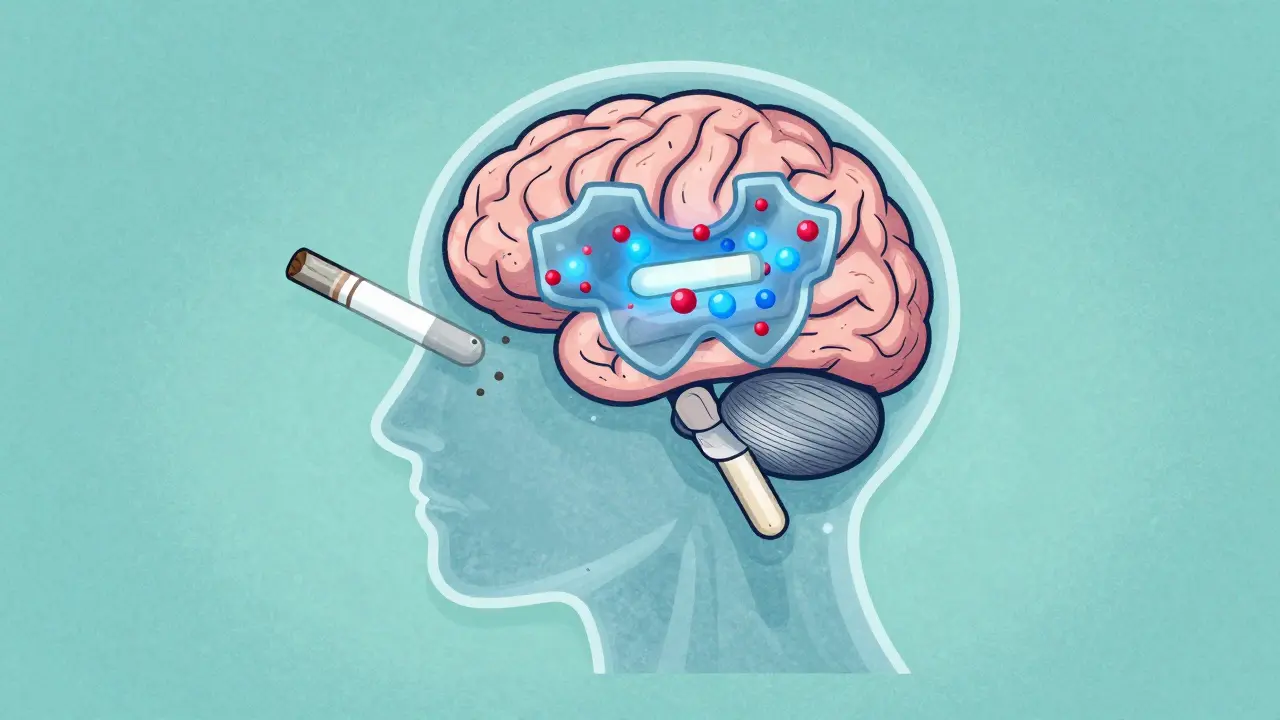
Unlike nicotine patches or gum, Bupropion contains no nicotine. Instead, it works by blocking the reuptake of dopamine and norepinephrine in the brain. It also antagonizes nicotinic acetylcholine receptors. In simple terms, it reduces the intense cravings you feel when you don't smoke and lessens the pleasure you get from lighting up if you do slip up. According to the CDC, it cuts cravings by about 40% compared to a placebo.
The real benefit? You stay off nicotine entirely. For people who want to avoid any form of nicotine replacement therapy (NRT), this is a game-changer. Clinical trials show abstinence rates of 19-23% at six months, which is significantly higher than the 7-10% seen with placebos.
Critical Drug Interactions to Watch
This is the most important section for your safety. Bupropion affects liver enzymes, specifically CYP2B6, and lowers the seizure threshold. Mixing it with certain medications can be dangerous.
| Medication Class | Interaction Risk | Action Required |
|---|---|---|
| MAOIs (Monoamine Oxidase Inhibitors) | Absolute Contraindication | Do not use within 14 days of stopping MAOIs. Risk of hypertensive crisis. |
| Varenicline (Chantix) | High Risk | FDA advises against concurrent use due to increased neuropsychiatric events. |
| Other Seizure-Lowering Drugs | Moderate to High | Includes tramadol, antipsychotics, and tricyclic antidepressants. Monitor closely. |
| CYP2B6 Substrates | Moderate | Drugs like tamoxifen may have reduced efficacy. Dose adjustments may be needed. |
| Alcohol | Moderate | Heavy alcohol use increases seizure risk. Limit intake while on treatment. |
If you take MAOIs for depression, Bupropion is strictly off-limits. The combination can cause a life-threatening spike in blood pressure. Even after stopping MAOIs, you must wait at least two weeks before starting Bupropion.
There is also significant debate around combining Bupropion with Varenicline (Chantix). While some older studies suggested they could be used together, the FDA issued a safety communication in 2022 warning against this combination due to reports of severe mood changes and anxiety. Stick to one pharmacotherapy unless your doctor explicitly oversees a combined protocol.
Dosing Protocol: Timing Is Everything
You cannot just start Bupropion and quit smoking the same day. That is a recipe for failure. Because the drug takes time to build up in your system, you need to follow a specific schedule.
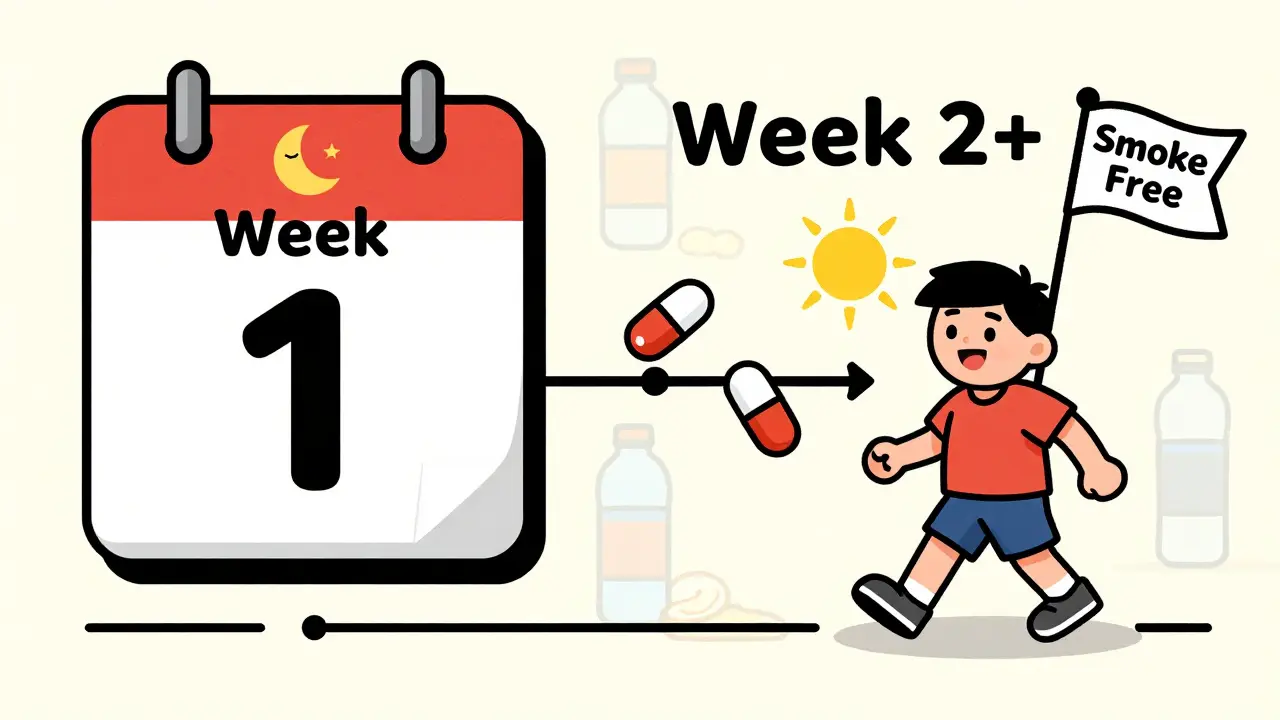
- Start Early: Begin taking the medication 1 to 2 weeks before your target quit date. This allows therapeutic levels to reach your brain.
- Week 1: Take 150 mg once daily. This helps your body adjust and minimizes side effects like jitteriness.
- Week 2 Onwards: Increase to 150 mg twice daily. Ensure there are at least 8 hours between doses to prevent sleep issues.
- Duration: Continue the medication for 7 to 9 weeks total. Many doctors recommend extending this to 12 weeks for better long-term success.
Take the second dose before 5 PM. Why? Because insomnia is the number one side effect, affecting nearly 25% of users. Taking it too late will keep you awake all night, making quitting even harder.
Side Effects: What to Expect
No medication is perfect. While Bupropion avoids the weight gain associated with quitting smoking (a huge plus for many), it comes with its own set of challenges.
- Insomnia: As mentioned, staying awake is common. Stick to the morning and early afternoon dosing rule.
- Dry Mouth: Affects about 12% of users. Keep water handy and use sugar-free gum.
- Headaches: Occur in roughly 9% of patients. Usually mild and resolve after the first week.
- Nausea: Happens in 13% of cases. Always take Bupropion with food to mitigate this.
- Seizures: Rare but serious. The risk is about 1 in 1,000 at standard doses. However, this risk spikes if you have a history of eating disorders like bulimia or anorexia, or if you exceed the recommended dose.
If you experience severe agitation, confusion, or thoughts of self-harm, stop the medication and seek medical help immediately. These are signs of neuropsychiatric adverse events, which are rare but documented.
Bupropion vs. Other Cessation Methods
Why choose Bupropion over Varenicline or Nicotine Replacement Therapy (NRT)? It depends on your health profile and preferences.
Bupropion vs. Varenicline: Varenicline generally has slightly higher quit rates (19.3% vs 17.5% at 6 months). However, Varenicline causes more nausea (22.4% vs 11.2%). If you have a sensitive stomach or are prone to nausea, Bupropion might be easier to tolerate. Also, if you have comorbid depression, Bupropion treats both conditions simultaneously.
Bupropion vs. NRT: Patches and gum provide immediate relief because they replace nicotine. Bupropion does not. If you need instant gratification to curb cravings, NRT wins. But if you want to break the chemical dependency on nicotine completely without introducing more nicotine into your system, Bupropion is superior. It also costs significantly less-generic Bupropion SR averages $35 for a 30-day supply, compared to hundreds for brand-name alternatives.
Who Should Avoid Bupropion?
Not everyone is a candidate for this medication. You should not use Bupropion if you have:
- A history of seizures or epilepsy.
- A current or past diagnosis of bulimia or anorexia nervosa.
- Taken an MAOI within the last 14 days.
- An allergy to Bupropion or any component of the tablet.
- Uncontrolled high blood pressure.
If you fall into any of these categories, talk to your doctor about alternative options like Clonidine or Guanfacine, though these are considered second-line treatments.
Maximizing Your Success Rate
Medication alone is only part of the equation. To boost your chances of staying smoke-free, combine Bupropion with behavioral strategies.
First, identify your triggers. Do you smoke with coffee? With stress? Change those routines. Second, use support resources. The CDC's "Tips From Former Smokers" program shows a 45% higher adherence rate among users who engage with their materials. Third, be patient. The first two weeks are the hardest. Once the drug reaches steady state in your blood (around day 8), the cravings usually subside significantly.
Remember, relapse is common. If you slip up, don't throw away the rest of your pills. Restart the routine. Most successful quitters attempt multiple times before succeeding permanently.
Can I drink alcohol while taking Bupropion for smoking cessation?
You should limit alcohol consumption. Alcohol lowers the seizure threshold, and so does Bupropion. Combining them increases the risk of seizures, especially if you binge drink. Moderate drinking is generally considered safe for most healthy adults, but consult your doctor if you have a history of heavy drinking or liver issues.
Does Bupropion cause weight gain when quitting smoking?
No, Bupropion is actually known for causing minimal weight gain or even slight weight loss. Unlike quitting cold turkey or using NRT, where metabolic slowdown often leads to weight gain, Bupropion's effect on dopamine helps maintain appetite control. This makes it a preferred choice for smokers worried about post-quit weight increase.
How long does it take for Bupropion to work?
It takes about 7 to 10 days to reach therapeutic levels in your bloodstream. This is why you must start the medication 1-2 weeks before your quit date. You won't feel an immediate effect like you would with a nicotine patch. Patience during the first week is crucial.
Can I take Bupropion with antidepressants?
It depends on the type. Bupropion is an antidepressant itself, so combining it with other SSRIs or SNRIs requires careful monitoring by a psychiatrist to avoid serotonin syndrome or excessive stimulation. Never combine it with MAOIs. Always disclose all current medications to your prescribing physician.
Is generic Bupropion as effective as brand-name Zyban?
Yes. Generic Bupropion SR contains the exact same active ingredient and dosage form as Zyban. The FDA ensures generics meet the same quality and efficacy standards. Switching to the generic version can save you hundreds of dollars without sacrificing effectiveness.
It is absolutely disgusting that people rely on chemical crutches to escape the moral failing of their own addiction.
You are not a victim of nicotine; you are a slave to your own lack of discipline and willpower.
These pharmaceutical companies profit off your weakness while selling you another poison wrapped in a white pill.
I judge those who cannot simply snap out of it without altering their brain chemistry with NDRI nonsense.
The fact that this article suggests lowering seizure thresholds as an acceptable trade-off for convenience is morally bankrupt.
We need more spiritual fortitude, not more drugs.
This entire industry is built on exploiting the helpless.
Shameful.
i think its really cool that u shared this info tho.
lot of ppl dont know bout the maoi interaction part.
my cousin tried quitting cold turkey like 3 times and failed every time so he started wellbutrin last year and its been 6 months smoke free now.
the key is definitely starting it before u actually stop smoking like the guide says.
if u just start it on quit day u feel terrible.
also yeah dry mouth is real lol keep water bottle nearby.
gl to anyone trying this route.
🧠✨ Hey guys! 🚭💨 Just wanted to drop some hard facts about the pharmacokinetics here because everyone is ignoring the CYP2B6 inhibition aspect! 📉💊
If you are taking Tamoxifen (adjuvant therapy for breast cancer), Bupropion reduces the AUC of endoxifen significantly! 😱🚫 This is not a drill! The therapeutic index is compromised! 📉📉
Also, don't forget the nicotinic acetylcholine receptor antagonism mechanism! It's not just dopamine reuptake inhibition! 🧪⚡️
Please consult your oncologist before mixing these agents! 🏥👩⚕️ Don't risk your survival rates for a quick fix! 🙅♀️💔 #PharmacologyMatters #QuitSmoking #ScienceFacts
Hey there! 👋 I see a lot of different opinions here but honestly, if this works for you, it works.
No shame in using tools to help break such a tough habit. Smoking is incredibly addictive chemically, so fighting it alone is like running a marathon with weights on your ankles.
I used bupropion myself and the biggest thing was staying consistent with the timing. Taking it too late in the day messed up my sleep big time.
Try to stick to the morning dose rule mentioned in the post. You got this! 💪
The general public seems utterly incapable of understanding basic neuropharmacology without oversimplifying it into 'magic pill' narratives.
Bupropion is not a cure; it is a symptomatic management tool with a narrow therapeutic window.
The notion that one can simply 'follow a schedule' and ignore individual metabolic variances is laughably naive.
Furthermore, the comparison to Varenicline is flawed because it ignores the genetic polymorphisms in CHRNA5-A3-B4 that dictate nicotine dependence severity.
Most commenters here lack the intellectual rigor to grasp why monotherapy often fails in heavy smokers.
It is tedious to watch laypeople debate clinical guidelines they do not comprehend.
Listen up you idiots.
In India we have ayurvedic methods that work better than your western pills.
Bupropion causes seizures? Try not eating junk food instead.
Your whole approach to health is broken.
Stop relying on big pharma and start respecting natural remedies.
This article is garbage propaganda.
What an exceptionally comprehensive and well-structured resource! :)
I am truly delighted to see such clarity regarding the contraindications, particularly the MAOI warning which is often overlooked in casual discussions.
It is wonderful to witness individuals taking proactive steps towards improving their respiratory health and overall longevity.
May all who embark upon this journey find strength and success in their endeavors! ✨
Let us continue to support one another with positivity and factual accuracy!
I remember when my sister tried this. She was really anxious about the side effects, especially the insomnia part.
She ended up taking melatonin at night which helped her sleep through the first few weeks.
It was a rough patch for her emotionally too, she felt very irritable.
But she made it. So if you are struggling, know that it gets easier after the first two weeks.
hey man i think this is good info.
just make sure u talk to ur doc first.
i had high blood pressure so i couldnt take it.
but for most people it seems ok.
good luck to everyone trying to quit.
its hard but worth it.
The data presented is insufficient.
You fail to address the specific dosage adjustments required for patients with hepatic impairment.
CYP2B6 metabolism is highly variable.
Your generalized advice is negligent.
Consult primary literature.
This summary is inadequate for clinical decision making.
Unacceptable quality.