Blockbuster patent expirations: 2025 and beyond timeline
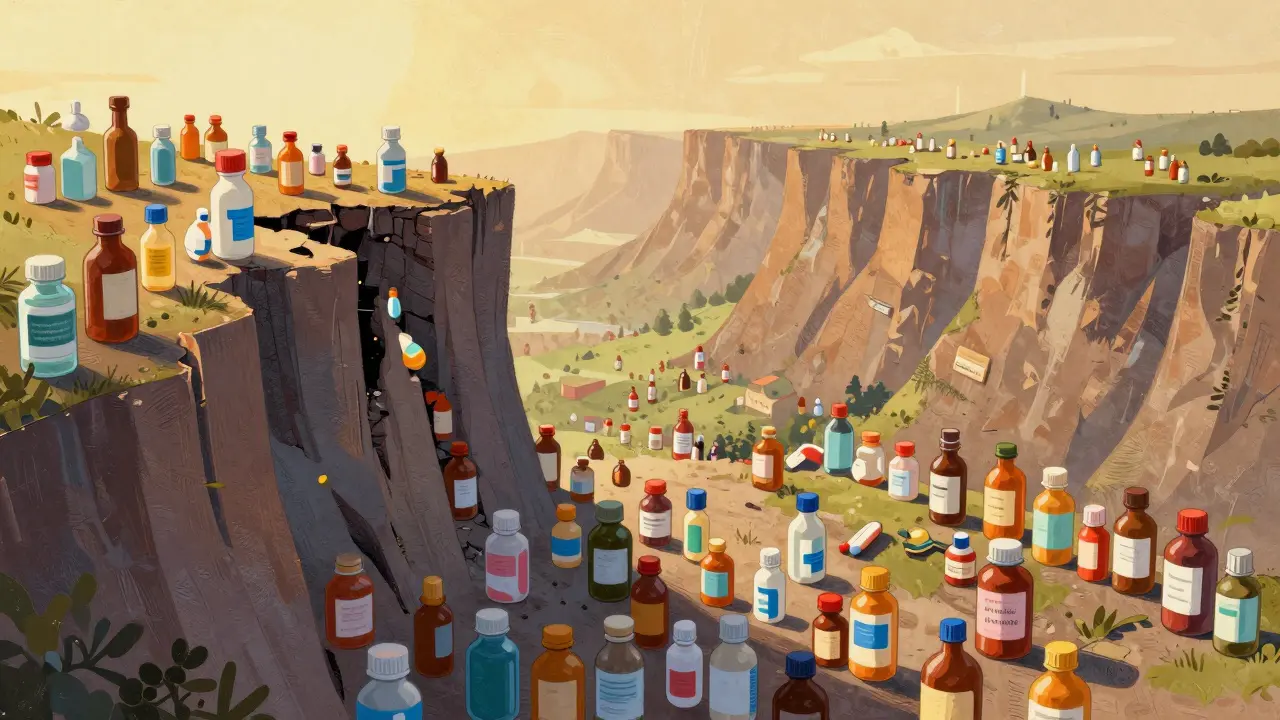
Patent expiration marks the moment when a pharmaceutical company loses its exclusive right to sell a specific medicine. By the time protection ends, other manufacturers can produce identical versions at a fraction of the cost. We are currently standing on the edge of a massive shift in healthcare known as the patent cliff. If you are following drug pricing, insurance coverage, or investment trends in pharma, this wave matters more than anything seen in the last three decades.
Right now, in April 2026, the dust is settling on the first big wave. Last year, we watched major cardiovascular drugs lose their shields. But the real action is just heating up for the next five years. An estimated $250 billion in global prescription sales is set to face generic competition between 2025 and 2030. That isn't just a number; it represents the life-saving treatments millions of people rely on every day.
Why do patents matter for your wallet?
To understand the timeline, you need to know why prices drop so drastically. When a company invents a new drug, they get a temporary monopoly through intellectual property laws. This allows them to recoup billions in research costs. Once that period ends, the gates open.
The system works like this: The original manufacturer holds a Blockbuster Drug status, which means annual sales exceed a billion dollars. Once protection lifts, competitors flood in with cheaper alternatives. For small molecules-the standard pills and capsules-prices typically crash by 80% to 90% within a year. You might see a bottle that cost $300 jump down to $30 almost overnight. This isn't speculation; it's documented history with the FDA's Orange Book database tracking thousands of products.
However, things get complicated with biologics. These are large, complex proteins often delivered via injection. They don't get "generics"; they get Biosimilar versions. Developing these takes longer and costs more to approve. While small molecules switch quickly, biologics can maintain higher prices for years after the patent clock runs out because there are fewer qualified competitors ready to step in immediately.
Key drugs entering the free market
You probably won't remember every chemical name, but the effects will show up on your pharmacy bill. Several heavy hitters dominate this timeline. Let's look at the specific players changing the landscape.
First, there was Entresto. As of mid-2026, the transition for this heart failure medication is well underway. Its core combination patent expired in July 2025. Before the switch, patients were paying roughly $150 to $300 monthly out of pocket. Now, with generic versions available, that cost has plummeted. Doctors report patients switching enthusiastically once formulary rules update. The savings here help cover other medical needs, giving families breathing room in tight budgets.
Next up is Eliquis. This blood thinner is huge in terms of revenue, generating over $13 billion annually before facing its expiration window. Its key crystalline form patent heads toward expiry in late 2026. Because this competes in a crowded market with older options like warfarin, price pressure could be significant. Patients currently prescribed Eliquis should talk to their pharmacists about what happens in November 2026. Early planning prevents shortages and ensures continuous care.
Then we reach the big elephant in the room: Keytruda. Merck's immunotherapy cancer treatment generated nearly $30 billion in sales last year alone. It faces patent challenges starting around 2028. Unlike the others, Keytruda treats oncology, where doctors are notoriously hesitant to switch therapies mid-treatment due to severity of illness. Even with a generic option, branded share might stay high longer because lives are on the line. Still, the sheer volume of sales at risk makes this the single most financially consequential event in the sector.
| Drug Name | Manufacturer | Therapy Area | Estimated U.S. Expiration | Annual Sales (approx) |
|---|---|---|---|---|
| Entresto | Novartis | Cardiovascular | July 2025 (Passed) | $7.8 Billion |
| Eliquis | Bristol Myers Squibb | Blood Clotting | November 2026 | $13.2 Billion |
| Keytruda | Merck | Oncology | 2028 | $29.3 Billion |
| Stelara | AbbVie | Immunology | 2027 | $6.5 Billion |
| Trulicity | Sanofi/Eli Lilly | Diabetes | 2028 | $8.1 Billion |
How generics actually enter the market
It is not a light switch turning off and on instantly. There is a rigorous process governing entry. The FDA requires generic manufacturers to submit an Abbreviated New Drug Application, commonly called an ANDA. This proves their version is chemically equivalent to the brand.
If you are wondering why a patent expires one year but shelves don't stock the generic until two years later, it is because of development lead times. Companies spend months or years proving safety data matches the original. On average, small molecule generics hit shelves 6 to 12 months post-expiration. For biologics, that lag jumps to 18 to 24 months. This delay means the "cliff" isn't vertical; it's a slope. You still pay premium prices for a while even if the legal protection ended earlier.
Litigation also plays a game of chess here. Big pharma companies sometimes sue generic challengers before launch to delay entry. Regulatory agencies like the FTC watch these moves closely to prevent anti-competitive behavior. Despite lawsuits, the trend remains consistent: eventually, competition wins. The market forces usually override legal maneuvering over a timeframe of 2 to 3 years after the critical patent date.
The patient experience during the transition
For the people taking these meds, the shift brings both relief and confusion. In September 2024, cardiology specialists noted that many patients were eager to switch to generic Entresto due to cost concerns. One California doctor reported her patients seeing monthly costs drop from hundreds of dollars down to under fifty.
However, supply chains get stressed during these switches. Pharmacists sometimes worry about shortages when multiple generic makers enter at once or when production ramps up too slowly. Hospital systems usually handle this better than retail pharmacies because they manage formularies centrally. They negotiate bulk prices early to secure inventory. Retail pharmacists might struggle with availability spikes if demand surges unexpectedly.
Patient advocacy groups play a role too. Surveys show that nearly 70% of patients would switch immediately upon generic availability if the savings were guaranteed. Out-of-pocket costs drive the decision far more than brand loyalty. Education is key though; some patients fear generic versions work less effectively. Pharmacists educate that therapeutic equivalence exists, especially for standard pills. For biologics, education focuses on "switchability," ensuring the immune system accepts the similar protein without rejecting it.
What companies are doing to survive
Pharmaceutical giants cannot afford to sit idle while revenues evaporate. Merck, for instance, announced investments of over $12 billion in research and development specifically to replace Keytruda's eventual loss. They are betting on next-generation oncology therapies to fill the gap.
Companies also acquire smaller firms to buy new technologies rather than building them from scratch. Bristol Myers Squibb bought Karuna Therapeutics for $4.1 billion to boost its neuroscience portfolio ahead of Eliquis losses. These acquisitions keep their product pipelines full. Analysts predict consolidation will speed up, meaning the top ten pharma companies might shrink to six or seven by 2035.
They also try to "evergreen" patents. This involves tweaking the delivery method or formulation slightly to file new patents on the same core drug. While legal, regulators scrutinize this heavily. The goal is to extend the profitable life of a medicine without stifling true innovation. Balancing shareholder value with public health access remains the tightrope walk for executives.
Preparing for the next wave
If you work in healthcare administration or manage your own prescriptions, preparation is smart. Hospitals are already updating inventory management protocols. Many are implementing early switch programs for patients on medications set to expire in late 2026.
Keep track of the FDA Purple Book for biological products and the Orange Book for small molecules. These databases list patent expiration dates publicly. Tools like the Generic Pharmaceutical Association's navigator provide month-by-month updates. Insurance plans are reacting too; PBM negotiations are getting aggressive in anticipation of the price drops. Your copay might change without a new doctor visit once the generic lands.
Don't panic if the pill looks different. Generic manufacturers don't always replicate the exact shape or color of the brand-name version, though the active ingredient remains identical. Always read the label and ask your pharmacist if anything seems off. Communication ensures continuity of care.
When exactly does the patent protection end for Eliquis?
The key patent for Eliquis (apixaban) protecting its crystalline form is scheduled to expire in November 2026. Once this date passes, generic manufacturers can begin the approval process to market competing versions, likely hitting shelves in late 2027 or early 2028 depending on regulatory review times.
Will generic versions work exactly the same as the brand?
For small molecule drugs like Entresto or Eliquis, yes. The FDA requires bioequivalence, meaning the generic performs identically in the body. However, for biologics like Keytruda, the versions are biosimilars-they are highly similar but not exact copies. Patients may need monitoring during the transition to ensure the same clinical response.
How much will prices drop once the generic arrives?
History shows typical drops of 80% to 90% for traditional pills within the first year of generic entry. Biologics see slower declines, often starting at 30% initially, but costs continue trending downward as more competitors enter the market over several years.
Can my doctor stop me from switching to a generic?
Usually, insurance companies push for generics automatically. Some doctors write scripts stating "Dispense as Written" (DAW) to force a brand, but this often incurs higher costs for you unless medically necessary. State laws vary on whether pharmacists can substitute without permission, but patient consent is always required for significant therapeutic switches.
Why does Keytruda expiration affect cancer patients differently?
Oncology drugs involve complex treatment regimens and sensitive health states. Physicians are often reluctant to switch active therapies mid-course even when a cheaper version exists. Additionally, since Keytruda is a biologic, competition comes in the form of biosimilars, which take longer to develop and have stricter interchange requirements.
The patent cliff represents a structural failure of the current intellectual property framework. Pharmaceutical monopolies extend far beyond reasonable protection periods for innovation. Research costs are inflated artificially by marketing budgets rather than clinical trials. Generic manufacturers face litigations designed solely to delay market entry indefinitely. Legal strategies focus on patent thickets surrounding minor formulations of active ingredients. The FDA requires extensive bioequivalence testing despite known chemical structures remaining identical. Approval timelines are manipulated to maintain brand loyalty among prescribing physicians. Patients suffer from delayed access to affordable medication options during these transitions. Insurance formularies update slower than actual patent expiration dates occur annually. Supply chains fracture when multiple generic suppliers attempt simultaneous distribution channels. Hospital systems often stockpile older inventory before accepting new lower-cost alternatives. Rural healthcare providers lack the resources to manage complex switching protocols efficiently. Regulatory agencies prioritize corporate stability over urgent public health needs consistently. True competition only emerges after several years of initial market consolidation attempts. Systemic change requires legislation that caps pricing independent of patent duration completely.
Prices are finally going down soon.
Balancing innovation incentives with patient affordability remains a complex global challenge. Different nations approach pharmaceutical regulation with varying degrees of urgency. Developing markets rely heavily on timely generic availability for survival. Wealthier economies often absorb higher costs through subsidies and tax systems. Collaboration between sectors ensures that quality standards do not slip during price wars. Trust between doctors and pharmacists facilitates smoother transitions for vulnerable groups. Communication strategies should emphasize therapeutic equivalence to reduce unnecessary anxiety. Cultural differences influence how patients perceive the difference between brands and copies. International agreements could streamline approval processes to benefit everyone equally. We must respect the work done by researchers while ensuring access follows reasonably.
Big pharma will find loopholes before anyone actually saves money on prescriptions. They own the regulators who decide what gets approved. It feels like another scam designed to extract wealth from sick people. Profit margins never seem to shrink regardless of legal changes.
Generic entry causes shortages more often than it fixes prices. Supply chain failures hurt patients more than high costs.
Only the wealthy get the real meds anyway. Everyone else gets whatever scraps fall from the table. Corporate greed dictates the rules of medicine here. You cannot trust them to care about human lives.
Are we prepared for the shortage!!! Many pharmacies will panic!!! Inventory will vanish overnight!!! We must stock up now!!! Insurance won't cover gaps!!! Prices might spike before they drop!!! Be aware!!! Stay vigilant!!! Watch your bills!!! Safety comes first!!!
Promises of savings rarely materialize in practice for individual patients. The math looks good until administrative fees intervene. Realistically nothing changes until laws force actual price controls. Skepticism is warranted when past trends show minimal relief.
Patience helps. Just wait for the switch. It happens. Costs will lower. Keep your records. Follow your doctor. Don't worry too much. Things work out eventually.
We need to remember that innovation drives medical progress forward constantly. Every dollar spent on research eventually leads to breakthrough treatments for disease. Patents provide the necessary capital to fund expensive development pipelines globally. Without exclusive rights companies would simply stop investing in risky therapies entirely. The goal should be finding a balance between access and sustainable growth. Generic competition brings relief to millions struggling with monthly co-payments today. New biosimilars offer hope for cancer patients facing prohibitive therapy costs. Health insurers are watching these timelines closely to adjust coverage plans accordingly. Government programs could step in earlier to support low income families during switches. Education campaigns help reduce fear surrounding generic versions of familiar medicines. Pharmacists act as vital guardians ensuring patient safety during transition periods. Technology advances allow faster production cycles for small molecule competitors quickly. Global health equity improves significantly when barriers to entry lower substantially. Future policies might integrate outcome based pricing models to protect consumers better. Hope remains strong that the next decade brings better outcomes for everyone involved.
Check the Orange Book database regularly for updates on your specific medications. Talk to your pharmacist about formulary changes ahead of time. Ask if your insurance covers the upcoming generic versions automatically. Keep track of refill dates so you do not miss the window. Communication prevents gaps in treatment schedules effectively.
Navigating these changes requires emotional resilience and practical planning together. Stress management helps families cope with the uncertainty of supply shifts. Community support networks share information on reliable pharmacy sources locally. Healthcare professionals remain committed to guiding patients through these transitions safely. Maintaining a positive mindset empowers individuals to advocate for their best interests firmly. Understanding the process reduces fear and builds confidence in medical decisions made daily.
The ethics of monopolizing life-saving tools deserve philosophical scrutiny. Value of human existence outweighs financial returns generated by exclusivity. Morality dictates access should not depend on ability to pay alone. Innovation must serve humanity rather than shareholders primarily. Society benefits when knowledge flows freely without artificial restrictions imposed. True progress lies in shared discovery instead of hoarded secrets. We must rethink the contract between inventors and the public.
Fight for your rights when insurance denies the switch aggressively. Demand written explanations for any refusal to substitute branded products. Contact your representative if regional supply issues persist longer than expected. Organize local groups to pressure hospital networks for better transparency. Silence benefits corporations who try to hide the reality from consumers.