Best Practices for Choosing Safe OTC Medications at the Pharmacy
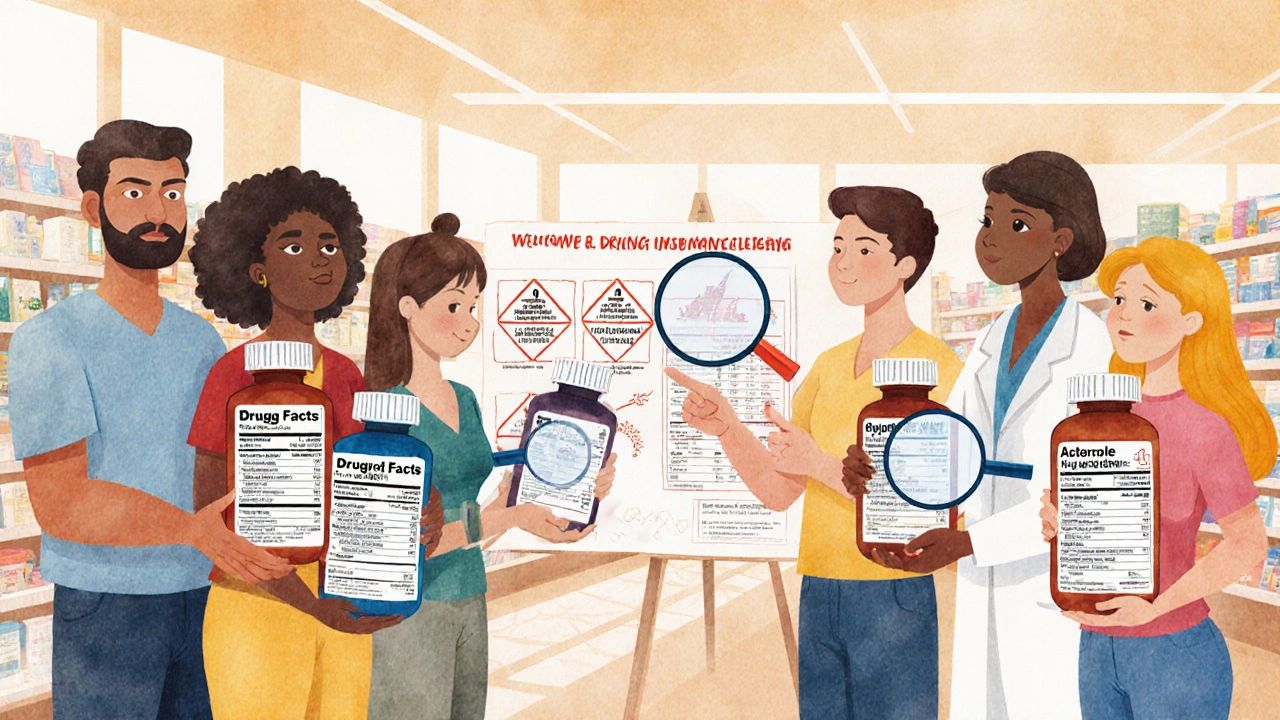
Every year, millions of people walk into a pharmacy looking for relief from a headache, a cold, or an upset stomach. They grab a bottle off the shelf, read the front label, and assume it’s safe. But here’s the truth: OTC medications aren’t harmless just because you don’t need a prescription. In fact, they’re responsible for nearly 200,000 emergency room visits in the U.S. each year - mostly because people didn’t read the label or didn’t know what they were taking.
Read the Drug Facts Label - Every Time
The most important thing you can do before buying any OTC medicine is to read the Drug Facts label. This isn’t just a formality. It’s your safety checklist. Since 1999, the FDA has required every OTC product to use this standardized format so you can compare products easily. The label breaks down five key things: active ingredients, purpose, uses, warnings, and directions.Active ingredients are the only part that matters. That’s what actually treats your symptom. If you’re buying a cold medicine, you might see acetaminophen, dextromethorphan, and phenylephrine listed. If you’re already taking a prescription painkiller that contains acetaminophen, adding another product with it could lead to liver damage. The FDA says acetaminophen overdoses cause about 56,000 ER visits annually. That’s not a small risk.
Don’t skip the warnings section. It tells you who shouldn’t take it - like people with high blood pressure, liver disease, or pregnancy. It also lists what to avoid, like alcohol or other medicines. If you’re unsure, don’t guess. Talk to the pharmacist.
Know What’s in Your Medicine
Many people don’t realize that the same active ingredient can appear in multiple products under different brand names. Tylenol, Excedrin, and even some prescription pain relievers all contain acetaminophen. If you take two of them together, you’re doubling your dose - and that’s dangerous.Same goes for ibuprofen and naproxen. Both are NSAIDs, and both can cause stomach bleeding or kidney damage if taken too often or in combination. If you’re treating a sore throat, you don’t need a cold medicine with decongestants and cough suppressants. Just pick something that targets your actual symptom.
Here’s a simple rule: pick the medicine with the fewest active ingredients you need. If you have a runny nose and a headache, don’t buy a four-in-one cold formula. Buy a single-ingredient pain reliever and a separate antihistamine if needed. That way, you control what you’re taking and avoid accidental overdoses.
Use the Right Dose - No Guessing
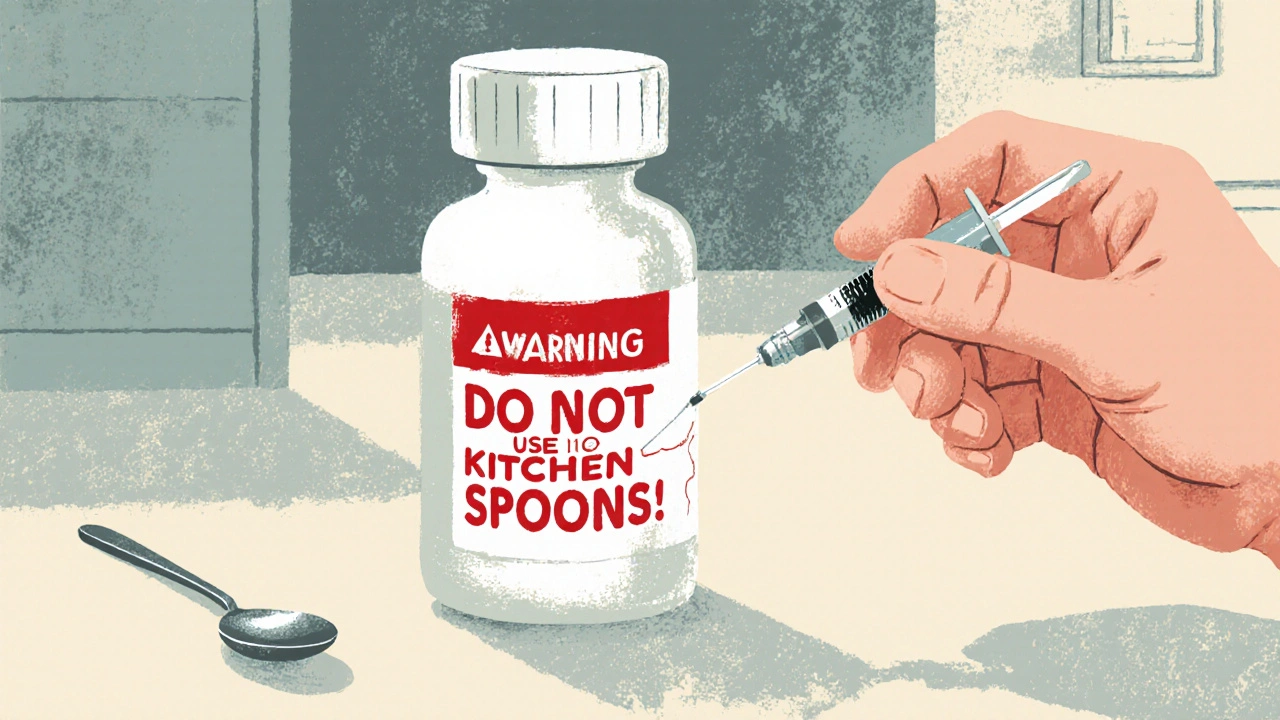
Children aren’t small adults. That’s not just a saying - it’s a medical fact. The FDA warns that estimating a child’s dose based on weight or age can be deadly. A teaspoon (TSP) is 5 milliliters. A tablespoon (TBSP) is 15 milliliters. That’s three times more. Kitchen spoons vary wildly in size - some hold twice as much as others. That’s why you should always use the measuring tool that comes with the medicine.Even adults make this mistake. I’ve seen people take two tablets because they didn’t feel better after one. But OTC meds have maximum daily limits for a reason. Taking more won’t make you feel better faster - it just increases your risk of harm. For example, the daily limit for acetaminophen is 3,000 to 4,000 mg depending on your health. That’s about six extra-strength tablets. Go over that, and you’re putting your liver at risk.
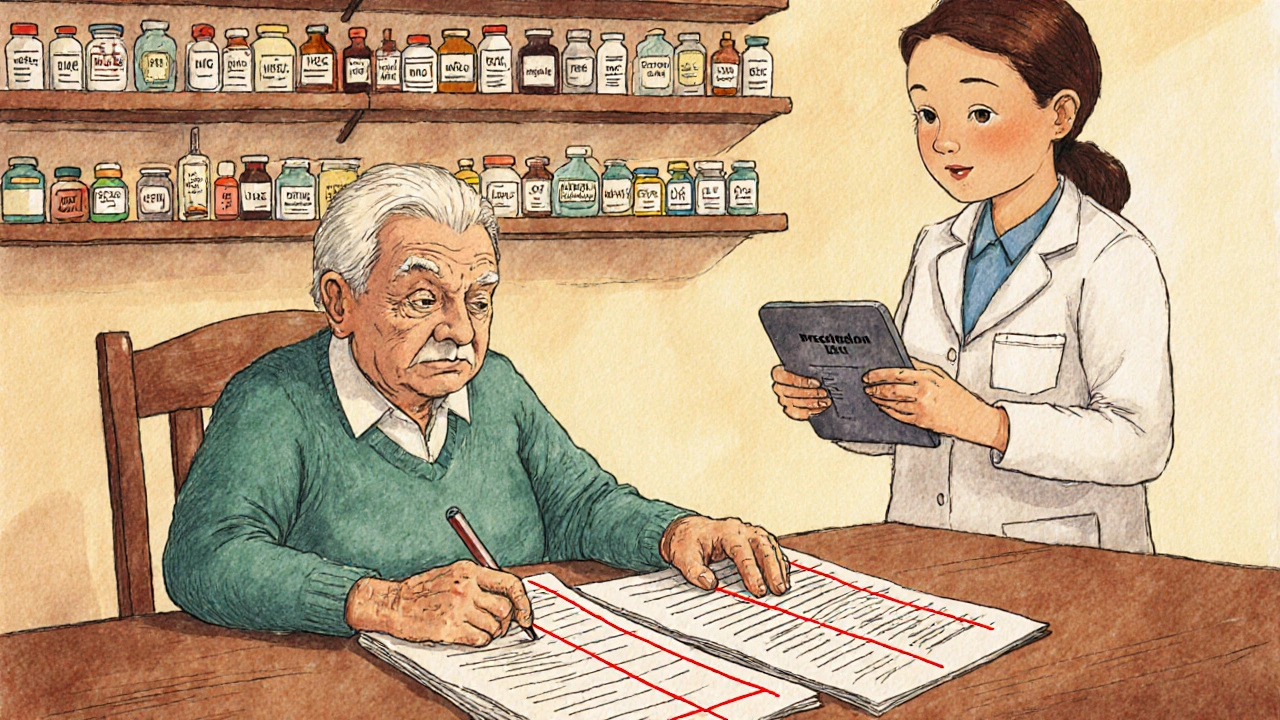
For older adults, this is even more critical. People over 65 make up half of all adverse drug reactions, even though they’re only 13% of the population. Their bodies process drugs slower. They’re often on multiple medications. Mixing OTCs with prescriptions can be a silent danger.
Talk to the Pharmacist - It’s Free
Pharmacists aren’t just the people who hand you your pills. They’re trained to spot dangerous combinations, flag risks, and recommend safer alternatives. And yes, asking them for advice is free.Let’s say you have diabetes and you’re thinking about buying a cold medicine. Some decongestants can raise your blood sugar. Some antihistamines can make it harder to urinate if you have an enlarged prostate. A pharmacist will know which products are safe for your condition - and which ones to avoid.
Studies show that when people talk to a pharmacist before buying OTC meds, medication errors drop by 67%. That’s not a small number. That’s life-changing. Don’t feel like you’re bothering them. They’re there for this exact reason. Bring your list of all your prescription meds, supplements, and even herbal products. Even something like St. John’s Wort can interact with antidepressants or birth control.
Check for Interactions - Especially With What You’re Already Taking
OTC meds don’t exist in a vacuum. They interact with everything else in your body. Here are a few common, dangerous combinations:- Alcohol + antihistamines (like Benadryl) → extreme drowsiness, slowed breathing
- Alcohol + dextromethorphan (cough syrup) → increased risk of overdose
- Aspirin + blood thinners (like warfarin) → higher chance of bleeding
- Sleep aids + prescription sedatives → respiratory depression
And don’t forget about supplements. Fish oil, garlic pills, ginkgo biloba - they all thin your blood. If you’re on a blood thinner or about to have surgery, these can be risky. Always tell your pharmacist what you’re taking, even if you think it’s “just a natural remedy.”
Stick With One Pharmacy
If you use multiple pharmacies, no one has your full medication history. That’s a problem. Your pharmacist needs to know everything you’re taking - prescriptions, OTCs, vitamins - to catch dangerous overlaps. If you fill all your meds at one place, they can flag issues before you even walk out the door.Many pharmacies now offer free medication reviews. Ask for one. It takes 15 minutes. It could save you from a hospital visit.
Know When to Stop - And When to See a Doctor
OTC meds are for short-term relief. If your headache lasts more than a few days, your cough drags on past two weeks, or your fever won’t go down after three days - it’s not an OTC problem anymore. It’s a sign you need professional care.Don’t use OTC painkillers to mask symptoms so you can keep going. That’s how minor issues turn into serious ones. If you’re pregnant, breastfeeding, or caring for a young child, always check with a doctor before taking anything. Even something as simple as Pepto-Bismol can be risky during pregnancy because it contains bismuth subsalicylate, which is related to aspirin.
What’s New in 2025?
The FDA is updating its OTC drug review system under the CARES Act of 2020. By 2025, you’ll see faster updates to labeling and ingredient safety rules. For example, in 2023, fluticasone furoate became the first OTC nasal steroid for allergies - something that used to require a prescription. That’s progress. But it also means the rules are changing. What was safe last year might need a new warning today.That’s why reading the label every time matters. Even if you’ve used the same product for years, the formula might have changed. The warnings might be updated. The dose might be adjusted.
Bottom line: OTC medications are powerful tools. But they’re not toys. Treat them with the same respect you’d give a prescription. Read the label. Know what’s in it. Talk to the pharmacist. And never assume because it’s over-the-counter, it’s safe to take without thinking.
Can I take two different OTC medicines at the same time?
You can, but only if you check the active ingredients first. Many cold, flu, and pain relievers contain the same drugs - like acetaminophen or ibuprofen. Taking two products with the same ingredient can lead to an overdose. Always compare the Drug Facts labels. If they share an active ingredient, don’t combine them unless a pharmacist says it’s safe.
Is it safe to give OTC medicine to a child based on their weight?
Only if the label says so. Never guess. Always use the dosing chart on the package, and use the measuring tool that comes with the medicine - not a kitchen spoon. Children’s bodies process medicine differently than adults, and even small mistakes can be dangerous. If you’re unsure, ask the pharmacist for the right dose based on your child’s exact weight.
Why do some OTC medicines say “do not use if pregnant”?
Some ingredients can cross the placenta and affect the baby. For example, ibuprofen and aspirin can cause complications in late pregnancy. Decongestants like pseudoephedrine can reduce blood flow to the placenta. Even herbal ingredients like echinacea or goldenseal aren’t proven safe. Always check with a doctor before taking anything during pregnancy - even something as simple as a cough drop.
What should I do if I accidentally take too much OTC medicine?
Call Poison Control immediately at 1-800-222-1222 in the U.S. or your local poison center. Don’t wait for symptoms to appear. Acetaminophen overdoses, for example, can damage your liver without you feeling sick for hours. Keep the medicine bottle handy when you call - they’ll need to know the exact ingredients and how much was taken.
Can I use expired OTC medicine?
It’s not recommended. While some expired medicines may still be safe, their potency drops over time. Pain relievers, allergy meds, and antibiotics may not work as well. In rare cases, expired liquid medicines can break down into harmful substances. If the medicine is more than a year past its expiration date, throw it out. Many pharmacies offer free medication disposal bins.
Man, I used to just grab whatever looked like it would knock out my headache. Then I ended up in the ER because I didn’t realize my cold med had acetaminophen too. Never again. Read the damn label. It’s not hard.
This is so important. I’m a nurse and I see people come in with liver damage from stacking OTC meds all the time. Seriously, if you’re unsure, ask the pharmacist. They’re not there to sell you stuff-they’re there to keep you alive.
It’s funny how we treat OTC meds like candy. We’ll read the ingredients on a bag of chips but ignore the Drug Facts label like it’s government propaganda. But here’s the truth: your body doesn’t care if it’s prescription or not-it just reacts. The real question isn’t ‘Is this safe?’ It’s ‘Do I really need this?’
I used to think pharmacists were just glorified cashiers. Then I asked one about my blood pressure med and a cough syrup I was taking. She looked at me like I’d just tried to microwave my phone. Turned out the dextromethorphan was making my BP spike. I’ve been going to the same pharmacy ever since. Free advice? Yeah. Worth more than the medicine.
While the general principles outlined herein are indeed laudable and reflect sound public health practice, one must also acknowledge the structural limitations of the current OTC regulatory framework. The FDA’s Drug Facts labeling system, though standardized, remains insufficiently accessible to populations with low health literacy. Furthermore, the proliferation of multi-symptom formulations creates a cognitive burden that is neither equitable nor efficient. A more robust system would require mandatory digital QR codes linking to interactive, multilingual safety profiles-something currently absent despite technological feasibility.
OMG I JUST REALIZED I’VE BEEN TAKING TWO DIFFERENT COLD MEDS FOR A WEEK BECAUSE ONE HAD ‘HEADACHE’ ON THE FRONT AND THE OTHER SAID ‘COUGH RELIEF’-BUT BOTH HAD ACETAMINOPHEN. I’M A HUMAN TIME BOMB. 🤯 I’M GOING TO THE PHARMACY TOMORROW WITH A LIST OF EVERYTHING I’VE TAKEN SINCE JANUARY. I’M SCARED. BUT ALSO KINDA PROUD? Like, I’m not dumb-I just didn’t know. Now I do. Thanks for the wake-up call.
This post is dangerously naive. The real issue isn’t patient ignorance-it’s the FDA’s deregulation of OTC drugs since the 1970s. Companies were allowed to market multi-ingredient products without clinical trials for interactions. The result? A public that’s been deliberately misled into thinking ‘over-the-counter’ means ‘safe.’ This isn’t education-it’s damage control for corporate negligence.
Label reading? Overrated. In Nigeria, we just ask the guy behind the counter. He knows what’s in it. You don’t need a PhD to know if something’s strong. If it knocks you out, don’t take it with alcohol. Simple.
ok so i just took 2 tylenol and a cold med that had acetaminophen and now i’m panicking?? like i didn’t even know they were the same thing?? i’m 23 and i thought tylenol was just for headaches?? this is a whole new level of trauma 😭
my grandma used to say ‘if it’s not hurting you, don’t take it.’ i didn’t get it until i saw her stop taking her cough syrup after 3 days even though the bottle said ‘up to 7.’ she said, ‘if it’s not better, it’s not the medicine-it’s the body.’ i think she knew more than all the labels.
It is imperative to note that the assertion regarding pharmacist consultation reducing medication errors by 67% is statistically robust only if the sample population was controlled for confounding variables such as socioeconomic status, baseline health literacy, and access to primary care. Without such controls, the correlation may be spurious. Furthermore, the recommendation to use a single pharmacy is only viable in urban centers with centralized healthcare infrastructure-this is not scalable in rural or underserved communities.
While the content is informative, I would like to point out that in India, many OTC medications are sold without proper labeling due to regulatory gaps. The assumption that all products have standardized Drug Facts labels does not hold true globally. Education must be context-specific, not just FDA-centric.
Why do people still use kitchen spoons? I’ve seen it. It’s not ignorance-it’s laziness. You want to be safe? Buy a $2 dosing cup. It’s not that hard.
Did you know the FDA changed the acetaminophen limits in 2011 because they were pressured by Big Pharma? They didn’t want to lose sales from combo products. That’s why the limit is still 4000mg instead of 3000mg. They’re not protecting you-they’re protecting profits. The real danger isn’t the medicine. It’s the system.
THIS IS SO IMPORTANT!! 🙌 I just started using the same pharmacy and they gave me a free med review-turned out my fish oil was messing with my blood thinner. I was about to have surgery next week!! 🥹 THANK YOU for posting this. I’m telling everyone I know. 💙