Behavioral Weight Loss Therapy: Cognitive Strategies That Work
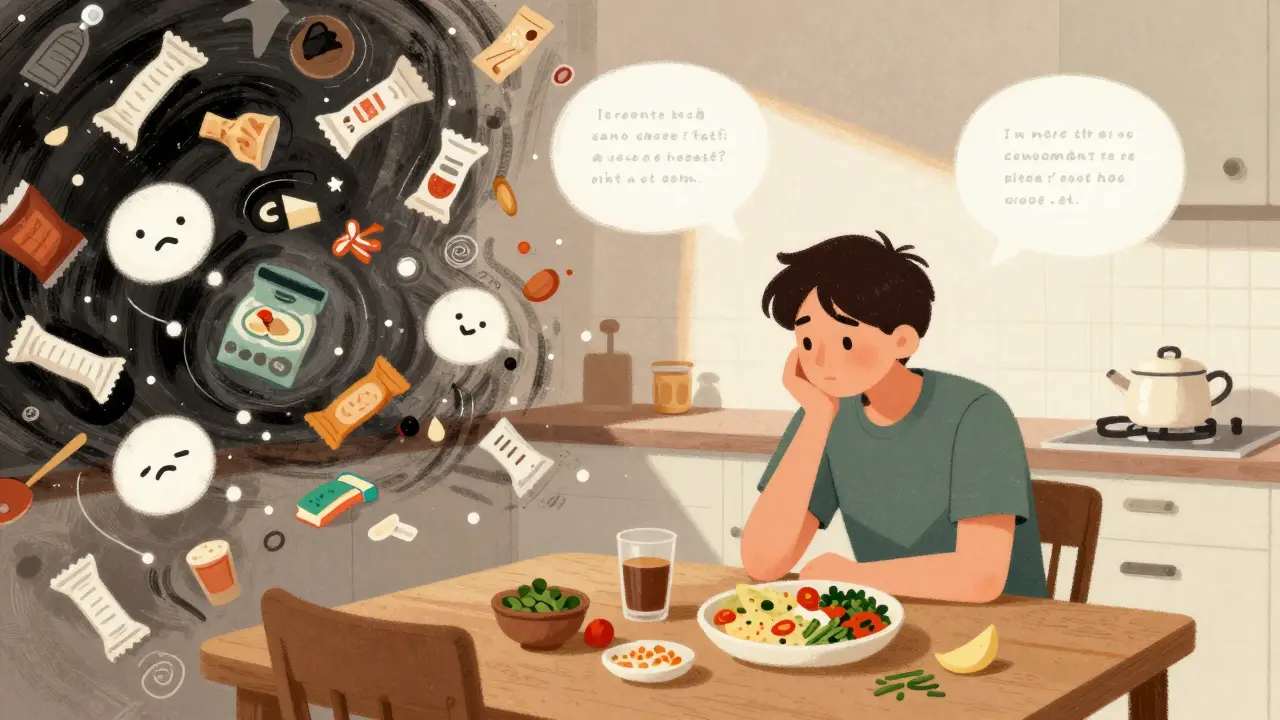
You’ve probably tried the diet. You counted calories, skipped dessert, and maybe even joined a gym with good intentions. But months later, the scale hasn’t moved much, or worse, you gained it all back plus interest. If this sounds familiar, you aren’t alone-and it’s likely not because you lack willpower. The problem often isn’t just what you eat; it’s how you think about food, stress, and your body.
This is where Behavioral Weight Loss Therapy, specifically using cognitive strategies rooted in Cognitive Behavioral Therapy (CBT), changes the game. Instead of focusing solely on restriction, these methods target the mental loops that trigger overeating. They help you rewire your relationship with food by addressing the thoughts and emotions that drive your habits.
The Science Behind the Mind-Weight Connection
Traditional diets fail because they ignore the psychological engine behind eating. Cognitive Behavioral Therapy for weight management was adapted from general psychotherapy principles developed by Aaron Beck in the 1960s. It wasn’t until the 1980s that pioneers like Albert J. Stunkard at the University of Pennsylvania applied these concepts specifically to obesity treatment.
The core idea is simple but powerful: your thoughts influence your feelings, which in turn drive your behaviors. If you believe “I’m stressed, so I deserve a cookie,” you feel justified in eating it, leading to the behavior of reaching for sugar. A 2023 meta-analysis published in Scientific Reports confirmed that integrating behavioral techniques with cognitive strategies yields statistically significant results. Across nine studies involving 902 patients, those receiving CBT-based interventions saw a mean BMI change of -1.6 compared to -0.05 in control groups. While modest on paper, this difference is clinically meaningful when scaled over time and combined with other lifestyle changes.
Core Cognitive Strategies That Actually Work
Effective behavioral weight loss therapy relies on specific, actionable tools. Here are the most evidence-based strategies used by clinicians today:
- Cognitive Restructuring: This involves identifying and challenging distorted thoughts. For example, changing “If I eat one slice of pizza, I’ve ruined my diet” to “One slice is part of a balanced day.” Research by Beck & Busis (2017) showed that restructuring these negative thought patterns can decrease emotional eating episodes by 63%.
- Self-Monitoring: Keeping a detailed journal of food intake, activity, and mood. Studies show that participants with 85-90% adherence to self-monitoring lose 5-10% more weight than those who don’t track consistently.
- Stimulus Control: Modifying your environment to reduce triggers. This might mean keeping junk food out of the house or eating only at a designated table, not in front of the TV.
- Problem-Solving Skills: Preparing for high-risk situations. If you know you tend to overeat at family gatherings, you plan ahead by eating a healthy snack beforehand or bringing a dish you enjoy.
- Relapse Prevention Planning: Accepting that setbacks happen and having a concrete plan to get back on track without spiraling into guilt.
Why CBT Beats Diet-Only Approaches
If you’ve ever followed a strict meal plan only to binge after a few weeks, you’ve experienced the limits of behavioral-only approaches. A study by Jacob et al. (2018) highlighted a stark contrast: participants using CBT lost an average of 8.2% of their body weight at six months, compared to just 5.1% for those following standard behavioral interventions without cognitive components.
The difference lies in sustainability. Diets restrict actions; CBT addresses the root causes of why we break rules. When you understand that “all-or-nothing” thinking leads to abandonment of goals, you can intervene before the binge happens. However, it’s important to note that CBT alone may not produce dramatic weight loss for everyone. The National Institutes of Health (NIH) notes that while CBT improves psychological outcomes, it works best when combined with nutritional counseling and physical activity guidelines.
| Intervention Type | Average Weight Loss (6 Months) | Key Strength | Main Limitation |
|---|---|---|---|
| Standard Diet Only | ~3-5% | Immediate structure | High dropout rate; poor long-term maintenance |
| Behavioral Intervention (No CBT) | ~5.1% | Habit formation | Doesn't address emotional triggers |
| CBT-Based Therapy | ~8.2% | Addresses psychological drivers | Requires skilled therapist; time-intensive |
| CBT + Motivational Interviewing | ~12.7% (at 18 months) | High adherence; intrinsic motivation | Complex to deliver; limited availability |

The Power of Combining CBT with Motivational Interviewing
Even the best cognitive strategies can stall if a patient lacks motivation. This is where Motivational Interviewing (MI) comes in. MI is a collaborative communication style that helps people resolve ambivalence about change. When combined with CBT, the results are impressive. Wilfley et al. (2018) documented a 12.7% mean weight loss at 18 months for patients receiving CBT+MI, compared to 7.3% for CBT alone.
Moreover, dropout rates-a major hurdle in weight management programs-drop significantly. Standard diet interventions see a 54.4% dropout rate, whereas CBT-enhanced programs report only 38.7%. Adding MI further reduces attrition by fostering autonomy and reducing shame. Instead of being told what to do, patients explore their own reasons for wanting to change, making them more resilient against setbacks.
Challenges and Realistic Expectations
Let’s be honest: CBT for weight loss isn’t a magic bullet. One of the biggest criticisms is modest long-term maintenance. Grave, Calugi, & Marchesini (2014) found that patients typically regain 30-35% of lost weight within the first year post-treatment. Only 20-30% of patients maintain a 10% weight loss at two years. Why? Because life gets busy, stress returns, and old habits creep back in.
Another barrier is access. Certified CBT specialists in obesity care are scarce. According to the American Psychological Association’s 2023 workforce analysis, there is only one certified specialist per 125,000 eligible patients in the U.S. Rural areas fare even worse, with only 15% of counties having such resources. Additionally, insurance coverage is limited; the Obesity Medicine Association’s 2024 policy analysis revealed that only 32% of U.S. insurance plans cover more than 12 sessions annually.
Despite these challenges, CBT remains a first-line recommendation from the American Heart Association (2023). Its strength lies in treating comorbidities. Patients with binge eating disorder (BED), for instance, see remarkable improvements. Calugi et al. (2016) reported that more than half of BED patients were no longer diagnosable at five-year follow-up after CBT intervention. Furthermore, depression and anxiety symptoms dropped by 40% alongside weight loss, highlighting the holistic benefit of this approach.

Digital Tools vs. Human Therapists
In 2026, digital health apps like Noom and WeightWatchers Beyond the Scale have made CBT principles accessible to millions. These platforms use AI-driven personalization to deliver cognitive exercises and tracking tools. However, a 2023 JAMA Internal Medicine review found that these apps produce a mean weight loss of 3.2%, compared to 6.8% in therapist-led CBT.
The gap exists because human therapeutic alliance-the trust and connection between patient and clinician-is irreplaceable. Apps can provide education and tracking, but they struggle to navigate complex emotional crises or nuanced cognitive distortions. That said, internet-based CBT (ICBT) has emerged as a viable alternative for those who cannot access in-person care. A 2024 study in Brieflands showed significant reductions in BMI and stress levels among users of structured online modules, suggesting that while not perfect, digital options are far superior to doing nothing.
How to Get Started with Cognitive Strategies
If you’re interested in trying these techniques, here’s a practical roadmap:
- Identify Your Triggers: Start a simple log. Note not just what you ate, but what you felt right before. Were you bored? Anxious? Hungry?
- Challenge Negative Thoughts: Write down automatic negative thoughts (e.g., “I failed today”). Ask yourself: Is this true? What evidence supports or contradicts it? Rewrite it neutrally.
- Set SMART Goals: Specific, Measurable, Achievable, Relevant, Time-bound. Instead of “Eat healthier,” try “Include one vegetable with dinner five nights this week.”
- Find Support: Look for therapists certified in CBT for obesity or join group programs. Group CBT has been shown to achieve comparable outcomes to individual therapy at one-third the cost (Annals of Behavioral Medicine, 2022).
- Be Patient: Mastery takes time. The University of Turin research noted that only 45% of participants achieve proficiency in cognitive restructuring by session 6. Expect a learning curve.
The Future of Behavioral Weight Loss
The landscape is shifting toward integrated stepped-care models. The National Institutes of Health invested $14.7 million in 2024 for trials testing CBT augmentation of GLP-1 agonists like semaglutide. This reflects a growing recognition that even with potent medical interventions, cognitive strategies remain essential for addressing the psychological drivers of weight regain. Medication can suppress appetite, but CBT teaches you how to live with the new normal without falling back into old patterns.
As workforce shortages persist, innovation in delivery formats continues. Group therapies, telehealth sessions, and hybrid digital-human models are expanding access. The goal isn’t just weight loss; it’s building a sustainable, compassionate relationship with your body and food. By understanding the cognitive strategies that work, you move beyond the cycle of dieting and start creating lasting change.
How long does it take to see results from CBT for weight loss?
Most clinical protocols run for 12 to 26 weekly sessions. Initial changes in eating behaviors and thought patterns can occur within the first 4-6 weeks, but significant weight loss and sustained habit change typically become evident after 3-6 months of consistent practice. Long-term maintenance requires ongoing reinforcement.
Is CBT covered by insurance for weight loss?
Coverage varies widely. As of 2024, only about 32% of U.S. insurance plans cover more than 12 sessions annually for obesity-related CBT. Some plans may cover it if diagnosed with binge eating disorder or severe obesity with comorbidities. Always check with your provider and consider asking for a pre-authorization based on medical necessity.
Can I do CBT for weight loss on my own?
While self-help books and apps can teach basic concepts, guided CBT is significantly more effective. In-person CBT shows effect sizes 37% higher than self-directed approaches. However, internet-based CBT (ICBT) offers a middle ground, providing structured modules that can be effective for mild cases or as a supplement to professional care.
What is the difference between CBT and regular diet counseling?
Diet counseling focuses on nutrition facts, calorie counts, and meal planning. CBT focuses on the psychological aspects: identifying triggers, challenging negative self-talk, managing emotions, and building resilience against relapse. CBT addresses *why* you eat certain things, not just *what* you should eat.
Does CBT help with binge eating disorder?
Yes, CBT is considered the gold-standard treatment for binge eating disorder (BED). Studies show that more than half of BED patients are no longer diagnosable at five-year follow-up after undergoing CBT. It helps break the cycle of restriction-binge-guilt that characterizes the disorder.