Antitrust Laws and Competition Issues in Generic Pharmaceutical Markets
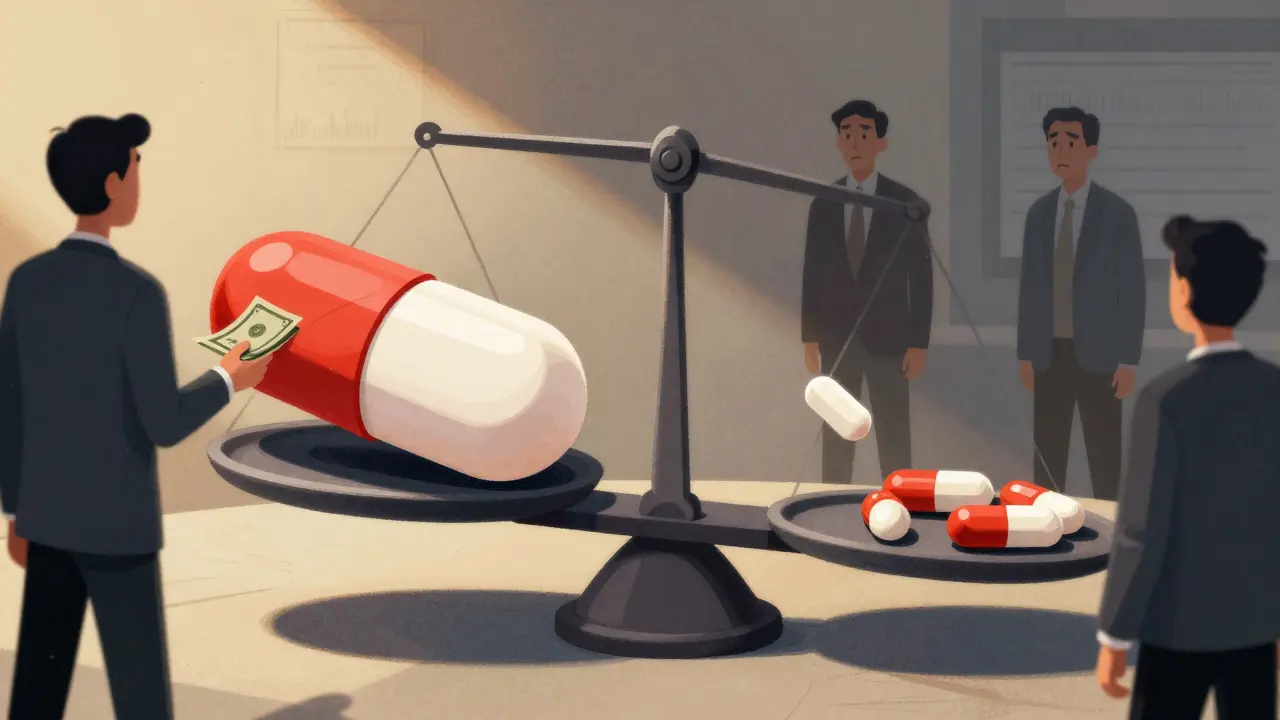
Generic drugs make up 90% of all prescription fills in the U.S. today. That’s not because people prefer them - it’s because they’re cheaper. But behind that number is a decades-long battle over who gets to sell these life-saving medications and when. Antitrust laws were never meant to regulate pill prices directly. Yet in the generic drug market, they’ve become the main tool fighting off tactics that keep prices high and competition low.
How the Hatch-Waxman Act Created the Modern Generic Market
In 1984, Congress passed the Drug Price Competition and Patent Term Restoration Act - better known as the Hatch-Waxman Act. It was a compromise. Branded drug companies got extended patent life to make up for time lost during FDA approval. In return, generic manufacturers got a faster, cheaper path to market through the Abbreviated New Drug Application (ANDA). The real game-changer? The first generic company to challenge a branded drug’s patent with a Paragraph IV certification got 180 days of exclusive rights to sell its version. That exclusivity wasn’t meant to be a reward - it was an incentive. The idea was simple: if you’re brave enough to sue a big pharma company over a patent, you get a head start on the market. And it worked. Between 2005 and 2014, generic drugs saved U.S. consumers $1.68 trillion. In 2012 alone, that number hit $217 billion. Without Hatch-Waxman, most of those savings wouldn’t exist.Pay-for-Delay: When Competition Is Bought
But something strange started happening. Instead of fighting in court, branded companies began paying generic makers to stay away. These deals, called "pay-for-delay," looked like this: the brand pays the generic company millions - sometimes hundreds of millions - to delay launching its cheaper version. The generic company walks away with cash. The brand keeps its monopoly. Patients pay more. The FTC called it anti-competitive. In 2013, the Supreme Court agreed in FTC v. Actavis. The court ruled that these reverse payments weren’t automatically legal just because they happened inside a patent settlement. If the payment was large and unexplained, it could violate antitrust law. That opened the door for lawsuits. One of the biggest cases? Gilead Sciences paid $246.8 million in 2023 to settle claims it used pay-for-delay to block generic versions of its HIV drug Truvada. Between 2000 and 2023, the FTC pursued 18 pay-for-delay cases in pharma. Settlements totaled over $1.2 billion. That’s not just fines - it’s money taken out of the hands of companies that tried to game the system.Orange Book Abuse and Patent Thickets
The FDA’s Orange Book lists every patent tied to a branded drug. Generic companies must address every listed patent in their ANDA. That’s supposed to make things clear. But some companies abuse it. Bristol-Myers Squibb was fined in 2003 for listing patents that didn’t actually cover the drug - just minor formulations. The goal? To block generic entry by making the legal path look too risky. This tactic, called "patent thickets," involves stacking dozens of patents - some valid, some weak - around a single drug. Generic companies get overwhelmed. They give up. The brand keeps its monopoly. The FTC has called this manipulation. Courts have agreed in some cases. But it’s still happening. In 2023, the FTC sued Teva for filing sham citizen petitions - fake complaints to the FDA claiming a generic drug was unsafe - just to delay approval of Copaxone, a multiple sclerosis drug. The case is still pending.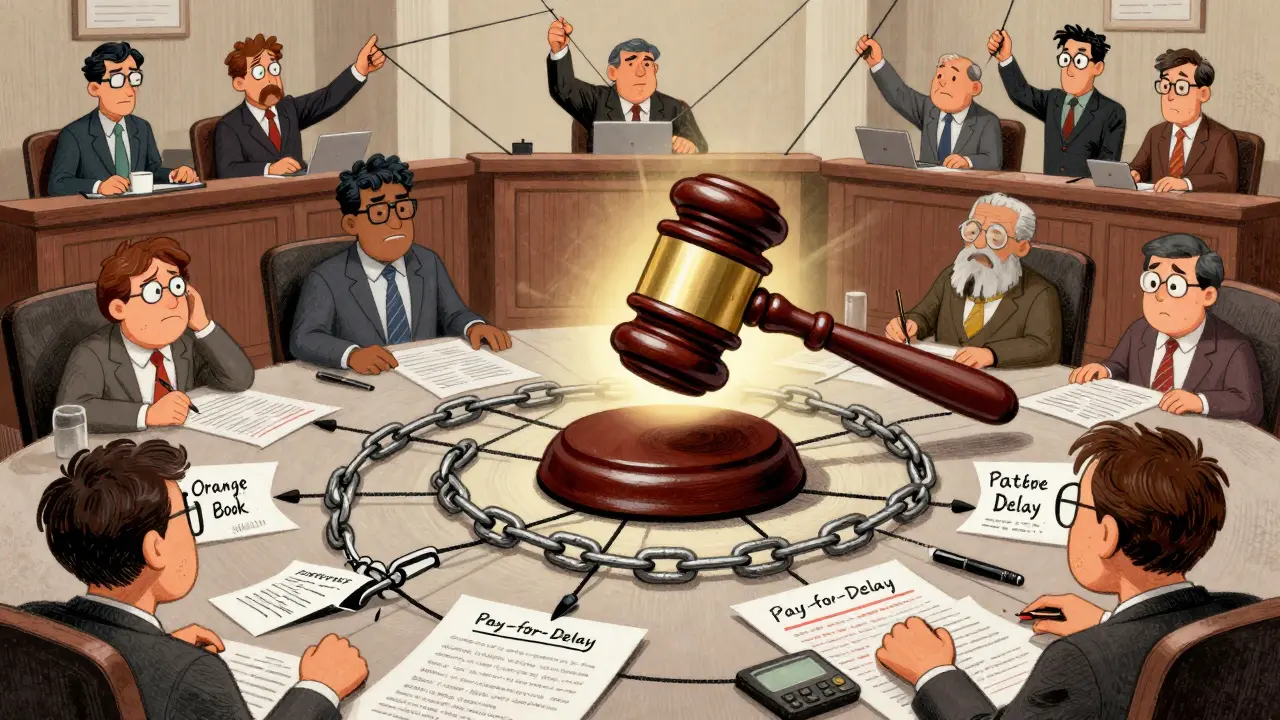
Product Hopping and Other Tricks
Another tactic? Product hopping. That’s when a brand slightly changes its drug - maybe switches from a pill to a capsule, or adds a new coating - right before the patent expires. Then it pushes doctors and patients to switch to the new version. The old drug? It gets pulled from the market. The generic version? It can’t launch because the original formulation is gone. AstraZeneca did this with Prilosec and Nexium. The courts didn’t rule it illegal because they said AstraZeneca didn’t block generics - it just changed its product. But the FTC still calls it anti-competitive. Why? Because it tricks the system. Patients and pharmacies think they’re getting an "improved" drug. In reality, they’re paying more for a version that’s barely different.Global Differences in Enforcement
The U.S. isn’t the only place fighting this battle. The European Union has taken a harder line on regulatory manipulation. Companies there have been fined for withdrawing marketing authorizations in certain countries just to block generic entry. Others were penalized for misleading patent offices to extend protection. China, which just released new antitrust guidelines in January 2025, is cracking down hard. Their new rules call out five "hardcore restrictions" - price fixing, market division, output limits, joint boycotts, and blocking new tech. Of the six pharmaceutical cases penalized in China by Q1 2025, five involved price fixing through messaging apps, meetings, or even algorithms. Authorities are now using AI to track suspicious pricing patterns across online pharmacies. The European Commission estimates that delays in generic entry cost European consumers €11.9 billion every year. That’s not theoretical. It’s real money people can’t spend on food, rent, or other medicines.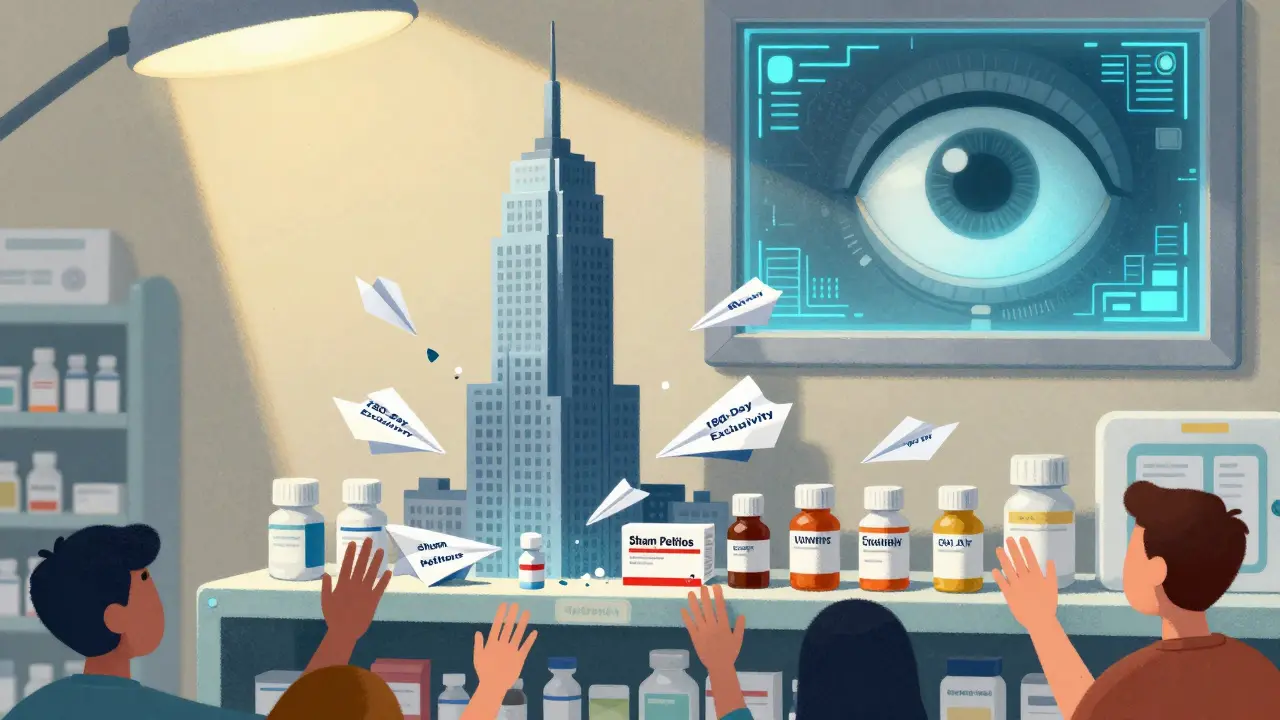
It's funny how we talk about competition like it's a game. But for someone in India trying to afford insulin, it's not a game. It's life or death. The system was built to help, but now it feels like a maze designed to keep people out.
Maybe we need to stop thinking in terms of patents and profits and start thinking in terms of people. That's all it really is.
pay for delay?? lmao the pharma bros are out here playing monopoly with our meds 😭💸
I had a friend who skipped her diabetes meds for 3 months because the generic cost $400 a month. She’s fine now, but barely. This isn’t some abstract legal debate. It’s someone’s grandma choosing between food and pills.
And yeah, the 180-day exclusivity thing? That’s a loophole big enough to drive a truck through. Why reward the first mover when it just delays everyone else?
It’s interesting how the Hatch-Waxman Act was supposed to be a win-win, but over time, the incentives got twisted. The 180-day window was meant to encourage challenge, not create a cartel-like delay.
Now it’s less about innovation and more about timing who gets to enter first. The real winners? The companies that can afford lawyers, not the ones who need the medicine.
One of the most insidious aspects of this entire system is the way patent thickets are constructed-not just through legitimate extensions, but through minor, trivial modifications that have zero clinical benefit. A change in coating, a shift from tablet to capsule, a different salt form-none of these improve efficacy, yet they trigger automatic regulatory delays for generics.
When the FDA’s Orange Book becomes a weaponized tool rather than a reference guide, it’s no longer about patient safety-it’s about corporate control. And the courts have been too hesitant to draw a line here, even when the FTC has clearly laid out the evidence.
Let’s be real: the entire pharmaceutical industry is a scam. They don’t cure anything-they just keep you dependent. The ‘generic’ market? It’s a shell game where the same players own both sides. Pay-for-delay? That’s just the polite version of what’s really happening.
They’re not competing. They’re colluding under the guise of law. And the FTC? They’re just the cops who show up after the bank’s already been robbed.
people need medicine not lawsuits
if you can make it cheaper let them make it
stop letting lawyers win
hey i just found out my blood pressure med went from $120 to $12 after a generic came out and i cried for like 10 minutes
like… how is this even legal that it cost that much before??
thank you to whoever made the generic
you’re a hero
Competition lowers prices. Simple.
China using AI to track drug prices? That’s not regulation-that’s surveillance. And now they’re copying our system? No wonder they’re cracking down. They’re scared of free markets.
Meanwhile, here in the US, we’re still letting pharma CEOs write the rules. This isn’t capitalism. It’s feudalism with pills.
you ever notice how every time a generic comes out, the brand name company suddenly has a new 'safety concern' about it? like… why now? why not 5 years ago?
they're lying. the FDA is in their pocket. i know it.
i work in a pharmacy and see this every day
people cry when they find out their insulin is $40 instead of $400
they don’t know it’s because someone fought in court
they just know they can breathe again
thank you to the lawyers and the generics makers
you’re doing god’s work