Anticholinergic Burden with Tricyclic Antidepressants: Cognitive and Cardiac Risks
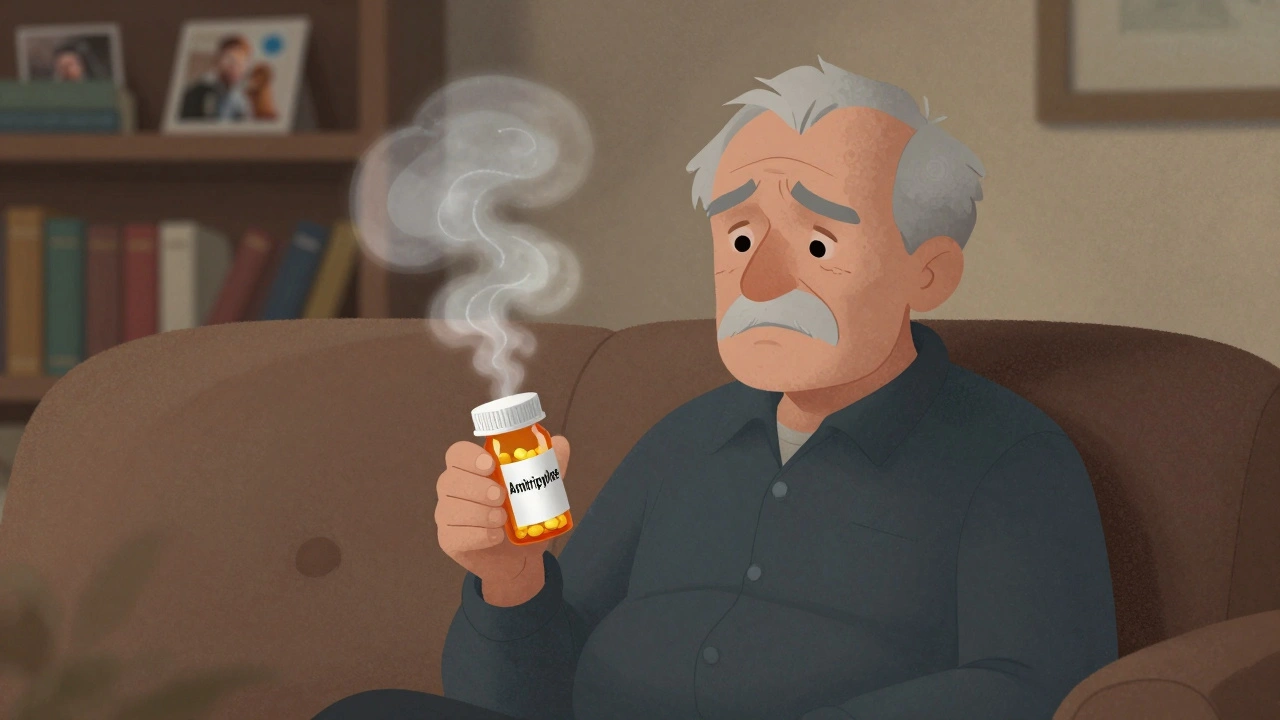
When doctors prescribe tricyclic antidepressants (TCAs) like amitriptyline or nortriptyline, many assume they’re just treating depression. But behind the scenes, these drugs are quietly flooding the body with anticholinergic activity-blocking a key brain chemical called acetylcholine. And that’s where the real danger lies. For people over 50, especially those on multiple medications, this hidden burden can trigger memory loss that looks like dementia, irregular heartbeats that land them in the ER, or even permanent cognitive damage. The truth? TCAs are not the safe, go-to option they once were. In fact, major health organizations now warn they should be avoided in older adults unless every other option has failed.
What Is Anticholinergic Burden?
Anticholinergic burden isn’t a single drug effect-it’s the sum of all the medications in your system that block acetylcholine. This neurotransmitter helps with memory, attention, muscle control, digestion, and heart rhythm. When too many drugs interfere with it, your body starts to malfunction. Tricyclic antidepressants are among the worst offenders. Drugs like amitriptyline and nortriptyline carry the highest possible score-3-on the Anticholinergic Cognitive Burden (ACB) Scale. That means they’re classified as highly anticholinergic. Even one of these pills can push your total ACB score above the danger line of 3. And when you add in over-the-counter sleep aids like diphenhydramine (Benadryl), allergy pills like chlorphenamine, or bladder meds like oxybutynin, the risk multiplies fast.Why TCAs Are a Silent Threat to the Brain
Many patients and even some doctors don’t realize that the confusion, forgetfulness, and mental fog caused by TCAs aren’t signs of aging-they’re drug side effects. A landmark study tracking over 3,400 adults over 65 for seven years found that those taking medications with high anticholinergic burden had a 54% higher risk of developing dementia. And here’s the chilling part: the damage didn’t reverse after they stopped taking the drugs. Some cognitive decline appears to be permanent. In clinical practice, it’s not rare to see older patients diagnosed with early dementia, only to have their symptoms vanish after switching off amitriptyline. One psychiatrist in Halifax reported a case where a 72-year-old woman was being evaluated for Alzheimer’s. Her memory was so bad she couldn’t recall her grandchildren’s names. After switching to an SSRI and stopping all other anticholinergics, her Mini-Mental State Examination score jumped from 21 to 28 in six months. She started recognizing faces again. She didn’t have dementia. She had drug-induced brain fog.Cardiac Risks: More Than Just a Palpitation
TCAs don’t just mess with your brain-they can mess with your heart. These drugs act like Class 1A antiarrhythmics, meaning they slow down the electrical signals in your heart. At therapeutic doses, amitriptyline can widen the QRS complex on an ECG by 10 to 25%. In overdose, that number can spike to 50%. That’s not just an abnormal reading-it’s a ticking time bomb. Prolonged QRS and QT intervals increase the risk of torsades de pointes, a deadly heart rhythm that can lead to sudden cardiac arrest. Studies show TCAs carry about three times the risk of arrhythmias compared to SSRIs. Amitriptyline alone is linked to 2.8 times higher risk of QT prolongation than sertraline. For someone with existing heart disease, high blood pressure, or a history of fainting, this isn’t a minor concern. It’s a life-threatening one. Emergency rooms across Canada are seeing more cases of TCA-induced arrhythmias than ever before, especially in patients who didn’t know their meds were risky.
How TCAs Compare to Modern Alternatives
There’s a big difference between old-school TCAs and today’s antidepressants. SSRIs like sertraline, escitalopram, and fluoxetine have ACB scores of 0 or 1. SNRIs like duloxetine and venlafaxine? Also 0 or 1. That means they don’t block acetylcholine significantly. They’re just as effective for depression and often better for nerve pain. And they’re far safer for the heart. A 2023 review of over 200,000 patients found SSRIs had half the risk of cardiac events compared to TCAs. Even in cases where TCAs were once considered the best option-like treatment-resistant depression or chronic neuropathic pain-newer alternatives now exist. Ketamine infusions, transcranial magnetic stimulation, and even certain anticonvulsants like gabapentin can replace TCAs without the anticholinergic baggage. The shift isn’t just theoretical. In the U.S., TCA prescriptions for depression dropped from 15% of all antidepressant fills in 2000 to under 5% in 2020. That’s not because they stopped working. It’s because safer options became available.When Might TCAs Still Be Used?
That doesn’t mean TCAs have no place in medicine. For a small group of patients-those who’ve tried every other antidepressant, every pain medication, every therapy, and still have severe, disabling depression or treatment-resistant nerve pain-they can be a last resort. But even then, it’s not a decision to make lightly. Guidelines from NICE and the Beers Criteria now say: avoid TCAs in adults over 65 unless absolutely necessary. And if you do use them, monitor closely. That means baseline ECGs, regular cognitive checks, and a plan to taper off as soon as possible. Some doctors still prescribe nortriptyline over amitriptyline because it’s slightly less potent at blocking acetylcholine, but both still score a 3 on the ACB scale. There’s no safe version of a high-anticholinergic drug. The goal isn’t to find the least bad TCA-it’s to find a better alternative.
What Patients and Clinicians Can Do
If you’re over 50 and taking any antidepressant, ask: Is this a TCA? If yes, ask: What’s my total anticholinergic burden? Don’t just look at your prescription list. Check your cabinet. Do you take NyQuil? Benadryl? Unisom? Those count. The average older adult takes five to seven medications. Add up the ACB scores. If you’re at 3 or higher, you’re in the danger zone. Talk to your doctor about switching. Don’t stop cold turkey-TCAs can cause withdrawal symptoms like nausea, dizziness, and rebound depression. A slow taper over 4 to 8 weeks is standard. And if you’re a clinician, use the ACB Calculator during every medication review. Many electronic health records now flag high-anticholinergic combinations automatically. In the UK, 63% of clinics use these tools. In the U.S., it’s still under 50%. That gap needs to close. Cognitive decline from anticholinergics is preventable. It’s not inevitable. It’s a side effect-and side effects can be reversed if caught early.Real Stories Behind the Numbers
On Reddit, a nurse shared how her 78-year-old father, on amitriptyline for depression and sleep, started forgetting how to use the TV remote and couldn’t remember his own phone number. The family assumed Alzheimer’s. After switching to sertraline and stopping diphenhydramine, his memory returned within three months. In a patient forum, a woman wrote that she’d been on nortriptyline for 10 years for back pain. She developed severe constipation, dry mouth, and blurred vision. She thought it was just aging. After stopping, she said, “I felt like I got my life back.” And in a support group for heart patients, a man described how, after three weeks on amitriptyline, he collapsed at home from a rapid heartbeat. His ECG showed QT prolongation. He didn’t know his antidepressant could do that. He survived. But he’s now on an SSRI-and he’s alive to tell the story.Can tricyclic antidepressants cause dementia?
Yes. Long-term use of TCAs with high anticholinergic burden (ACB score of 3) is linked to a 54% increased risk of developing dementia over seven years, according to a major study in JAMA Internal Medicine. The cognitive decline can be irreversible, even after stopping the medication. Symptoms like memory loss, confusion, and difficulty concentrating are often mistaken for Alzheimer’s, when they’re actually drug-induced.
Is amitriptyline safer than other TCAs?
No. Both amitriptyline and nortriptyline have the maximum ACB score of 3, meaning they’re equally potent at blocking acetylcholine. Nortriptyline is slightly less sedating and has a marginally better safety profile in overdose, but its anticholinergic effects are just as strong. Neither is safer for the brain or heart in long-term use.
What are the signs of anticholinergic toxicity?
Common signs include dry mouth, constipation, blurred vision, urinary retention, confusion, memory problems, dizziness, rapid heartbeat, and hallucinations. In older adults, these symptoms often mimic dementia. If someone on a TCA suddenly becomes forgetful or disoriented, anticholinergic burden should be suspected before assuming neurodegeneration.
Are SSRIs a better choice than TCAs?
For most people, yes. SSRIs like sertraline and escitalopram have ACB scores of 0 or 1, meaning they don’t significantly block acetylcholine. They’re just as effective for depression and anxiety, cause fewer side effects, and are far safer for the heart. They’re now the first-line treatment in nearly all guidelines. TCAs should only be considered if multiple SSRIs and SNRIs have failed.
Can I stop taking a TCA cold turkey?
No. Stopping TCAs abruptly can cause withdrawal symptoms like nausea, vomiting, dizziness, insomnia, anxiety, and even rebound depression. Always taper slowly under medical supervision-typically over 4 to 8 weeks. Your doctor can help you switch to a safer antidepressant while minimizing discomfort.
If you’re on a TCA and experiencing memory issues, dry mouth, constipation, or heart palpitations, don’t assume it’s just getting older. Talk to your doctor. Ask for your ACB score. Explore alternatives. Your brain and heart deserve better.
omg i had no idea benadryl was this dangerous 😭 my grandma takes it every night to sleep and now i’m freaking out
bro this is wild. i used to take amitriptyline for migraines and thought the brain fog was just stress. turns out it was the drug. switched to sertraline and my memory came back like i got a system update. y’all need to check your med lists. seriously.
The empirical evidence presented here is compelling, particularly the longitudinal data from the JAMA study. The correlation between cumulative anticholinergic burden and dementia risk is not merely associative but appears to be dose-dependent and temporally persistent. What remains under-discussed is the socioeconomic stratification of exposure-older adults on fixed incomes are disproportionately prescribed these medications due to cost, and often lack access to alternative therapies or pharmacogenetic screening. This is not just a clinical issue, but a systemic failure in geriatric care.
They call it 'anticholinergic burden' like it's a backpack you can just take off. But for people who’ve been on these drugs for 20 years, the brain doesn't reset. It forgets how to remember. And now we're told to just switch? Like swapping out a DVD player for a streaming box when the whole house is wired for analog. It’s not that simple. It’s never that simple.
Interesting how this post frames TCAs as some kind of villain. What about the patients who didn’t respond to SSRIs? Who got worse on them? Who developed sexual dysfunction, emotional blunting, or suicidal ideation? TCAs aren’t perfect, but they’re not evil either. Maybe the problem isn’t the drug-it’s the reductionist mindset that says 'one size fits all' in psychiatry.
to anyone reading this: if you’re over 50 and on anything with diphenhydramine or oxybutynin, PLEASE talk to your doctor. I didn’t realize my mom’s ‘forgetfulness’ was from her sleep aid + nortriptyline. We switched her to melatonin and citalopram-she started remembering our birthdays again. it’s not magic. it’s just chemistry. 💛
my uncle was diagnosed with dementia at 70. turned out he was on amitriptyline + Benadryl + Tums (yes, the antacid has anticholinergic properties). after switching meds? He started playing piano again. He remembered his wife’s favorite song. He cried. We all cried. This isn’t just medical advice. it’s a second chance at life.
It is imperative that we acknowledge the epistemological limitations of contemporary pharmacological paradigms. The reduction of complex neurophysiological phenomena to ACB scores, while quantitatively useful, risks obscuring the qualitative lived experience of the patient. Is cognitive decline truly reversible, or merely masked? Are we treating symptoms, or are we, in our zeal for safety, erasing the very mechanisms by which some individuals have managed chronic pain or depression for decades? The data may be compelling, but the human cost of abrupt discontinuation is rarely quantified.
stop acting like SSRIs are magic pills they cause weight gain and emotional numbness and people are on them for 15 years too. why is it ok to trash TCAs but ignore the long term effects of everything else? the real issue is lazy prescribing not the drugs themselves
Wow. Another anti-aging fear-mongering article. Next they’ll say coffee causes dementia. Everyone’s getting older. Of course you forget things. Of course your heart acts up. Stop blaming meds and start accepting mortality. This post is just another way for pharma to sell you ‘safer’ drugs you don’t need.
My dad was on nortriptyline for 12 years. He thought his constipation and dry mouth were ‘just part of getting old.’ Then he had a near-fatal arrhythmia. The cardiologist looked at his med list and said, ‘You’re lucky you’re alive.’ We switched him to escitalopram. He’s 78 now. He’s hiking. He remembers my daughter’s name. He didn’t need to die to learn this. Nobody should.